

OR Portland
Hazelwood
Hazelwood is one of Portland's largest neighborhoods, spanning both Northeast and Southeast Portland between I-205 and NE 162nd Avenue. The neighborhood is anchored by the Gateway Transit Center (MAX Red, Blue, and Green lines), Mall 205, Adventist Medical Center, and Glendoveer Golf Course on the eastern edge. Housing stock is predominantly mid-century ranches and bungalows built between 1946 and the mid-1960s, with newer townhomes and mixed-use infill concentrated near the Gateway Urban Renewal Area.




Living in Hazelwood
Portland's second-largest neighborhood, anchored by the Gateway Transit Center, Mall 205, Adventist Medical Center, and Glendoveer Golf Course on the east edge.
Updated April 2026 by Joe SalingWhat Hazelwood Is Really Like
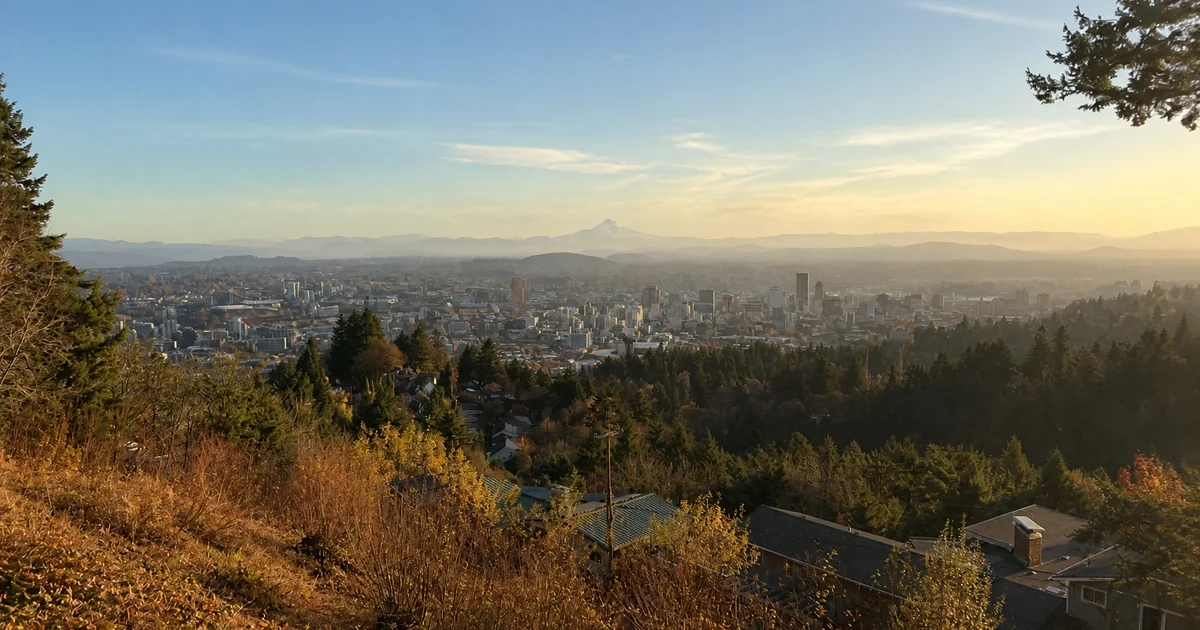
Hazelwood is one of Portland's largest and most populated neighborhoods, spanning both Northeast and Southeast Portland between I-205 on the west, NE 162nd Avenue on the east, NE Halsey Street on the north, and SE Division Street on the south. The neighborhood wraps around Mill Park on three sides and runs nearly three miles east to west. The defining feature is the Gateway district at the northwestern corner, where I-205 meets I-84 and the MAX Red, Blue, and Green lines converge at the Gateway Transit Center. That transit convergence is the single biggest reason Hazelwood works for commuters who want an outer-Portland price point without giving up downtown access.
A weekday morning in Hazelwood splits between Gateway (where buses, MAX trains, and highway ramps are all moving at once) and the residential interior east of 102nd, which runs much calmer. Mall 205, the Gateway Shopping Center, Adventist Medical Center, and the growing Gateway Green bike park give the west end of the neighborhood a town-center feel that most outer Portland neighborhoods do not have. The east end near Glendoveer Golf Course and NE 148th feels more residential and suburban, with ranch homes set back from quieter side streets. Sandwiched between those two poles is a mix of 1950s and 1960s housing that ties the neighborhood together.
On residential blocks you will see gardeners, dog walkers looping through Cherry Park or Ventura Park, cyclists heading to the I-205 multi-use path, and joggers circling the Glendoveer Fitness Trail that runs the golf course perimeter. The Gateway Urban Renewal Area has driven a steady layer of new townhomes and mixed-use infill over the past 15 years, but much of the interior remains original mid-century stock. Expect more than 800 businesses, multiple MAX stations, and a neighborhood that functions as a full destination rather than just a bedroom community.
Looking for broader context on the area? Read my full East Portland relocation guide for how Hazelwood fits into the wider district.
Homes and Architecture in Hazelwood
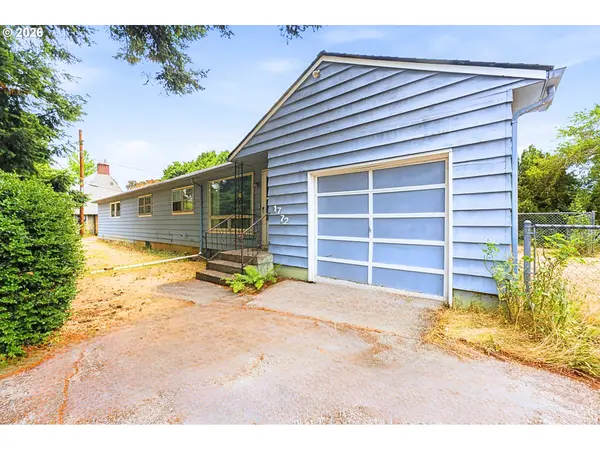
Hazelwood's housing stock was built primarily between 1946 and the mid-1960s as returning WWII veterans filled out the area, and that era still defines the neighborhood. You see Craftsman-inspired bungalows, post-war ranches, split-levels on slightly sloped lots, and one-story cottages with traditional masonry or board-and-batten siding. A distinctive Hazelwood feature is that many pre-annexation homes sit farther back from the sidewalk than inner Portland norms, giving residential blocks a more open, suburban feel. Newer construction layers in near the Gateway Urban Renewal Area, with townhouses, mid-rise apartments, and mixed-use buildings along NE Halsey and the Mall 205 corridor.
When you shop here, expect the widest price and condition spread of any outer east Portland neighborhood. Entry-level 1950s ranches in need of updates sit alongside remodeled homes with newer kitchens, split systems, and finished basements. Competitive dynamics are moderate compared to inner Portland, but Gateway-adjacent blocks with good transit access and newer construction can still draw multiple offers. Two items to verify before writing: which school district the address falls in (Hazelwood spans David Douglas to the south and Parkrose to the north), and whether the lot is inside the Gateway Regional Center zoning overlay, which can affect ADU rights and future redevelopment potential.
- Mid-century ranch & split-level
- Post-war Craftsman bungalows
- 21st-century townhomes & infill
- 5,000 to 8,000 sq ft lots common
- Entry to mid-range for East Portland
Dining, Parks, and Daily Life
Falco's Pub
A Hazelwood standby since 2009 at 9950 SE Stark, Falco's is where the neighborhood actually gathers. The menu leans sandwiches and casual pub fare, the drinks are reasonable, Monday nights host comedy, and Thursdays are karaoke. Not trying to reinvent anything, just doing the neighborhood-pub thing well.
Gateway Discovery Park
Portland's modern park built to anchor the Gateway Regional Center. The 3-acre site has a playground with climbable red spheres, a skate spot, splash pad, and open turf that hosts the East Portland Summer Arts Festival. It is the closest thing Hazelwood has to a civic square.
Heroes American Cafe
A local breakfast and lunch spot at NE 102nd near Halsey that residents have treated as the de facto neighborhood coffee stop for years. Classic American menu, unpretentious service, and close enough to walk from much of Gateway's residential blocks.
Glendoveer Golf Course & Fitness Trail
Glendoveer takes up the entire northeast corner of the neighborhood with two 18-hole courses and a 2-mile soft-surface fitness trail that loops the perimeter. The trail is open to non-golfers and is one of the better running and walking loops in outer Portland. Trees and relative quiet make it feel much further from the city than it is.
Mall 205 & Gateway Shopping Center
Daily errands run at Fred Meyer, Target, Home Depot, and the rest of Mall 205 on the southwest corner of the neighborhood. Gateway Shopping Center at NE Halsey adds additional anchor retail. Between the two, Hazelwood residents rarely leave the neighborhood for groceries, hardware, or pharmacy.
Getting Around
Hazelwood's commute options are the neighborhood's headline feature. The Gateway Transit Center hosts MAX Red, Blue, and Green lines plus multiple TriMet bus routes; downtown Portland runs roughly 20 minutes by train. I-205 and I-84 are both within two minutes by car, putting downtown at 15 to 20 minutes off-peak. The I-205 multi-use path carries bike commuters north to the airport and south toward Lents.
Joe's Take on Hazelwood
When buyers tell me they want an entry to mid-range price point in Portland, with multiple MAX lines, full-service retail, and a real neighborhood scale, Hazelwood is one of the first places I put on the list. You get transit access most outer neighborhoods cannot match, three different MAX lines plus I-205 and I-84 within minutes, and retail density that means you can live here without driving 20 minutes for basics. The honest trade-off is that Hazelwood is big and uneven. Gateway near Mall 205 reads differently than the Glendoveer edge at 148th, and pricing, walkability, and feel all change block to block.
The housing stock and location suit buyers who prioritize commute options, want single-family space at an outer Portland price, and value full-service retail over boutique corridors. Remote workers who travel often through PDX benefit from the MAX Red Line running directly to the airport. It is less of a fit for buyers who want a walkable pedestrian commercial street like Mississippi or Alberta; Hazelwood's commercial life is arterial-scaled around NE Halsey, 102nd, and 122nd rather than pedestrian-corridor in the inner-Portland sense.
Before you write an offer in Hazelwood, three specifics matter. First, confirm the school district at your exact address. The neighborhood is split between David Douglas (south) and Parkrose (north), and a few blocks fall in Reynolds or Centennial at the edges, which is something Portland Public Schools does not serve here. Second, check whether the parcel sits inside the Gateway Regional Center zoning overlay; this can affect ADU eligibility, height limits, and future redevelopment value. Third, on 1950s and 1960s homes, pull the sewer scope and check the electrical panel; original cast-iron laterals and 100-amp panels are common and can run five figures to replace.
Frequently Asked Questions About Hazelwood
How do home prices in Hazelwood compare to the rest of East Portland?
Hazelwood typically prices in the middle of the East Portland range. Gateway-adjacent blocks with newer townhomes and MAX access tend to price higher, while interior 1950s and 1960s ranches farther east run more affordable. Expect Hazelwood to price roughly in line with Parkrose Heights and Powellhurst-Gilbert, above Centennial and Glenfair, and below Montavilla across I-205. The MAX convergence at Gateway adds a premium that neighborhoods without rail transit do not carry. The current average sales price and active listing count are shown at the top of this page and update automatically with the market.
What are property taxes like in Hazelwood?
Multnomah County property taxes in Hazelwood run at an effective combined rate of approximately 1.3% to 2.1% of assessed value, in line with the rest of the county. Because Hazelwood home values tend to run below inner Portland, typical annual tax bills are also lower on average. Oregon Measure 50 caps assessed value growth at 3% per year, so long-held homes often pay less than their market value would suggest. Parcels inside the Gateway Urban Renewal Area may see additional district-specific levies. Verify current rates and the specific assessment for any address at multco.us/assessment-taxation.
Which schools serve Hazelwood?
Hazelwood is split between two school districts. Most of the neighborhood is served by the David Douglas School District, with elementary options including Cherry Park, Menlo Park, Lincoln Park, and Ventura Park, plus Floyd Light Middle School and David Douglas High School. The northern portion of Hazelwood above NE Halsey falls in the Parkrose School District with Russell Elementary, Parkrose Middle School, and Parkrose High School. A few edge blocks fall in Reynolds or Centennial. Verify the specific address assignment at the Portland Maps school lookup (portlandmaps.com) since boundaries can change.
What is the housing stock like in Hazelwood?
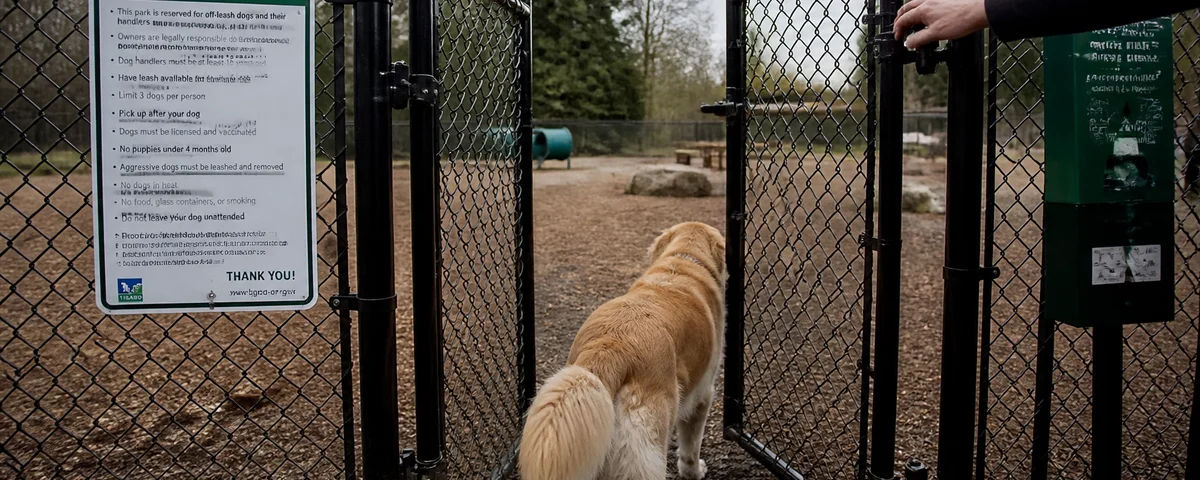
Housing stock is predominantly mid-century ranches, split-levels, and post-war Craftsman bungalows built between 1946 and the mid-1960s, plus a growing layer of 21st-century townhomes and mixed-use apartments concentrated near the Gateway Urban Renewal Area. Lot sizes generally run 5,000 to 8,000 square feet, with larger lots toward the Glendoveer edge. Amenity access includes Cherry Park (10 acres with an off-leash dog area), Lincoln Park (7 acres), Gateway Discovery Park, Glendoveer Golf Course and its 2-mile fitness trail, and Gateway Green's bike park across I-205. Mall 205 and the Gateway Shopping Center handle daily retail.
How long is the commute from Hazelwood to downtown Portland?
Downtown Portland typically runs 15 to 20 minutes by car via I-84 or I-205 off-peak, and about 20 to 25 minutes on the MAX Red or Blue line from Gateway Transit Center. Peak-hour drives can stretch to 30 to 40 minutes depending on freeway conditions. The MAX Red Line also runs directly to PDX Airport in about 15 minutes, which is a genuine daily benefit for frequent travelers. TriMet bus service along NE Halsey, NE Glisan, and 102nd, 122nd, and 148th Avenues supplements the rail options.
Is Hazelwood walkable?
Walkability varies significantly across Hazelwood. Blocks near Gateway, Mall 205, and the MAX stations have Walk Scores in the 70s and 80s with grocery, pharmacy, restaurants, and transit all within a few blocks. Interior residential blocks, especially east of 122nd toward Glendoveer, score in the 40s to 60s and are more car-dependent for errands. NE Halsey and 102nd have continuous sidewalks and decent pedestrian infrastructure. Bike access is strong thanks to the I-205 multi-use path, Gateway Green's bike park, and the Glendoveer fitness trail loop.
How does Hazelwood compare to nearby East Portland neighborhoods?
Hazelwood typically prices roughly in line with Parkrose Heights and Powellhurst-Gilbert, above Centennial and Glenfair, and below Montavilla across I-205. Montavilla has more pedestrian-scale commercial corridor walkability on SE Stark. Parkrose offers similar housing stock with the Parkrose School District throughout. Centennial and Glenfair sit further east with longer commutes and less transit density. Hazelwood is the pick when a buyer wants the Gateway MAX convergence, the retail density of Mall 205, and a larger neighborhood with multiple character pockets from Gateway mixed-use to Glendoveer residential.
Can I add an ADU or short-term rental in Hazelwood?
Most Hazelwood lots are eligible for an accessory dwelling unit under Portland's Residential Infill Project rules, which allow up to one ADU on a single-family lot. The larger lots common in Hazelwood often accommodate ADU construction more easily than tighter inner-Portland parcels. Parcels inside the Gateway Regional Center zoning overlay may have different rules, including taller buildings or multiple units permitted. Short-term rentals require a City of Portland STR permit; Type A permits require owner-occupancy, and Type B permits (non-owner-occupied) have stricter limits. Verify both ADU eligibility and STR permit type for your specific address with Portland Bureau of Development Services (portland.gov/bds) before counting on rental income.
Thinking About Buying in Hazelwood?
I help buyers navigate East Portland neighborhoods every week. Let's talk about what you need, what you can afford, and whether Hazelwood is the right fit.
Schedule a Free Consultation Or call Joe directly: (503) 910-7364Joe Saling · Saling Homes at eXp Realty · 10+ years serving Portland metro buyers and sellers
Saling Homes at eXp Realty is committed to the principles of the Fair Housing Act and Equal Housing Opportunity. Licensed in the State of Oregon. Information deemed reliable but not guaranteed. Verify all data independently before making real estate decisions.
MY BLOGS

MARKET TRENDS

HOUSING DETAIL
NEARBY SCHOOL & BUSINESS
130 SE 119TH AVE, Portland, OR 97216
Townhouse 1 Bed 1 Bath 741 SqFt
Listed by Kelly Right Real Estate of Portland, LLC
12078 SE PINE ST #7, Portland, OR 97216
Townhouse 2 Beds 1.1 Baths 818 SqFt
Listed by Redfin422 NE 141ST PL, Portland, OR 97230
Townhouse 4 Beds 2.1 Baths 1,643 SqFt
Listed by Premiere Property Group, LLC11650 NE GLISAN ST, Portland, OR 97220
Single Family Home 3 Beds 1 Bath 1,052 SqFt
Listed by Opendoor Brokerage LLC9837 NE IRVING ST #312, Portland, OR 97220
Condo 1 Bed 1 Bath 513 SqFt
Listed by MORE Realty13055 SE STARK ST #39, Portland, OR 97233
Manufactured Home 2 Beds 1 Bath 913 SqFt
Listed by eXp Realty, LLC14134 E BURNSIDE ST #3, Portland, OR 97233
Townhouse 3 Beds 2 Baths 1,162 SqFt
Listed by MORE Realty13045 SE STARK ST #124, Portland, OR 97233
Manufactured Home 2 Beds 1.1 Baths 789 SqFt
Listed by eXp Realty, LLC109 NE 148TH AVE, Portland, OR 97230
Single Family Home 5 Beds 2 Baths 2,968 SqFt
Listed by Streamline Real Estate819 SE 136TH AVE, Portland, OR 97233
Single Family Home 5 Beds 3 Baths 2,500 SqFt
Listed by Walczyk Associates Realty11060 NE OREGON ST, Portland, OR 97220
Single Family Home 3 Beds 2.1 Baths 1,446 SqFt
Listed by iStar Realty LLC12817 SE STARK ST, Portland, OR 97233
Condo 2 Beds 2 Baths 1,003 SqFt
Listed by Mal & Seitz2027 SE 100TH AVE, Portland, OR 97216
Single Family Home 3 Beds 2 Baths 2,750 SqFt
Listed by Cascade Hasson Sotheby's International Realty10985 E BURNSIDE ST #23, Portland, OR 97216
Condo 1 Bath 371 SqFt
Listed by Tree City Real Estate39 NE 113TH PL, Portland, OR 97220
Single Family Home 3 Beds 2 Baths 1,528 SqFt
Listed by Summa Real Estate Group1229 SE 139TH AVE, Portland, OR 97233
Single Family Home 3 Beds 2 Baths 1,361 SqFt
Listed by Keller Williams Realty Professionals14722 NE FLANDERS ST, Portland, OR 97230
Townhouse 3 Beds 2.1 Baths 1,166 SqFt
Listed by RE/MAX Advantage Group10426 SE LINCOLN CT, Portland, OR 97216
Single Family Home 3 Beds 2.1 Baths 2,809 SqFt
Listed by Keller Williams PDX Central10345 NE CLACKAMAS ST #3, Portland, OR 97220
Condo 1 Bed 1 Bath 502 SqFt
Listed by MORE Realty32 SE 126TH AVE, Portland, OR 97233
Single Family Home 3 Beds 1 Bath 910 SqFt
Listed by Change Realty, LLC

Coming Soon
Commute Score
Coming Soon
Coming Soon
DEMOGRAPHICS
Population:
Density:
Households:
Gender
Coming Soon
Coming Soon
Coming Soon
Coming Soon

Joe Saling
joe@sellingpdxhomes.com