12 Day Trips From Portland, Oregon: All Under 90 Minutes
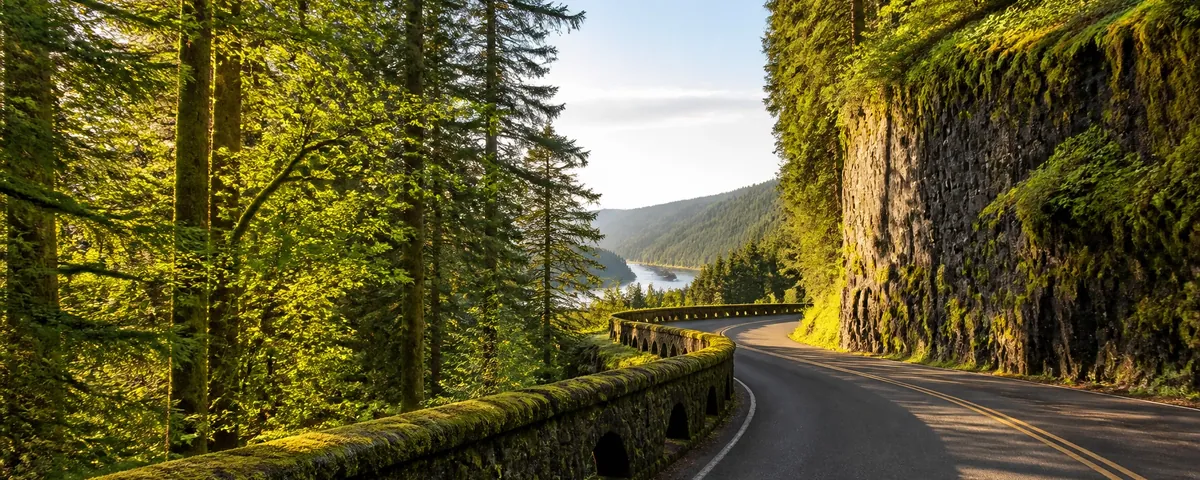
Multnomah County. The Historic Columbia River Highway, where several waterfalls sit within a short drive of each other.
Portland sits in a rare spot. Inside 90 minutes you can stand under a 600-foot waterfall, walk on an ocean beach, taste Pinot in world-class wine country, or watch a snow-capped volcano reflect in a lake. The hard part isn't finding somewhere to go. It's that the good day and the wasted day start with the same drive, and the difference is almost never the destination. It's what time you left and what the weather is doing.
Two things changed in the last year that most travel guides haven't caught up on. Oregon expanded paid parking to dozens more state park day-use sites, and the Multnomah Falls permit rules shifted again for 2026. I checked every trip below against the agency that manages it, so the permit rules, parking fees, and closures here are current as of this month, not copied from a post written years ago. If you're new to the area, this pairs well with my guide on moving to Portland from out of state.
Here are twelve trips, sorted by how far you're driving and what the sky needs to be doing, plus an honest list of the ones that aren't worth it right now.
What is the best day trip from Portland, Oregon?
For the shortest drive with the biggest payoff, the Columbia River Gorge waterfall corridor is hard to beat: five named waterfalls within a 45-minute drive of downtown, and four of them need no permit at all. If you want the ocean, Cannon Beach is the fastest salt water from Portland at 85 to 95 minutes on a weekday. If it's raining, that's not bad news. Silver Falls State Park and the Gorge both run harder and look better when the weather is wet. The move is to pick your trip from the forecast, not the other way around.
→ Bottom line: check the forecast first, then choose. A marine layer means the coast is grey and 55 while the Gorge bakes at 85, and the December rain that ruins the beach is exactly what makes the waterfalls roar.
- First, the part nobody tells you: permits and parking in 2026
- The twelve trips at a glance
- Band one: under 45 minutes
- Band two: 45 to 70 minutes
- Band three: 70 to 90 minutes
- Three trips locals actually use
- The honest skip list
- What each season is actually like
- Where these trips sit relative to where you live
- Frequently asked questions
First, the part nobody tells you: permits and parking in 2026
This is the section that saves your day, so it comes before the trips. Three rule changes catch people every summer.
Multnomah Falls. A timed-use permit is required to park at the I-84 Exit 31 lot between 9 a.m. and 6 p.m., daily, from May 22 through September 7, 2026. It costs about two dollars, you book it on Recreation.gov, and permits release 14 days ahead and again 2 days ahead. Here's the catch that trips everyone up: the permit lets you park if a space is open. It does not reserve you a spot. Show up before 9 a.m. or after 6 p.m., or visit outside those summer dates, and you need no permit at all. Arrive by bike, on foot, or by shuttle and you're also exempt.
The other Gorge waterfalls. Latourell, Bridal Veil, Wahkeena, and Horsetail don't require the Multnomah permit. Some Gorge lots did change during the 2025 and 2026 state-parks fee rollout, so check the ODOT waterfall corridor page before you go.
Oregon State Parks day-use fee. At parks that charge, a day-use parking permit is $10 for Oregon residents and $12 for out-of-state visitors, and one daily permit is good all day at any Oregon state park that charges. Walk, bike, or bus in and it's free. If you visit fee parks more than six times a year, the $60 annual resident pass pays for itself.
Washington parks are different. Beacon Rock is a Washington state park, which means you need a Washington Discover Pass, not the Oregon permit. This is the single most common mistake on a Gorge trip, and the Oregon permit does you no good across the river.
Treating drive time as the only variable
The mistake first-timers make is picking the most famous destination and going on a Saturday at 11 a.m. in July. The Gorge and the coast are both close, but they're close in completely different ways. On a clear day the coast is the move. On a foggy summer morning it's grey and cold at the beach while the Gorge is sunny and warm. Check the forecast, then pick. That one habit separates a great day from a long, annoyed drive.
The twelve trips at a glance
Scan by drive time and by what the weather is doing. Fees and permits change, so treat this as a starting point and confirm the specific lot before you leave.
| Trip | Area | Drive (one way, off-peak) | Best for | Weather needed | Fee or permit | Car-free option |
|---|---|---|---|---|---|---|
| Gorge waterfall corridor | Columbia Gorge | 35 to 45 min | Waterfalls | Any, best wet | Multnomah permit in summer; others free | Yes, shuttle |
| Sauvie Island | NW of Portland | 30 min | U-pick farms | Sun | Sauvie Island parking permit | No |
| Fort Vancouver + Waterfront | Vancouver, WA | 20 min | Free easy day | Any | Grounds free; fort admission | Yes |
| Oregon City + Willamette Falls | Clackamas Co. | 25 min | Rainy-day stop | Any | Free | Partial |
| Dundee Hills + Newberg | Yamhill Co. | 45 to 55 min | Wine tasting | Sun | Tasting fees vary | No |
| Cascade Locks | Columbia Gorge | 50 min | Riverfront, PCT | Any | Free | Yes, transit |
| Beacon Rock | Skamania Co, WA | 50 min | Short steep hike | Dry | WA Discover Pass | No |
| McMinnville | Yamhill Co. | 60 min | Rain-proof day | Any | Museum admission | No |
| Silver Falls State Park | Marion Co. | 70 to 80 min | Waterfall loop | Any, great wet | Oregon day-use $10/$12 | No |
| Hood River + Fruit Loop | Hood River Co. | 70 to 80 min | Orchards, town | Sun | Free; farms seasonal | No |
| Timberline + Trillium Lake | Mt. Hood | 80 to 90 min | Reflection, snow | Sun or snow | Sno-Park in winter | No |
| Cannon Beach + Ecola | Clatsop Co. | 85 to 95 min | Ocean day | Sun | Ecola day-use $10/$12 | No |
Band one: under 45 minutes
Columbia River Gorge waterfall corridor
Weather: any. Best in rain or spring melt. You can be looking up at a waterfall 35 minutes after leaving your driveway, which is the whole argument for this trip. The stretch of the Historic Columbia River Highway between Latourell and Horsetail strings four roadside falls together, so you're back in the car and onto the next one within minutes. Latourell drops in a single 249-foot plume you can see from the lot. Wahkeena fans down over mossy rock. Horsetail sits right beside the road.
The honest tradeoff: the famous one, Multnomah, is the one to time carefully. In summer between 9 and 6 you need that permit, the lot fills before the morning fog burns off, and there's no legal shoulder parking anywhere on the Historic Highway. Do the four free falls instead, or hit Multnomah first thing before the permit window opens.

Sauvie Island
Weather: sun. Summer and fall only. Ten minutes past the St. Johns Bridge, the city drops away and you're in open farmland along the Columbia. The reason to come is the u-pick farms. In berry season you can walk out of a field with a full flat of strawberries or blueberries for a fraction of the farmers-market price, and it shifts to pumpkins and corn by fall.
The honest tradeoff: this is a seasonal trip, full stop. Outside roughly June through October there's little reason to make the drive, and the island turns flat and muddy in winter. You also need a separate Sauvie Island parking permit, sold at the markets on the island, not the state-parks permit and not at the trailheads.
Fort Vancouver and the Vancouver Waterfront
Weather: any. The trip that needs zero planning. Twenty minutes north, no permit, and two things worth doing sit within a walk of each other: the reconstructed Hudson's Bay Company fort with its huge open parade field, and the redeveloped Vancouver waterfront with a walkable riverfront and a pedestrian land bridge connecting the two.
The honest tradeoff: this is a city day, not a wilderness one. The reconstructed fort charges admission and keeps seasonal hours, so if the fort itself is your reason to go, confirm it's open before you leave. The grounds and waterfront are free any time.
Oregon City and Willamette Falls
Weather: any. Good rainy-day option. Twenty-five minutes south sits the second-largest waterfall by volume in the country, and most people who live here have never actually stopped to look at it. Oregon City pairs it with the End of the Oregon Trail interpretive center and a historic downtown built on two levels, connected by a municipal elevator.
The honest tradeoff: public viewing of Willamette Falls has been limited for years while the riverwalk is built out in phases. Access is improving but still partial, so treat this as a stop, not a headliner, and check the current viewing situation before you build a day around the falls themselves.
Band two: 45 to 70 minutes
Dundee Hills and Newberg
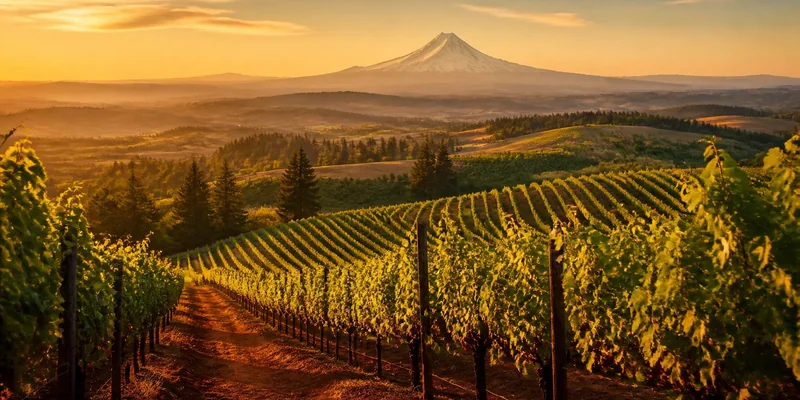
Weather: sun. Best in fall harvest. The closest edge of the Willamette Valley wine country, so you get the same Pinot Noir and Chardonnay that made the region famous without driving all the way to McMinnville. The red Jory soil between the vine rows is the visual signature of the area, and on a clear day the view northeast reaches Mount Hood. If you want to be close to this on a regular basis, the guide to living in Hillsboro covers the metro's nearest jumping-off point.
The honest tradeoff: somebody has to drive, and tasting fees add up fast across a group. Most tasting rooms are appointment-only now, so a carful of walk-ins on a Saturday can strike out. Book two rooms ahead rather than winging four.
Cascade Locks and Bridge of the Gods
Weather: any. The one trip on this list you can do without a car. Columbia Area Transit runs the Columbia Gorge Express from Gateway Transit Center out to Cascade Locks, where you can walk the waterfront park, watch the sternwheeler, and stand under the Bridge of the Gods where the Pacific Crest Trail crosses the river.
The honest tradeoff: it's a half-day, not a full one. The town is small, so pair it with a Gorge hike or a nearby waterfall or you'll be back home by early afternoon.
Beacon Rock State Park, Washington
Weather: sun or dry. Skip if it's icy. The best payoff-per-effort trip in the Gorge. A trail of just under a mile climbs an 848-foot basalt monolith by way of more than 50 switchbacks bolted to the rock, and it opens onto a full Gorge panorama at the top for a fraction of the effort a hike like Angel's Rest demands.
The honest tradeoff: the trail is a railed catwalk on open rock, so anyone uneasy with heights or exposure should skip it. And bring the Washington Discover Pass, not your Oregon permit. This is the trip where people learn that lesson the hard way.
McMinnville
Weather: any. The rain-proof choice. The entry that works whether or not the sky cooperates. NE 3rd Street is a walkable few blocks of shops, coffee, and restaurants, and the Evergreen Aviation and Space Museum a few minutes away houses the Spruce Goose under one roof, which fills an afternoon regardless of weather.
The honest tradeoff: trying to do the museum, wine tasting, and downtown in one day turns it into a ten-hour marathon. Pick two of the three and you'll actually enjoy them.
Band three: 70 to 90 minutes
Silver Falls State Park
Weather: any. Genuinely better in the rain. The Trail of Ten Falls loops past ten waterfalls in a single 7.2-mile hike, and you can walk behind four of them, including the 177-foot curtain of South Falls a short walk from the trailhead. This is the rare Oregon trip that's better in wet weather, when every fall runs at full volume.
The honest tradeoff: leave the dog at home, because pets aren't allowed on the Canyon Trail, which makes up most of the loop. The South Falls lot fills first on weekends, so an early start saves you circling. Check the park's current trail advisories before you go, since construction and seasonal repairs occasionally close sections.
Hood River and the Fruit Loop
Weather: sun. Best in summer. Drive an hour up the Gorge and the landscape flips from rainforest to high desert in about 30 miles. Hood River is a walkable river town full of breweries and cider houses, with world-class windsurfing on the Columbia, and the Fruit Loop is a scenic drive through the orchards of the Hood River Valley, loaded with apples, pears, and farm stands in season.
The honest tradeoff: it's a summer and early-fall trip. In winter most of the Fruit Loop farms close and you're left with a windy river town. And because Historic Columbia River Highway construction has affected the scenic route, check TripCheck for the through-route before you commit to the pretty road.
Mount Hood: Timberline Lodge and Trillium Lake
Weather: sun in summer, snow in winter. Two different trips. This one is genuinely two trips depending on the season, and both earn the drive. In summer, tour the historic 1930s Timberline Lodge and drive to Trillium Lake for the postcard reflection of Hood's peak on the water. In winter, it's a ski day and a snow-play day, 90 minutes from downtown.
The honest tradeoff: the Trillium Lake road isn't plowed in winter, so the reflection shot is a summer and fall thing only, roughly June through October. Come winter you need a Sno-Park permit and traction devices, and mountain weather turns fast, so check conditions before heading up.
Cannon Beach and Ecola State Park
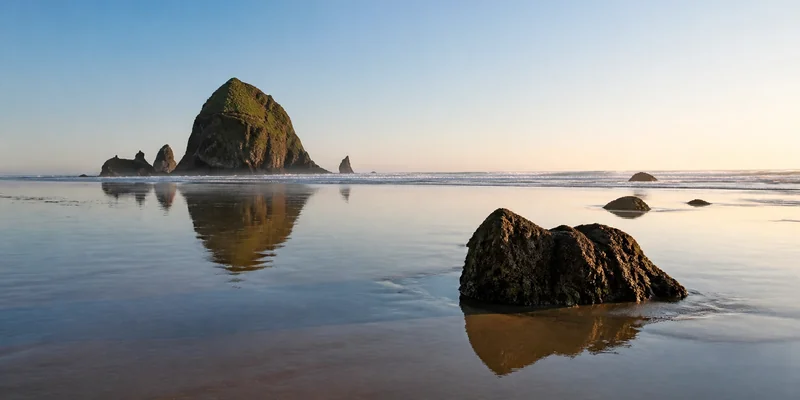
Weather: sun. Check the marine layer first. The fastest ocean from Portland, and the most coast you can pack into one stop. Haystack Rock rises 235 feet off the sand at Cannon Beach, and just north, Ecola State Park delivers forested headland views out over the water. Highway 26 west is the quick road to salt water.
The honest tradeoff: two things most guides get wrong. First, the drive is 85 to 95 minutes on a weekday but can top two hours on a summer Saturday on 26, which puts it at the very edge of the 90-minute promise. Second, the west section of the Clatsop Loop Trail at Ecola has been closed since April 17, 2026 due to an active landslide, so confirm what's open before you plan the hike.
The thing new arrivals learn the hard way is that the coast is often colder and greyer than town in summer, while the Gorge bakes. When the forecast shows a marine layer at the beach, that's usually the day to point the car east instead.
Field note
Three trips locals actually use
Not on the main list, but worth knowing.
L.L. Stub Stewart State Park and the Banks-Vernonia State Trail. A paved 21-mile rail trail about 50 minutes out, ideal for a flat family bike ride. Note that Stub Stewart is one of the parks that began charging day-use parking on March 30, 2026.
Molalla River Recreation Corridor. Managed by the Bureau of Land Management and free, an hour south, with river access and swimming holes when the weather is warm. Minimal facilities, which is part of the appeal.
Lacamas Lake and downtown Camas, Washington. Thirty minutes across the river: a lake loop, a walkable historic main street, and a wildflower trail that peaks in spring.
The honest skip list
The whole point of a list like this is trust, so here are the trips that get recommended constantly but shouldn't be, at least not right now.
Mount St. Helens west side and Johnston Ridge Observatory
Do not go. State Route 504 has been closed past milepost 45.2 since a 2023 landslide, the observatory is unreachable, and the agencies estimate it won't reopen until around spring 2027. If you want the volcano, the south side, including Ape Cave (open by timed ticket starting May 22, 2026), is the day-trip option. Half the travel lists online still send people up 504. They're wrong.
Astoria. A genuinely great town, but it's 95 to 105 minutes each way, which breaks the 90-minute promise. Save it for a weekend, not a day trip.
Tillamook Creamery as a destination. The creamery is about 85 minutes, but it's a 45-minute stop, and the Three Capes scenic route that would make it a full day sits well over two hours out. Hit the creamery on the way to somewhere else, not as the somewhere else.
Multnomah Falls between 10 a.m. and 4 p.m. on a summer weekend. Not a place to skip, a time to skip. Go early or go in the off-season and it's a completely different, far better experience.
What each season is actually like
Summer, June to September. Permit season and traffic season. The Gorge and Hood River run hot and dry, while the coast is often socked in with marine layer and 20 degrees colder than town, which is the opposite of what most newcomers expect. Departure time matters more than destination.
Fall, October and November. The best stretch of the year for most of this list, and almost nobody says so. The Multnomah Falls permit window ends September 7, the vineyards hit harvest, the Fruit Loop peaks with apples and pears, and the crowds thin out.
Winter, December to February: the rainy season, handled honestly. Rain isn't a reason to stay home, it's a reason to change trips. Waterfall volume peaks in winter and early spring, which makes Silver Falls and the Gorge better, not worse. The coast in a real winter storm is a legitimate destination if you go for the drama and not the beach. Meanwhile Trillium Lake's road is unplowed and Sauvie Island turns to mud, so match the trip to the weather.
Spring, March to May. Waterfalls still running high, wildflowers opening on the east end of the Gorge, and the permit window doesn't start until May 22. The early-May shoulder weeks are the best value of the year.
Weekday versus weekend. Every drive time on this list is a weekday number. On a summer Saturday, add real time to anything on Highway 26 or I-84, and start earlier than you think you need to.
Where these trips sit relative to where you live
If you're weighing which part of the metro to land in, access to all of this is a real factor and it's easy to overlook. Homes on the west side, in Beaverton and Hillsboro, put the coast and wine country closest. East-side and inner Portland addresses shave time off the Gorge, Hood River, and Mount Hood. Nothing in the metro is truly far from any of it, which is a big part of what makes living in Portland work.
If you're new to the area and still sorting out neighborhoods, that trade between "closer to the coast" and "closer to the mountain" is worth thinking through, and it's the kind of thing I help buyers weigh all the time. You can also browse current Portland metro listings to see what's available where.
Frequently asked questions
What is the best day trip from Portland?
It depends on the weather more than anything. The Columbia River Gorge gives you the most waterfall for the least drive, the coast at Cannon Beach is the fastest ocean, and Silver Falls is the best rainy-day pick because the falls run harder when it's wet. Check the forecast, then choose.
Do I need a permit to visit Multnomah Falls in 2026?
Yes, if you park at the I-84 Exit 31 lot between 9 a.m. and 6 p.m. from May 22 through September 7, 2026. It costs about two dollars on Recreation.gov and does not guarantee a parking spot. Outside those hours and dates, or if you arrive by bike, foot, or shuttle, no permit is required.
How much does it cost to park at Oregon state parks?
At parks that charge, a day-use permit is $10 for Oregon residents and $12 for out-of-state visitors, and one daily permit works all day at any fee park in the system. It's free if you walk, bike, or take transit in. If you go often, the $60 annual resident pass pays for itself after about six visits.
What is the closest beach to Portland, Oregon?
Cannon Beach is the fastest, at 85 to 95 minutes on a weekday, though summer weekend traffic on Highway 26 can push that past two hours. Manzanita and the beaches near Oswald West are a few minutes further south and usually quieter.
Can you do a day trip from Portland without a car?
Yes, though options are limited. Cascade Locks is reachable on the Columbia Area Transit bus from Gateway Transit Center, and Multnomah Falls can be reached by shuttle from downtown Portland. Most other trips on this list really do need a car.
Is Mount St. Helens open to visit from Portland?
The west side and the Johnston Ridge Observatory are not reachable and aren't expected to reopen until around spring 2027, because of a road closure on State Route 504. The south side, including Ape Cave, is open in season by timed ticket, and that's the current day-trip option.
What is there to do near Portland when it is raining?
Rain is a reason to change trips, not cancel them. Silver Falls and the Gorge waterfalls run harder and look better in wet weather. For a fully indoor day, McMinnville pairs a walkable downtown with the Evergreen Aviation and Space Museum, and Fort Vancouver works year-round.
Figuring out where to land in the metro?
Portland is one of the few places where the mountains and the ocean are both a morning's drive away. If you're thinking about a move and want to figure out which side of the metro puts you closest to the trips you'd actually take, let's talk it through. No pressure, just a conversation.
Homes for Sale in the Portland Metro Area
Browse current listings across the Portland metro area.
Data verified: July 2026
- Recreation.gov, Multnomah Falls Timed Use Permit
- Oregon Department of Transportation, Waterfall Corridor Permits
- Oregon State Parks, Day-use Parking Permits
- Oregon State Parks, Silver Falls State Park
- Oregon State Parks, Ecola State Park
- Washington State Parks, Beacon Rock State Park
- National Park Service, Fort Vancouver
- USDA Forest Service, Gifford Pinchot National Forest
- ODOT TripCheck, real-time road conditions
Saling Homes at eXp Realty is committed to equal housing opportunity. We do not discriminate on the basis of race, color, religion, sex, handicap, familial status, or national origin.
Categories
- All Blogs (93)
- Buying a Home (35)
- Community Page (14)
- Downsizing (7)
- Home Buying Process (7)
- Homeownership (6)
- Increasing Your Homes Value (4)
- Local Events (2)
- Market Update (21)
- Mortgage Information (9)
- Neighborhood Eats and Experiences (1)
- neighborhood info (3)
- Real Estate News (15)
- Selling Your Home (20)
Recent Posts




GET MORE INFORMATION