What to Look For When Touring a Home: A Room-by-Room Guide for Portland Buyers

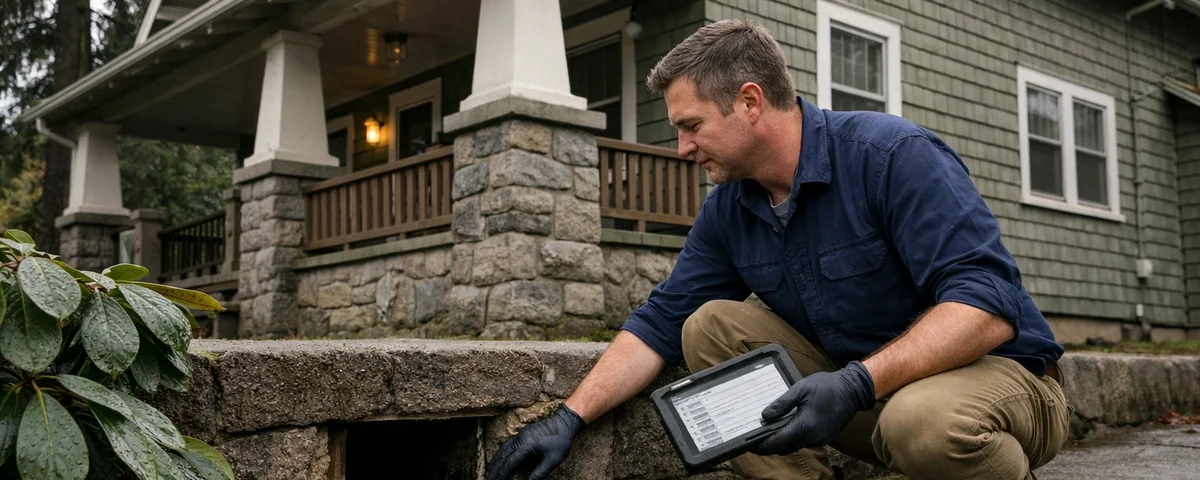
Portland, Oregon — A buyer examines the foundation and exterior of a classic Craftsman bungalow. The walk-through starts before you step inside.
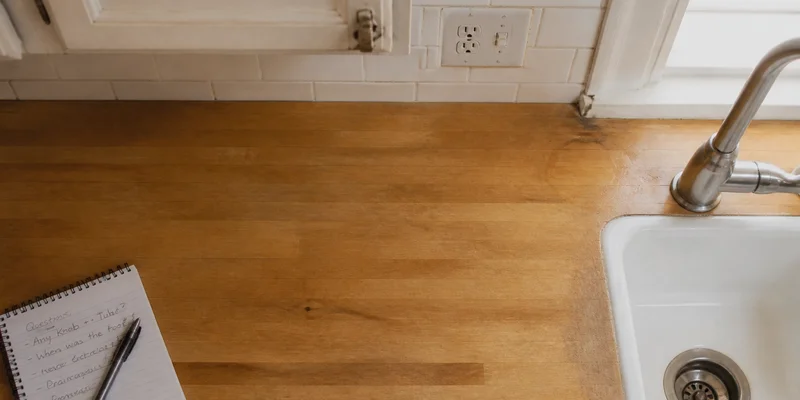
You have 30 to 45 minutes at a showing. Most buyers spend it falling in love with the kitchen counters. The buyers who do well in this market spend it gathering the information they need to make a confident decision — and they know what to look for before they walk in the door.
What Should You Look For When Touring a Home?
During a home tour, focus on the things that are expensive or impossible to change: foundation condition, roof age, water damage evidence, electrical panel type, and HVAC condition. Cosmetic details like paint, carpet, and fixtures are easy to update after closing. In Portland, add moss on the roof, crawl space moisture, oil tank history, and sump pump presence to your checklist — these are PNW-specific concerns that do not show up on generic touring guides. Take photos of everything, ask questions about systems, and treat the showing as a data-gathering session, not a final judgment.
→ Bottom line: prioritize structure, systems, and moisture over finishes — those are the decisions that affect your negotiation, your inspection, and your budget for years after closing.
I pull PortlandMaps.com before every showing for City of Portland properties. The permit history, code complaints, and past sales are all there — and they change what I look for before we even walk in the door. For Washington County and Clackamas County properties I use the county assessor and permit portals instead. That prep changes the conversation at the door.
Field note
Not pre-approved yet? Touring without financing in place limits your options fast in the Portland market — you may find a home you want but not be able to move on it. Get the financing piece sorted first. See the mortgage pre-approval guide for Oregon buyers →
A Home Tour Is Not an Inspection — Here Is What It Is
A licensed home inspector will spend three to four hours at a property after you are under contract. They will get on the roof, go into the crawl space, run every outlet, check every window, and hand you a written report. That process is thorough and it is worth every dollar.
A showing is different. You have 30 to 45 minutes, you cannot move furniture or open the electrical panel, and you are making a decision about whether this home is worth a formal offer. The goal is not to catch every defect — it is to gather enough information to understand whether the property is roughly what it appears to be, and to flag anything that needs to go directly to your inspector.
Buyers who treat a showing like a relaxed walk-through tend to miss signals that an inspector would catch later. Buyers who treat it like a scavenger hunt for problems tend to talk themselves out of every house. The right mode is somewhere in between: calm, methodical, and curious. You are gathering data, not rendering a verdict.
This guide gives you a room-by-room framework for that data-gathering. The home inspection guide covers what happens after you are under contract. Together they cover the full process from first look to formal report.
Room-by-Room: What to Check at Every Showing
Use the selector below to jump to the area you are standing in. Every panel covers the top things to check, the most common red flags, and the Portland-specific concerns that generic guides leave out. All content is in this page regardless of which tab you select — nothing is hidden from your inspector's report or your own notes.
Select a room or area:
Exterior and Foundation
The exterior walk is the most underused part of a showing. Most buyers glance at the front and move inside. Walk all four sides of the house if you can. You are looking for things that cost real money to fix.
Top things to check:
- Grading and drainage. Does the ground slope toward the house or away from it? Ground that slopes toward the foundation is a moisture invitation. Look for low spots against the foundation, compacted soil, and downspout extensions that dump water next to the foundation wall.
- Gutters and downspouts. Sagging gutters, missing sections, and downspouts that terminate at the foundation (not extended 4+ feet away) are deferred maintenance that costs $500 to $2,500 to correct and causes thousands in water damage if left alone.
- Foundation visible condition. Hairline cracks in poured concrete foundations are common and usually not structural. Horizontal cracks, stair-step cracks in block foundations, and cracks wider than a credit card warrant a structural engineer opinion, not just a standard home inspection.
- Roof condition from the street. You cannot get on the roof, but you can look for missing or curling shingles, dark staining (moss and algae), and visible sagging along the ridge line. A 25-year composition shingle roof at 20 years is a negotiation point; the same roof at 28 years is a replacement budget item.
- Siding and wood trim. Look for soft wood at window sills, door frames, and fascia boards. Press with a finger if it looks suspect. Soft wood means moisture has been there long enough for rot to set in. Repainting costs a few thousand dollars; repairing rot plus repainting costs significantly more.
Portland-specific: Moss on the roof is so common in Portland that buyers often dismiss it. Moss holds moisture against shingles and shortens roof life by years. A roof with heavy moss needs a cleaning assessment and possibly an adjusted life expectancy conversation with your inspector. Budget for it explicitly when you are reviewing the inspection report.
Kitchen
The kitchen is where most buyers spend most of their emotional energy at a showing. Appliances, counters, and cabinet style are cosmetic decisions you can change. Focus instead on the things behind and beneath those finishes.
Top things to check:
- Under the sink. Open the cabinet and look at the base of the cabinet interior. Soft flooring material, staining, or a musty smell indicates past or current leaks. Look at the supply lines and drain connections directly. Braided stainless supply lines are good. Corrugated plastic or old rubber lines are a replacement flag.
- Cabinet condition and function. Open and close every cabinet and drawer. Drawers that stick badly, doors that don't close flush, and hinges that have pulled away from the cabinet face are signs of either settling, moisture swelling, or years of deferred maintenance. Minor — but they tell you something about how the home was cared for.
- Backsplash and tile grout. Cracked, missing, or deeply stained grout around the sink and counter is a moisture point. It looks cosmetic but grout integrity prevents water from reaching the substrate behind the tile.
- Dishwasher and appliance function. If the seller is leaving appliances, run the dishwasher if possible (30-second cycle). Pull it forward slightly if you can to look for floor damage underneath — dishwasher leaks are common and damage the flooring and subfloor.
- Ventilation. Is there a range hood? Does it vent to the outside or recirculate? Recirculating hoods are common in older Portland homes and not a defect, but they handle grease and smoke less effectively. No ventilation at all is a moisture flag over time.
Portland-specific: Many Portland homes from the 1940s through 1980s have had multiple kitchen remodels over the decades. That means you may be looking at a 2015 cabinet install over a 1970s subfloor over a 1945 joist system. Inconsistent flooring height between the kitchen and adjacent rooms can signal a remodel layered on top of an existing floor rather than replaced all the way down.
Bathrooms
Bathrooms concentrate water, humidity, and drainage in a small space. They show deferred maintenance more clearly than almost any other room. Spend more time here than feels comfortable.
Top things to check:
- Tile and caulk at tub and shower surrounds. Press on the tiles around the tub perimeter. They should be solid. Soft tiles, tiles that flex when pressed, or missing caulk at the tub-wall joint are signs of water intrusion behind the wall. Full surround replacement runs $2,000 to $6,000 depending on scope.
- Floor at the base of the toilet. Soft flooring around the toilet base means the wax ring has been leaking, possibly for a long time. It is a subfloor repair, not just a toilet repair. Press gently with your foot near the toilet base — it should feel solid, not give or flex.
- Exhaust fan. Turn it on. Does it run? Does it vent to outside (check if you can see a vent cap on the exterior or in the attic space)? Bathrooms vented into the attic are a code issue in most jurisdictions and cause attic moisture problems over time.
- Water pressure and drain speed. Run the faucets. Is the pressure acceptable? Does the drain clear immediately or does it back up slowly? A slow drain is usually a clog (minor) but can signal a deeper drain line issue.
- Signs of past mold. Look at the ceiling, especially in the corners and near the light fixture. Bathroom ceilings that have been painted over repeatedly to hide mold often have a slightly lumpy texture in the corners. It is not always visible but worth looking at closely.
Portland-specific: Older Portland homes often have one full bathroom for the entire house, sometimes added as a later conversion. Look at whether the bathroom configuration makes practical sense for the number of bedrooms — and whether the plumbing stack serving it is accessible for future repairs.
Basement and Crawl Space
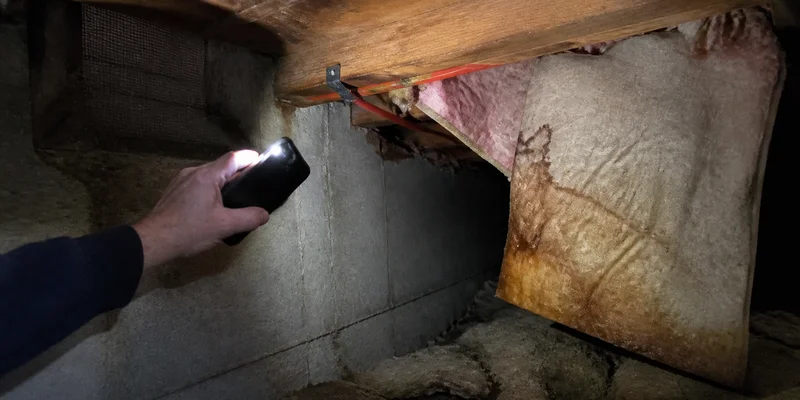
This is the section where most buyers rush, and where the most expensive surprises hide. If the home has a basement or crawl space, take your time down there. Bring your phone flashlight.
Top things to check:
- Moisture staining on walls and floor. White mineral deposits (efflorescence) on concrete walls mean water has been pushing through the concrete. Active staining is different from old staining — old staining that is dry may indicate a problem that was corrected. Active damp areas on the floor or walls mean water is still moving through.
- Sump pump presence and condition. Many Portland-area homes in low-lying areas or with high water tables have sump pumps. If there is one, does it look maintained? Is there a backup battery system? A sump pump that has been running for years is not a defect — it is a feature — but you need to understand what you are taking on.
- Insulation condition. Insulation that has dropped away from the floor joists above, or insulation that is stained, compressed, or shows signs of pest activity, is a flag. In crawl spaces, insulation should be vapor barrier-covered and in contact with the subfloor above.
- Structural members. Look at the floor joists and beam supports. Is there evidence of prior repairs (sistered joists, new wood bolted next to old)? Sistered joists are not always bad — sometimes they reflect a permitted repair. But they warrant a question to the listing agent and a flag for your inspector.
- Pest evidence. Mud tunnels on foundation walls or floor joists are subterranean termite sign. Sawdust-like material beneath joists (frass) can indicate wood-boring beetles or carpenter ants. Both are common in PNW homes. Get a pest inspection if you see either.
Portland-specific: Crawl spaces in Portland are more common than full basements in the older residential stock. They are also the most likely location for moisture issues, old plumbing, and deferred insulation work. Ask whether the crawl space has been encapsulated. An encapsulated crawl space (vapor barrier sealed and conditioned) is a significant upgrade over a vented crawl space in terms of moisture control and energy performance.
Attic, Roof, and Mechanicals
You cannot get on the roof at a showing. You may or may not be able to access the attic. What you can do is gather information that will direct your inspector's attention — and ask the listing agent direct questions about system ages.
Top things to check:
- Attic access. Find the hatch. Can you see into the attic at all? Look for daylight (none is good — daylight means a gap in the roof deck), insulation depth, and any visible staining on the sheathing (brown staining indicates past or present roof leak). You do not need to go in, but a 10-second look with your phone flashlight tells you something.
- Water heater age and type. Find the water heater. The manufacture date is on a label on the side or stamped in the serial number. Standard tank water heaters last 10 to 15 years. A 12-year-old water heater is not a defect but it is a near-term replacement budget item ($1,200 to $2,500 installed depending on type). Tankless water heaters last longer but cost more to replace.
- HVAC age and condition. Look at the furnace and any air handling equipment. The manufacture date is on a label inside the unit. Furnaces last 15 to 25 years depending on maintenance. A 20-year-old furnace that has been regularly serviced is different from a 20-year-old furnace with no service records. Ask the listing agent directly: when was it last serviced?
- Ductwork visible condition. If ducts are exposed in the basement or crawl space, look for disconnected sections, flex duct that has collapsed, and silver tape repairs on top of previous repairs. Leaky ductwork is a real efficiency loss and an air quality issue.
- Chimney condition if present. Look at the chimney from the exterior (visible crumbling, gaps at the flashing where it meets the roof) and from the inside (is the damper present and operational, is the firebox intact). Wood-burning fireplace inspections are a specialty item — flag it for your inspector.
Portland-specific: Many Portland homes have gas furnaces serving radiant baseboard systems or forced air systems that were converted from oil heat decades ago. If the home was ever on oil heat, ask about the oil storage tank history. See the PNW-Specific section below for the full oil tank discussion.
Electrical and Plumbing
Electrical and plumbing are the two systems most likely to produce expensive surprises after closing. You cannot test everything at a showing, but you can identify the warning signs that tell your inspector where to look.
Top things to check:
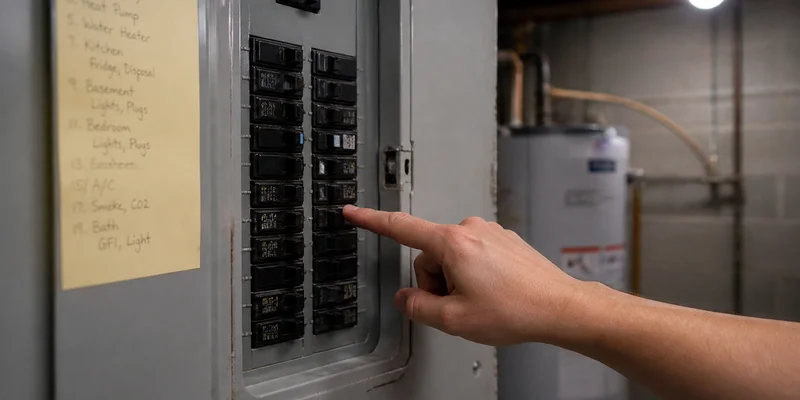
- Electrical panel brand and type. Find the main panel and open it. Federal Pacific Electric (FPE) Stab-Lok panels and Zinsco panels are two brands with documented safety issues that insurance companies sometimes refuse to cover or require replacement before issuing a policy. Both were common in Portland homes built from the 1950s through the 1980s. The brand name is on the panel face or inside the door. This is worth knowing before you fall in love with the house.
- Panel amperage. A 100-amp main breaker is adequate for most single-family homes. An older 60-amp main is a limitation if the home has electric heat, EV charging, or central air conditioning. Upgrading service from 60 to 200 amps runs $2,000 to $5,000 including permits.
- Outlets: two-prong vs. three-prong. Two-prong outlets throughout the home indicate the electrical system has not been updated to include grounding. Not a code violation in an existing home, but a common buyer concern and a renovation item if the buyer wants to run modern equipment safely.
- Water supply pipe material. If you can see supply lines in the basement or utility areas, note the material. Copper is the gold standard. PEX is modern and acceptable. Galvanized steel was standard in homes built before the 1960s and corrodes from the inside — reduced water pressure throughout the home is often the first sign. Polybutylene (gray plastic pipe installed in the 1970s-90s) is a known failure material and was the subject of class action litigation.
- Visible plumbing repairs. Look for SharkBite fittings (push-to-connect fittings that DIYers use for quick repairs), drain lines that have been jury-rigged with multiple angles and connectors, and supply lines that have been repaired in visible spots without addressing the surrounding pipe condition.
Portland-specific: Portland's older residential stock (pre-1960) frequently has a mix of original galvanized supply lines, later copper additions, and modern PEX repairs added over decades. It is common to see all three materials in the same basement. Your inspector will assess the overall system condition; your job at the showing is to note the visible mix and flag it.
The First 60 Seconds Inside
Before you open a single cabinet or look at a single room, pause at the entry for 60 seconds. Your senses will give you information that the rest of the walk-through may not.
Smell. A house that has been freshly painted and has candles burning on every surface is not automatically suspicious — but it is worth noting. Musty or mildew smell at the entry, especially on a dry day, points toward moisture in the basement, crawl space, or walls. Pet odor is a cosmetic problem. A chemical smell can indicate recent product use. All of these are data points, not verdicts.
Light and shadows. Natural light is one of the few things you genuinely cannot change about a house without major expense. Take in the light direction, the window size, and whether the home feels naturally bright or dark. Visit in different light conditions if you tour twice.
Floor feel underfoot. Walk slowly from the entry into the first room. Does the floor flex noticeably as you step? Squeaking is common in older Portland homes and usually minor. Significant flexing under foot — especially near exterior walls or around the perimeter — can indicate subfloor issues or floor joist problems at the foundation connection points.
Ceiling texture and staining. Look up in every room. Water stains on ceilings range from historic and dry (a leak that was repaired years ago) to active (a current problem). Dark rings with lighter centers are often old. Soft, bubbled drywall or fresh paint on a ceiling that is otherwise unpainted is a flag worth flagging for your inspector.
What to Photograph and Document
Take more photos than you think you need. You will not remember what you saw in the third bedroom at the third house of the day. Your phone camera will.
A useful documentation strategy has two layers: photos of what looks good (so you remember why you were interested) and photos of everything that raised a question (so you can discuss them with your agent and inspector).
Always photograph:
- The electrical panel, open, showing the breaker layout and any labels inside the door
- The water heater label (manufacture date and model)
- The furnace label (make, model, and manufacture date)
- Any visible water staining on ceilings, walls, or below sinks
- The crawl space or basement if you can access it
- The exterior foundation on all four sides
- The roof from the street (zoom in on any shingle condition or moss growth)
- Any areas of soft wood, damaged trim, or deferred exterior maintenance
If you write anything down (and you should — bring a notebook or use your phone notes), capture the address, the date, and a one-line summary of what you thought of the home overall. Three houses in, they start to blur together. Your notes are the record that keeps them distinct.
Your agent can help you interpret what you photographed before you submit an offer. The photos also become useful context when you are reviewing the inspection report — if the inspector mentions an issue you did not notice at the showing, the photos confirm whether it was visible or newly discovered.
Cosmetic vs. Structural — Why the Difference Drives Your Negotiation
This distinction determines what you can reasonably ask for after an inspection, and what you need to budget for yourself.
Cosmetic issues are changes you choose to make based on taste or preference. Carpet color, paint, light fixtures, dated tile, old appliances you plan to replace, and landscaping all fall here. Sellers are rarely obligated to address cosmetic items, and asking them to is usually a negotiation distraction. Budget for these separately from the purchase price discussion.
Structural and system issues are material defects that affect the function, safety, or value of the home. Foundation cracks that are actively moving, roof failures, major electrical hazards, sewage backups, and significant moisture intrusion fall into this category. These are negotiating points — either a price adjustment, a repair credit, or a seller repair before closing.
The gray zone is where most showing observations land. A 20-year-old furnace that runs perfectly is not a defect, but it is near end of life. A roof with five years of remaining life is not failing, but it is a known near-term capital expense. Galvanized supply lines that still deliver reasonable pressure are not an emergency, but they will eventually need to be replaced. Your agent can help you think through which of these warrant a negotiation conversation and which are simply part of buying an older home.
When you are ready to go deeper on the negotiation side of this, the making a competitive offer guide covers how structural findings from an inspection affect offer strategy, repair requests, and credits at closing.
Questions to Ask the Listing Agent at Every Showing
The listing agent represents the seller, not you. They are required to disclose known material defects in Oregon — but they are not volunteering information that could complicate the transaction. Asking direct questions is your job. Your agent should be with you to ask them and to interpret the answers.
These five questions apply to almost every showing:
- "How old is the roof, and when was it last serviced or inspected?" A seller who knows the roof age knows the roof. A seller who does not know is either uninformed or avoidant. Both are data.
- "Are there any known water intrusion events in the history of the home?" Oregon disclosure law requires sellers to disclose known defects. This question makes the disclosure direct and explicit.
- "When were the furnace and water heater last serviced?" Service records indicate a maintained home. No records on a 15-year-old furnace is a flag.
- "Has there ever been an oil storage tank on this property?" Ask this for any Portland-area home built before 1980. See the PNW section below for why this matters.
- "Are there any active permits or recent unpermitted work?" Unpermitted work — especially structural, electrical, or plumbing work — can complicate financing, insurance, and future resale. Oregon requires sellers to disclose known unpermitted work, but buyers should ask directly.
If you are in the City of Portland, PortlandMaps.com answers several of these questions before you even ask. Pulling the permit history before the showing lets you walk in knowing whether permits were pulled for recent work — and whether they were finaled.
PNW-Specific Concerns Portland Buyers Need to Know
Generic home touring guides are written for the national median house. Portland buyers are looking at a specific combination of climate, building era, and regional history that produces concerns those guides skip entirely. Here are the ones that come up most often in the Portland market.
Moss on the roof. Portland's climate makes moss growth almost inevitable on any roof with shade. Moss is not immediately catastrophic, but it holds moisture against shingles, lifts the edges of shingle tabs, and significantly reduces roof lifespan. A roof with heavy moss growth should be cleaned before you can assess its actual remaining life. Budget $300 to $800 for a professional cleaning and treatment, and have your inspector assess the shingle condition underneath.
Underground oil storage tanks. From roughly 1920 to 1975, heating oil tanks were buried in the yards of Portland homes. When natural gas became available, many tanks were abandoned in place. An abandoned tank may have leaked — and a leaking tank creates an environmental liability that can cost tens of thousands of dollars to remediate. Ask the listing agent directly about oil tank history. Order an oil tank sweep (ground-penetrating radar search, typically $200 to $350) as part of your due diligence if the home was built before 1975 and has any history of oil heat. The Oregon Department of Environmental Quality maintains a database of known petroleum-contaminated sites.
Crawl space moisture and vapor barriers. Portland's wet winters mean crawl spaces take moisture abuse for six months of every year. A crawl space without an adequate vapor barrier and proper venting is a moisture problem that leads to mold, wood rot, and pest attraction over time. When you are in the crawl space or basement, look for a continuous vapor barrier on the ground and check whether the vents are operable and positioned appropriately.
Sump pumps. Homes in low-lying areas, near the Willamette and its tributaries, and in neighborhoods with high water tables may have sump pumps. This is not a defect — it is a feature that handles a known condition. What matters is whether the pump is functional, maintained, and whether there is a battery backup for when power goes out during a winter storm. If a sump pump exists, ask how frequently it runs and whether the basement has ever flooded despite the pump.
Sewer scopes. Portland has a combined storm and sanitary sewer system in many older neighborhoods. The private sewer lateral (the pipe connecting your home to the city main) is the homeowner's responsibility. Root intrusion from Portland's mature tree canopy is extremely common in clay or cast iron sewer lines. A sewer scope inspection ($150 to $350) should be standard due diligence on any Portland home built before 1975. Your inspector may offer it as an add-on, or you can order it separately.
For a City of Portland property, pull the PortlandMaps.com report before your offer. For Washington County properties (Beaverton, Hillsboro, Tigard, Tualatin), use the Washington County Assessment and Taxation portal. For Clackamas County (Lake Oswego, West Linn, Milwaukie), use the Clackamas County Assessor. These resources show permit history, ownership chain, and tax records — all useful before you submit an offer.
When This Guide Does Not Apply
New Construction and Builder Model Homes
If you are touring a builder model or a newly constructed spec home, most of what is in this guide applies differently. New construction has its own set of buyer protections, warranty obligations, and negotiation dynamics. The cosmetic vs. structural distinction still matters — but the risks shift. Workmanship issues, grade and drainage on a freshly landscaped lot, and HVAC commissioning are the things to focus on.
More importantly, when you are negotiating with a builder, you are negotiating with a company that sells homes every day. Your agent's experience with builder contracts and upgrade negotiations is especially valuable there. That is a different conversation from buying a resale home — and it deserves its own guide. In the meantime, the full home buying roadmap covers the broader process for both new construction and resale buyers.
Frequently Asked Questions
What are the most important things to look for when touring a home?
Prioritize structure and systems over finishes. The most important things to assess are foundation condition, roof age and moss or shingle damage, signs of water intrusion in ceilings and basements, electrical panel brand and amperage, water heater and furnace age, and crawl space or basement moisture evidence. These are the items that are expensive to fix and impossible to ignore after closing. Cosmetic details — paint, carpet, fixtures, dated tile — are easy to change later and should not drive your go/no-go decision at the showing. In Portland, add oil tank history, sewer scope, and crawl space vapor barrier to your baseline checklist.
What are the biggest red flags to watch for at a home showing?
The red flags that matter most are: visible foundation cracks wider than a credit card or horizontal in orientation; water staining on ceilings or walls that looks active or was recently painted over; soft wood at window sills, door frames, or fascia boards; a Federal Pacific Electric (Stab-Lok) or Zinsco electrical panel; galvanized supply lines throughout the home combined with low water pressure; and evidence of moisture in the crawl space or basement (efflorescence, dropped insulation, or a musty smell). Any one of these is a conversation with your agent and a flag for your inspector, not necessarily a reason to walk away.
Should I take notes during a home tour?
Yes — and most buyers underestimate how useful notes become. By the third house of the day, details blur together. Your notes are the record that keeps each property distinct. Write the address, the date, a one-line overall impression, and anything you photographed or questioned. Photos of the electrical panel, water heater label, and any staining are especially useful later when you are reviewing an inspection report or comparing two properties. Your agent can help you interpret what you noted before you submit an offer.
What questions should I ask at a home showing?
The five questions that apply to almost every showing are: How old is the roof and when was it last serviced? Have there been any known water intrusion events? When were the furnace and water heater last serviced? Has there ever been an oil storage tank on the property? Are there any active permits or known unpermitted work? Your agent will be present and can ask follow-up questions based on the answers. In Oregon, sellers are required to disclose known material defects — asking directly makes the disclosure explicit and on the record.
How do I tell if a house has water damage?
Look for rings or staining on ceilings, especially in corners and near exterior walls. Look beneath every sink cabinet for soft flooring material or staining at the base. Press on the tiles around tub and shower surrounds — they should be solid. Check the floor around the base of every toilet for soft or springy flooring. In the basement or crawl space, look for efflorescence (white mineral deposits on concrete walls) and any soft or discolored insulation. Water damage is rarely completely hidden — it almost always leaves a physical trace. Smell is also a useful guide: a musty odor in a basement or crawl space on a dry day indicates moisture has been there long enough to grow mold.
What is PortlandMaps.com and how do I use it before a showing?
PortlandMaps.com is the City of Portland's public property information portal. Before a showing on any City of Portland property, you can look up the permit history (including whether permits for recent work were pulled and finaled), past code complaints, property tax records, zoning, flood zone status, and ownership history. This takes about five minutes and changes what you pay attention to when you walk in. If permits for a recent bathroom remodel were pulled but never finaled, that is a question you want to ask before making an offer — not after. For properties outside the city limits, use Washington County Assessment and Taxation or the Clackamas County Assessor equivalent.
What PNW-specific things should Portland buyers watch for that other guides miss?
Four items are specific to the Portland market and rarely appear in national buying guides. First, underground oil storage tanks: homes built before 1975 that were ever on oil heat may have an abandoned tank in the yard, which creates environmental liability. Order an oil tank sweep during due diligence if you are unsure. Second, roof moss: Portland's climate makes moss almost inevitable, and it shortens roof life — have your inspector assess shingle condition under any moss growth. Third, crawl space moisture and vapor barriers: wet winters are hard on crawl spaces, and inadequate vapor barriers lead to mold and wood rot over time. Fourth, sewer lateral condition: root intrusion from Portland's mature trees is extremely common in pre-1975 clay or cast iron sewer lines. A sewer scope ($150 to $350) should be standard practice on older Portland homes.
Ready to Tour?
What did you see at that showing?
Every home tour raises questions that are specific to that property and that buyer's situation. If you saw something that gave you pause — or if you want to talk through whether a home you toured is worth a formal offer — reach out. That conversation is exactly what I am here for.
Homes for Sale in the Portland Metro
Browse current listings across the Portland metro area.
Data verified: May 2026
- PortlandMaps.com — City of Portland permit history, code complaints, property records, and zoning
- InterNACHI (nachi.org) — National Association of Certified Home Inspectors, Oregon-affiliated inspector credential verification and inspection standards
- Washington County Assessment and Taxation — Property records, assessor data, and permit history for Washington County properties
- Multnomah County Assessor — Property tax records and ownership history for Multnomah County
- Oregon Department of Environmental Quality — Underground storage tank program and petroleum-contaminated site registry
- CFPB: Your Home Loan Toolkit — Consumer Financial Protection Bureau home buyer education resources
- Consumer Reports — Home inspection and home buying guidance for consumers
- NAR 2024 Profile of Home Buyers and Sellers — National Association of Realtors annual buyer and seller behavior data
The information in this post is for general educational purposes and does not constitute financial, legal, or tax advice. Consult a qualified professional for guidance specific to your situation.
Saling Homes at eXp Realty is committed to equal housing opportunity. We do not discriminate on the basis of race, color, religion, sex, handicap, familial status, or national origin.
Categories
- All Blogs (92)
- Buying a Home (34)
- Community Page (14)
- Downsizing (7)
- Home Buying Process (7)
- Homeownership (6)
- Increasing Your Homes Value (4)
- Local Events (2)
- Market Update (20)
- Mortgage Information (9)
- Neighborhood Eats and Experiences (1)
- neighborhood info (3)
- Real Estate News (14)
- Selling Your Home (19)
Recent Posts







GET MORE INFORMATION