Portland Home Inspection Guide: What to Expect and What to Negotiate
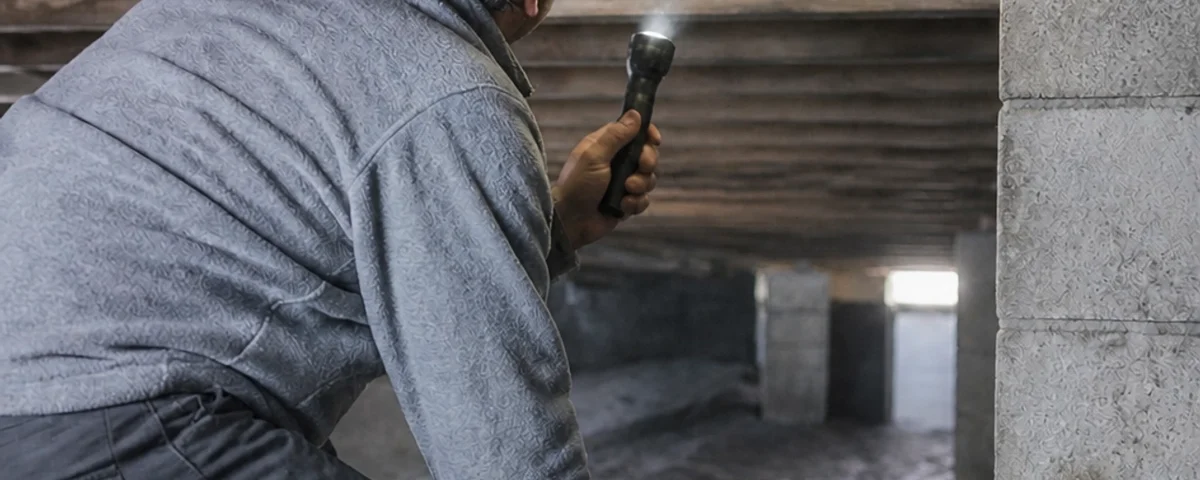
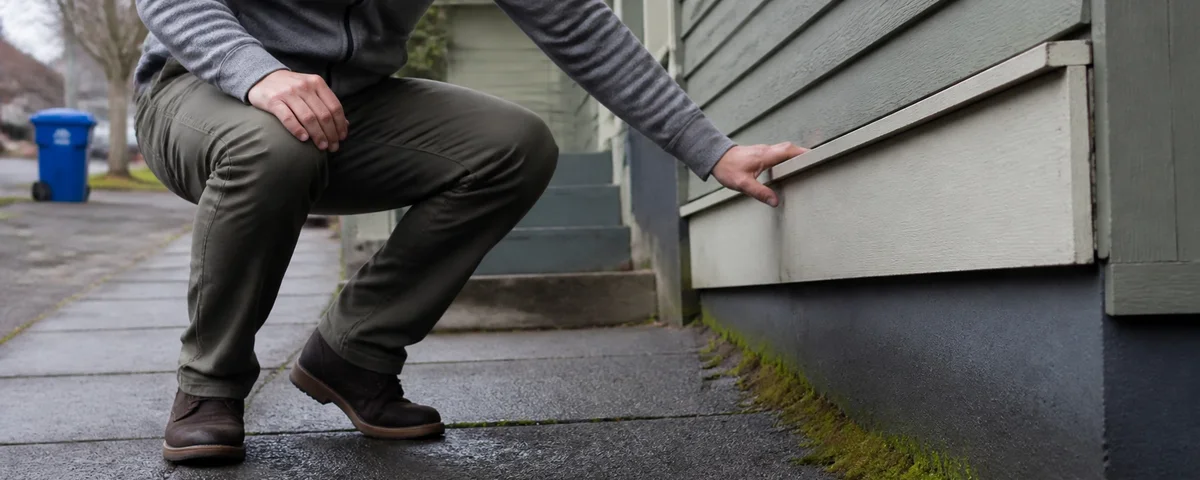
Crawlspace inspection on a 1940s Craftsman in Southeast Portland — one of the most common inspection scenarios in the city's older housing stock.
You made an offer, it got accepted, and now you have a window — typically 10 to 15 business days in Oregon — to find out exactly what you're buying. The home inspection is the most important due-diligence step in the entire purchase process. But in Portland, a standard inspection isn't always enough. This guide walks you through what to expect, what to add, and how to negotiate when the report comes back with problems.
What should Portland home buyers expect from the inspection process?
A standard general inspection in Portland runs $400 to $600 and covers the home's major systems — structure, roof, electrical, plumbing, HVAC, and more. But Portland's housing stock and climate make four additional specialty inspections worth serious consideration: sewer scope, oil tank locate, radon test, and mold or moisture assessment. Plan for a 10 to 15 business day inspection contingency window in your Oregon purchase agreement. When the report comes back, focus your negotiation energy on items over $1,500 to $2,000 — smaller items are usually not worth the seller friction they create.
→ Bottom line: in Portland, budget $800 to $1,200 for a full inspection package including specialty add-ons. It is the best money you will spend in the entire transaction.
What a Standard Home Inspection Covers
Oregon Certified Home Inspectors (OCHI) follow a defined scope of inspection that covers the major visible and accessible systems of the home. Your inspector will assess and report on all of the following:
- Structural components: Foundation, framing, visible structural members, signs of settling or movement
- Roof: Roofing material condition, flashing, gutters, visible underlayment at transitions
- Exterior: Siding, trim, grading, drainage, driveways, walkways, decks, porches
- Electrical system: Main panel, service entry, visible wiring, outlets, fixtures, GFCI protection
- Plumbing: Visible supply and drain lines, fixtures, water heater, pressure
- HVAC: Furnace, air conditioning (if present), ductwork, flue condition
- Insulation and ventilation: Attic insulation, vapor control, bathroom exhaust
- Interior: Walls, ceilings, floors, windows, doors, stairs
- Fireplace and chimney: Visible components, damper operation, firebox condition
What a standard inspection does not cover: anything behind finished walls, underground systems (sewer laterals, fuel tanks), air quality (radon, mold spores), or the full chimney flue interior. Those require specialty add-ons.
Oregon law requires inspectors to use the Oregon Real Estate Inspection (OREI) form or a form that meets or exceeds its standards. Reports are typically delivered within 24 hours of the inspection. Your inspector should walk the property with you at the end and highlight the priority items verbally before you read the full report.
Your Inspection Contingency in Oregon
Oregon's standard purchase agreement includes an inspection contingency — a defined window during which you can order inspections, review the results, and decide how to proceed. Here is how it works in practice.
Typical timeline: 10 to 15 business days from acceptance (not calendar days). Portland's competitive market sometimes pushes buyers to offer a shorter window — 7 to 10 business days is common — but going below 7 business days makes it difficult to schedule all the specialty inspections you may need.
What you can do during the contingency:
- Order the standard general inspection (usually scheduled within 2 to 3 days of acceptance)
- Order specialty inspections based on what the general inspector flags or the property's age and history
- Review all reports
- Submit a repair request, request a credit, or accept the property as-is
- Terminate the purchase agreement and receive your earnest money back if the inspection reveals conditions you cannot accept
What you cannot do: Re-negotiate price after the inspection contingency expires, unless a separate appraisal contingency applies. The inspection window is the window. Once it closes, you are proceeding in the transaction on whatever terms were agreed.
Still writing your offer? The length of your inspection contingency should be part of your offer strategy. See how inspection terms factor into making a competitive offer in Portland →
The repair request process: After reviewing all inspection reports, your agent submits a written repair request to the seller. In Oregon, this is typically a list of items with a requested remedy — repair before closing, a seller credit at closing, or a price reduction. The seller can accept, counter, or decline. If no agreement is reached, you have the right to terminate and receive your earnest money back (if you are still within the contingency window).
The repair request is a negotiation, not a demands list. How it is framed matters as much as what is on it. Agents who have done this hundreds of times know which items sellers typically respond to and which ones create friction without moving the needle. That is exactly where having the right representation changes the outcome. For more on how the buying process works from offer through close, the full home buying roadmap walks through each stage.
Portland-Specific Inspections You Should Add
A standard general inspection is the baseline. But Portland has four specific conditions that appear regularly enough in local transactions that skipping the relevant specialty inspection is a meaningful risk. The type of inspection you need depends on the home — its age, construction type, location, and what the general inspector flags.
Select the inspection type most relevant to your situation:
Sewer Scope Inspection
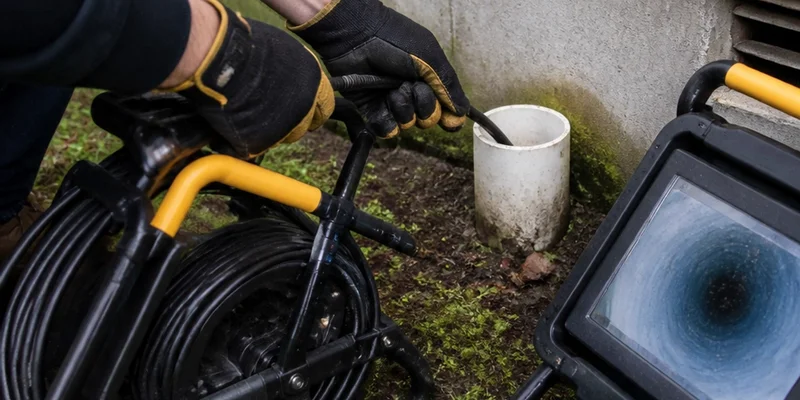
What it is: A camera is fed through your cleanout access point and down the sewer lateral — the pipe that runs from your house to the city main. The inspector records footage and identifies root intrusion, pipe bellies (sags where water pools), cracks, offsets, and deterioration.
Why Portland specifically: The city's older housing stock is full of clay and cast-iron lateral lines, especially in pre-1960 homes across inner SE, NE, N, and North Portland. Tree roots in Portland's mature urban canopy — and that canopy is extraordinary — find clay pipe joints and grow into them over decades. Root intrusion is the most common sewer scope finding in Portland transactions.
Cost: $175 to $275 in the Portland metro. Add-on to a standard inspection or ordered separately. Takes 45 to 90 minutes.
When to order it: Any home built before 1980. Any home with large trees close to the house. Any home the general inspector notes deferred plumbing maintenance. Any home where the seller has never had a sewer scope.
What the findings mean:
- Root intrusion (minor): Roots visible but pipe is clear and structurally intact. Often negotiable as a credit. Rooter service costs $300 to $600; hydro-jetting $400 to $800.
- Root intrusion (significant) or pipe belly: Roots blocking flow or standing water visible in the low point. Repair costs: spot repair $1,500 to $4,000; full lateral replacement $8,000 to $20,000+ depending on depth and street crossing requirements.
- Deteriorated clay (crumbling): The pipe is at end of life. Replacement conversation begins immediately.
Negotiating sewer scope findings: A clean sewer scope is worth noting in your repair request as "no findings." A significant finding (pipe belly, root intrusion requiring repair, deterioration) is negotiable. Sellers in Portland are accustomed to sewer scope findings — this is not unusual. A repair credit or pre-closing repair is the typical resolution. Note: Portland Bureau of Environmental Services' sewer lateral maintenance program has provided low-interest loans for lateral replacement; worth mentioning to the seller if they are reluctant.
Oil Tank Locate (Tank Sweep)
What it is: A technician uses a magnetometer to sweep the yard for buried metal — specifically, a decommissioned or abandoned underground heating oil storage tank. If a tank is located, the technician marks its position, estimates its size, and notes proximity to the foundation and any visible fill or vent pipes.
Why Portland specifically: Portland homes built between roughly 1920 and 1975 were frequently heated with fuel oil. When homeowners converted to natural gas, many abandoned the underground tank in place rather than decommissioning it. The tank sat, slowly rusted, and leaked. Some tanks were properly decommissioned (pumped, filled with sand or concrete). Many were not. You often cannot tell from the surface.
Cost: $125 to $200 for a locate. If a tank is found, soil sampling adds $400 to $800.
When to order it: Any home built before 1975. Any home with an old oil fill pipe (a small pipe near the foundation, often capped), a vent pipe, or any fuel oil-related equipment in the basement or mechanical room. If you see the ghost of an old burner — even if the current furnace is gas — the prior system was likely oil.
Oregon DEQ and what it means if a tank is found: Oregon's DEQ oversees underground storage tank cleanup. As of July 2025, all UST work — decommissioning, soil sampling, cleanup — must be performed by a licensed DEQ service provider (rules updated July 1, 2025 under updated OAR Chapter 340, Division 160). Sellers are required to disclose known USTs, but may genuinely not know one exists if they inherited the property after the conversion era.
What the findings mean:
- No tank found: Clean locate, no further action needed.
- Tank found, soil samples clean: Decommissioning costs $3,000 to $8,000. Negotiable as a seller credit or pre-closing decommission.
- Tank found with petroleum-impacted soil: Cleanup scope depends on how far contamination has migrated. Minor contamination: $10,000 to $25,000. Significant migration: $50,000+. This is a materially different risk profile and requires a careful negotiation or termination decision.
Negotiating oil tank findings: Portland sellers rarely refuse to address oil tank findings. It is a disclosed liability and lenders will not fund a loan on a property with known contamination. Typical outcomes: seller decommissions before closing, seller credits the estimated decommission cost, or parties negotiate a price adjustment reflecting cleanup scope. The DEQ's Your DEQ Online portal (launched January 2025) now tracks all tank reporting and cleanup status — your inspector or a licensed service provider can look up whether a property has a DEQ record.
Radon Test
What it is: A test device (typically a charcoal canister for real estate transactions) is placed in the lowest livable level of the home for 48 to 96 hours, then sent to a lab. The result is a radon concentration in picocuries per liter (pCi/L).
Why Portland specifically: Portland's radon levels are significantly above the national average. The Oregon Health Authority has found that 28% of Portland homes test above the EPA action level of 4.0 pCi/L — compared to roughly 6% nationally. The cause is geological: the Missoula floods deposited radon-releasing sediment across the Willamette Valley, and Portland's geology generates more radon than most urban areas. Eleven of Portland's 33 ZIP codes are classified as high-risk by OHA; 18 are moderate risk. Northeast Portland has the highest concentration of high-risk ZIPs. Radon testing is not required under Oregon law as part of a home sale — it is optional and buyer-initiated.
Cost: $150 to $250 for a professional short-term test. The OHA's Radon Awareness Program offers free test kits for residents in under-tested ZIP codes (check eligibility at OHA's radon ZIP code page).
When to order it: Every home purchase in the Portland metro, regardless of ZIP code classification. The OHA recommends testing all homes because radon levels vary from home to home even within the same block. A "green" ZIP code does not mean a "green" result for any specific home.
What the findings mean:
- Under 2.0 pCi/L: Below the EPA's consideration range. No action needed.
- 2.0 to 4.0 pCi/L: EPA recommends considering mitigation. Worth discussing — especially if you work from home or have young children.
- Above 4.0 pCi/L: EPA recommends mitigation. Mitigation cost: $1,500 to $3,500 for a sub-slab depressurization system, which can reduce radon up to 99%. This is a predictable, fixed-cost remediation.
Negotiating radon findings: Sellers frequently respond to radon mitigation requests because the cost is defined and bounded. Unlike a sewer scope finding where costs can escalate, radon mitigation is a known quantity. A credit or pre-closing installation is typical. If the test comes back above 8.0 pCi/L, the conversation about seller-side installation (not just a credit) becomes more reasonable — at that level, mitigation is urgent, not precautionary.
Mold and Moisture Assessment
What it is: A moisture assessment uses a moisture meter to measure moisture content in walls, floors, and ceilings beyond the general inspector's visual check. An air sampling test adds lab analysis of spore counts in the air. Together, they identify both visible and hidden mold, active water intrusion sources, and conditions likely to produce future mold growth.
Why Portland specifically: Portland's climate — wet from October through May, with cool, damp springs — creates real mold risk in crawlspaces, basements, and behind exterior walls. The Pacific Northwest mold pattern is different from warm-humid mold common in the Southeast: Portland mold is driven by persistent moisture and condensation, not heat and humidity. Crawlspace mold is the most common finding in Portland moisture assessments.
Cost: $300 to $600 for a moisture assessment. Air sampling adds $100 to $300 per sample for lab analysis. Results within 3 to 5 business days.
When to order it: The general inspector notes musty odor, visible moisture staining, or elevated moisture readings. Any home with an unencapsulated crawlspace in a lot with poor drainage. Any home where the seller has disclosed water intrusion history. Any home with a basement, especially in areas with high water table (low-lying lots near rivers or wetlands).
What the findings mean:
- Cosmetic surface mold (bathroom tile grout, small visible patches): $300 to $1,500 to remediate. Often not worth the seller negotiation — absorb the cost.
- Crawlspace mold (structural components): $3,000 to $12,000 depending on extent. Negotiable, often covered by a seller credit. Pairing with a new vapor barrier or encapsulation adds $2,000 to $8,000 and is worth doing regardless.
- Hidden structural mold (wall cavities, floor joists, subfloor): $5,000 to $30,000+. Source must be identified before remediation or it will return. Active water intrusion finding without an identifiable fix is a reason to consider terminating.
Negotiating mold findings: The outcome depends entirely on the source. Surface mold from a leaky showerhead is a minor item. Mold driven by a failed foundation drain or a roof-to-wall flashing failure is a structural water intrusion problem, not a mold problem. Treating the symptom without fixing the source is not a resolution — it is a delay. Make sure any repair credit addresses both the mold and the water source, or you are buying the problem.
How to Read the Report and What to Negotiate
Inspection reports in Oregon are thorough documents — a typical report on a 1,950-square-foot Portland home runs 40 to 70 pages with photographs. The volume is intimidating. Here is how to process it.
Reading the Report Without Panicking
Every inspection report is organized by system: roof, exterior, electrical, plumbing, HVAC, interior, insulation. Within each system, the inspector flags items as Deferred Maintenance (cosmetic or maintenance items), Monitor (watch over time), Repair or Replace (professional repair recommended), and Safety Hazard (address immediately). Focus your first read on Repair or Replace and Safety Hazard. Deferred Maintenance items on an older home are expected — they do not make the home a bad purchase.
Most Portland homes, especially those built before 1980, will have a meaningful inspection report. That is not a reflection of the home's value or your decision to buy it — it is a reflection of age. The question is not "does this report have items on it" but "which items are material enough to negotiate, and which are the normal cost of buying an older home."
The Dollar Threshold
In Portland transactions, buyers typically negotiate items that will cost $1,500 to $2,000 or more to repair. Below that threshold, most experienced agents recommend absorbing the cost rather than submitting a repair request — the friction with the seller, and the risk of the transaction destabilizing over a $600 item, is not worth it. This is not a rule written into Oregon law. It is a practical pattern built from how Portland sellers respond to repair requests.
In transactions where buyers submitted long lists of small items, I have watched sellers either reject the entire request or come back with a counter that removed everything under $1,500 anyway. A focused repair request on two or three significant items almost always lands better than a 12-item list that includes caulking and a sticky window.
Field note
What Sellers Typically Offer vs. Refuse
Not all inspection findings are equal from a negotiation standpoint. Here is how Portland sellers typically respond to the most common categories:
| Finding Type | Seller Typical Response | Notes |
|---|---|---|
| Roof near end of life (5 years or less) | Credit — usually | Sellers often prefer credit over replacement; gives buyer control of contractor |
| Deferred cosmetic maintenance | Refuses — almost always | Painting, landscaping, cosmetic patching: sellers rarely credit these |
| Active water intrusion | Negotiable | Depends heavily on identified source; crawlspace drainage vs. foundation failure are very different conversations |
| Oil tank (found, soil clean) | Credit or decommission — almost always | Lenders won't fund without resolution; sellers know this |
| Radon above 4.0 pCi/L | Credit — frequently | Predictable cost; sellers respond well because mitigation is defined and bounded |
| Electrical panel (Federal Pacific or Zinsco) | Negotiable — often credit | Known fire safety issue; many buyers require replacement before closing |
| Sewer scope (significant root intrusion or belly) | Credit — negotiable | Portland sellers are accustomed to sewer findings; repair credit is common |
| Structural deficiency (foundation cracks, failed posts) | Negotiable — sometimes refuses | Scope varies widely; seller's response depends on repair cost and their equity position |
Credit vs. Repair: Which to Request
When you have a choice, requesting a credit at closing is almost always better than requiring the seller to make the repair. A seller who repairs an item does so to sell the home — not to own it. They will choose the least expensive licensed contractor and do the minimum scope required to remove the item from the repair request. A credit gives you control: you choose the contractor, you define the scope, and you ensure it is done to your standard.
The exception is an active safety hazard. A failed smoke detector circuit, an inoperable furnace going into a Portland winter, or an active gas leak — these belong on the repair list, not the credit list, and should be resolved before closing rather than compensated with money after. How repair credits flow through to your final numbers is covered in the Oregon closing costs guide.
When to Walk Away
Most inspection findings are negotiable. Some are not. These are the scenarios in Portland transactions where the right answer is termination, not negotiation:
When Termination Is the Right Move
- Active structural compromise with no identifiable repair path. A failing foundation with ongoing settlement, no clear engineering solution, and no realistic credit amount is not a negotiation — it is a structural liability.
- Petroleum contamination with significant soil migration. If an oil tank locate reveals contamination that has migrated beyond the property boundary, cleanup scope and cost can become unpredictable. An open-ended remediation liability is different from a decommission.
- Active sewage backup discovered during inspection. A sewer lateral failure with active backflow into the home is not a credit item. The pipe needs to be replaced before closing, and if the seller cannot or will not do it, termination is usually the right call.
- Pervasive hidden mold with an unidentified water source. If a moisture assessment reveals mold throughout wall cavities and the source of water intrusion is not identifiable without opening walls, you are looking at an undefined scope. That is a different risk than a crawlspace mold finding with a known fix.
- Seller refuses all negotiation on a material finding. If the seller declines to address a finding that would cost $15,000 to $40,000 to remediate and declines a corresponding credit, you have a decision to make. Buying a known problem without compensation is rarely the right outcome.
Terminating within the inspection contingency window returns your earnest money in full. That is what the contingency is for. Using it when the situation warrants is not a failure — it is the system working exactly as designed.

Frequently Asked Questions
How much does a home inspection cost in Portland, Oregon?
A standard general inspection in the Portland metro runs $400 to $600 for a typical single-family home. Larger homes or older homes with more complex systems can run $650 to $800. Specialty inspections add to the total: sewer scope $175 to $275, oil tank locate $125 to $200, radon test $150 to $250, mold or moisture assessment $300 to $600. For most Portland buyers purchasing a home built before 1980, budgeting $800 to $1,200 for a full inspection package covering the general inspection plus two or three relevant specialty add-ons is realistic.
Do I have to be present at the home inspection?
You are not required to attend, but you should. The inspector's verbal walkthrough at the end of the inspection is one of the most valuable conversations of the entire purchase process. They will show you exactly what they found, explain the severity, and point out maintenance items that don't make the repair list but are worth knowing. Reading a 60-page report without that context is a different experience. Plan to arrive for the last hour or 90 minutes of the inspection.
Can I use the seller's inspection report from when they bought the home?
You can review it, but it is not a substitute for your own inspection. The seller's report may be several years old, does not reflect what has changed or deteriorated since they moved in, and was ordered to serve their interests — not yours. Oregon law requires sellers to disclose known material defects, and a prior inspection report can be a useful disclosure document, but always order your own inspection during the contingency period.
What happens if the seller won't make any repairs?
You have three options: accept the property as-is and proceed to closing, negotiate a price reduction or closing credit that compensates for the cost of the repairs, or terminate the purchase agreement within the inspection contingency window and receive your earnest money back. Which option makes sense depends on how significant the findings are, how much you want the property, and whether the seller's position reflects a genuine inability to address the issues or simply a negotiating stance. Your agent's read on the seller's situation and motivation matters significantly here.
How long does a home inspection take in Portland?
A standard general inspection on a typical Portland single-family home takes two to three hours. Add 45 to 90 minutes for a sewer scope if you are combining them (most inspectors can coordinate with a sewer scope company for the same day). Radon tests require the device to sit in the home for 48 to 96 hours, so the result comes several days after the inspection itself. Plan your inspection contingency timeline around the specialty tests that require lab analysis — radon and mold air sampling both have lab turnaround time that needs to fit within your contingency window.
Is a sewer scope inspection required in Oregon?
No. Oregon does not require a sewer scope as part of a standard home sale. It is optional and buyer-initiated. However, for any Portland home built before 1980 — and many built through the early 1990s — a sewer scope is strongly advisable given the city's clay lateral pipe history and mature tree canopy. A sewer lateral replacement can cost $8,000 to $20,000 or more. The $175 to $275 cost of a scope is straightforward due diligence on that risk.
How does the inspection work with a buyer's agent?
Your agent coordinates the inspection schedule, attends or reviews the report with you, helps you identify which findings are material and which are routine for the home's age, and drafts and submits the repair request on your behalf. How the repair request is framed — what is asked for, how it is prioritized, whether credits or repairs are requested — is where your agent's experience in Portland transactions directly affects the outcome. This is also part of what your buyer representation agreement covers. If you want to understand more about how that relationship works, the offer and contingency process is a good next read.
Your inspection period is the most important 10 days of the transaction.
Every home purchase in Portland is different. What specialty inspections make sense depends on the home's age, its history, and what the general inspector finds. If you want to talk through what a smart inspection strategy looks like for a specific property — before you're in the contingency window — I'm easy to reach.
Homes for Sale in the Portland Metro
Browse current listings across the Portland metro area.
Sources and Verification
- Oregon Construction Contractors Board — Home Inspector Certification (OCHI)
- Oregon DEQ — Underground Storage Tank Program (rules updated July 1, 2025)
- Oregon Health Authority — Radon Risk by ZIP Code
- EPA — Radon Action Level and Zone Maps
- Portland Bureau of Environmental Services — Sewer Lateral Information
- Consumer Financial Protection Bureau — Home Inspection Guidance
- Oregon DEQ — UST Rule Update 2025 (OAR 340, Division 160)
Data verified: May 2026
The information in this post is for general educational purposes and does not constitute financial, legal, or tax advice. Consult a qualified professional for guidance specific to your situation.
Saling Homes at eXp Realty is committed to equal housing opportunity. We do not discriminate on the basis of race, color, religion, sex, handicap, familial status, or national origin.
Categories
- All Blogs (92)
- Buying a Home (34)
- Community Page (14)
- Downsizing (7)
- Home Buying Process (7)
- Homeownership (6)
- Increasing Your Homes Value (4)
- Local Events (2)
- Market Update (20)
- Mortgage Information (9)
- Neighborhood Eats and Experiences (1)
- neighborhood info (3)
- Real Estate News (14)
- Selling Your Home (19)
Recent Posts






GET MORE INFORMATION