Oregon's 90-Day Rule on Home Sales: A Portland Buyer's Guide
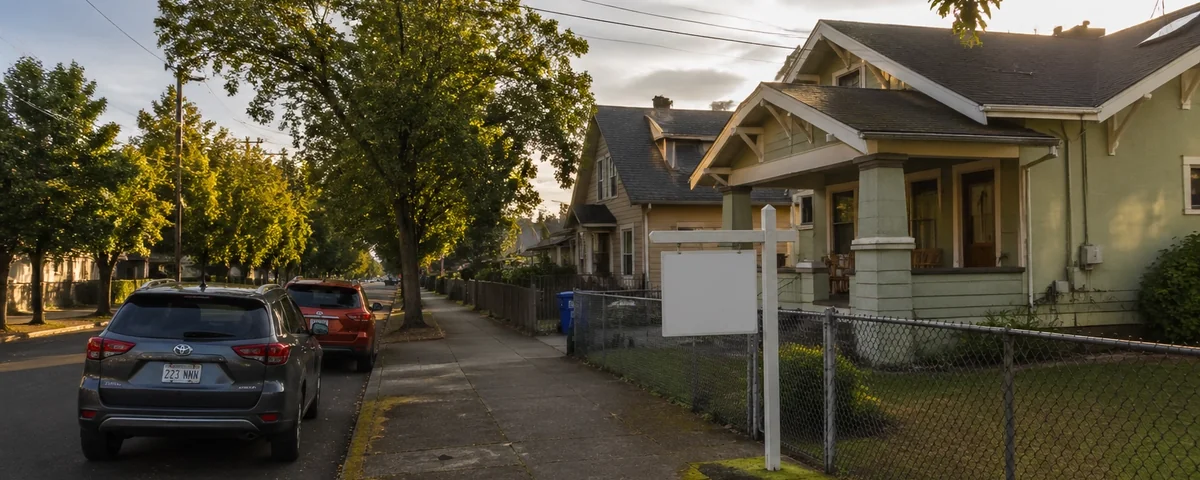
Portland, Oregon. The 90-day rule applies most directly to the entry-level price band where institutional buyers and individual buyers compete most.
If you've spent the last two years losing entry-level Portland homes to cash offers, you probably saw the news that Governor Kotek signed Oregon's new 90-day rule into law on April 22, 2026. The headlines made it sound like Wall Street just got kicked out of the Oregon housing market. The reality is more complicated, and more honest, than the headlines suggest.
What does Oregon's new 90-day rule actually do for Portland buyers?
House Bill 4128, signed by Governor Kotek on April 22, 2026, requires the largest institutional real estate investors to wait 90 days after a single-family home is publicly listed before they can purchase it or even make an offer. The rule applies only to firms that own 2,500 or more single-family homes nationwide and manage at least $1 billion in assets. Covered buyers must also submit a notarized disclosure form to the seller. In Portland specifically, the practical day-to-day impact on entry-level buyers will likely be modest, because institutional buyers were already only about 1% of the local single-family market. The bigger effect is structural: the law prevents Oregon from drifting toward the 10% institutional ownership levels seen in some Sun Belt cities.
→ Bottom line: HB 4128 is a guardrail against a future problem, not immediate relief from your current bidding war.
What the 90-Day Rule Actually Does
HB 4128 prohibits a narrow class of investors, called "covered entities," from buying or even offering on a single-family home in Oregon unless that home has been publicly listed for sale for at least 90 days. The waiting period applies to any purchase, which means off-market deals, pocket listings, and pre-list approaches to the seller are all blocked too. If the price drops during the listing window, the 90-day clock restarts.
Enforcement falls to the Oregon Attorney General. Earlier versions of the bill would have allowed private lawsuits, but those were stripped out in Senate amendments. After that change, the Oregon REALTORS shifted from opposition to a neutral position. Penalties run up to $250,000 for violating the waiting period and up to $10,000 for failing to provide the required disclosure form.
The bill also includes an emergency clause for early implementation, meaning the rule takes effect on offers made after the law's effective date rather than waiting through the standard delay between signing and enforcement. You can read the full bill text on the Oregon Legislative Information System.
Who Counts as an Institutional Buyer (and Who Doesn't)
This is where most of the headlines miss the nuance. The 90-day rule does not apply to all investors. It does not apply to most flippers. It does not apply to your neighbor who owns three rental houses. It applies only to the very largest firms.
A "covered entity" must meet both thresholds
To trigger the 90-day rule, an investor must own or hold an interest in 2,500 or more single-family homes nationwide AND manage $1 billion or more in assets, while operating as a fiduciary for pooled investor funds. Both conditions must be met. A firm with 2,500 homes but $400 million in assets is not covered. A hedge fund with $10 billion in assets but no real estate holdings is not covered.
The exemption list is also broader than the headlines suggest. Nonprofits, community land trusts, public housing authorities, creditors taking property in foreclosure satisfaction, and smaller landlords are all exempt. So are individual investors, small LLCs, and most of the local rental investors you'd ever realistically compete with on a Portland home.
That last point matters because it tells you who you were probably actually losing to. According to the most recent CNBC reporting on national investor activity, individuals who own ten or fewer properties account for over 90% of investor-owned homes. Large institutional firms make up just 2% of the investor pool nationally. The cash offers that beat you in 2024 and 2025 were almost certainly not coming from the firms HB 4128 covers.

The Portland Context: How Big Was the Problem Here?
This is where the honest math gets uncomfortable for the headline. Institutional investors have never been the dominant force in Portland's single-family market the way they are in Atlanta or Charlotte.
Portland's institutional ownership share is among the lowest in the country
Statewide, institutional investors accounted for about 4.4% of Oregon home purchases in the first quarter of 2025, down from 4.7% a year earlier. In Portland specifically, large institutional investors control only about 1% of the single-family market. By comparison, in Atlanta the figure is roughly 28% of single-family rental properties, and in Jacksonville it is 24%. Oregon has the ninth-lowest investor share of any state and the lowest of any Western state.
Sources: ATTOM Data Solutions Q1 2025; Urban Institute Profile of Institutional Investor-Owned Single-Family Rentals; Axios Portland.
The trend is moving further in buyers' favor, not the other way. As of October 2025, institutional investors had been net sellers of single-family homes nationally for six consecutive quarters. Invitation Homes, Progress Residential, American Homes 4 Rent, and FirstKey Homes, which are the four largest institutional landlords in the country, all sold more homes than they purchased in the third quarter of 2025. Their capital is shifting toward build-to-rent communities, not single-family acquisitions.
None of this means HB 4128 was a mistake. The bill's sponsor, Representative Bowman, framed it as preventive rather than reactive when he said on the House floor that Oregon should not wait until the problem becomes a Sun Belt-scale crisis. That framing is the right one. The law is a structural guardrail.
This bill matters more as a guardrail than as immediate relief. It keeps Oregon from drifting toward the Sun Belt market shares where 10% institutional ownership is normal. That is a future your kids will benefit from more than you will.
Field note

The Disclosure Form Is the Part You'll Actually See
If HB 4128 changes anything about your next Portland offer, it will most likely be the disclosure form. Covered institutional buyers must now submit a notarized disclosure to the seller, with a copy to the Oregon Department of Justice, affirming their status and confirming the home has been listed for at least 90 days.
This means that if a covered investor does bid against you, the seller will know. The seller's agent will know. Your agent will know. That is genuinely new information. Before HB 4128, an institutional offer could come in through an LLC name that revealed nothing about the buyer behind it. Now, the disclosure form makes the buyer's identity legible to everyone at the table.
Whether that information actually moves the seller's decision is a different question. Some sellers will care. Others will take the highest cash offer regardless. But the information itself is now in the room, which is more than you had before.

What Changes for Your Next Entry-Level Offer
Here is the practical translation of all of the above. If you are bidding $400,000 to $650,000 on a Portland-area entry-level home in 2026, here is what the 90-day rule does and does not change for you.
What does not change
Your competition is still mostly other individual buyers. The cash offers that have been beating first-time buyers in this price band were almost never coming from Wall Street firms in the first place. They were coming from local investors, second-home buyers, and other individuals who can move money quickly. HB 4128 does not affect any of those buyers. You will still be competing with them on offer day.
You also still need a strong, complete offer. Pre-approval, a clean inspection contingency, a realistic appraisal gap if the home is in a hot pocket, and an offer letter that actually addresses the seller's needs. None of that changes.
What does change
If a covered institutional buyer is one of your competitors, you will know it. The disclosure form makes that visible. From there, your agent's job is to use that information to position your offer as the better choice for the seller, not just on price but on certainty of close, timeline, and the human element of selling to a family rather than a fund.
You also get a 90-day head start before any covered investor can even make an offer. For homes that come on the market and sell within 90 days, which is most of them in Portland, the institutional investor competition is structurally absent. That is genuinely new.
Three things to do this week if you're actively bidding
1. Tighten your pre-approval. If you have not refreshed your pre-approval letter in the last 60 days, do it now. Lenders will refresh quickly and a current letter signals seriousness to listing agents. For a deeper walkthrough of the offer process, see our Portland home buyer's guide.
2. Ask your agent to confirm offer disclosures. If you are submitting on a home that has been listed less than 90 days, ask whether any competing offers came in with the new institutional buyer disclosure form. The information itself is leverage.
3. Check the broader Portland market context. The current Portland real estate market data will tell you whether the home you're targeting is in a fast-moving pocket or a slower one. That context shapes how aggressively you should structure your offer.
When This Rule Does Not Apply
Situations where HB 4128 will not affect your transaction
The 90-day rule does not apply to several common scenarios. It does not apply to homes that have been on the market for more than 90 days, since the waiting period has already elapsed. It does not apply if your competing buyer is below the 2,500-home or $1 billion threshold, which means most local and regional investors are unaffected. It does not apply to nonprofit buyers, community land trusts, public housing authorities, or creditors taking property through foreclosure. It does not apply to multifamily properties or condominiums regardless of who is buying. And it does not apply to off-market transactions where neither party is a covered entity, which is the most common type of off-market deal in Portland.
Frequently Asked Questions
What does Oregon's 90-day rule actually do?
HB 4128 requires institutional real estate investors that own 2,500 or more single-family homes nationwide and manage at least $1 billion in assets to wait 90 days after a single-family home is publicly listed before they can buy it or make an offer. They must also submit a notarized disclosure form to the seller. The Oregon Attorney General enforces the rule, with penalties up to $250,000 per waiting-period violation and $10,000 per disclosure failure.
Does HB 4128 stop all corporate investors from buying single-family homes in Oregon?
No. The rule applies only to the very largest institutional investors that meet both the 2,500-home and $1 billion asset thresholds. Smaller corporate investors, individual LLCs, local rental investors, and nonprofits are not covered. Most of the cash-buyer competition Portland buyers face does not come from firms that meet the covered-entity definition.
How will I know if I'm bidding against a covered institutional buyer?
Covered entities must submit a notarized disclosure form to the seller, with a copy to the Oregon Department of Justice, affirming their status and confirming the listing has been public for at least 90 days. Your agent can request confirmation that any competing offer came with this disclosure if applicable. Before HB 4128, institutional offers were often submitted through LLC names that revealed nothing about the buyer behind them.
Will the 90-day rule actually help me win bids on entry-level Portland homes?
The honest answer is that it depends on which competitors you were losing to. If you were losing to local individual investors or second-home buyers, the 90-day rule does not change anything. If you were occasionally losing to institutional firms with $1 billion-plus portfolios, the rule blocks them from bidding for the first 90 days a home is listed. In Portland, where institutional investors hold only about 1% of single-family homes, the practical impact for any individual buyer is modest.
When does the 90-day rule take effect?
HB 4128 includes an emergency clause for early implementation. Governor Kotek signed the bill on April 22, 2026, and the rule applies to offers made after the law's effective date. The Oregon Department of Justice is responsible for any rulemaking required to implement the disclosure form requirements.
Can I use the disclosure form to negotiate harder against an institutional offer?
Yes, in two practical ways. First, the disclosure makes the buyer's identity legible, which means the seller can no longer accept an institutional offer without knowing it is institutional. Some sellers care about that distinction and some do not, but the information is now in the room. Second, knowing you are competing against a covered entity shapes how your agent positions your offer on factors beyond price, including certainty of close, timeline flexibility, and the human element of who will live in the home. The disclosure does not give you a price advantage, but it does give you negotiating context you did not have before.
What kinds of properties does HB 4128 cover?
The rule applies only to single-family residences. Multifamily properties, condominiums, manufactured housing parks, and commercial real estate are not covered. The single-family scope reflects the bill's focus on owner-occupant homes rather than rental investment classes that have always been institutional territory.
Bidding entry-level in Portland this spring?
HB 4128 is one piece of a bigger picture. If you want to talk through your specific situation, including what you've been bidding on, where you keep getting outbid, and what changed in the 2026 market, I'm happy to walk through it with you. No commitment, just a conversation.
Homes for Sale in the Portland Metro
Browse current entry-level listings in the Portland metro area.
Data Sources
Data verified: April 2026
- Oregon Senate Democrats. "Oregon Senate Takes Action to Defend Homeownership Opportunities for Oregon Families." March 2, 2026. Source.
- KPTV / Oregon Newsroom. "Kotek signs 6 bills focused on lowering housing costs and making it easier to build." April 22, 2026. Source.
- KATU. "Oregon takes aim at corporate homebuying to help families compete." March 13, 2026. Source.
- Axios Portland. "Oregon investor home sales slide as housing market slows." July 9, 2025. Source.
- CNBC. "Home sales: Investors make up highest share of buyers in 5 years." October 7, 2025. Source.
- Urban Institute. "A Profile of Institutional Investor-Owned Single-Family Rental Properties." 2023. Source.
- Oregon Legislative Information System. "House Bill 4128 Overview and Bill Text." Source.
The information in this post is for general educational purposes and does not constitute financial, legal, or tax advice. Consult a qualified real estate attorney or licensed Oregon broker for guidance specific to your situation.
Saling Homes at eXp Realty is committed to equal housing opportunity. We do not discriminate on the basis of race, color, religion, sex, handicap, familial status, or national origin.
Categories
- All Blogs (92)
- Buying a Home (34)
- Community Page (14)
- Downsizing (7)
- Home Buying Process (7)
- Homeownership (6)
- Increasing Your Homes Value (4)
- Local Events (2)
- Market Update (20)
- Mortgage Information (9)
- Neighborhood Eats and Experiences (1)
- neighborhood info (3)
- Real Estate News (14)
- Selling Your Home (19)
Recent Posts








GET MORE INFORMATION