What Eastmoreland Portland Actually Feels Like
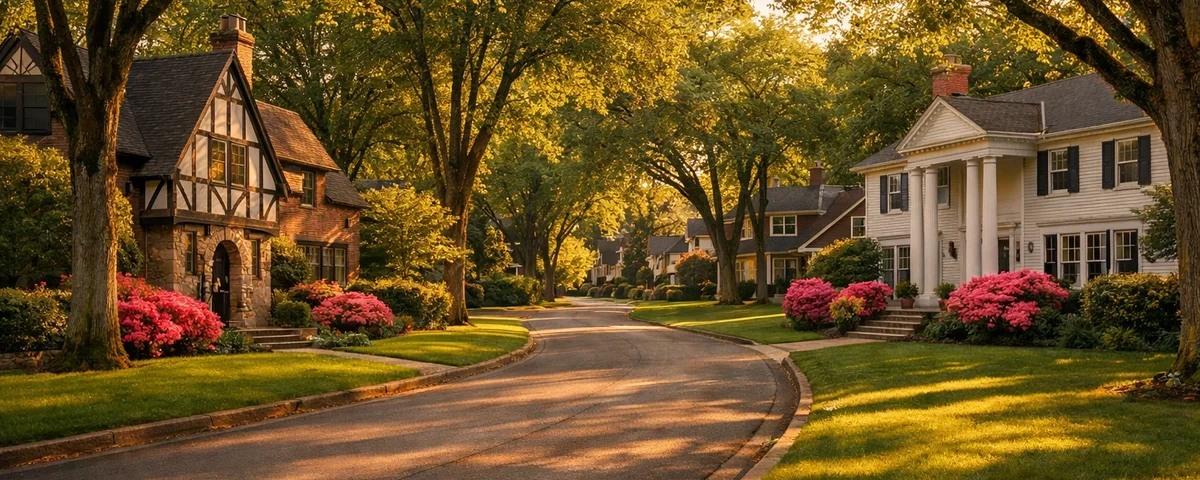
A curving, canopy-covered street in Portland's Eastmoreland neighborhood, where the east-west roads bend with the terrain instead of following a grid.
Eastmoreland is one of those Portland neighborhoods that makes you double-check which city you are in. The curving streets, the deep front yards, the canopy so thick it filters the afternoon light into something closer to a cathedral than a sidewalk. It does not look or feel like the rest of Southeast Portland, and that is entirely by design.
Listed on the National Register of Historic Places since December 2022, Eastmoreland sits about five miles south of downtown, tucked between Reed College to the north and the Eastmoreland Golf Course to the south. There is no commercial district inside the neighborhood boundaries. No coffee shops on the corner, no restaurants down the block. And for the people who live here, that is the entire point.
Is Eastmoreland Right for You?
Eastmoreland works for buyers who want architectural character, large lots, and a fully residential setting where the nearest commercial corridor is a short walk away rather than next door. Homes here generally start in the high $800s and often cross into seven figures. If you need a walkable business district at your doorstep, nearby Sellwood-Moreland or Woodstock will be a better fit. But if you want the feeling of living in a place that was planned like a park and still feels like one, Eastmoreland delivers that in a way very few Portland neighborhoods can.
Walking Eastmoreland's Streets
The first thing you notice in Eastmoreland is the street pattern. When landscape engineer Robert Greenleaf laid out the neighborhood in the early 1900s, he ran the north-south streets on a standard grid but let the east-west streets curve to follow the natural contours of the terrain. The result is a neighborhood that feels more like a planned garden than a city block. You turn a corner and the street bends away from you, lined with mature deciduous trees so tall and full that the Eastmoreland Neighborhood Association published a 246-page book documenting the canopy.
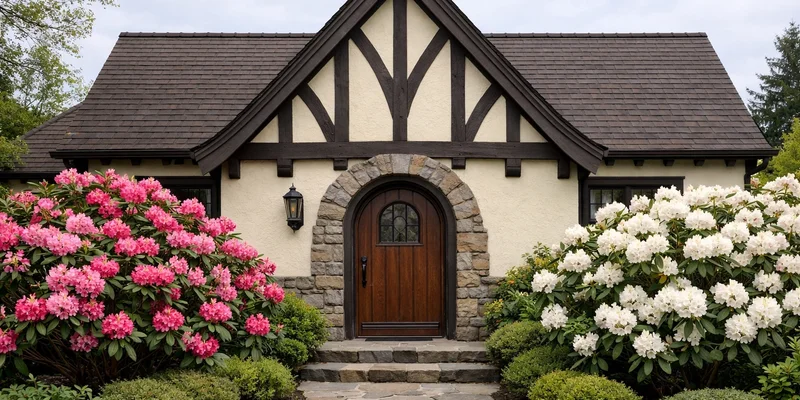
The homes sit well back from the street on oblong lots with significant setbacks. Construction eras span the 1920s through the 1940s, with architectural styles running from Tudor Revival and Colonial Revival to English Cottage, Craftsman, and American Foursquare. More than 80 percent of the structures in the historic district are considered contributing properties. The sidewalks are present throughout, the terrain rolls gently, and the overall impression is of a neighborhood that was built slowly and with intention rather than speed.
If there is one intersection that captures the neighborhood, it is SE Reed College Place near Berkeley Park. You get the canopy, the deep setbacks, the Collegiate Gothic brick of Duniway Elementary in the background, and the Reed College campus just beyond. Stand there on a weekday morning and you will hear birdsong louder than traffic.
Daily Life: Where Residents Actually Go
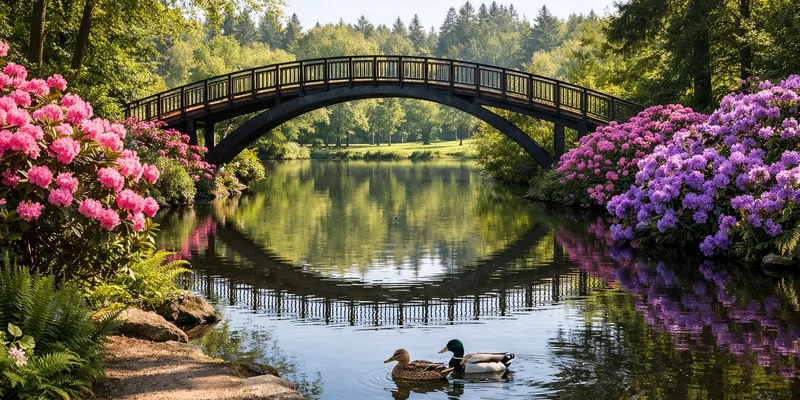
Because Eastmoreland is entirely residential, daily life revolves around the green spaces within the neighborhood and the commercial corridors just outside it. Crystal Springs Rhododendron Garden is the centerpiece: 9.5 acres of rhododendrons, azaleas, a spring-fed lake, three waterfalls, and enough waterfowl to make serious birders slow down. The garden is open year-round, dogs are welcome on leash, and peak bloom in late May turns the whole place into something you would not believe exists five miles from downtown. Berkeley Park handles the more practical side of outdoor life with tennis courts, a softball field, a playground, and a pavilion that gets steady use on weekends.
The Eastmoreland Golf Course is public, over 100 years old, and one of the most-played courses in the state. No membership required. It was originally donated by William Ladd when home sales in the new development lagged. That gamble paid off, and the course has been a neighborhood anchor ever since. Reed College hosts more than 200 public events each year: lectures, concerts, theater, and community open days. The campus itself is open to walk, and the 28-acre Reed Canyon is one of the best quiet walks in Southeast Portland.
For groceries, coffee, and restaurants, residents head to Woodstock Boulevard on the north edge (New Seasons, Otto's Sausage Kitchen, and a solid lineup of local spots) or west to Sellwood's antique row and restaurant corridor. The walk to Woodstock from most parts of Eastmoreland takes about 10 minutes. Sellwood is a similar distance heading west across the Bybee Bridge.
Schools Serving Eastmoreland
Eastmoreland is zoned to Duniway Elementary School, which sits inside the neighborhood at 7700 SE Reed College Place and carries a B-plus rating on Niche. The building itself dates to 1927, built in the Collegiate Gothic style that mirrors Reed College's architecture next door. Middle school students attend Sellwood Middle School, also rated B-plus on Niche. High school students are zoned to Cleveland High School, which holds an A-minus on Niche and offers an International Baccalaureate program.
Joe's Honest Read
Here is the thing about Eastmoreland that you will not find in a listing description: the historic district designation changes the math on what you can do with a property. Over 80 percent of the homes are classified as contributing structures, which means any demolition triggers a review process. That does not mean you cannot remodel, but it does mean the teardown-and-rebuild strategy that plays out in other parts of Southeast Portland does not work the same way here. If you are buying in Eastmoreland, you should go in with your eyes open about what that means for your specific property and your long-term plans. That is the kind of conversation worth having before you write an offer, not after.
Eastmoreland is genuinely right for buyers who prioritize lot size, mature landscaping, and a residential setting over walkable nightlife or commercial access. If your weekend priority is grilling in the backyard and walking the dog through the rhododendron garden, this neighborhood was practically designed for you. If you need a coffee shop you can walk to in your slippers, Woodstock or Hawthorne will feel more like home.
How Eastmoreland Compares
If you are looking at Eastmoreland, you are probably also looking at a few other neighborhoods in the same tier. Sellwood-Moreland is the closest comparison geographically. Similar SE Portland feel, but with its own commercial district, more housing variety, and generally a lower price point. Alameda in Northeast offers the same grand-home-on-a-hill character at a comparable price tier, but with a ridge location and better views. Laurelhurst is Portland's other National Register historic district, with a similar canopy and architectural character, but it sits closer to the Hawthorne and Belmont corridors. The decision usually comes down to whether you want your neighborhood to include its own shops and restaurants (Sellwood, Laurelhurst) or whether you specifically want the insulated, residential-only setting that Eastmoreland provides.
Explore the full guide to living in Southeast Portland or browse all Southeast Portland neighborhoods to compare options.
Frequently Asked Questions About Eastmoreland
What is the Eastmoreland Historic District and how does it affect homeowners?
The Eastmoreland Historic District was added to the National Register of Historic Places in December 2022. It includes over 1,000 contributing structures and covers most of the neighborhood. The primary practical impact for homeowners is demolition review. If you want to tear down a contributing structure, the process includes a review period. However, remodeling and interior renovations are not restricted by the historic listing. The protection level is limited to demolition review, not full design review like some other historic districts in other cities.
Are there restaurants or shops inside Eastmoreland?
No. Eastmoreland is entirely residential with no commercial district within its boundaries. Residents walk or drive to adjacent neighborhoods for dining, groceries, and errands. Woodstock Boulevard on the north edge and Sellwood to the west are the two closest commercial corridors, both roughly a 10-minute walk from most parts of the neighborhood.
How much do homes cost in Eastmoreland Portland?
Eastmoreland is one of Portland's higher-priced neighborhoods. Median sale prices have generally been in the $850,000 to $950,000 range in recent years, with larger homes on double lots or premier blocks regularly exceeding $1 million. The mix of architectural styles and lot sizes creates a range, but entry-level options below $700,000 are rare. Your agent can pull current inventory and recent comparable sales for a more specific picture.
What schools serve the Eastmoreland neighborhood?
Eastmoreland is zoned to Duniway Elementary School (K-5, located inside the neighborhood), Sellwood Middle School (6-8), and Cleveland High School (9-12). Cleveland offers an International Baccalaureate program. All three schools are part of Portland Public Schools. Niche ratings as of 2026 are B-plus for Duniway, B-plus for Sellwood Middle, and A-minus for Cleveland.
Is Eastmoreland walkable?
Within the neighborhood itself, Eastmoreland is very walkable: sidewalks throughout, low traffic volume, and flat to gently rolling terrain. The limitation is that there are no commercial destinations inside the neighborhood. For shopping and dining, you are walking 5 to 10 minutes to Woodstock Boulevard or Sellwood. Biking is also practical, with dedicated bike lanes on SE Woodstock and SE 28th Avenue. TriMet bus route 19 runs along Woodstock and connects to the Orange Line MAX station.
What is Crystal Springs Rhododendron Garden?
Crystal Springs Rhododendron Garden is a 9.5-acre public garden located between Reed College and the Eastmoreland Golf Course. It contains over 2,500 rhododendrons, azaleas, and companion plants set around a spring-fed lake with waterfalls and two pedestrian bridges. The garden is open year-round and welcomes leashed dogs. Peak bloom runs from late April through June. It was jointly established in 1950 by Portland Parks and Recreation and the American Rhododendron Society.
How does Eastmoreland compare to Laurelhurst?
Both neighborhoods are on the National Register of Historic Places and share a similar character: mature tree canopy, early 20th-century architecture, and large lots. Laurelhurst sits closer to the Hawthorne and Belmont commercial corridors and has Laurelhurst Park as its anchor green space. Eastmoreland has the golf course, Crystal Springs, and Reed College. Laurelhurst tends to have slightly faster access to inner eastside dining and nightlife. Eastmoreland offers a more insulated, residential-only setting. Price points are comparable.
Can you remodel a home in the Eastmoreland Historic District?
Yes. The National Register listing for Eastmoreland triggers demolition review, not full design review. Interior renovations, additions, and exterior updates are not subject to historic commission approval. The demolition review process applies only when a contributing structure would be torn down. If you are considering a purchase and want to understand exactly how the historic designation affects a specific property, check PortlandMaps.gov for that address to see whether the home is classified as contributing or noncontributing.
Want to See Eastmoreland in Person?
The best way to understand Eastmoreland is to walk it. I would be happy to show you the neighborhood, talk through what the historic district means for specific properties, and help you figure out whether this is the right fit for your priorities. Let's start with a conversation.
Saling Homes at eXp Realty is committed to equal housing opportunity. We do not discriminate on the basis of race, color, religion, sex, handicap, familial status, or national origin.
Categories
- All Blogs (93)
- Buying a Home (35)
- Community Page (14)
- Downsizing (7)
- Home Buying Process (7)
- Homeownership (6)
- Increasing Your Homes Value (4)
- Local Events (2)
- Market Update (21)
- Mortgage Information (9)
- Neighborhood Eats and Experiences (1)
- neighborhood info (3)
- Real Estate News (15)
- Selling Your Home (20)
Recent Posts









GET MORE INFORMATION