

OR Portland
Sellwood Moreland





Living in Sellwood-Moreland
A Willamette-adjacent pocket in the southern reach of Southeast, with Victorian and Craftsman homes, SE 13th's Antique Row, Oaks Bottom Wildlife Refuge, and the Springwater Corridor Trail.
Updated April 2026 by Joe SalingWhat Sellwood-Moreland Is Really Like
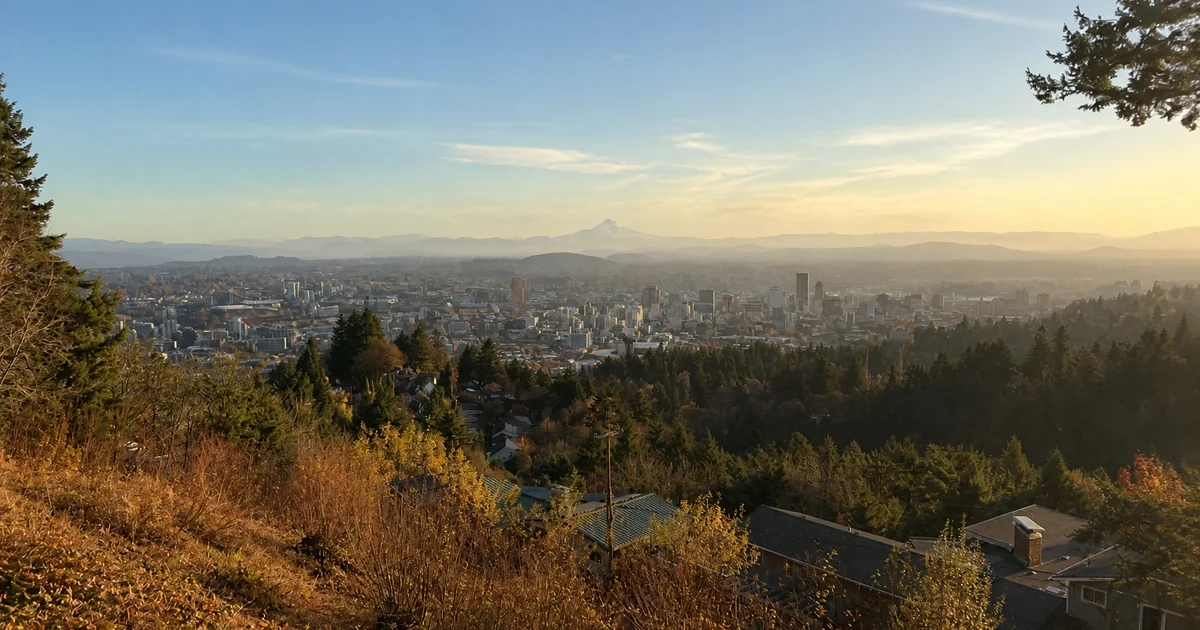
Sellwood-Moreland occupies the southernmost reach of Southeast Portland along the Willamette River, running from roughly SE Bybee Boulevard south to the Sellwood Bridge, and from the river east to SE McLoughlin Boulevard. The neighborhood is actually two historic pockets stitched together: Westmoreland in the north, centered on SE Milwaukie Avenue and Westmoreland Park, and Sellwood in the south, centered on SE 13th Avenue's Antique Row and the Sellwood Riverfront. The Willamette River forms the western boundary, and the Springwater Corridor Trail and Oaks Bottom Wildlife Refuge cut through the western edge as linear natural areas.
A weekday morning here is coffee lines at Bertie Lou's and commuters crossing the Sellwood Bridge to Lake Oswego, dog walkers on the Springwater, and MAX Orange Line riders heading to the Tacoma or Bybee stations. The SE 13th Antique Row is the neighborhood's architectural and commercial spine, lined with antique shops, bookstores, cafes, and restaurants; SE Milwaukie Avenue through Westmoreland functions as a secondary corridor with bakeries, a New Seasons, and Moreland Theater. Weekends shift toward Oaks Amusement Park and the Springwater trail, with skaters, runners, and cyclists using the waterfront path as a primary route south toward Milwaukie and Gresham.
On residential blocks you see gardeners working Victorian front porches, bike commuters heading toward the Springwater, runners looping Westmoreland Park, and weekend walkers browsing the Sellwood antique shops. The Sellwood-Moreland Business Alliance runs a strong neighborhood association, coordinating annual events like the Sundae in the Park festival at Sellwood Park and the Sellwood Moreland Farmers Market on Wednesdays in summer. The neighborhood has one of Portland's deepest block-party cultures, with consistent summer turnouts across the residential interior.
Looking for broader context on the area? Read my full Southeast Portland relocation guide for how Sellwood-Moreland fits into the wider district.
Homes and Architecture in Sellwood-Moreland
Sellwood-Moreland has some of the oldest and most architecturally diverse housing stock in Southeast Portland. Sellwood's southern pocket holds a notable concentration of late-1800s and early-1900s Victorians, Queen Annes, and Folk Victorian cottages (some of the oldest houses in the city), alongside Craftsman bungalows and foursquares from the 1910s and 1920s. Westmoreland's northern pocket skews later, with a heavier share of 1920s and 1930s English cottages, Tudors, and colonial revivals plus a layer of 1950s ranches. Lot sizes typically run 5,000 to 7,000 square feet, with some larger legacy lots in Sellwood and tighter 4,000 square foot lots in parts of the oldest blocks.
When you shop here, expect a wider spread of condition than in more uniform inner-Southeast neighborhoods. Some Victorians and Queen Annes have been meticulously restored; others retain deferred maintenance commensurate with being 100-plus years old. Kitchens and baths vary from original-era to fully remodeled, and the oldest homes may have layers of previous additions worth evaluating carefully. Competitive dynamics are strong, especially for updated Victorians on the interior Sellwood blocks and for Westmoreland homes within walking distance of SE Milwaukie Avenue. Two items worth pricing carefully: foundation conditions on pre-1920 homes (cedar post-and-pier or partial basement construction is common and sometimes needs stabilization), and older sewer laterals (cast-iron and sometimes concrete or terra-cotta on the oldest blocks).
- Victorian & Queen Anne (Sellwood)
- Craftsman bungalows & foursquares
- Tudors & English cottages (Westmoreland)
- 4,000 to 7,000 sq ft lots
- Premium for Southeast Portland
Dining, Parks, and Daily Life
A La Carts Food Pavilion
A long-running food cart pod at SE 13th and Lexington with a rotating mix of international street food, outdoor seating, and a covered pavilion. A neighborhood lunch and casual-dinner anchor that gives Sellwood its informal food scene.
Gino's Restaurant & Bar
An Italian neighborhood restaurant in Westmoreland that's been serving the area for decades, known for classic red-sauce cooking, a solid bar, and a long-regulars culture. One of several walkable dinner options along Milwaukie Avenue.
Bertie Lou's Cafe
A tiny breakfast counter on SE 13th that has been a Sellwood institution for more than 50 years. Tight quarters, strong regulars, and the kind of morning routine that marks it as a core neighborhood third place. Expect a short wait on weekends.
Oaks Bottom Wildlife Refuge & Springwater Corridor
Oaks Bottom Wildlife Refuge sits on the neighborhood's western edge along the Willamette, offering wetland trails, bird habitat, and the mural-bordered Oaks Pioneer Cemetery. The Springwater Corridor Trail runs through it, connecting Sellwood to downtown Portland north and to Gresham to the east.
Daily Errands
New Seasons Market at SE Bybee and Milwaukie Avenue anchors the neighborhood's daily grocery and pharmacy needs, walkable for most of Westmoreland and accessible by bike from Sellwood. Safeway at SE Tacoma Street covers the southern end. Sellwood Hardware on SE 13th handles everyday hardware without a drive.
Getting Around
The MAX Orange Line runs along SE 17th with the Tacoma and Bybee stations putting downtown Portland about 15 to 18 minutes away by train. By car, downtown is 15 to 20 minutes off-peak via SE McLoughlin Boulevard or SE 17th. The Sellwood Bridge connects directly to Lake Oswego and Highway 43 for west-side commutes. TriMet bus routes on Milwaukie, 17th, and Tacoma cover regional transit.
Joe's Take on Sellwood-Moreland
When buyers ask me about inner Southeast neighborhoods with distinctive character, riverfront access, and two separate walkable commercial corridors, Sellwood-Moreland is usually at the top of my list. You get some of the oldest and most architecturally interesting housing stock in the city, direct access to the Springwater Corridor and Oaks Bottom, and two separate commercial spines (SE 13th Antique Row and SE Milwaukie Avenue) that function differently. The honest trade-offs are price premium and commute distance. You pay more per square foot here than in Richmond or Woodstock, and downtown is a slightly longer drive than from inner-inner Southeast.
The housing stock and location suit buyers who want pre-war architecture with distinctive character, who value direct access to the Willamette and the Springwater Trail, and who can absorb the price premium that comes with the neighborhood's desirability. It works especially well for remote workers who use the Springwater as a daily outdoor anchor, for anyone who wants a walk-to-dinner scene on 13th or Milwaukie without the corridor density of Division or Hawthorne, and for buyers willing to own an older home with the maintenance profile that comes with it. It is less of a fit if you want new construction or a quick downtown commute.
Before you write an offer in Sellwood-Moreland, check several specifics. Pull the sewer scope on any pre-1940 home; cast-iron, concrete, and occasional terra-cotta laterals at 80 to 130 years old are common findings. For Victorians and Queen Annes, pay close attention to foundation reports; cedar post-and-pier foundations are original to many Sellwood homes and may need stabilization or partial replacement. Check for knob-and-tube wiring status for insurability. Pull the PPS school boundary at pps.net for your specific address; Sellwood-Moreland feeds different elementaries depending on block (Llewellyn and Duniway are common), and middle school assignment varies. Drive the block to evaluate proximity to the Union Pacific rail line on the east edge, which is close enough to some blocks to create train-horn sound.
Frequently Asked Questions About Sellwood-Moreland
How do home prices in Sellwood-Moreland compare to the rest of Southeast Portland?
Sellwood-Moreland prices in the premium tier of Southeast Portland. Expect to pay above Richmond, Sunnyside, Woodstock, and Reed, roughly in line with Eastmoreland and inner Northeast neighborhoods like Grant Park, and well above outer-Southeast neighborhoods. The combination of older distinctive architecture, Springwater Corridor and Oaks Bottom access, two walkable corridors (SE 13th and Milwaukie Avenue), and the Sellwood Bridge connection to Lake Oswego all push prices up. The current average sales price and active listing count are shown at the top of this page and update automatically with the market.
What are property taxes like in Sellwood-Moreland?
Multnomah County property taxes in Sellwood-Moreland run at an effective combined rate of approximately 1.3% to 2.1% of assessed value, in line with the rest of the county. Oregon Measure 50 caps assessed value growth at 3% per year, so long-held homes often pay significantly less than their market value would suggest. Because home values tend to be higher here, typical annual tax bills also run higher than the district average. Verify current rates and the specific assessment for any address you are considering at multco.us/assessment-taxation.
Which schools serve Sellwood-Moreland?
Sellwood-Moreland is served by Portland Public Schools. Most of the neighborhood feeds Llewellyn Elementary or Duniway Elementary, then Sellwood Middle School, then Cleveland High School, though specific boundaries depend on the exact address. Llewellyn and Duniway both rate among the higher-performing PPS elementary schools on GreatSchools and Niche. Portland Public Schools uses open enrollment, so residents can apply to any PPS school regardless of address, with acceptance not guaranteed at oversubscribed schools. Verify the specific address assignment with the PPS boundary finder at pps.net, since boundaries can change.
What is the housing stock like in Sellwood-Moreland?
Housing stock is predominantly pre-1940, with Sellwood holding a notable concentration of late-1800s and early-1900s Victorians, Queen Annes, and Folk Victorian cottages alongside Craftsman bungalows, and Westmoreland skewing toward 1920s and 1930s English cottages, Tudors, and colonial revivals. Lot sizes typically run 4,000 to 7,000 square feet. Amenity access includes Oaks Bottom Wildlife Refuge (160 acres along the Willamette), the Springwater Corridor Trail, Sellwood Riverfront Park, Westmoreland Park, Oaks Amusement Park, SE 13th Antique Row, and the SE Milwaukie Avenue commercial corridor.
How long is the commute from Sellwood-Moreland to downtown Portland?
Downtown Portland is typically 15 to 20 minutes by car off-peak via SE McLoughlin Boulevard or SE 17th, or 15 to 18 minutes on the MAX Orange Line from the Tacoma or Bybee stations. Peak-hour drives can push to 25 to 35 minutes. Bike commuters use the Springwater Corridor Trail along the Willamette, which runs directly to downtown along the waterfront in about 20 to 25 minutes. The Sellwood Bridge connects to Lake Oswego and Highway 43 for west-side commutes in 10 to 15 minutes off-peak.
Is Sellwood-Moreland walkable?
Sellwood-Moreland is one of the more walkable neighborhoods in Southeast Portland, with two separate commercial corridors providing different kinds of walkability. Walk Scores near SE 13th Antique Row and SE Milwaukie Avenue run in the 70s to 80s, with access to restaurants, coffee, antique shops, a bookstore, and daily services. Interior blocks score lower but still connect easily to either corridor by a short walk. The Springwater Corridor adds a protected pedestrian and bike route along the river, and the SE Umatilla and SE Claybourne neighborhood greenways handle low-stress east-west bike connections.
How does Sellwood-Moreland compare to nearby Southeast Portland neighborhoods?
Sellwood-Moreland typically prices in line with Eastmoreland directly east, above Richmond and Woodstock to the north, and well above Brentwood-Darlington further south. Eastmoreland offers larger lots on a curving grid with a more uniform architectural character, but lacks Sellwood's commercial corridors and riverfront access. Richmond has denser commercial corridors (Division and Hawthorne) but doesn't have the Willamette access or the Victorian housing stock. Westmoreland's portion prices slightly below the Sellwood-proper core. Sellwood-Moreland is the pick when a buyer specifically wants older distinctive architecture, river access, and two walkable corridors.
Can I add an ADU or short-term rental in Sellwood-Moreland?
Most Sellwood-Moreland lots are eligible for an accessory dwelling unit under Portland's Residential Infill Project rules, which allow up to one ADU on a single-family lot. The larger lots in parts of Sellwood-Moreland (especially in Sellwood proper) can support detached ADUs more flexibly than the tightest inner-Southeast parcels. A few historic-character blocks have additional review considerations. Short-term rentals require a City of Portland STR permit; Type A permits require owner-occupancy, and Type B permits (non-owner-occupied) have stricter limits and are harder to obtain. Verify both ADU eligibility and STR permit type for your specific address with Portland Bureau of Development Services (portland.gov/bds) before counting on rental income.
Thinking About Buying in Sellwood-Moreland?
I help buyers navigate Southeast Portland neighborhoods every week. Let's talk about what you need, what you can afford, and whether Sellwood-Moreland is the right fit.
Schedule a Free Consultation Or call Joe directly: (503) 910-7364Joe Saling · Saling Homes at eXp Realty · 10+ years serving Portland metro buyers and sellers
Saling Homes at eXp Realty is committed to the principles of the Fair Housing Act and Equal Housing Opportunity. Licensed in the State of Oregon. Information deemed reliable but not guaranteed. Verify all data independently before making real estate decisions.
MY BLOGS

MARKET TRENDS

HOUSING DETAIL
NEARBY SCHOOL & BUSINESS
1634 SE SPOKANE ST, Portland, OR 97202
Single Family Home 4 Beds 3.1 Baths 3,136 SqFt
Listed by Redfin
8535 SE 15TH AVE, Portland, OR 97202
Single Family Home 3 Beds 2 Baths 1,993 SqFt
Listed by John L. Scott Portland Central637 SE LINN ST #E, Portland, OR 97202
Townhouse 2 Beds 2.1 Baths 1,775 SqFt
Listed by eXp Realty, LLC944 SE SHERRETT ST, Portland, OR 97202
Single Family Home 3 Beds 2.1 Baths 2,350 SqFt
Listed by Premiere Property Group, LLC1622 SE HARNEY ST, Portland, OR 97202
Single Family Home 3 Beds 2 Baths 2,498 SqFt
Listed by Portlandia Properties, LLC1525 SE MILLER ST, Portland, OR 97202
Single Family Home 5 Beds 3 Baths 3,932 SqFt
Listed by Oregon First1865 SE Tacoma ST #3, Portland, OR 97202
Townhouse 2 Beds 2.1 Baths 898 SqFt
Listed by Keller Williams Realty Portland Premiere2505 SE Tacoma ST, Portland, OR 97202
Multi-Family 12 Beds 7.5 Baths 4,686 SqFt
Listed by Real Estate Network Group, LLC615 SE LINN ST #D, Portland, OR 97202
Townhouse 2 Beds 3.1 Baths 2,303 SqFt
Listed by Premiere Property Group, LLC6642 SE 16TH AVE, Portland, OR 97202
Townhouse 3 Beds 3.1 Baths 1,530 SqFt
Listed by JLW Realty LLC8438 SE 21ST AVE, Portland, OR 97202
Multi-Family 3 Beds 3.1 Baths 2,189 SqFt
Listed by Knipe Realty ERA Powered1025 SE TENINO ST, Portland, OR 97202
Single Family Home 3 Beds 1.1 Baths 1,477 SqFt
Listed by Oregon First914 SE UMATILLA ST, Portland, OR 97202
Single Family Home 4 Beds 4 Baths 4,180 SqFt
Listed by Windermere Realty Trust2073 SE Harold ST #5, Portland, OR 97202
Townhouse 2 Beds 2.1 Baths 911 SqFt
Listed by Keller Williams Realty Portland Premiere8867 SE 10TH AVE, Portland, OR 97202
Multi-Family 5 Beds 4 Baths 5,499 SqFt
Listed by Berkshire Hathaway HomeServices Real Estate Professionals8867 10th Av, Portland, OR 97202
Single Family Home 5 Beds 4 Baths 4,205 SqFt
Listed by MARIE HOSKINS of BERKSHIRE HATHAWAY HOMESERVICES R E PROF
8867 SE 10TH AVE, Portland, OR 97202
Single Family Home 5 Beds 4 Baths 5,499 SqFt
Listed by Berkshire Hathaway HomeServices Real Estate Professionals2014 SE MARION ST, Portland, OR 97202
Multi-Family 4 Beds 2 Baths 1,560 SqFt
Listed by CORE, Realtors600 SE MARION ST #109, Portland, OR 97202
Condo 2 Beds 2 Baths 1,427 SqFt
Listed by Premiere Property Group, LLC5225 SE 18TH AVE, Portland, OR 97202
Single Family Home 5 Beds 3 Baths 2,439 SqFt
Listed by HomeSmart Realty Group

Coming Soon
Commute Score
Coming Soon
Coming Soon
DEMOGRAPHICS
Population:
Density:
Households:
Gender
Coming Soon
Coming Soon
Coming Soon
Coming Soon

Joe Saling
joe@sellingpdxhomes.com