

Living in Southeast Portland, Oregon
Walk east along Hawthorne Boulevard on a Saturday morning and you pass five commercial corridors, a volcano, and fifteen distinct neighborhoods before you reach the district's eastern edge at 82nd.
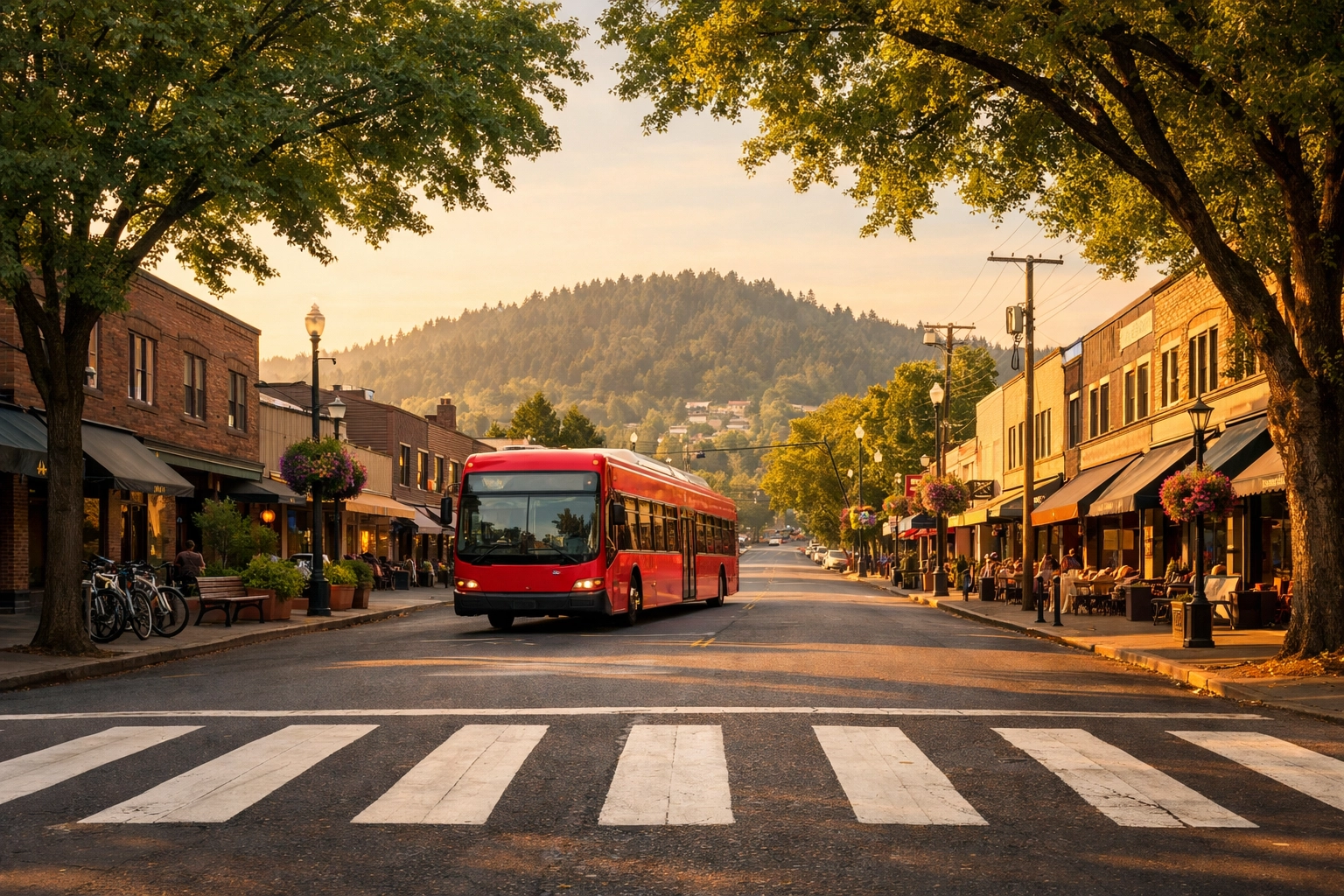
Southeast Portland — The Portland district where independent corridors, architectural variety, and price range all stretch widest
Portland's most neighborhood-dense district, where five walkable commercial corridors run east-to-west through fifteen distinct residential pockets, and prices stretch from $350K in Lents to $1.2M+ in Eastmoreland.
Updated April 2026Southeast Portland is the most neighborhood-dense district of Portland's seven, stretching from the Willamette River east to 82nd Avenue and anchored by five walkable commercial corridors – Hawthorne Boulevard, SE Division Street, Belmont Street, SE 13th Avenue in Sellwood, and Foster Road in outer SE. The district covers roughly 10 square miles of the city and contains fifteen distinct residential neighborhoods, from the 1890s Victorians of Buckman to the mid-century ranches of Lents. Most addresses are within 10 to 20 minutes of downtown Portland via the Hawthorne, Morrison, or Tilikum Crossing bridges. I've walked buyers through SE Portland enough times to know that the quadrant's signature is corridor density – every two to fifteen blocks, a new commercial strip emerges with its own identity, its own restaurant anchors, and its own architectural era.
Unlike Northeast Portland, which distributes its commercial energy across Alberta, Mississippi, and Beaumont, Southeast Portland stacks its five walkable corridors within a tighter east-west band and layers more independent restaurants, breweries, and bookstores per mile than any other Portland district. SE also carries a wider price range than NE – while NE's median sits in the $575-625K range, SE spans from sub-$400K entry bungalows in Lents and Foster-Powell to $1M+ restored Craftsman in Eastmoreland and Laurelhurst, giving buyers more starting points along the inner-to-outer gradient.
Explore Southeast Portland Neighborhoods
Tap any neighborhood on the map for price range, Walk Score, and a direct link to active listings in that area.
Everything You Need to Know About Southeast Portland
👇 Pick a topic below to jump straight to that section
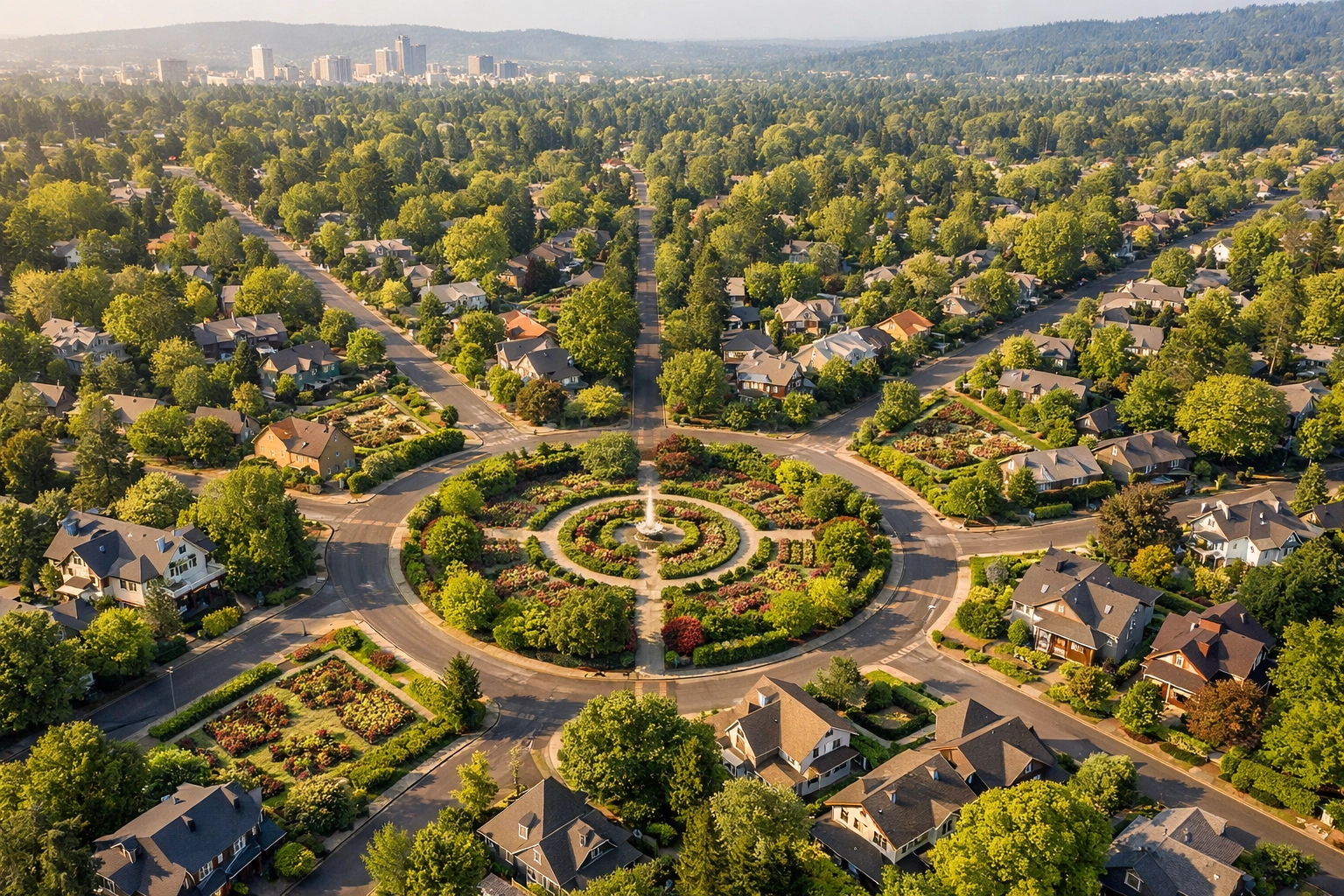
Neighborhoods
Fifteen distinct neighborhoods spanning Buckman's 1890s Victorians to Lents' post-war ranches. Walk Scores range from 94 in inner-SE to the 50s in outer neighborhoods, with corresponding price ranges from $350K to $1.2M+.
Jump to section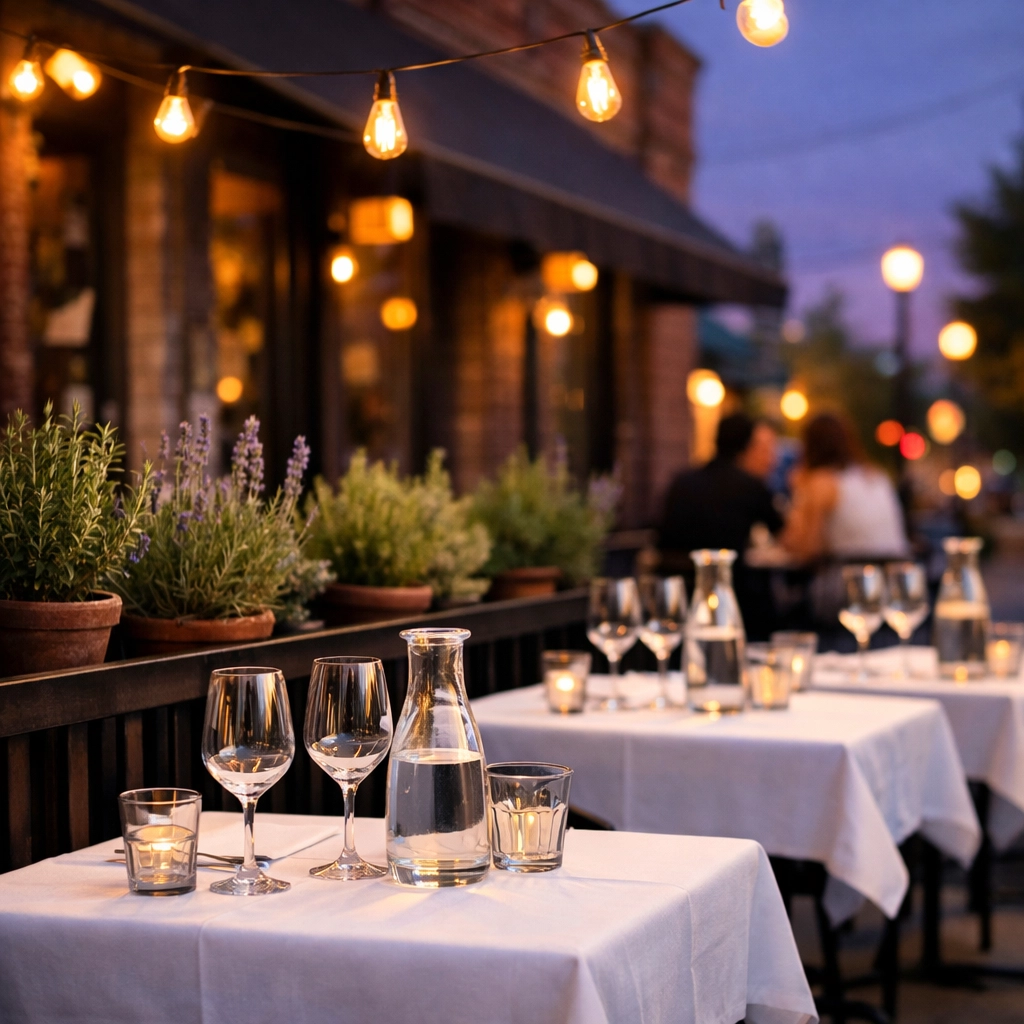
Dining
Five walkable corridors with more independent restaurants per mile than any Portland district. Division Street, Hawthorne Boulevard, Belmont Street, Foster Road, and SE 13th in Sellwood each anchor their own dining identity, plus food cart pods like Cartopia and Carts on Foster.
Jump to section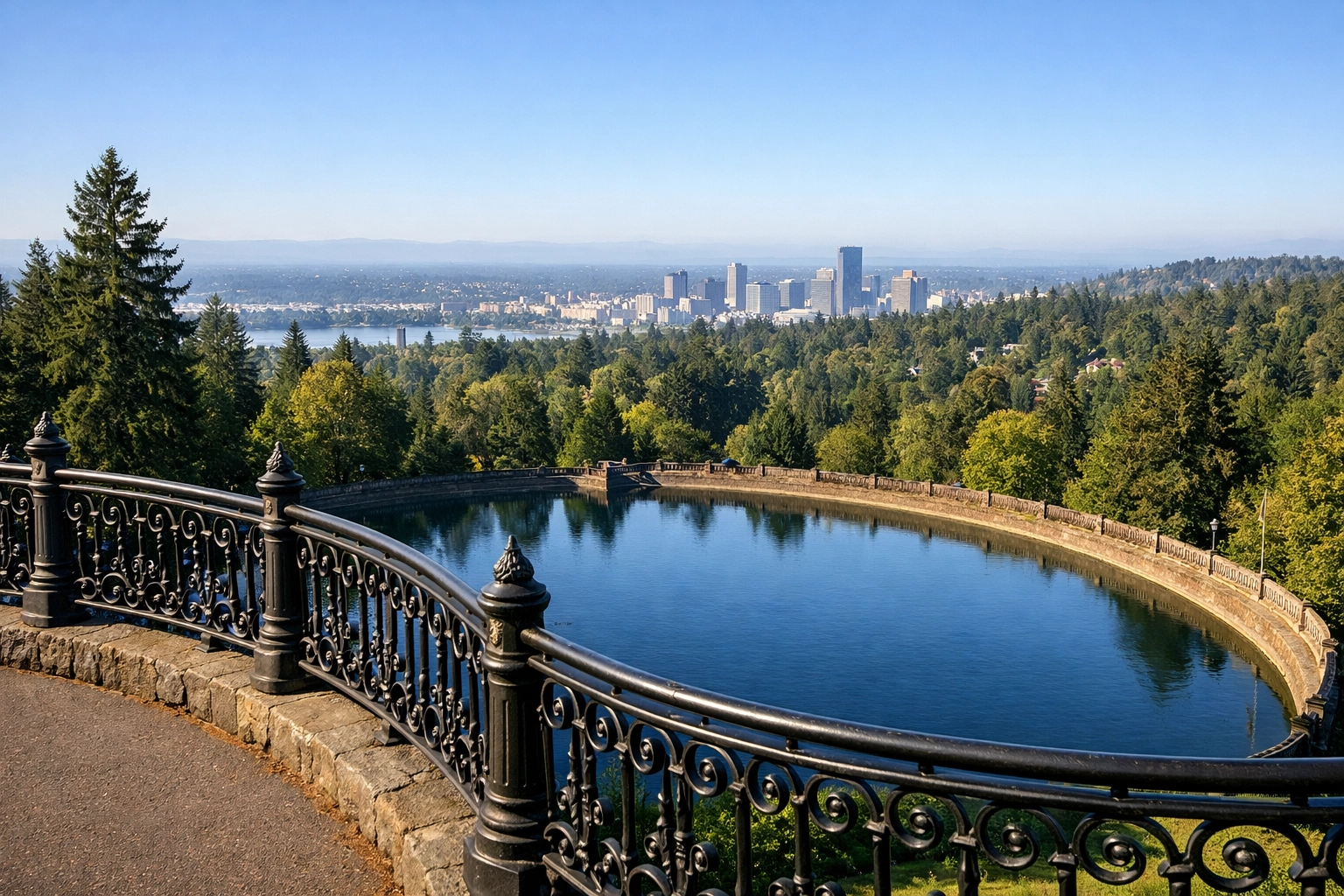
Parks & Trails
Mt. Tabor's 191-acre extinct volcano, Laurelhurst's historic duck pond, Oaks Bottom Wildlife Refuge, and the Springwater Corridor trail connecting the Sellwood waterfront to downtown. Eight major parks plus Crystal Springs Rhododendron Garden cover every sub-area of the district.
Jump to section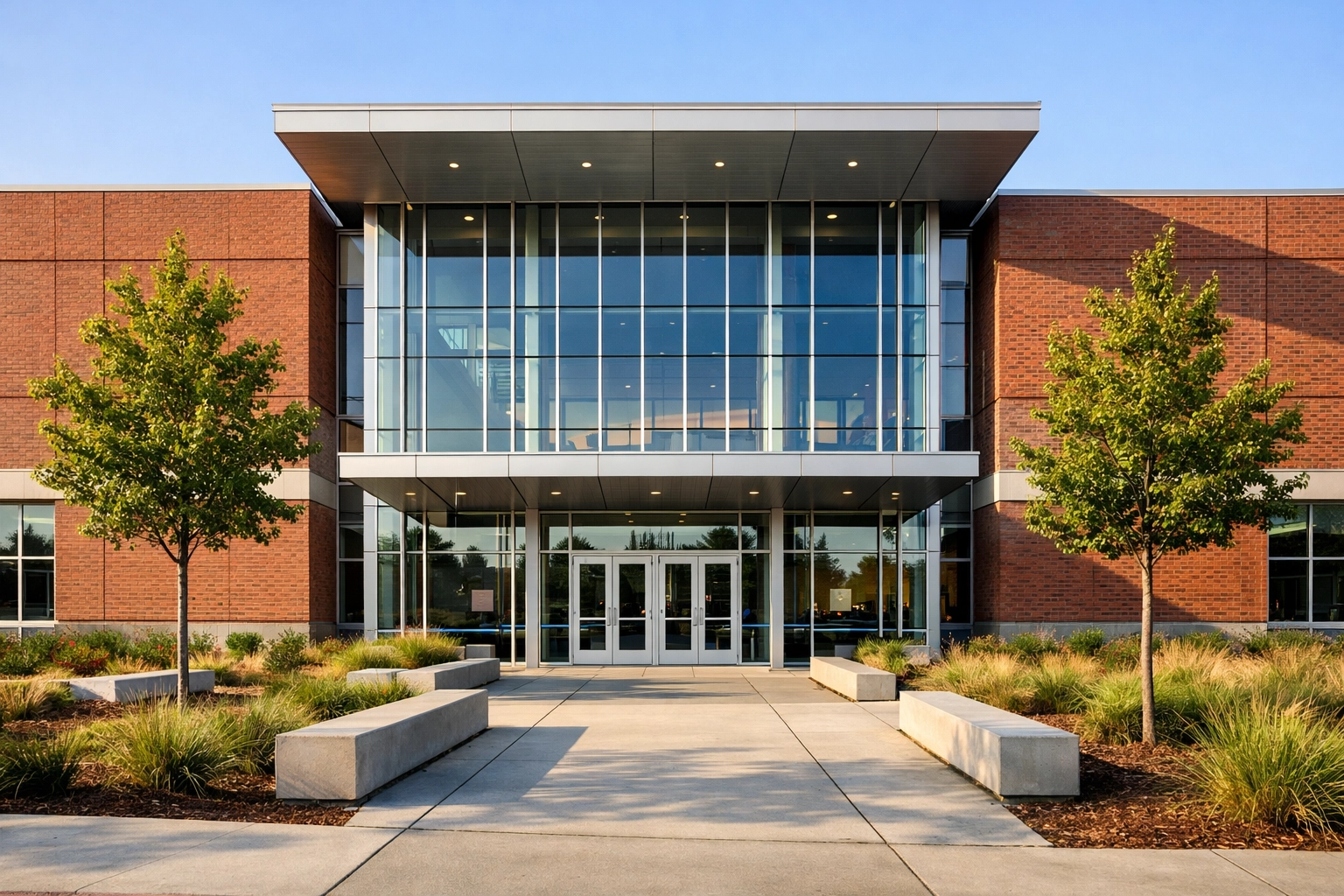
Schools
Portland Public Schools, Niche grade B. Two high schools serve SE: Cleveland with its full IB diploma program and Franklin (rebuilt 2017) with AP and GT tracks. Multiple K-8 magnet options including Sunnyside Environmental and Winterhaven STEAM.
Jump to section
Events & Culture
The PDX Adult Soapbox Derby racing homemade carts down Mt. Tabor every August since 1997, Portland Pickles baseball at Walker Stadium, Rose City Rollers at Oaks Park, plus the Moreland Farmers Market every Saturday May through October.
Jump to sectionShopping
Powell's Books on Hawthorne, Movie Madness video on Belmont, House of Vintage, and SE 13th Antique Row in Sellwood. Everyday grocery covered by Fred Meyer Hawthorne, New Seasons Sellwood, Trader Joe's, and People's Food Co-op in Brooklyn.
Jump to sectionHealthcare
No major hospital sits within SE district boundaries, but Adventist Health Portland (East Portland), OHSU Marquam Hill (SW, accessible via MAX Orange Line and Aerial Tram), and Providence Milwaukie Hospital are all within 10-20 minutes. In-district primary and urgent care is well-covered along Division, Hawthorne, and Woodstock.
Jump to sectionCommute & Transit
10 to 20 minutes to downtown Portland via the Hawthorne, Morrison, Tilikum, or Ross Island bridges. The MAX Orange Line runs through inner SE with ten stations connecting to downtown and Milwaukie. Westside tech corridor (Intel, Nike) is 25-55 minutes via US-26 depending on peak conditions.
Jump to sectionMajor Employers
OHSU is Portland's largest employer at roughly 21,000 people, reachable from SE via the Orange Line and Aerial Tram. In-district employment anchored by Reed College, PCC Southeast, OMSI, and Multnomah County public services. The Central Eastside Industrial District hosts food manufacturing and creative agencies.
Jump to sectionSoutheast Portland vs. Nearby Communities
Southeast Portland sits among six other Portland districts plus dozens of adjacent suburban options. Buyers comparing districts usually narrow their choice based on a combination of architectural era, corridor walkability, and commute priority. The numbers and trade-offs below show how SE compares to its three adjacent Portland districts plus one close suburban alternative.
| Factor | Southeast Portland This City | Northeast Portland | East Portland | North Portland |
|---|---|---|---|---|
| Median Home Price | $542K median; range $350K-$1.2M+ | $575-625K median | $420-475K median | $525-575K median |
| Property Tax Rate | 1.08% effective (Multnomah) | 1.08% effective (Multnomah) | 1.08% effective (Multnomah) | ~1.08% effective (Multnomah) |
| Top School District | PPS Niche B; Cleveland A- (IB), Franklin B | PPS Niche B; Cleveland A- (IB), Franklin B | A+ (LOSD) | A (BSD) |
| Commute to Portland | 10-20 min to downtown via 5 bridges | 10-20 min to downtown via bridges | 20-30 min to downtown via I-205 / I-84 | 15-25 min to downtown via I-5 / Broadway Bridge |
| Transit Access | MAX Orange Line + Tilikum Crossing + frequent bus grid | MAX Red/Blue on north edge, frequent bus | MAX Blue/Green/Red on outer edges | MAX Yellow Line on Interstate, frequent bus |
| Nature Access | Mt. Tabor, Oaks Bottom, Laurelhurst, Springwater Corridor | Grant Park, Alberta Park, Rose City Golf Course | Powell Butte Nature Park, Gateway Green | Pier Park, Cathedral Park, Columbia Slough |
| Commercial Core | 5 walkable corridors: Hawthorne, Division, Belmont, SE 13th, Foster | Alberta, Mississippi, Beaumont corridors | 82nd Ave, 122nd Ave, Gateway corridors | Mississippi Ave, Williams Ave, St. Johns |
| Healthcare Access | No in-district hospital; OHSU transit-accessible; strong primary/urgent care | Providence Portland Medical Center; Legacy Emanuel nearby | Adventist Health Portland; Legacy Mt. Hood via I-84 | Legacy Emanuel Medical Center; Kaiser Interstate |
| Best Suited For | Widest architectural range, densest commercial corridor layout, best inner-to-outer value gradient in one district | Buyers prioritizing a single defining corridor (Alberta, Mississippi, Beaumont-Wilshire) and larger yards in Grant Park / Alameda | Buyers prioritizing square footage, newer construction, and a lower price-per-foot with larger lots and 1960s-2000s housing stock | Buyers prioritizing the Mississippi/Williams corridor or St. Johns waterfront |
Southeast Portland This City
Northeast Portland
East Portland
North Portland
In my experience, buyers cross-shop SE and NE Portland most often, then either East Portland for more home at lower cost or Milwaukie for a slightly quieter south-of-the-Willamette feel with shorter commutes to Clackamas employment. North Portland comes up for buyers specifically prioritizing the Mississippi/Williams corridor, but the water separates it geographically from SE in ways that matter day-to-day.
My Take on Southeast Portland
Most of my SE Portland clients start at Hawthorne and Division and expand their radius from there. Division Street between SE 11th and SE 50th – specifically the stretch around SE 30th where Ava Gene's, Salt & Straw, and Lauretta Jean's anchor the corridor – is where buyers tend to anchor their mental picture of the district. Hawthorne Boulevard does similar work to the north, especially the blocks between SE 30th and SE 50th around Apizza Scholls, Powell's Hawthorne, and Trader Joe's. What usually surprises buyers is how quickly the character changes as you move east: from the SE 50s into SE 60s, you shift from inner-SE restored Craftsman at $500-800K into Mt. Tabor's volcanic terrain and Tudor Revival homes, then across the volcano into Foster-Powell and Lents where the same footprint costs $400K or less.
The honest trade-off SE Portland asks you to make is walkability versus lot size. The neighborhoods with 90+ Walk Scores – Buckman, Hosford-Abernethy, Sunnyside, Richmond – sit on standard 5,000 sq ft lots with tight block spacing and limited off-street parking, which is a real adjustment if your previous home had a driveway and a larger yard. Outer SE neighborhoods like Woodstock, Foster-Powell, and Lents offer larger lots, easier parking, and more home per dollar, but Walk Scores drop to the 50s-70s and daily errands increasingly require driving. The $150-300K price delta between inner and outer SE is real, and buyers who cross-shop the two ends almost always learn the trade-off isn't abstract – it shows up in morning coffee routines.
The market signal I watch in SE is new construction townhome infill on the SE 20s-40s grid. Over the past three years, developers have subdivided more standard grid lots in Buckman, Hosford-Abernethy, and Richmond into two- and three-unit townhome infill than any other district, which has softened entry pricing for inner-SE access below $600K. The Orange Line extension (in planning discussions) and ongoing Central Eastside development continue to pull commercial attention to the inner waterfront. For sellers in outer-SE mid-range neighborhoods like Woodstock and Creston-Kenilworth, the story is different – inventory is tighter, older housing stock commands premium when updated, and the affordability spread between outer-SE and inner-SE has narrowed slightly as inner-SE infill has increased supply.
Frequently Asked Questions About Southeast Portland
The median home price in Southeast Portland is approximately $542K based on recent sales data, though prices vary significantly by neighborhood. Inner-SE neighborhoods like Buckman, Sunnyside, and Richmond typically range from $450K to $800K. Sellwood-Moreland sits around $500K to $850K, Mt. Tabor ranges $550K to $900K, and premium Eastmoreland extends from $650K to over $1.1M. Outer-SE neighborhoods like Foster-Powell and Lents start in the $350K to $550K range. For current active listings, visit Southeast Portland homes for sale.
The commute from Southeast Portland to downtown Portland typically runs 10 to 20 minutes by car via the Hawthorne, Morrison, Ross Island, or Tilikum Crossing bridges, though peak-hour conditions can vary. The MAX Orange Line provides a transit option from inner-SE stations (SE Clinton/12th, SE 17th/Rhine, SE 17th/Holgate) to the downtown transit mall in roughly 15 to 20 minutes. Bus Line 14 on Hawthorne Boulevard provides frequent-service bus access to downtown. I always recommend buyers test their specific commute from their target neighborhood to their actual workplace before committing.
Southeast Portland falls within Portland Public Schools, which holds an overall Niche grade of B. Two high schools serve SE: Cleveland High School (Niche A-, GreatSchools 7/10) with a full International Baccalaureate diploma program, serving inner and western SE; and Franklin High School (Niche B, GreatSchools 6/10, rebuilt 2017) serving eastern and outer SE. K-8 magnet options include Sunnyside Environmental (B+ Niche, 9/10 GS) and Winterhaven STEAM (A- Niche, 9/10 GS, lottery-only). Use the PPS boundary finder to verify school assignments for specific addresses.
Southeast Portland contains roughly fifteen distinct residential neighborhoods including Buckman, Hosford-Abernethy, Sunnyside, Richmond, Mt. Tabor, Sellwood-Moreland, Eastmoreland, Reed, Woodstock, Foster-Powell, Creston-Kenilworth, Brooklyn, Brentwood-Darlington, Mt. Scott-Arleta, and Lents. Inner-SE neighborhoods closest to the Willamette tend to have Walk Scores of 85-94 with 1890s-1920s housing stock. Outer-SE neighborhoods toward 82nd Avenue have Walk Scores of 50-75 with 1940s-1960s housing and more affordable pricing. Explore all Southeast Portland listings by neighborhood and price range.
Southeast Portland is the most neighborhood-dense of Portland's seven districts, with five walkable commercial corridors (Hawthorne, Division, Belmont, SE 13th, Foster) each anchoring their own dining and retail identity. The district offers the widest price range in Portland, from $350K entry bungalows in Lents to $1.2M+ restored Craftsman in Eastmoreland. Walk Scores range from 50 in outer SE to 94 in Buckman. The district's strongest fit is for buyers prioritizing walkability, independent retail corridors, and access to downtown via multiple bridges. It's a less optimal match for buyers needing short commutes to the Westside tech corridor (Intel, Nike).
Southeast Portland is in Multnomah County, where the effective property tax rate averages approximately 1.08% of assessed value for Portland levy code areas. Oregon property taxes are calculated using the lower of two methods: assessed value multiplied by the local tax rate plus any special assessments, or real market value multiplied by Measure 5 limits ($5 per $1,000 for education taxes, $10 per $1,000 for general government) plus voter-approved bonds. Specific rates vary by levy code area within SE Portland. See the Multnomah County property tax page for address-specific details.
Southeast Portland has strong transit service through TriMet. The MAX Orange Line runs 7.3 miles with ten stations from downtown Portland through inner-SE to Milwaukie, crossing the Willamette via Tilikum Crossing (the first major car-free bridge in the US). Frequent-service bus lines serve all major corridors: Line 14 Hawthorne, FX2-Division, Line 4 Division/Fessenden, Line 15 Belmont, Line 9 Powell, and Line 75 César E Chávez on SE 39th. Most inner-SE addresses have walking access to at least two frequent-service options within 15 minutes. See TriMet for schedules and route details.
Southeast Portland is home to Mt. Tabor Park (191 acres on an extinct volcano with summit city views and hiking trails), Laurelhurst Park (31 acres, 1912 historic park on the National Register), Oaks Bottom Wildlife Refuge (163-acre Willamette wetland), Sellwood Riverfront Park (8 acres with boat dock and Springwater Corridor access), Crystal Springs Rhododendron Garden (9.5 acres of 2,500+ rhododendrons near Reed College), Westmoreland Park (42 acres with nature-based playground), Sellwood Park (Portland's oldest public swimming pool), and Lents Park (home to the Portland Pickles baseball team at Walker Stadium). The Springwater Corridor trail connects the Sellwood waterfront to downtown via Tilikum Crossing.
Southeast Portland has a median home price around $542K compared to Northeast Portland's approximately $575-625K range, and SE offers a wider price spread from entry to premium ($350K to $1.2M+ vs. roughly $450K to $1.1M in NE). SE Portland stacks five walkable commercial corridors (Hawthorne, Division, Belmont, SE 13th, Foster) in a tighter east-west band, while NE distributes commercial energy across Alberta, Mississippi, and Beaumont with larger lots in neighborhoods like Grant Park and Alameda. Both districts fall in Multnomah County with the same 1.08% property tax rate. Buyers often cross-shop SE and NE before choosing based on commercial corridor preference and architectural era.
From Southeast Portland, downtown Portland is 10-20 minutes via multiple bridges or the MAX Orange Line. OHSU on Marquam Hill, Portland's largest employer at roughly 21,000 people, is uniquely accessible via the Orange Line to South Waterfront combined with the OHSU Aerial Tram. The Lloyd District is 10-15 minutes via the Burnside Bridge. The Clackamas/Milwaukie corridor is 15-25 minutes via SE McLoughlin or I-205. The Westside tech corridor (Intel in Hillsboro, Nike in Beaverton) is SE's longest commute at 25-55 minutes via US-26 depending on peak conditions. PDX Airport is 15-25 minutes via I-205 N.
Walkability in Southeast Portland varies dramatically by neighborhood according to Walk Score. Inner-SE neighborhoods rank among Portland's most walkable: Buckman and Sunnyside both score 93-94, with Hosford-Abernethy at 89-92 and Richmond in the high 80s. Mid-SE neighborhoods including Mt. Tabor and Woodstock score in the mid-70s. Outer-SE neighborhoods including Foster-Powell and Lents score in the 50s-70s, where daily errands typically require a car. Commercial corridors (Hawthorne, Division, Belmont) are particularly walkable, with grocery stores, restaurants, and daily services accessible on foot from adjacent residential blocks.
Southeast Portland's housing costs track close to the Portland citywide median, with SE's median home price at approximately $542K compared to Portland citywide around $510K to $529K. SE offers a wider range than the city average: outer-SE neighborhoods like Lents and Foster-Powell come in below the citywide median at $350K-$550K, while premium SE neighborhoods like Eastmoreland exceed the citywide upper ranges at $650K to over $1.1M. Property taxes are consistent with Portland citywide at approximately 1.08% of assessed value. Daily costs (groceries, utilities, transportation) match Portland averages.
Southeast Portland shares Portland's Pacific Northwest climate with mild, wet winters and dry, warm summers. Annual average highs reach the low 60s Fahrenheit, with lows in the low 40s. January highs typically average in the mid-40s with lows in the low 30s; July highs reach the low 80s with lows in the low 50s. Annual rainfall averages approximately 42 inches spread across 151 rainy days per year, most of which fall between October and April. Annual snowfall averages around 7 inches across roughly 2 snowy days. Mt. Tabor's elevation (636 feet) and outer-SE neighborhoods occasionally see slightly more snow than inner-SE waterfront areas.
Southeast Portland has some of the most-covered restaurant corridors in the country. SE Division Street alone anchors Ava Gene's (Roman/Italian), Magna Kusina (Filipino), Oma's Hideaway (Malaysian/Indonesian), and Lauretta Jean's (pies and breakfast). SE Hawthorne Boulevard anchors Apizza Scholls (Neapolitan pizza) and the Cartopia food cart pod. The Central Eastside hosts Kachka (Eastern European) and Loyal Legion (99+ Oregon taps). Sellwood, Foster-Powell, and Belmont all have additional destination restaurants. Food cart pods including Cartopia, Carts on Foster, Hawthorne Asylum, and Hinterland are central to the district's dining identity.
Living in Southeast Portland means choosing which commercial corridor becomes your everyday backdrop – Hawthorne, Division, Belmont, SE 13th, or Foster – because the district organizes around those five walkable strips. Transit options include the MAX Orange Line, Tilikum Crossing, and frequent-service bus lines on every major east-west corridor, making many inner-SE households genuinely one-car or zero-car. Price range stretches from $350K entry bungalows in Lents to over $1.2M restored Craftsman in Eastmoreland, with most homes in the $450K-$700K range for 1920s-1940s housing stock on 5,000 sq ft lots. Major employers include OHSU (via Orange Line + Aerial Tram), Reed College, OMSI, and the Central Eastside Industrial District. Remote and hybrid workers find the density of coffee shops, independent bookstores, and walkable third-places a practical fit for flexible work arrangements.
Let's Find Your Southeast Portland Home
Whether you're relocating for work, upgrading for space, or buying your first home, I'll help you find the right fit in the right neighborhood. No obligation, no pressure -- just straight answers and local expertise.
Schedule a Free Consultation No obligation · Responds within 24 hours · (503) 910-7364Neighborhoods in Southeast Portland
Southeast Portland contains roughly fifteen distinct residential neighborhoods spread across four sub-areas, with housing stock spanning 1890s Victorians in Buckman to mid-century ranches in Lents. The twelve neighborhoods below represent the district's primary buyer-relevant options, organized roughly from inner-SE (highest Walk Scores, smallest lots, oldest housing) to outer-SE (larger lots, more affordable, newer housing). Every neighborhood card links to its dedicated neighborhood page with full listing data, Walk Score, and sub-area details.
Sellwood-Moreland
FEATUREDWillamette riverfront access via Oaks Bottom and Springwater Corridor, with SE 13th Antique Row as the commercial anchor. Architecture runs Victorian-era cottages to 1920s bungalows, with Westmoreland's Craftsman streets and new infill in Moreland Village.
$500K-$850KBuckman
Walk Score + Buckman characterOne of the city's highest Walk Scores at 94, bounded by SE Burnside and SE 28th with Ladd's Addition's diagonal grid at its center. Housing stock mixes 1890s Victorians with modern infill townhomes on subdivided lots.
$450K-$750K
Hosford-Abernethy
Walk Score + Hosford-Abernethy characterHome to Ladd's Addition rose gardens and OMSI along the waterfront. A mix of 1900-1930s Craftsman and Victorian homes within walking distance of both Division and Hawthorne commercial corridors.
$450K-$750KSunnyside
Walk Score + Sunnyside characterBelmont Street commercial strip runs through the middle with coffee shops and restaurants anchoring each block. Housing stock is predominantly 1910s-1920s Portland four-squares and Craftsman bungalows on 5,000 sq ft grid lots.
$475K-$750KRichmond
Walk Score + Richmond characterContains the Hawthorne Boulevard commercial district from SE 30th to SE 50th, with Division Street forming the southern commercial corridor. Housing stock is restored 1910s-1930s Craftsman, with newer ADUs and infill on standard grid lots.
$500K-$800KMt. Tabor
Walk Score + Mt. Tabor characterNamed for the 191-acre extinct-volcano park at its center, with tree-canopied streets climbing the volcano's flanks. Homes tend toward larger 1920s-1940s Tudor Revival, Colonial Revival, and custom builds, many with summit city views.
$550K-$900KEastmoreland
Walk Score + Eastmoreland characterPremium enclave surrounding Reed College, with Crystal Springs Rhododendron Garden on the eastern edge. Housing is 1920s-1940s English Tudor, Colonial Revival, and Arts and Crafts homes on 7,000-10,000 sq ft lots with mature trees.
$650K-$1.1M+Reed
Walk Score + Reed characterBuilt around Reed College with a residential scale smaller than Eastmoreland but similar architectural era. Walking distance to Crystal Springs Rhododendron Garden and the Reed College campus arboretum.
$500K-$750KWoodstock
Walk Score + Woodstock characterWoodstock Boulevard commercial district runs east-west through the center, anchored by Otto's Sausage Kitchen and the Woodstock Farmers Market. Housing is 1940s-1960s ranches and bungalows on standard grid lots, with Woodstock Park and the Woodstock Library as neighborhood hubs.
$425K-$650KCreston-Kenilworth
Walk Score + Creston-Kenilworth characterBounded by SE Powell, SE Holgate, and the rail corridor, with Creston Park as the neighborhood green space. Housing skews 1920s-1940s bungalows and mid-century ranches, more affordable per square foot than inner-SE.
$400K-$600KFoster-Powell
Walk Score + Foster-Powell characterTriangular street grid bounded by Foster Road, Powell Blvd, and SE 82nd Ave, with FoPo as the local shorthand. Foster Road commercial district has added several destination restaurants and bars over the past decade.
$375K-$550KBrooklyn
Walk Score + Brooklyn characterBetween the Brooklyn Yard rail corridor and the Willamette, with Powell Boulevard as the northern boundary. A quieter residential pocket with 1900s-1920s bungalows, close to OMSI, the Aladdin Theater, and the Orange Line at Clinton/12th.
$425K-$625KDining in Southeast Portland
Southeast Portland has more independent restaurants per mile than any other Portland district, concentrated along five walkable commercial corridors. Division Street between SE 11th and SE 50th has added more nationally recognized restaurants per block than any other Portland street in the past decade, anchored by Ava Gene's, Magna Kusina, and Oma's Hideaway. Hawthorne Boulevard holds Apizza Scholls and the Cartopia food cart pod. Belmont Street runs parallel with Stumptown Coffee's flagship neighborhood cafe. The district's dining identity is inseparable from its food cart pod scene – Cartopia on Hawthorne (since 2008), Carts on Foster (home to The Egg Carton), Hawthorne Asylum (20+ carts with covered seating), and Hinterland near Mt. Tabor collectively host hundreds of independent food businesses. SE 82nd and the Jade District add Portland's densest concentration of Asian restaurants, and Sellwood anchors the south end with established neighborhood spots along SE 13th.
Ava Gene's
Beard-recognized Roman-style Italian with handmade pasta, anchoring the SE Division corridor since 2012.
Visit Website 02Restaurant | Neapolitan PizzaApizza Scholls
Nationally recognized Neapolitan pizza on SE Hawthorne since 2005, with a reputation that draws lines before opening.
Visit Website 03Restaurant | Eastern European / RussianKachka
Beard-nominated Russian and Eastern European cuisine on SE Grand Ave, anchoring the Central Eastside dining scene.
Visit WebsiteMagna Kusina
Modern Filipino fare on SE Division, one of the most-covered Asian restaurants in Portland.
Visit Website 05Restaurant | Malaysian / IndonesianOma's Hideaway
Boundary-breaking Malaysian, Singaporean, and Indonesian fare in a stylish SE Division setting.
Visit Website 06Restaurant | ThaiFarmhouse Kitchen Thai
Authentic Thai cuisine on SE Hawthorne Boulevard, well-established in Portland's Thai dining scene.
Visit WebsiteThe Egg Carton
Foster-Powell breakfast cart at the Carts on Foster pod, known for scratch-made biscuits and eggs benedicts since 2012.
Visit Website 08Restaurant | Multiple CuisinesCartopia Food Cart Pod
Portland's signature food cart pod at SE 12th and Hawthorne, operating since 2008 with covered seating, a fire table, and late-night hours.
Visit Website 09Bar | Theater PubBagdad Theater & Pub
Historic 1927 McMenamins theater and pub on SE Hawthorne, combining first-run films with pub food and Oregon beer.
Visit WebsiteI tell relocating buyers that if they want to understand SE Portland in one Saturday, walk Division from SE 11th to SE 50th with a stop at Cartopia for dinner. By the time you've crossed six restaurant-dense blocks, you'll understand why people pick this district.
Shopping in Southeast Portland
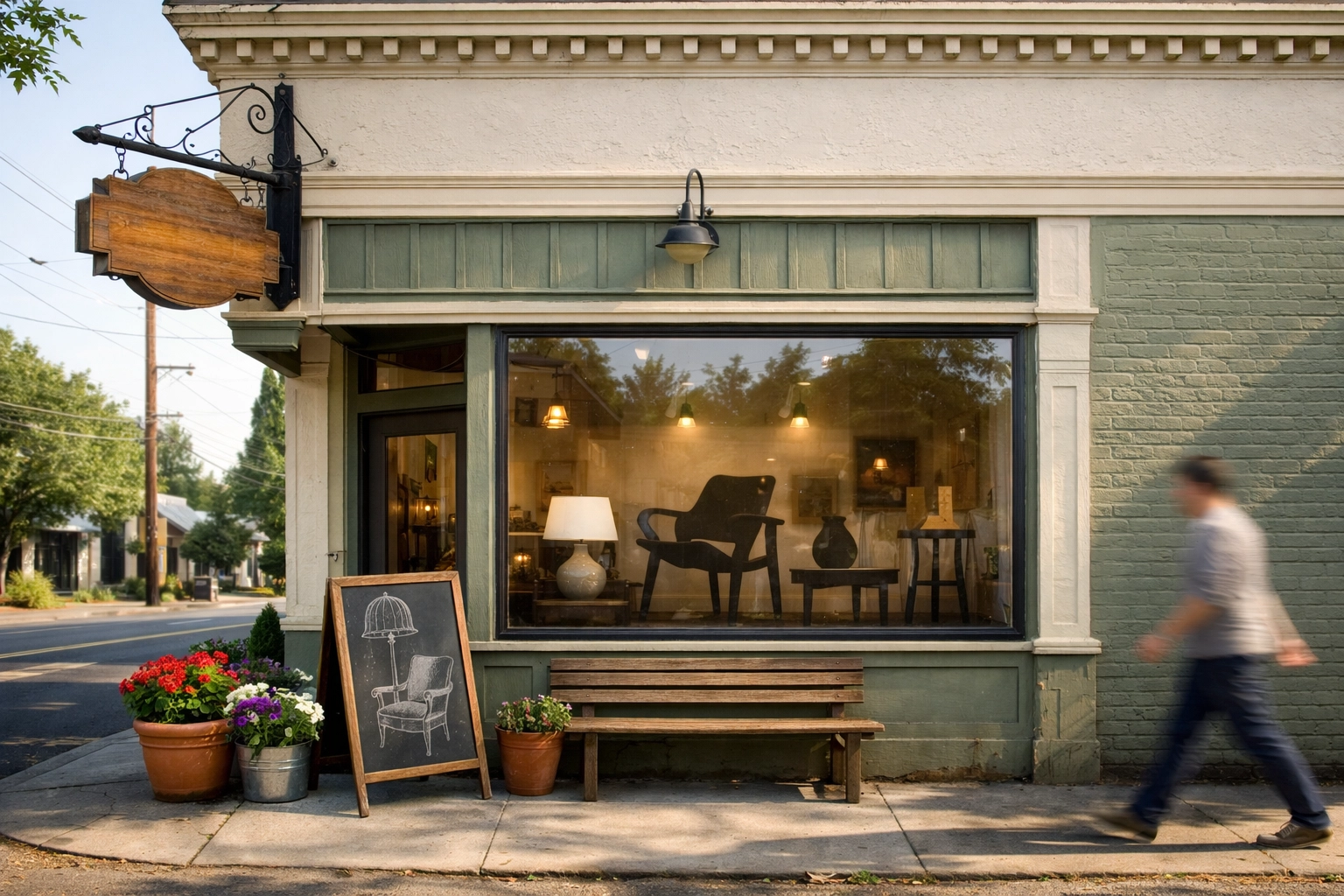
Southeast Portland has more walkable independent retail corridors than any Portland district. Hawthorne Boulevard runs the district's longest continuous retail strip, with Powell's Books on Hawthorne, House of Vintage, Presents of Mind, and Trader Joe's anchoring the SE 30s-40s blocks. SE Division has upscale boutiques layered between restaurants. Belmont Street holds Movie Madness (the largest independent video collection in the country) plus destination cafes. SE 13th in Sellwood is Antique Row, with Stars Antique Mall and the Moreland Farmers Market anchoring the south end. Woodstock Boulevard in outer SE carries smaller neighborhood retail and the Sunday Woodstock Farmers Market. Daily groceries are well-covered: Fred Meyer on SE 39th and Hawthorne, New Seasons in Sellwood, Trader Joe's on Cesar Chavez, and People's Food Co-op in Brooklyn.
I usually tell buyers the shopping question answers itself once they pick their commercial corridor. Buyers who want walkable independent retail and vintage or boutique inventory end up on Hawthorne or Division. Buyers prioritizing daily errands over destination retail end up near Fred Meyer Hawthorne or New Seasons Sellwood. Buyers specifically drawn to the antique and collectibles scene gravitate to SE 13th in Sellwood. Outer-SE neighborhoods rely more heavily on Fred Meyer Hawthorne and the Jade District's grocery options along 82nd.
Parks & Trails in Southeast Portland
Southeast Portland's parks cluster around a few defining natural features: the extinct volcanic cinder cone of Mt. Tabor, the Willamette River frontage at Oaks Bottom and Sellwood Riverfront, and the historic pond at Laurelhurst. The Springwater Corridor trail stitches the district together, running from Sellwood Riverfront Park along the Willamette through Oaks Bottom Wildlife Refuge and connecting to downtown Portland via the Tilikum Crossing. Unlike suburban parks set away from housing, SE Portland's parks are walkable from most surrounding neighborhoods – Mt. Tabor sits in the middle of a residential neighborhood, Laurelhurst fronts Burnside and connects to inner-SE streets, and the Sellwood waterfront parks anchor the south end of the Springwater trail system. Crystal Springs Rhododendron Garden near Reed College peaks in April-May for rhododendron bloom season, making it a seasonal destination within the district.
Mt. Tabor Park
Extinct volcanic cinder cone with summit panoramic views of downtown Portland and Mt. Hood. Paved and unpaved trails, amphitheater, reservoirs, off-leash dog area, playground, tennis courts, basketball, volleyball, and horseshoe pit. Closed to motor vehicles all day Wednesday.
- Hiking trails
- Off-leash area
- Playground
- Tennis courts
- Picnic sites
- Restrooms
Laurelhurst Park
Historic 1912 park with a landscape-designed duck pond, one of Portland's best off-leash dog areas, playground, tennis and basketball courts, soccer field, and picnic shelters. On the National Register of Historic Places, designed by Emanuel Mische.
- Off-leash area
- Playground
- Tennis courts
- Duck pond
- Picnic sites
- Paved paths
Sellwood Riverfront Park
Willamette River waterfront park with boat dock, covered stage, picnic tables, and off-leash dog area. Springwater Corridor trailhead connects north to Oaks Bottom and downtown via Tilikum Crossing.
- River access
- Off-leash area
- Paths
- Picnic tables
- Boat dock
- Restrooms
Oaks Bottom Wildlife Refuge
Willamette River wetland refuge with a bluff viewpoint, unpaved trails, and the Springwater Corridor running along the east edge. Critical bird habitat; dogs must stay on leash.
- Trails
- Wildlife viewing
- Bluff viewpoint
- Springwater Corridor
- Wetland observation
- Leash required
Healthcare in Southeast Portland
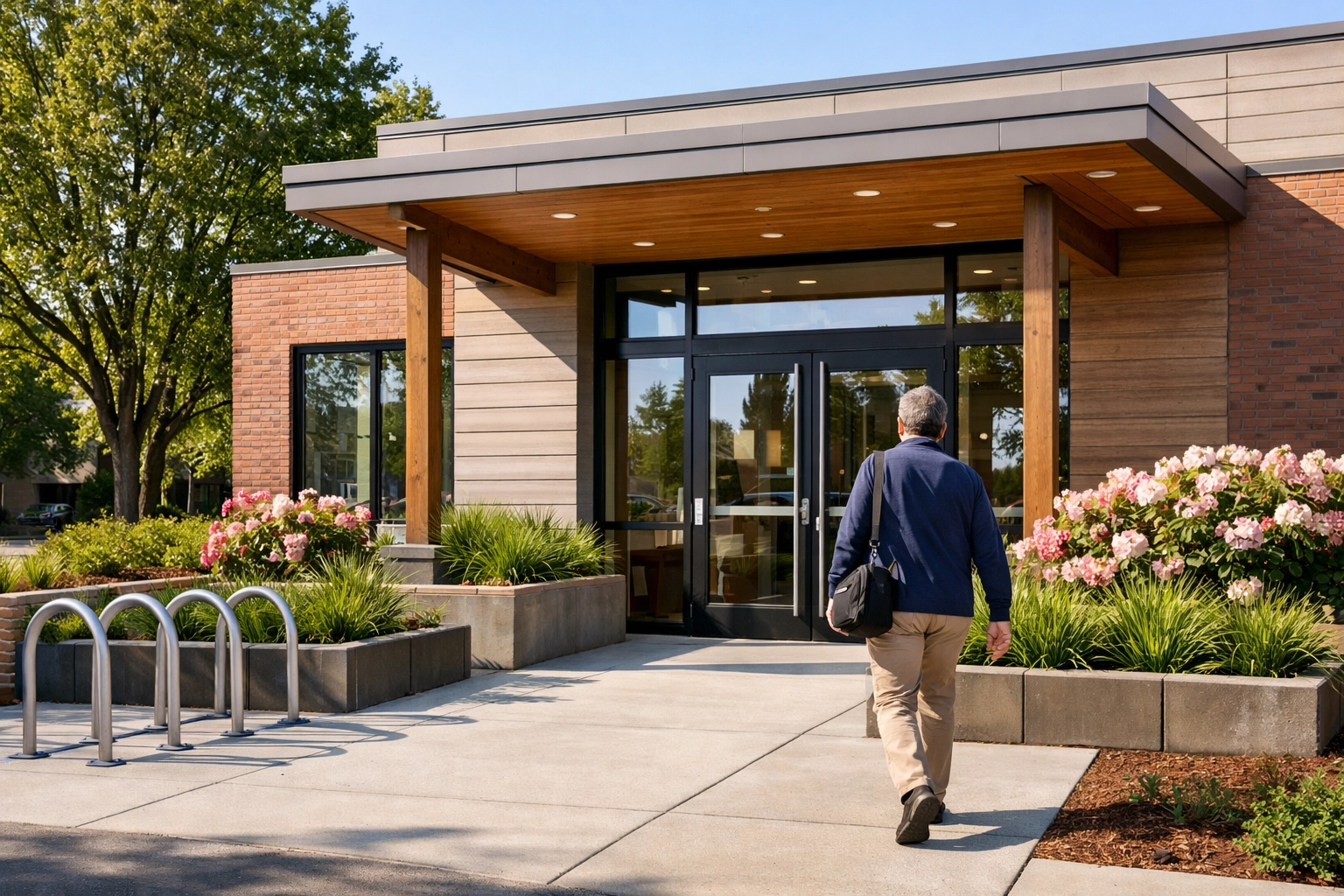
Southeast Portland has no major hospital within its boundaries, but three full-service hospitals are accessible within 10 to 20 minutes of most SE addresses. Adventist Health Portland (just east of the 82nd Avenue boundary in East Portland) is the nearest emergency room for most SE residents. OHSU on Marquam Hill, Oregon's only academic health center, Level 1 trauma center, and home to Doernbecher Children's Hospital, is uniquely transit-accessible from SE via the MAX Orange Line to South Waterfront and the OHSU Aerial Tram to the hilltop campus. Providence Milwaukie Hospital sits just south of the district in Milwaukie, often the closer option for residents in Sellwood, Eastmoreland, and Brentwood-Darlington. In-district primary care and urgent care coverage is strong along Division, Hawthorne, and Woodstock corridors. For relocating households with chronic-care needs or young children, the OHSU transit connection is a factor SE buyers often don't expect to weigh.
Adventist Health Portland
302-bed hospital with 24/7 emergency room, located at SE 102nd and Market just east of the 82nd Avenue district boundary in East Portland. OHSU Health partner; accessible 8-15 minutes from most SE addresses.
Visit WebsiteOHSU Immediate Care Clinic, Richmond
OHSU primary and immediate care clinic on SE Division, offering same-day appointments for minor illnesses, injuries, and preventive care. Open Monday-Friday and Saturday mornings.
Visit WebsiteZoomCare Hawthorne
ZoomCare urgent care on SE Hawthorne with online appointment scheduling and walk-in access. Handles minor illnesses, injuries, labs, and primary-care services.
Visit WebsiteMultnomah County Southeast Health Center
Multnomah County public health clinic providing primary care, pediatric care, prenatal services, and behavioral health. Serves inner and mid-SE residents on a sliding scale.
Visit WebsiteSchools in Southeast Portland
Southeast Portland falls within Portland Public Schools, which holds an overall Niche grade of B. Two high schools serve the district: Cleveland High School (Niche A-, GreatSchools 7/10) with a full International Baccalaureate diploma program, and Franklin High School (Niche B, GreatSchools 6/10, rebuilt 2017) with AP and Gifted and Talented tracks. School boundaries divide SE roughly between the two: Cleveland serves inner and western SE neighborhoods; Franklin serves eastern and outer SE. PPS offers open enrollment through lottery for magnet programs including Sunnyside Environmental K-8 and Winterhaven K-8 STEAM (lottery-only, no neighborhood enrollment). Sellwood's Llewellyn Elementary (Niche A-, GreatSchools 9/10) is a strong neighborhood option not slotted in the table below. Always verify school assignments for specific addresses using the PPS boundary finder.
| School | Level | GreatSchools | Niche | Notable Program |
|---|---|---|---|---|
| Cleveland High School | 9-12 | 7/10 | A- | Full IB diploma program; serves inner/west SE |
| Franklin High School | 9-12 | 6/10 | B | Rebuilt 2017; AP and GT tracks; serves east/outer SE |
| Hosford Middle School | 6-8 | 7/10 | B+ | Feeds Cleveland; 2303 SE 28th Pl |
| Mt. Tabor Middle School | 6-8 | 10/10 | A- | Feeds Franklin; Mt. Tabor/east-central SE |
| Sunnyside Environmental K-8 | K-8 | 9/10 | B+ | Environmental focus magnet; lottery-based |
| Duniway Elementary | K-5 | 9/10 | B+ | Sellwood/Eastmoreland anchor |
| Winterhaven K-8 | K-8 | 9/10 | A- | STEAM magnet, lottery-only; no neighborhood enrollment |
| Arleta Elementary | K-5 | 9/10 | B | Foster-Powell / outer SE corridor |
Cleveland High School
Level: 9-12
GreatSchools: 7/10 · Niche: A-
Program: Full IB diploma program; serves inner/west SE
Franklin High School
Level: 9-12
GreatSchools: 6/10 · Niche: B
Program: Rebuilt 2017; AP and GT tracks; serves east/outer SE
Hosford Middle School
Level: 6-8
GreatSchools: 7/10 · Niche: B+
Program: Feeds Cleveland; 2303 SE 28th Pl
Mt. Tabor Middle School
Level: 6-8
GreatSchools: 10/10 · Niche: A-
Program: Feeds Franklin; Mt. Tabor/east-central SE
Sunnyside Environmental K-8
Level: K-8
GreatSchools: 9/10 · Niche: B+
Program: Environmental focus magnet; lottery-based
Duniway Elementary
Level: K-5
GreatSchools: 9/10 · Niche: B+
Program: Sellwood/Eastmoreland anchor
Winterhaven K-8
Level: K-8
GreatSchools: 9/10 · Niche: A-
Program: STEAM magnet, lottery-only; no neighborhood enrollment
Arleta Elementary
Level: K-5
GreatSchools: 9/10 · Niche: B
Program: Foster-Powell / outer SE corridor
School boundaries shift over time. Verify your specific address assignment at Verify school assignment by address before making a purchase decision based on school access.
GreatSchools ratings and Niche grades are third-party assessments. Verify current ratings directly at GreatSchools and Niche .
Commute & Transit in Southeast Portland
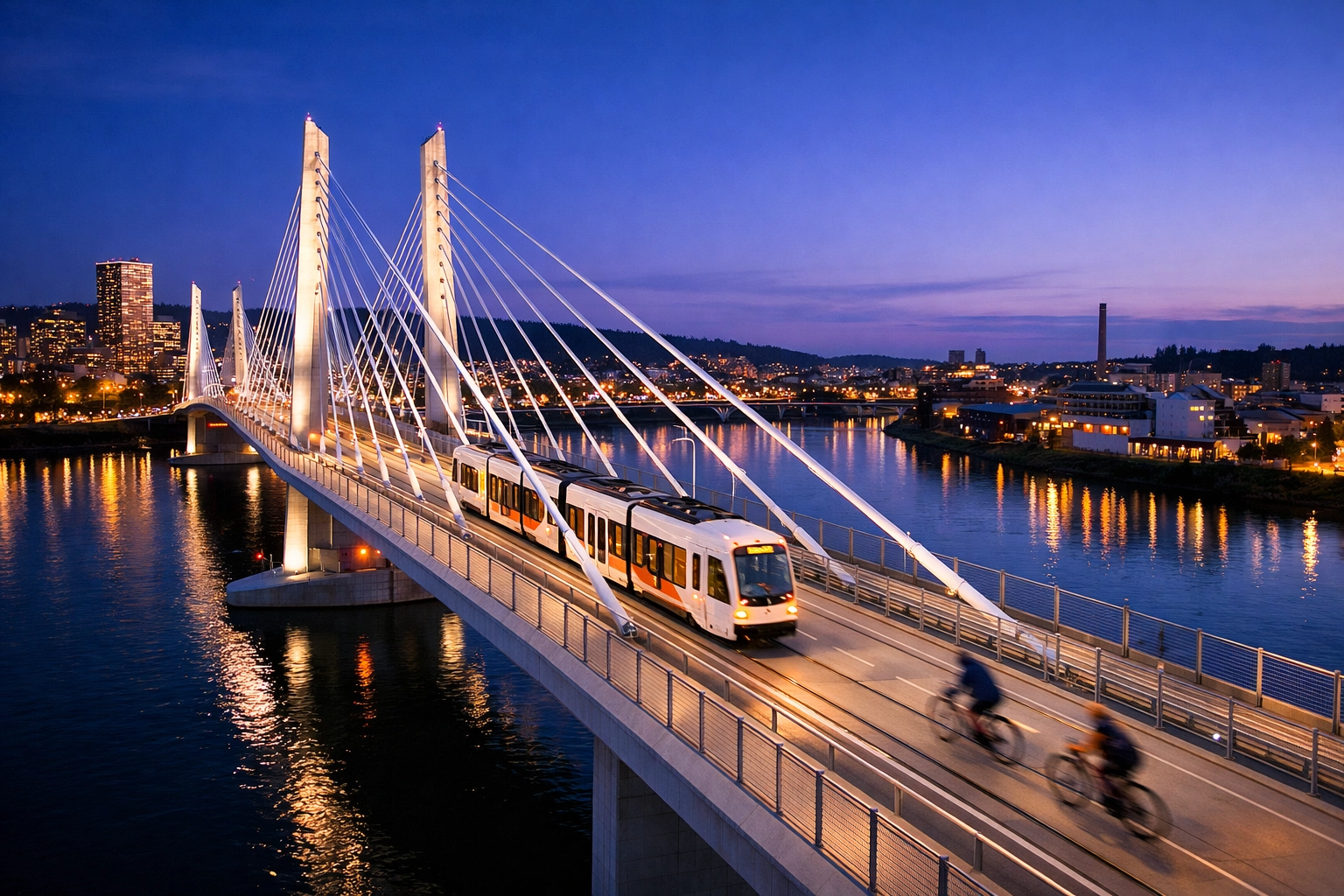
Commute times from Southeast Portland vary significantly by neighborhood, destination, and time of day. Times below are measured from a central point at SE 39th (César E Chávez Blvd) and SE Hawthorne, and can vary by 5-10 minutes depending on whether you're in inner-SE (Buckman, Hosford-Abernethy) or outer-SE (Foster-Powell east end, Lents). The district's transit differentiator is the MAX Orange Line and Tilikum Crossing, the first major car-free bridge in the US, carrying MAX, streetcar, bikes, and pedestrians but not private cars. Ten Orange Line stations through inner SE connect to downtown Portland and continue to Milwaukie. Frequent-service bus lines serve all major east-west corridors (Line 14 Hawthorne, FX2-Division, Line 4 Division/Fessenden, Line 15 Belmont, Line 9 Powell). Southeast Portland is a strong fit for remote and hybrid workers: walkable coffee shops and independent third-places throughout the district support flexible work arrangements, and the combination of transit access plus multiple bridge crossings makes one- or two-day-per-week downtown commutes practical without requiring a car.
| Destination → click for live directions | Best Route | Avg Drive Time | Transit Option |
|---|---|---|---|
| Downtown Portland (Pioneer Courthouse Square) | Hawthorne Bridge or Morrison Bridge | 10-15 min | MAX Orange Line or Bus 14 |
| OHSU Marquam Hill | Ross Island Bridge + SW Terwilliger | 15-20 min | Orange Line + Aerial Tram (~25-30 min) |
| Lloyd District / Moda Center | Burnside Bridge or SE Grand to I-5 | 10-15 min | MAX Blue/Red via Hollywood or Bus 6 (~20 min) |
| PDX Airport | I-205 N | 15-25 min | MAX Red Line from Gateway Transit Center (~35-45 min total) |
| Milwaukie / Clackamas Town Center | SE McLoughlin Blvd or I-205 S | 15-25 min | MAX Orange Line direct to Milwaukie/Main (~20 min) |
| Beaverton (Nike WHQ area) | US-26 W via I-405 or Ross Island + US-26 | 25-40 min | MAX Blue via downtown transfer (60+ min) |
| Hillsboro (Intel / Silicon Forest) | US-26 W | 35-55 min | MAX Blue all the way (75+ min) |
| Vancouver, WA | I-5 N across Columbia | 25-40 min | C-Tran or limited direct TriMet with downtown transfer |
Downtown Portland (Pioneer Courthouse Square)
Drive: 10-15 min
Transit: MAX Orange Line or Bus 14
Central business district + downtown office core; multiple bridge options keep travel resilient
OHSU Marquam Hill
Drive: 15-20 min
Transit: Orange Line + Aerial Tram (~25-30 min)
Portland's largest employer; uniquely transit-accessible from SE via Orange Line plus OHSU Aerial Tram
Lloyd District / Moda Center
Drive: 10-15 min
Transit: MAX Blue/Red via Hollywood or Bus 6 (~20 min)
Moda Center events, Convention Center, Lloyd office core
PDX Airport
Drive: 15-25 min
Transit: MAX Red Line from Gateway Transit Center (~35-45 min total)
Air travel gateway; typically 20 min off-peak, can vary during peak hours
Milwaukie / Clackamas Town Center
Drive: 15-25 min
Transit: MAX Orange Line direct to Milwaukie/Main (~20 min)
South commercial and healthcare corridor; Orange Line terminus at Milwaukie
Beaverton (Nike WHQ area)
Drive: 25-40 min
Transit: MAX Blue via downtown transfer (60+ min)
Nike + Beaverton tech and retail corridor; can vary significantly during peak hours
Hillsboro (Intel / Silicon Forest)
Drive: 35-55 min
Transit: MAX Blue all the way (75+ min)
Major Westside tech employer corridor; peak-hour conditions add significantly
Vancouver, WA
Drive: 25-40 min
Transit: C-Tran or limited direct TriMet with downtown transfer
Washington state alternative with different tax structure; peak conditions variable
Getting Around Without a Car
Many inner-SE households genuinely function as one-car or zero-car. The combination of the MAX Orange Line (every 15 minutes at peak), Tilikum Crossing, Line 14 Hawthorne frequent-service bus, FX2-Division, and the Springwater Corridor bike path to downtown creates multiple redundant ways to reach the central city without driving. Households that work downtown, at OHSU, or at Lloyd District employers can typically cover 80%+ of their weekly transportation by transit, bike, and walking.
The honest trade-off is for two-worker households where one partner commutes to the Westside tech corridor (Intel, Nike). From SE, the US-26 drive can vary significantly during peak hours, and transit (MAX Blue Line via downtown transfer) typically takes 60+ minutes each way. SE Portland works best as a one-car or car-free household when at least one partner works downtown, works from home, or works at an Orange Line-accessible employer.
Southeast Portland's transit differentiator
The MAX Orange Line is the SE Portland resident's primary transit artery, running 7.3 miles from downtown Portland (PSU) through ten SE stations (OMSI/SE Water, SE Clinton/12th, SE 17th/Rhine, SE 17th/Holgate, SE Bybee, SE Tacoma/Johnson Creek, and three Milwaukie stations) and continuing as the Yellow Line to North Portland and the Expo Center for a single one-seat ride across the city. Peak-hour service runs every 15 minutes; service extends roughly 4am to midnight.
Frequent-service bus routes (trains or buses scheduled every 15 minutes or better during peak hours) cover every major SE corridor. Line 14 runs Hawthorne Boulevard through inner and mid SE to downtown. FX2-Division is TriMet's frequent-express service on Division Boulevard with rapid-transit-style stations. Line 4 Division/Fessenden, Line 9 Powell, Line 15 Belmont/NW 23rd, and Line 75 César E Chávez/Lombard (the 39th Avenue arterial) complete the frequent-service grid. Most inner-SE addresses can reach two or more frequent-service routes within a 15-minute walk.
MAX Orange Line schedule →The Local Shortcut
A few SE-specific shortcuts are worth learning: SE 39th (César E Chávez Blvd) is the district's primary north-south arterial and frequently faster than I-205 for crossing the quadrant. SE 26th Avenue is a bike-priority neighborhood greenway that cuts through inner-SE without commercial-corridor traffic. SE 52nd provides an alternative north-south route between the 39th arterial and 82nd Avenue. The Springwater Corridor bike path is the fastest way from Sellwood to downtown by bike, crossing the Willamette via Tilikum Crossing. The Tilikum Crossing itself is often faster than the Hawthorne or Morrison bridges during peak hours because no private cars can use it.
Browse open houses in Southeast Portland → | Price-reduced listings →
Major Employers Near Southeast Portland

Southeast Portland is primarily a residential district where most workers commute out, with no single dominant private-sector employer the way Intel defines Hillsboro or Nike defines Beaverton. In-district employment anchors include Reed College, Portland Community College Southeast Campus, the Oregon Museum of Science and Industry (OMSI), and Multnomah County government services. The Central Eastside Industrial District along the SE waterfront hosts food and beverage manufacturing, creative agencies, and light industrial employers. Service economy jobs (restaurants, retail, coffee) create significant employment footprint across Hawthorne, Division, Belmont, and Foster corridors. OHSU, Portland's largest employer at roughly 21,000 people, is the dominant regional commute target for SE residents and is uniquely transit-accessible via the MAX Orange Line and the OHSU Aerial Tram. Intel and Nike on the Westside are the longest regional commutes at 25-55 minutes via US-26 depending on peak conditions.
OHSU (Oregon Health & Science University)
Oregon's only public academic health center and Portland's largest employer. Uniquely transit-accessible from SE via MAX Orange Line to South Waterfront and the OHSU Aerial Tram to Marquam Hill. Includes OHSU Hospital, Doernbecher Children's, and a growing South Waterfront campus.
Reed College
Private liberal arts college serving the Reed/Eastmoreland neighborhood; approximately 500 employees.
Portland Community College - Southeast
PCC's SE campus at the Jade District boundary, serving thousands of students with faculty and staff approximately 500+.
Oregon Museum of Science and Industry (OMSI)
Major cultural institution on the inner-SE waterfront, near the Tilikum Crossing and Orange Line. Employs approximately 300+ staff plus educators.
Multnomah County Government
County government services with offices, libraries, health clinics, and human services throughout SE. Significant public-sector employer across the district.
Providence Health & Services
Regional healthcare network; Providence Milwaukie is the nearest major facility south of the district boundary.
Intel
Major Westside tech employer. Longest regular commute destination for SE tech workers; can vary significantly during peak hours.
Nike
Athletic apparel global headquarters with approximately 12,000 employees at the Beaverton campus.
Community Events & Culture in Southeast Portland
Southeast Portland's signature event calendar centers on Mt. Tabor's PDX Adult Soapbox Derby every August (since 1997), where thousands of spectators line the extinct volcano to watch homemade gravity-powered cars race the course with a BYO beer garden at Blood Alley midway down. The Moreland Farmers Market runs Saturdays from May through October in Sellwood, and the Woodstock Farmers Market runs Sundays in outer SE. Year-round, the Rose City Rollers host flat-track roller derby bouts at The Hangar in Oaks Park, and the Portland Pickles play summer baseball at Walker Stadium in Lents Park. Oaks Amusement Park on the Sellwood waterfront operates seasonally with rides, an ice rink, and community events. Cultural venues include the Bagdad Theater and Pub on Hawthorne, the Clinton Street Theater (home of the longest continuously-running midnight movie in the world), and Revolution Hall — a concert venue inside the former Washington High School building.
Crystal Springs Rhododendron Bloom
Peak rhododendron bloom at the 9.5-acre Crystal Springs Rhododendron Garden near Reed College, with 2,500+ plants. Paid admission March through October, free November through February.
Moreland Farmers Market
Sellwood's Saturday farmers market running May through October at SE Bybee and 14th, featuring local produce, prepared food, and craft vendors.
Woodstock Farmers Market
Sunday farmers market at SE 47th and Woodstock Blvd, serving outer-SE neighborhoods through the summer season.
Portland Pickles Baseball
Summer collegiate baseball at Walker Stadium in Lents Park, home to the Portland Pickles. Community atmosphere with games typically June through late August.
Rose City Rollers
Portland's all-female flat-track roller derby league, with bouts at The Hangar at Oaks Park from January through June. Competitive bouts draw hundreds of spectators.
Oaks Amusement Park
Seasonal amusement park on the Sellwood waterfront adjacent to Oaks Bottom, with rides, an indoor roller rink, and community events. Opens April through October with select winter programming.
Market Snapshot
| Address | Date | Type | Beds · Baths · SqFt | Price | |
|---|---|---|---|---|---|
| Loading live data... | |||||
When Southeast Portland May Not Be the Right Fit
- You need a walkable downtown for daily errands. Southeast Portland's city-wide Walk Score is 43. Richmond scores a 79, but that walkable radius does not match the density or variety of Lake Oswego's downtown district along A Avenue and State Street, which has grocery, dining, and retail within a compact, connected grid.
- You are commuting daily to Hillsboro and want to avoid OR-217. The OR-217 corridor between Southeast Portland and US-26 can add 15-25 minutes during peak hours with no effective surface-street alternative. Beaverton's central and northern neighborhoods sit directly on the MAX Blue Line and US-26, putting Hillsboro employers within 15-20 minutes without touching OR-217.
- You are prioritizing the highest-rated school district in the metro. TTSD is a solid B+ by Niche, ranked #9 in Oregon. Lake Oswego School District holds the #1 ranking with an A+ grade and consistently higher proficiency scores. The median home price difference of $90,000-$190,000 is the cost of that ranking gap.
- You want acreage and rural character within 20 minutes of Portland. Southeast Portland's lots range from 3,500 sq ft in Hosford-Abernethy to approximately 15,000 sq ft on Buckman. There is no rural or one-acre-plus inventory within city limits. Sherwood's southern and western edges include properties with larger lots and direct proximity to the Tualatin River National Wildlife Refuge.
- You need MAX Light Rail for a car-free commute. WES Commuter Rail operates weekday rush hours only at approximately 45-minute intervals with no weekend service. Beaverton Transit Center serves both the MAX Blue Line (Hillsboro to Gresham) and Red Line (Beaverton to PDX Airport), providing all-day, seven-day light rail service.
More Resources for Portland (Multnomah County) Buyers
Living in Tualatin, Oregon
Distributed commercial corridors across Alberta, Mississippi, and Beaumont-Wilshire. Larger yards in Grant Park and Alameda; price range $450K-$1.1M.
City GuideLiving in Lake Oswego, Oregon
Larger lots and newer housing stock east of 82nd Avenue. Median around $420-475K with 1960s-2000s ranches and more entry-level inventory.
City GuideLiving in Sherwood, Oregon
Mississippi and Williams Avenue corridors, St. Johns waterfront character. Price range $475K-$850K with a mix of 1910s bungalows and new construction infill.
City GuideLiving in Portland, Oregon
The full picture on Portland neighborhoods, walkability, and what urban living looks like compared to the suburbs. A useful read before you decide where in the metro to focus your search.
Buyer ResourceHome Buying Process
A step-by-step walkthrough of buying a home in the Portland metro, from pre-approval through closing. No jargon, no gaps -- just what actually happens and when.
Market ReportPortland Metro Market Updates
Monthly data on prices, inventory, and trends across the Portland metro. Where the market stands right now and what it means for buyers actively searching.
About Joe Saling

Joe Saling
Saling Homes at eXp Realty
My job is to educate and advocate -- in that order. Before you make one of the biggest financial decisions of your life, you deserve to understand exactly what you're buying, what the market is doing, and what your options actually are. I bring over 20 years of sales, negotiation, and operations experience to every transaction, and I put all of it to work for you, not for a quick close.
I'm a native Oregonian with a decade of focused experience in the Portland metro. I know these neighborhoods, these schools, and these commutes because I've lived and worked here. My commission is transparent at 2.5%, and I'll walk you through every step so there are no surprises at the closing table -- only confidence.
If you're considering Southeast Portland, I'd love to help you figure out which neighborhood fits your life. That starts with a conversation, not a pitch.