

OR Portland
Eastmoreland
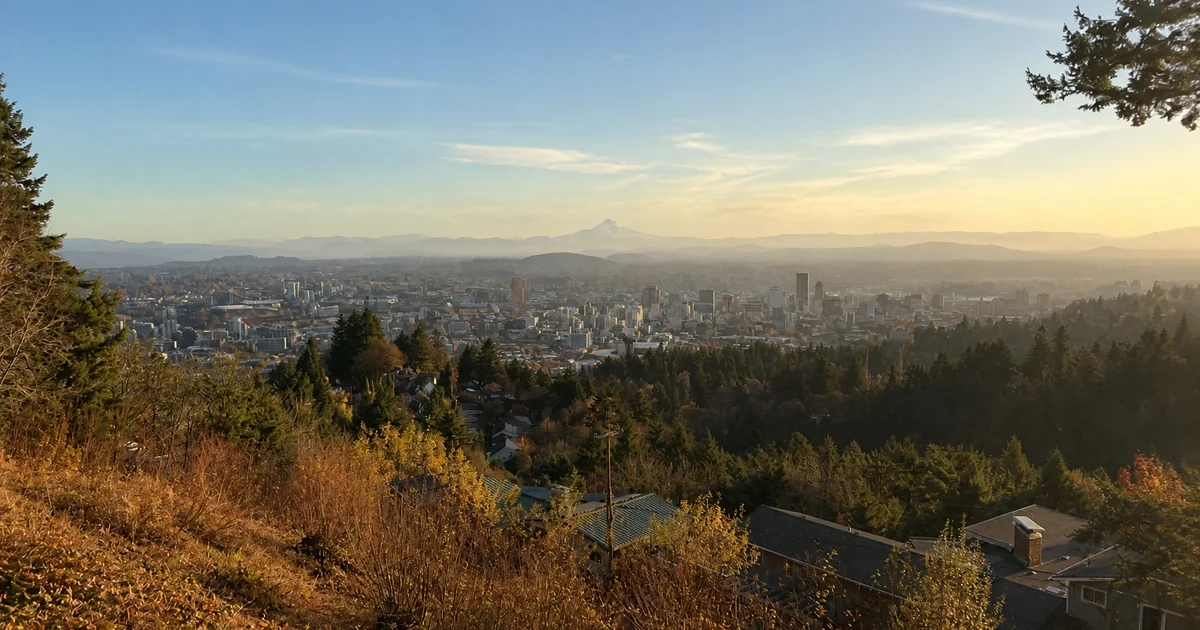
Eastmoreland is a Southeast Portland neighborhood of 1920s and 1930s Tudor Revival, English Cottage, and Colonial Revival homes on 7,000 to 10,000 square foot lots, wrapped around Reed College and the 155-acre Eastmoreland Golf Course. Crystal Springs Rhododendron Garden and Reed Canyon sit inside the neighborhood, and the Sellwood-Moreland commercial corridor is a short drive or walk away.





Living in Eastmoreland
A tree-lined residential neighborhood of 1920s and 1930s custom homes wrapped around Reed College and Eastmoreland Golf Course, with some of Portland's most mature street canopy.
Updated April 2026 by Joe SalingWhat Eastmoreland Is Really Like
Eastmoreland sits in Southeast Portland between SE 28th Avenue on the west and SE Reed College Place on the east, with Crystal Springs Boulevard at the north end and Johnson Creek Boulevard forming the southern edge. The neighborhood wraps around Reed College and the Eastmoreland Golf Course, which together occupy a large share of its footprint. The defining geography is the street canopy: block after block of mature elm, oak, and maple planted in the 1920s, with some of the widest tree-lined residential streets in the city.
A weekday morning here is the sound of Reed College bells, runners looping the golf course perimeter on SE Bybee Boulevard, and commuters pulling out toward SE McLoughlin Boulevard or SE Holgate. The neighborhood has almost no commercial footprint of its own, which is part of its character. For coffee, groceries, and restaurants, residents walk or drive the short distance to the Sellwood-Moreland corridor along SE 13th or SE Milwaukie Avenue. Weekend rhythms shift toward Crystal Springs Rhododendron Garden, which sits on the eastern edge and draws gardeners and photographers year-round.
On residential blocks you will see homeowners pruning rhododendrons, runners and dog walkers using the golf course loop, and cyclists heading to the Springwater Corridor a few blocks south. The Eastmoreland Neighborhood Association is active in tree preservation and has spent years in public debate over lot splits and teardowns, reflecting the neighborhood's commitment to its historic housing stock. The overall pace is residential and slower than inner Southeast Portland, with very little through-traffic on interior streets.
Looking for broader context on the area? Read my full Southeast Portland relocation guide for how Eastmoreland fits into the wider district.
Homes and Architecture in Eastmoreland
Eastmoreland's housing stock was built almost entirely between the 1920s and the 1940s, with a strong concentration of Tudor Revival, English Cottage, Colonial Revival, and Craftsman homes. Many were custom-built to individual designs rather than built as part of a subdivision, which gives the neighborhood more architectural variety than a typical Portland block. Lot sizes run larger than inner Southeast, with many homes sitting on 7,000 to 10,000 square foot lots, and corner parcels frequently larger. A smaller share of homes are mid-century ranches on the neighborhood's eastern and southern edges, and a limited number of 21st-century infill homes have been built where lot splits were approved before the 2018 historic district debate.
When you shop here, expect most listings to fall into one of three condition categories: carefully preserved original homes with period details intact (often owned for decades), homes that have been thoughtfully renovated with updated kitchens and baths while keeping original woodwork and floor plans, and occasional gut-renovation or new-build properties at the top of the price range. Competitive dynamics are typically strong on the preserved and well-renovated homes, which draw buyers from across the Portland metro. Two items worth budgeting for: older sewer laterals (often cast iron, sometimes original concrete at 90-plus years old) that commonly need repair or replacement, and oil tank decommissioning, which is still occasionally encountered in pre-war Southeast homes.
- Tudor Revival & English Cottage
- Colonial Revival
- Craftsman
- 7,000 to 10,000 sq ft lots common
- Premium for Southeast Portland
Geography, Amenities, and Getting Around
Tree Canopy & Reed College Grounds
Eastmoreland sits on gently rolling terrain with one of the most mature street tree canopies in the city. Reed College's 116-acre campus anchors the neighborhood's southeast interior, contributing an arboretum-like setting with the Reed Canyon and Crystal Springs Creek running through it. The canyon is open to the public and functions as a neighborhood natural area.
Sellwood-Moreland Corridor
The nearest full-service grocery and commercial corridor sits just west of the neighborhood along SE 13th Avenue and SE Milwaukie Avenue in Sellwood-Moreland, 3 to 5 minutes by car or a 15 to 20 minute walk from most Eastmoreland blocks. New Seasons Market, Safeway, restaurants, and Sellwood Park are all clustered there. For hardware and big-box shopping, SE McLoughlin Boulevard handles the larger stops.
Crystal Springs & Eastmoreland Golf
Crystal Springs Rhododendron Garden (9.5 acres with over 2,500 rhododendrons and azaleas) sits on the eastern edge near Reed College. The Eastmoreland Golf Course covers approximately 155 acres in the center of the neighborhood and doubles as a walking and running loop. The Reed Canyon and the Springwater Corridor multi-use trail (a few blocks south) round out the outdoor options.
Getting Around
Downtown Portland is approximately 15 to 20 minutes by car off-peak via SE McLoughlin Boulevard or SE 26th Avenue to the Ross Island Bridge. The MAX Orange Line runs along SE McLoughlin with stops at Bybee Boulevard and SE Tacoma/Johnson Creek, giving a direct transit option to downtown. TriMet bus lines run on SE Woodstock Boulevard and SE Holgate Boulevard. Peak commutes can push to 25 to 30 minutes.
Joe's Take on Eastmoreland
When buyers tell me they want a Southeast Portland neighborhood with larger lots, custom pre-war architecture, and a residential street character that is rare in the rest of inner Southeast, Eastmoreland is one of the first places I show them. The trade-off to understand up front is commercial density. Eastmoreland has almost no in-neighborhood retail or dining of its own; the daily-life amenities sit just outside its boundaries in Sellwood-Moreland and Woodstock. That is a feature for some buyers and a drawback for others.
The housing stock and location suit buyers who value architectural character and larger lots over walkable commercial amenities, and who appreciate proximity to Reed College, Crystal Springs Rhododendron Garden, and the Eastmoreland Golf Course as daily-life anchors. It works well for buyers with at least one car per household, since driving to groceries and restaurants is the norm. It is less of a fit for buyers who want to walk to a dozen shops and cafes on a single block, or who prefer new construction with modern systems and layouts.
Before you write an offer in Eastmoreland, there are a few specifics worth checking. Pull the sewer lateral scope on any pre-1950 home; cast-iron and concrete laterals at 90-plus years old commonly show cracks, root intrusion, or bellies. Confirm whether the property has had its underground oil tank decommissioned; DEQ certificates are the only clean documentation. Verify the specific school boundary at pps.net for your target address, since Portland Public Schools has redrawn Southeast boundaries before. If the lot has significant mature trees, check with the Eastmoreland Neighborhood Association and the city regarding any tree preservation requirements that may affect future remodels or additions.
Frequently Asked Questions About Eastmoreland
How do home prices in Eastmoreland compare to the rest of Southeast Portland?
Eastmoreland consistently prices at the upper end of the Southeast Portland range, typically above Sellwood-Moreland, Woodstock, and Mount Tabor on a per-square-foot basis, and well above Creston-Kenilworth, Foster-Powell, and Brentwood-Darlington. The custom pre-war architecture, larger lots, Reed College adjacency, and tree canopy all contribute to the premium positioning. Within Eastmoreland, prices vary significantly based on lot size, architectural pedigree, and proximity to the golf course or Crystal Springs. The current average sales price and active listing count are shown at the top of this page and update automatically with the market.
What are property taxes like in Eastmoreland?
Multnomah County property taxes in Eastmoreland run at an effective combined rate of approximately 1.3% to 2.1% of assessed value. Because Eastmoreland home values are higher than most Southeast neighborhoods, typical annual property tax bills are also higher in absolute dollars. Oregon Measure 50 caps assessed value growth at 3% per year, so long-held homes often pay less than their current market value would suggest; newly purchased homes are often reassessed closer to market. Verify current rates and the specific assessment for any address you are considering at multco.us/assessment-taxation.
Which schools serve Eastmoreland?
Eastmoreland is served by Portland Public Schools. The default elementary has historically been Duniway Elementary, with Sellwood Middle School and Cleveland High School as the default middle and high school assignments. All three have rated among the higher-performing schools in Portland Public Schools on GreatSchools and Niche. Portland Public Schools uses open enrollment, so residents can apply to any PPS school regardless of address, though acceptance at oversubscribed schools is not guaranteed. Verify the specific address assignment with the PPS boundary finder at pps.net, since boundaries can change.
What is the housing stock like in Eastmoreland?
Housing stock is predominantly 1920s to 1940s Tudor Revival, English Cottage, Colonial Revival, and Craftsman homes, many built to custom designs rather than tract subdivisions. Lot sizes commonly run 7,000 to 10,000 square feet, noticeably larger than most inner Southeast neighborhoods. A smaller share of mid-century ranches sits on the neighborhood's eastern and southern edges. Infill is limited due to the neighborhood's active tree preservation and lot-split advocacy. Amenity access includes Crystal Springs Rhododendron Garden, the Eastmoreland Golf Course (approximately 155 acres), Reed College grounds, and Reed Canyon.
How long is the commute from Eastmoreland to downtown Portland?
Downtown Portland is typically 15 to 20 minutes by car outside of peak hours via SE McLoughlin Boulevard and the Ross Island Bridge, or via SE 26th Avenue to the Hawthorne or Morrison bridges. Peak-hour drives can push to 25 to 30 minutes. The MAX Orange Line runs along SE McLoughlin with stops at SE Bybee Boulevard and SE Tacoma/Johnson Creek, offering a direct transit option to downtown. Bike commuters use the SE 28th Avenue greenway and the Springwater Corridor for flat, low-traffic routes.
Is Eastmoreland walkable?
Eastmoreland is moderately walkable for residential walking and outdoor access, but has limited in-neighborhood commercial walkability. The tree-lined streets, golf course loop, Reed Canyon trails, and Crystal Springs garden make daily recreational walking excellent. For groceries, coffee, and restaurants, most residents walk or drive to the Sellwood-Moreland corridor along SE 13th or SE Milwaukie Avenue, a 15 to 20 minute walk from most blocks. Walk Scores vary from the 40s on interior blocks to the 60s near SE Bybee Boulevard.
How does Eastmoreland compare to nearby Southeast Portland neighborhoods?
Eastmoreland typically prices above Sellwood-Moreland, Woodstock, Reed, and Mount Tabor on a per-square-foot basis, reflecting the custom pre-war architecture and larger lots. Sellwood-Moreland offers more walkable commercial amenities but smaller lots and more craftsman bungalows rather than custom Tudors. Reed, directly north, shares Reed College adjacency and similar architecture at a slightly lower price. Woodstock offers more in-neighborhood retail along SE Woodstock Boulevard at a lower price point. Eastmoreland is the pick when custom pre-war architecture, mature canopy, and larger lots matter more than walkable retail.
Can I add an ADU or short-term rental in Eastmoreland?
Most Eastmoreland lots are eligible for an accessory dwelling unit under Portland's Residential Infill Project rules, which allow up to one ADU on a single-family lot. The larger lot sizes in Eastmoreland can make detached ADU construction more flexible than in tighter inner-Southeast neighborhoods. Short-term rentals require a City of Portland STR permit; Type A permits require owner-occupancy, and Type B permits (non-owner-occupied) have stricter limits. Tree preservation rules can affect where an ADU can be sited on lots with significant mature trees. Verify ADU eligibility, tree code implications, and STR permit type for your specific address with Portland Bureau of Development Services (portland.gov/bds).
Thinking About Buying in Eastmoreland?
I help buyers navigate Southeast Portland neighborhoods every week. Let's talk about what you need, what you can afford, and whether Eastmoreland is the right fit.
Schedule a Free Consultation Or call Joe directly: (503) 910-7364Joe Saling · Saling Homes at eXp Realty · 10+ years serving Portland metro buyers and sellers
Saling Homes at eXp Realty is committed to the principles of the Fair Housing Act and Equal Housing Opportunity. Licensed in the State of Oregon. Information deemed reliable but not guaranteed. Verify all data independently before making real estate decisions.
MY BLOGS

MARKET TRENDS

HOUSING DETAIL
NEARBY SCHOOL & BUSINESS
7214 SE 34TH AVE, Portland, OR 97202
Single Family Home 3 Beds 2.1 Baths 2,684 SqFt
Listed by Coldwell Banker Bain
7538 SE 28TH AVE, Portland, OR 97202
Single Family Home 4 Beds 3.1 Baths 3,751 SqFt
Listed by Windermere Realty Trust7531 SE REED COLLEGE PL, Portland, OR 97202
Single Family Home 4 Beds 3 Baths 2,567 SqFt
Listed by Berkshire Hathaway HomeServices NW Real Estate7607 SE 31ST AVE, Portland, OR 97202
Single Family Home 4 Beds 3.1 Baths 3,832 SqFt
Listed by John L. Scott Portland Central6821 SE Reed College PL, Portland, OR 97202
Single Family Home 4 Beds 3.1 Baths 3,174 SqFt
Listed by MORE Realty2925 SE CARLTON ST, Portland, OR 97202
Single Family Home 4 Beds 4 Baths 4,114 SqFt
Listed by Windermere Realty Trust6627 SE 34TH AVE, Portland, OR 97202
Single Family Home 5 Beds 3 Baths 3,077 SqFt
Listed by Neighbors Realty7349 SE 30TH AVE, Portland, OR 97202
Single Family Home 4 Beds 2 Baths 3,046 SqFt
Listed by Keller Williams Realty Portland Elite3328 SE CRYSTAL SPRINGS BLVD, Portland, OR 97202
Single Family Home 4 Beds 3.1 Baths 4,217 SqFt
Listed by Windermere Realty Trust

Coming Soon
Commute Score
Coming Soon
Coming Soon
DEMOGRAPHICS
Population:
Density:
Households:
Gender
Coming Soon
Coming Soon
Coming Soon
Coming Soon

Joe Saling
joe@sellingpdxhomes.com