

OR Portland
Brooklyn
Brooklyn is a compact inner Southeast Portland neighborhood tucked between Powell Boulevard, the Willamette River, and the historic Brooklyn Rail Yard. The housing stock skews heavily toward pre-1940 Craftsman bungalows, Old Portland four-squares, and Victorian cottages on streetcar-era lots. SE Milwaukie Avenue carries the local commercial life, with walkable coffee, dining, and quick Ross Island Bridge access to downtown.


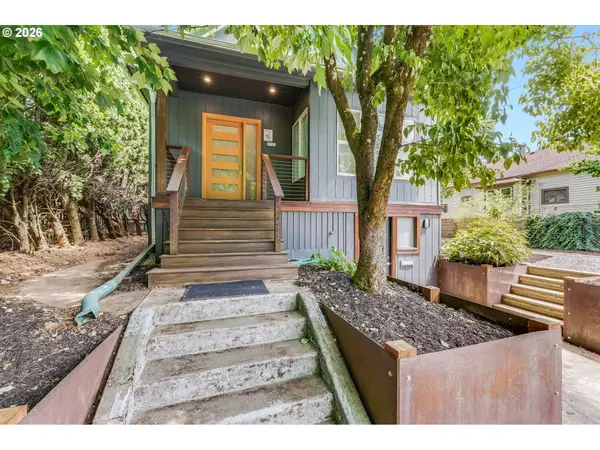



Living in Brooklyn
A compact inner Southeast pocket between Powell and the Willamette with Craftsman bungalows, the Brooklyn Rail Yard, and walkable SE Milwaukie Avenue anchoring a tight-knit commercial block.
Updated April 2026 by Joe SalingWhat Brooklyn Is Really Like
Brooklyn sits in inner Southeast Portland between Powell Boulevard on the north, McLoughlin Boulevard and the Willamette River on the west, and roughly SE Holgate on the south, with SE 26th Avenue forming the eastern edge. The defining geography is the historic Brooklyn Rail Yard along the western flank, which has shaped the neighborhood's layout and character since the 1800s. SE Milwaukie Avenue runs through the heart of the district as the main commercial spine, and the neighborhood sits low on the valley floor, a few minutes from downtown across the Ross Island Bridge.
A weekday morning in Brooklyn sounds like Union Pacific trains shifting in the rail yard, the hum of Powell and McLoughlin traffic at the edges, and coffee service starting at Slow Bar and the cafes on Milwaukie. By midday the residential blocks quiet down and Milwaukie Avenue stays active with neighborhood errands, library foot traffic, and lunch crowds at Fat Albert's Cafe or the Tin Shed on Powell. Weekends shift toward Brooklyn City Park, Powell Park, and the trails at Oaks Bottom Wildlife Refuge just to the west beyond the rail yard and McLoughlin.
On residential blocks you will see porches loaded with bicycles, front-yard gardens squeezed onto small lots, and people walking dogs toward the Springwater Corridor trailhead. The Brooklyn Action Corps runs one of the more active neighborhood associations in the city, with regular cleanups, tree plantings, and coffee meetups at the Brooklyn Park Pub. The rail yard provides a constant soundtrack that is part of the neighborhood's identity, not a bug. Close-in commute access pulls bike riders and transit commuters to the corridor, and remote workers often post up on Milwaukie Avenue for the afternoon.
Looking for broader context on the area? Read my full Southeast Portland relocation guide for how Brooklyn fits into the wider district.
Homes and Architecture in Brooklyn
Brooklyn's housing stock is dominated by pre-1940 construction, with Craftsman bungalows, Old Portland four-squares, and modest Victorian cottages making up the majority of single-family homes. Lots tend to run narrow and deep, typically 4,000 to 5,000 square feet, a signature of the late-1800s and early-1900s streetcar-era platting. A layer of 1950s and 1960s ranch infill shows up on scattered blocks, and the last 15 years have added skinny homes and occasional duplex conversions near the commercial corridor. The rail yard and Powell Boulevard anchor the edges, and blocks closer to those arteries trade some quiet for a lower entry price.
When you shop here, expect to see a wide spectrum of condition. Some bungalows have been carefully restored with original fir floors, tile fireplaces, and updated mechanical systems; others still carry 1920s knob-and-tube, single-pane windows, and foundations that predate modern seismic code. Competitive dynamics sit in the middle of the Southeast range: not the bidding intensity of Hosford-Abernethy or Sunnyside, but faster and more multiple-offer than outer Southeast blocks. Two items to underwrite before you offer: older sewer laterals with tree-root intrusion from the mature canopy, and any train-related noise patterns you can only assess by standing on the porch at different times of day.
- Craftsman bungalows
- Old Portland four-squares
- Victorian cottages
- 4,000 to 5,000 sq ft lots
- Entry point for inner Southeast
Dining, Parks, and Daily Life
Slow Bar
A Brooklyn fixture known for a late-night burger and a well-poured cocktail, Slow Bar has been one of the corridor's gravity points for years. The space is dim and unfussy and the patio fills up on warm evenings. A reliable first stop for buyers trying to read the corridor's personality.
Jade Bistro and Patisserie
A longtime Portland name for Vietnamese food and French-inspired pastries just off Powell near Brooklyn's northern edge. Pho and banh mi at lunch, sit-down dinners, and a bakery case that rotates weekly. One of the neighborhood's most cited dining draws for buyers checking out the area.
Brooklyn Park Pub
Set across from Brooklyn City Park, the Brooklyn Park Pub functions as the unofficial neighborhood living room. Trivia nights, a covered patio, and a crowd that skews local on weeknights. Walkable from most residential blocks, and the place neighbors actually bump into each other.
Brooklyn City Park
Brooklyn's central green space sits along SE Milwaukie with a playground, picnic shelter, tennis and basketball courts, and a large open field. The adjacent community garden adds a weekend rhythm through spring and summer. Smaller than the district's destination parks but punches above its weight for a 5-acre footprint.
Daily Errands
New Seasons Seven Corners on SE Division handles most grocery runs about 5 minutes by car, and Safeway on SE Powell is closer for basics. Fred Meyer Hawthorne sits about 8 minutes north. For hardware, Ace Hardware on SE Woodward and the larger Home Depot on SE Holgate cover most needs within a 10-minute drive.
Getting Around
Brooklyn has some of the best close-in commute access in Southeast. Downtown Portland is 8 to 12 minutes by car via the Ross Island Bridge off-peak, and the TriMet Line 19 runs down Milwaukie with direct downtown service. Bike commuters use SE Clinton and SE Bush neighborhood greenways, and Springwater Corridor access sits a few blocks west. MAX Orange Line stations are a short drive at SE Tacoma or Bybee.
Joe's Take on Brooklyn
When buyers ask me where they can still find a pre-1940 Portland bungalow at an entry price for inner Southeast, Brooklyn is usually the first answer I give. You get the Craftsman character of Hosford-Abernethy or Sunnyside, the close-in commute of a neighborhood sitting across the river from downtown, and a real walkable commercial block on SE Milwaukie, all at prices that typically run noticeably below the Division and Hawthorne corridor neighborhoods two miles north. The honest trade-off is the rail yard and the Powell Boulevard edge. Both contribute real ambient noise, and both need to be evaluated block by block.
The housing stock and location suit buyers who value close-in access and pre-war architecture over a quieter residential setting, who bike or take transit to downtown, and who want a walkable dining block without paying the premium of the inner Hawthorne or Division corridors. It is less of a fit for buyers who need a consistently quiet block for remote work or who want large lots; Brooklyn's streetcar-era platting runs small, and the rail yard sound carries further than some buyers expect on a first Saturday visit.
Before you write an offer in Brooklyn, there are a few specifics worth checking. Pull the sewer scope on any pre-1940 home; cast-iron laterals under the tree canopy commonly show root intrusion. Stand on the porch at different times of day to hear the rail yard activity pattern for your specific block (it varies substantially by distance and wind direction). Check the flood and high-groundwater maps for lots closer to McLoughlin; a handful of blocks sit low enough that basement moisture is an ongoing maintenance item. Finally, verify the specific school boundary for your address at pps.net, since Portland Public Schools has redrawn Brooklyn-area boundaries before.
Frequently Asked Questions About Brooklyn
How do home prices in Brooklyn compare to the rest of Southeast Portland?
Brooklyn typically prices below the inner Southeast corridor neighborhoods of Hosford-Abernethy, Sunnyside, and Richmond on a per-square-foot basis, while running roughly in line with Creston-Kenilworth and slightly above Foster-Powell and Brentwood-Darlington. The rail yard proximity, Powell Boulevard edge, and smaller lot sizes all pull entry prices down relative to the Division and Hawthorne corridor blocks. Brooklyn is often the answer for buyers who want a pre-1940 Southeast bungalow without the Division corridor premium. The current average sales price and active listing count are shown at the top of this page and update automatically with the market.
What are property taxes like in Brooklyn?
Multnomah County property taxes in Brooklyn run at an effective combined rate of approximately 1.3% to 2.1% of assessed value, in line with the rest of the county. Because Brooklyn home values sit below inner Southeast corridor neighborhoods, typical annual property tax bills are also lower on average. Oregon Measure 50 caps assessed value growth at 3% per year, so long-held homes often pay less than their market value would suggest. Verify current rates and the specific assessment for any address you are considering at multco.us/assessment-taxation.
Which schools serve Brooklyn?
Brooklyn is served by Portland Public Schools. The default assignments for most addresses are Winterhaven K-8 or Llewellyn Elementary, continuing to Hosford Middle School and Cleveland High School, though boundaries vary within the neighborhood. Portland Public Schools uses open enrollment, so residents can apply to any PPS school regardless of address, though acceptance at oversubscribed schools is not guaranteed. Verify the specific address assignment with the PPS boundary finder at pps.net, since boundaries can change.
What is the housing stock like in Brooklyn?
Housing stock is predominantly pre-1940 Craftsman bungalows, Old Portland four-squares, and Victorian cottages on 4,000 to 5,000 square foot lots, with scattered 1950s and 1960s ranch infill and some 21st-century skinny homes near the commercial corridor. Amenity access includes Brooklyn City Park (5 acres with courts and a community garden), Powell Park, and quick access to the Springwater Corridor trail via nearby blocks. The neighborhood is bounded by the historic Brooklyn Rail Yard on the west and Powell Boulevard on the north, which shape both the character and the block-by-block noise profile.
How long is the commute from Brooklyn to downtown Portland?
Downtown Portland is typically 8 to 12 minutes by car via the Ross Island Bridge outside of peak hours, which is among the shortest drives of any Southeast neighborhood. TriMet Line 19 runs down SE Milwaukie Avenue with direct downtown service. Bike commuters use SE Clinton and SE Bush neighborhood greenways into the Central Eastside and across the Tilikum Crossing. The MAX Orange Line stations at SE Tacoma or SE Bybee are a short drive and connect directly to downtown and South Waterfront.
Is Brooklyn walkable?
Walkability is moderate to strong near SE Milwaukie Avenue and lighter on the outer residential blocks. Homes within three to four blocks of Milwaukie can walk to Slow Bar, Brooklyn Park Pub, Brooklyn City Park, and Milwaukie corridor coffee and groceries. Blocks closer to the rail yard or Powell Boulevard have fewer pedestrian destinations but still connect to the commercial spine in under ten minutes on foot. Walk Scores in the neighborhood generally range from the 70s along Milwaukie to the low 60s on the outer residential edges.
How does Brooklyn compare to nearby Southeast Portland neighborhoods?
Brooklyn typically prices below Hosford-Abernethy, Sunnyside, and Richmond on a per-square-foot basis, and roughly in line with Creston-Kenilworth and Sellwood-Moreland at the lower end of their range. Sellwood has more commercial density along SE 13th and a quieter feel without a rail yard. Hosford-Abernethy has higher prices and walkability to both Division and the Central Eastside. Creston-Kenilworth has similar pre-war stock and lower prices but less corridor density than Brooklyn's Milwaukie spine. Brooklyn is the pick when a buyer wants close-in commute access, a walkable commercial block, and pre-war architecture at an inner Southeast entry price.
Can I add an ADU or short-term rental in Brooklyn?
Most Brooklyn lots are eligible for an accessory dwelling unit under Portland's Residential Infill Project rules, which allow up to one ADU on a single-family lot. The smaller, streetcar-era lot sizes here can make ADU footprints tighter than in outer Southeast, so verify setback and FAR math early. Short-term rentals require a City of Portland STR permit; Type A permits require owner-occupancy, and Type B permits (non-owner-occupied) have stricter limits and are harder to obtain. Verify both ADU eligibility and STR permit type for your specific address with Portland Bureau of Development Services (portland.gov/bds) before counting on rental income.
Thinking About Buying in Brooklyn?
I help buyers navigate Southeast Portland neighborhoods every week. Let's talk about what you need, what you can afford, and whether Brooklyn is the right fit.
Schedule a Free Consultation Or call Joe directly: (503) 910-7364Joe Saling · Saling Homes at eXp Realty · 10+ years serving Portland metro buyers and sellers
Saling Homes at eXp Realty is committed to the principles of the Fair Housing Act and Equal Housing Opportunity. Licensed in the State of Oregon. Information deemed reliable but not guaranteed. Verify all data independently before making real estate decisions.
MY BLOGS

HOUSING DETAIL
MARKET TRENDS

NEARBY SCHOOL & BUSINESS
1404 SE LAFAYETTE ST, Portland, OR 97202
Single Family Home 4 Beds 2 Baths 2,097 SqFt
Listed by RE/MAX Equity Group
3786 SE 11TH AVE, Portland, OR 97202
Single Family Home 4 Beds 2.1 Baths 3,010 SqFt
Listed by Inhabit Real Estate3604 SE 7TH AVE, Portland, OR 97202
Multi-Family 6 Beds 4 Baths 2,376 SqFt
Listed by Summa Real Estate Group4219 SE 25TH AVE, Portland, OR 97202
Single Family Home 3 Beds 1 Bath 888 SqFt
Listed by Harnish Company Realtors4415 SE 26TH AVE, Portland, OR 97202
Single Family Home 3 Beds 2 Baths 1,402 SqFt
Listed by Realty Works Group3035 SE 9TH AVE, Portland, OR 97202
Single Family Home 4 Beds 2.1 Baths 2,418 SqFt
Listed by Keller Williams Realty Professionals4315 SE 16TH AVE, Portland, OR 97202
Single Family Home 4 Beds 3 Baths 2,720 SqFt
Listed by MORE Realty3424 SE 10TH AVE, Portland, OR 97202
Multi-Family 4 Beds 4 Baths 2,201 SqFt
Listed by LUXE Forbes Global Properties921 SE MALL ST, Portland, OR 97202
Multi-Family 4 Beds 2 Baths 2,621 SqFt
Listed by H & H Preferred Real Estate821 SE BUSH ST, Portland, OR 97202
Single Family Home 3 Beds 1.1 Baths 1,825 SqFt
Listed by Redfin3371 SE 7TH AVE, Portland, OR 97202
Multi-Family 7 Beds 4 Baths 2,937 SqFt
Listed by Realty Portland3333 SE 11TH AVE SE, Portland, OR 97202
Single Family Home 4 Beds 4 Baths 3,460 SqFt
Listed by RMS Investment Real Estate2458 SE CORA ST, Portland, OR 97202
Single Family Home 5 Beds 3.1 Baths 2,565 SqFt
Listed by Windermere Realty Trust2458 SE CORA ST, Portland, OR 97202
Multi-Family 5 Beds 3.1 Baths
Listed by Windermere Realty Trust1407 SE CORA ST, Portland, OR 97202
Commercial 26,702 SqFt
Listed by Premiere Property Group, LLC3511 SE MILWAUKIE AVE, Portland, OR 97202
Commercial 2,480 SqFt
Listed by Georgetown Realty Inc.1590 SE HOLGATE BLVD, Portland, OR 97202
Vacant Land 0.1 Acres
Listed by All Professionals Real Estate4033 SE MILWAUKIE AVE, Portland, OR 97202
Commercial 8,620 SqFt
Listed by Westlake Properties

Coming Soon
Commute Score
Coming Soon
Coming Soon
DEMOGRAPHICS
Population:
Density:
Households:
Gender
Coming Soon
Coming Soon
Coming Soon
Coming Soon

Joe Saling
joe@sellingpdxhomes.com