

OR Portland
Mt. Tabor







Living in Mt. Tabor
A Southeast neighborhood wrapped around a 190-acre extinct volcano park with historic reservoirs, Craftsman and Tudor housing stock, and walkable access to the SE Belmont, Hawthorne, and Division commercial corridors.
Updated April 2026 by Joe SalingWhat Mt. Tabor Is Really Like
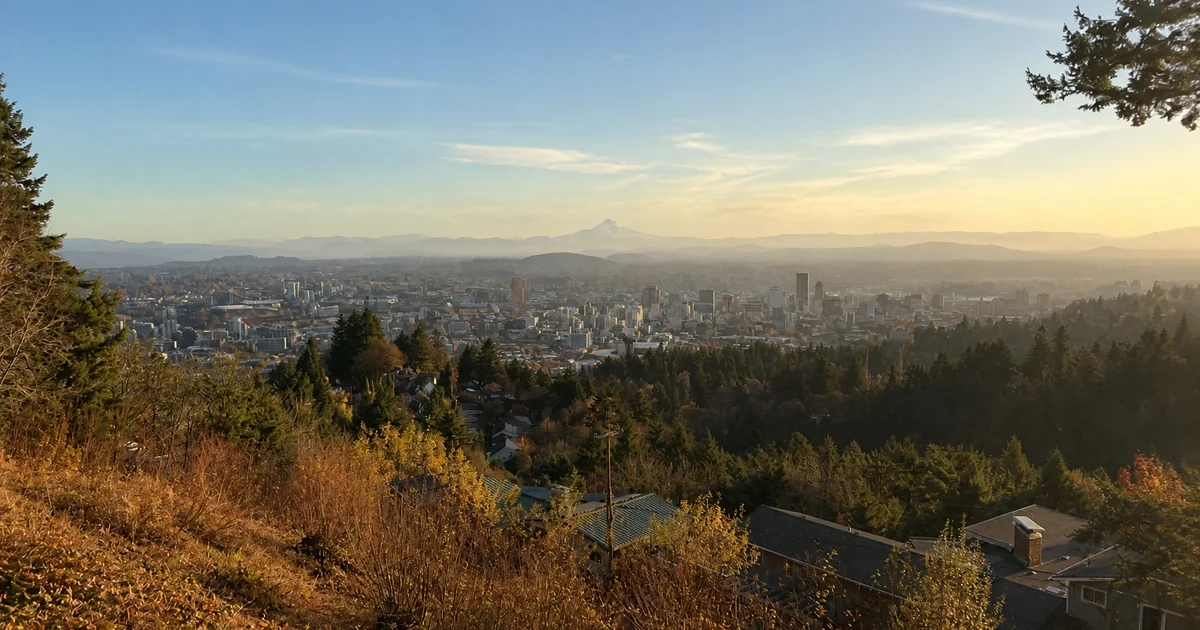
Mt. Tabor sits about five miles east of downtown Portland, with boundaries running from SE 49th Avenue on the west to SE 76th Avenue on the east, and from East Burnside Street on the north to SE Division Street on the south. The defining geographic feature is Mt. Tabor itself, a 636-foot extinct volcanic cinder cone and one of only a handful of volcanoes contained within U.S. city limits. Mt. Tabor Park, roughly 190 to 196 acres of wooded hiking trails, reservoirs listed on the National Register of Historic Places, and panoramic views of downtown Portland and Mt. Hood, takes up a significant portion of the neighborhood's footprint. Commercial corridors run along all four borders (Burnside, Belmont, Hawthorne, Division, and 60th), leaving the interior largely residential.
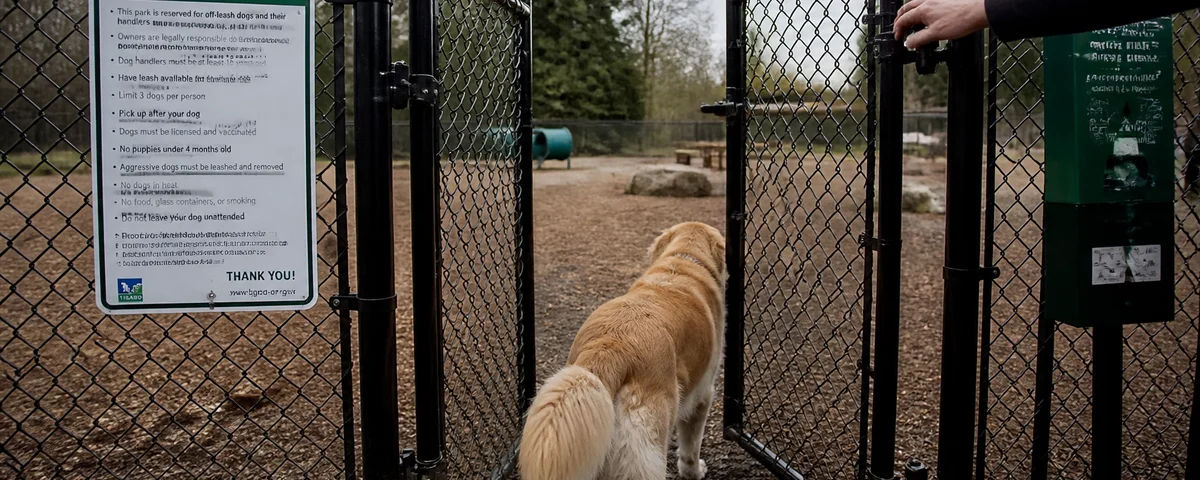
A weekday morning here is runners on the paved park loops, dog walkers heading to the off-leash area, and coffee cups at Tabor Bread on Belmont. Mt. Tabor's reservoirs and open-air cinder cone crater make it genuinely different from any other Portland neighborhood; there is no real substitute for climbing the park stairs and looking out at the downtown skyline with Mt. Hood on the horizon. Evenings cluster on the bordering corridors: Belmont for cocktails at the Sapphire Hotel and pizza at Stark Street Pizza, Hawthorne for the historic commercial row, Division for the restaurant strip, and Coquine on the neighborhood's western edge, which has drawn seven James Beard Foundation Award nominations.
On any given block you will see gardeners working planted front yards, cyclists climbing the park's switchbacks for the view, remote workers walking to Albina Press or Rain or Shine for their Monday morning reset, and Mt. Tabor residents heading to the annual PDX Adult Soapbox Derby that runs gravity-powered homemade cars down the park's slopes. The Mount Tabor Neighborhood Association meets the second Wednesday of each month and runs the Mt. Tabor Art Walk each May, where residents open their homes and studios to the public. Powell Boulevard on the southern edge historically creates a visible price delineation within the neighborhood; homes north of Powell tend to price meaningfully above homes south of Powell on the same square footage.
Looking for broader context on the area? Read my full Southeast Portland relocation guide for how Mt. Tabor fits into the wider district.
Homes and Architecture in Mt. Tabor
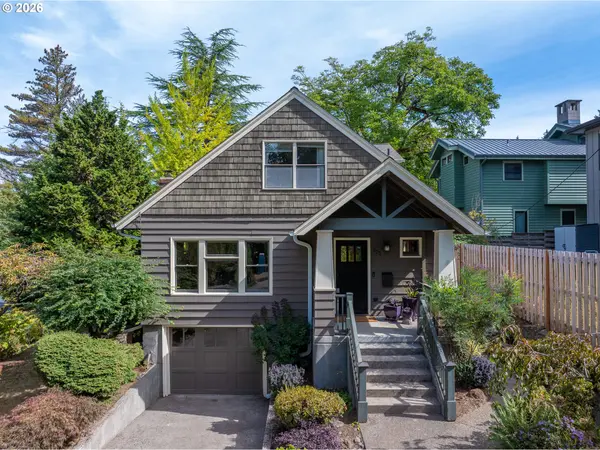
Mt. Tabor's housing stock is one of the most architecturally varied in Portland. You see early-1900s Craftsman bungalows, Tudor-style homes, English cottages, foursquares, Mediterranean bungalows perched above street grade, and 1950s mid-century ranches, along with a meaningful layer of post-1980s Craftsman-inspired new construction on scraped lots. West-slope blocks, particularly those along and near Thorburn and Yamhill, command the premium because they face downtown Portland and Mt. Hood with view lines that few other Portland neighborhoods offer. Lot sizes vary widely, from 5,000 square feet on interior grid blocks to large custom-home parcels on the volcanic slope that can run 10,000 square feet or more.
When you shop here, expect most listings to show a mix of preserved original architecture (oak floors, period millwork, period fixtures) and updated systems (kitchens, baths, roofs). Competitive dynamics are consistently strong; Mt. Tabor attracts a national buyer pool drawn by the park and the view blocks, and homes in the western half of the neighborhood commonly see multiple offers. Two items worth pricing in before offering: foundation condition on homes built into the volcanic slope (some Mt. Tabor hillside homes have historical settlement issues worth investigating), and sewer lateral condition on pre-1940 homes under mature canopy where cast-iron or concrete laterals at 80-plus years old commonly need spot repair or full replacement.
- Craftsman bungalows
- Tudor & English cottages
- Mid-century ranch & newer infill
- 5,000 to 10,000+ sq ft lots
- Premium for Southeast Portland
Dining, Parks, and Daily Life
Coquine
A Mt. Tabor institution with seven James Beard Foundation Award nominations, serving a five-course prix fixe menu inside a historic storefront on the neighborhood's western edge. This is the special-occasion destination that puts Mt. Tabor on the broader Portland restaurant map.
Tabor Bread
An artisan bakery just off Hawthorne turning out daily fresh bread, pastries, and a small but serious lunch menu. This is the neighborhood's Saturday morning ritual stop, and the grain-forward loaves are unlike most Portland bread.
Sapphire Hotel / Albina Press
The Sapphire Hotel on Belmont is a long-running cocktail bar housed in a historic building that functions as Mt. Tabor's evening gathering point. Albina Press and Rain or Shine Coffee House provide the weekday coffee-shop anchors for remote workers on the Belmont side of the neighborhood.
Mt. Tabor Park
The neighborhood's defining asset. Approximately 190 acres with wooded hiking trails, an off-leash dog park, three historic open reservoirs on the National Register of Historic Places, tennis and basketball courts, playgrounds, and a community garden. Hosts the annual Mt. Tabor Bike Race Series and the PDX Adult Soapbox Derby.
Daily Errands
A QFC anchors the north end of the neighborhood near Burnside, with New Seasons Market on SE Division and 32nd a short drive or bike ride west and a Fred Meyer on Hawthorne within 10 minutes. Portland Nursery on SE Division and 50th is a landmark garden center that has served the neighborhood for more than 100 years.
Getting Around
Downtown Portland is typically 15 to 20 minutes by car via Hawthorne, Division, or I-84 off-peak. TriMet bus lines run along Hawthorne (14), Division (4), Belmont (15), Burnside (20), and 60th Avenue (75). The MAX Blue Line is about 5 to 10 minutes by car north at the 60th or 82nd Avenue stations. Bike commuting uses the Salmon Street greenway or the Clinton Street greenway heading west.
Joe's Take on Mt. Tabor
When buyers ask me what makes Mt. Tabor different from the other premium inner-SE neighborhoods, my answer is always the park. You can live in Richmond or Sunnyside and walk to Hawthorne or Belmont; you can live in Mt. Tabor and do all of that plus walk straight uphill into 190 acres of wooded trails, volcanic crater, and downtown skyline view. The housing stock is more architecturally varied than almost any other SE neighborhood, and the west-facing blocks genuinely deliver view lines you cannot find again in Portland for the same money. The honest trade-off is the price premium; Mt. Tabor consistently prices at the top of the Southeast range, and competition for the best blocks is real.
The housing stock and location suit buyers who want architectural variety (Craftsman, Tudor, English cottage, mid-century), direct daily access to a major urban park, and walkable access to at least three major Portland commercial corridors (Belmont, Hawthorne, and Division) from a single home. Remote workers and people who prioritize outdoor recreation do particularly well here because the park effectively functions as a backyard amenity. It is less of a fit for buyers on a tighter budget (Montavilla, Foster-Powell, or Mt. Scott-Arleta deliver comparable housing stock at lower price points), or for buyers who want a westside-centered commute.
Before you write an offer in Mt. Tabor, a few specifics worth pulling. For any hillside home west of 60th Avenue, ask for foundation and drainage history; homes built into the volcanic slope can show settlement or drainage issues that need investigation. Get a sewer scope on any pre-1940 home; cast-iron laterals under mature canopy commonly show root intrusion, and replacement on sloped properties can run higher than flat-lot neighborhoods. Check the specific school boundary at pps.net since Mt. Tabor includes both Glencoe Elementary (west side) and Atkinson Elementary (east side) feeder zones, and both feed to Mt. Tabor Middle School and then to Franklin High School. Finally, walk the block on a Saturday afternoon to test the specific traffic profile; some Mt. Tabor blocks are genuinely tucked into the park and see almost no traffic, while others sit on Belmont spillover.
Frequently Asked Questions About Mt. Tabor
How do home prices in Mt. Tabor compare to the rest of Southeast Portland?
Mt. Tabor consistently prices at the top of the Southeast Portland range. Expect to pay more than Richmond, Sunnyside, Hosford-Abernethy, and most of Sellwood-Moreland, and roughly in line with Laurelhurst and Eastmoreland. Within Mt. Tabor itself, homes north of Powell Boulevard typically price above homes south of Powell on comparable square footage, and west-facing hillside blocks with downtown or Mt. Hood views command a significant premium. The current average sales price and active listing count are shown at the top of this page and update automatically with the market.
What are property taxes like in Mt. Tabor?
Multnomah County property taxes in Mt. Tabor run at an effective combined rate of approximately 1.3% to 2.1% of assessed value, in line with the rest of the county. Because Mt. Tabor home values run at the higher end of the Southeast range, typical annual property tax bills are correspondingly higher than neighboring areas for comparable square footage. Oregon Measure 50 caps assessed value growth at 3% per year, so long-held homes often pay less than their market value would suggest. Verify current rates and the specific assessment for any address you are considering at multco.us/assessment-taxation.
Which schools serve Mt. Tabor?
Mt. Tabor is served by Portland Public Schools. The default elementary assignment depends on address: the western half of the neighborhood generally feeds to Glencoe Elementary (home to a well-regarded Mandarin Chinese Immersion program) at SE 51st and Belmont, and the eastern half generally feeds to Atkinson Elementary on SE 58th. Both continue to Mt. Tabor Middle School, which hosts the Spanish Dual Language Immersion program. High school students continue to Franklin High School, rated B-plus by Niche. Verify the specific address assignment at the PPS boundary finder at pps.net, since boundaries can change.
What is the housing stock like in Mt. Tabor?
Housing stock is one of the most architecturally varied in Portland, including early-1900s Craftsman bungalows, Tudor-style homes, English cottages, foursquares, Mediterranean-style bungalows, 1950s mid-century ranches, and post-1980s Craftsman-inspired new construction on scraped lots. Lot sizes vary from 5,000 square feet on interior grid blocks to 10,000-plus square feet on hillside parcels. Amenity access includes Mt. Tabor Park (approximately 190 acres with trails, reservoirs on the National Register of Historic Places, off-leash dog park, and panoramic views), Portland Nursery on SE Division, and walkable access to the Belmont, Hawthorne, and Division commercial corridors.
How long is the commute from Mt. Tabor to downtown Portland?
Downtown Portland is typically 15 to 20 minutes by car via Hawthorne, Division, or I-84 outside of peak hours, with the Hawthorne Bridge providing direct downtown access. Peak-hour drives can stretch to 25 to 35 minutes depending on bridge and I-84 conditions. TriMet bus 14 on Hawthorne and bus 4 on Division provide direct downtown service. The MAX Blue Line is a short drive or bus ride north at the 60th or 82nd Avenue stations. Bike commuters use the SE Salmon or SE Clinton greenways for the ride west toward the river and downtown.
Is Mt. Tabor walkable?
Walkability is strong overall and varies by location within the neighborhood. Blocks within three to four blocks of Belmont, Hawthorne, Division, or Burnside can walk to restaurants, coffee shops, and grocery within 10 to 15 minutes, with Walk Scores in the 70s to 80s. Interior blocks directly adjacent to Mt. Tabor Park score lower for commercial walkability but offer direct trail access and the park's paved loops for walking and running. Most streets have well-maintained sidewalks. Bike access is strong via the SE Salmon greenway and the bike-friendly residential streets that cross the neighborhood.
How does Mt. Tabor compare to nearby Southeast Portland neighborhoods?
Mt. Tabor typically prices above Richmond and Sunnyside to the west, well above Montavilla and South Tabor to the east and south, and in line with Laurelhurst farther north. Richmond has denser Hawthorne commercial access at a lower price point. Sunnyside has similar Belmont access but without the park amenity. Laurelhurst offers larger homes and historic-district protections but lacks Mt. Tabor's volcanic park. Mt. Tabor is the pick when a buyer wants architectural variety, direct access to a major urban park and volcanic cinder cone, walkable access to multiple commercial corridors, and is prepared to pay the corresponding premium.
Can I add an ADU or short-term rental in Mt. Tabor?
Most Mt. Tabor lots are eligible for an accessory dwelling unit under Portland's Residential Infill Project rules, which allow up to one ADU on a single-family lot. Larger hillside parcels in the neighborhood can be particularly well-suited for detached ADU construction, though slope and drainage can add complexity. Short-term rentals require a City of Portland STR permit; Type A permits require owner-occupancy, and Type B permits (non-owner-occupied) have stricter limits and are harder to obtain. Verify both ADU eligibility and STR permit type for your specific address with Portland Bureau of Development Services (portland.gov/bds) before counting on rental income.
Thinking About Buying in Mt. Tabor?
I help buyers navigate Southeast Portland neighborhoods every week. Let's talk about what you need, what you can afford, and whether Mt. Tabor is the right fit.
Schedule a Free Consultation Or call Joe directly: (503) 910-7364Joe Saling · Saling Homes at eXp Realty · 10+ years serving Portland metro buyers and sellers
Saling Homes at eXp Realty is committed to the principles of the Fair Housing Act and Equal Housing Opportunity. Licensed in the State of Oregon. Information deemed reliable but not guaranteed. Verify all data independently before making real estate decisions.
MY BLOGS

MARKET TRENDS

HOUSING DETAIL
NEARBY SCHOOL & BUSINESS
516 SE 54TH AVE, Portland, OR 97215
Single Family Home 3 Beds 2.1 Baths 2,248 SqFt
Listed by Cascade Hasson Sotheby's International Realty
4951 SE SALMON ST, Portland, OR 97215
Single Family Home 3 Beds 2 Baths 2,692 SqFt
Listed by Windermere Realty Trust7303 SE SHERMAN ST, Portland, OR 97215
Single Family Home 2 Beds 1 Bath 819 SqFt
Listed by Triple Oaks Realty LLC5558 SE STARK ST, Portland, OR 97215
Single Family Home 3 Beds 2 Baths 2,385 SqFt
Listed by John L. Scott922 SE 66TH PL, Portland, OR 97215
Single Family Home 4 Beds 2 Baths 3,298 SqFt
Listed by Alameda Realty LLC530 SE 70TH AVE, Portland, OR 97215
Single Family Home 4 Beds 3.1 Baths 3,083 SqFt
Listed by Neighborhood Works535 SE 70TH AVE, Portland, OR 97215
Single Family Home 4 Beds 2 Baths 2,883 SqFt
Listed by Think Real Estate5433 SE DIVISION ST, Portland, OR 97206
Single Family Home 3 Beds 1.1 Baths 2,949 SqFt
Listed by Cascade Hasson Sotheby's International Realty1847 SE 56TH AVE, Portland, OR 97215
Single Family Home 4 Beds 1.2 Baths 3,120 SqFt
Listed by Windermere Realty Trust7033 SE STARK ST, Portland, OR 97215
Single Family Home 4 Beds 2 Baths 2,556 SqFt
Listed by Neighbors Realty1915 SE 59TH AVE, Portland, OR 97215
Single Family Home 3 Beds 2 Baths 2,498 SqFt
Listed by Windermere Realty Trust6126 SE STEPHENS ST, Portland, OR 97215
Single Family Home 4 Beds 2.1 Baths 3,828 SqFt
Listed by Neighborhood Works461 SE 72ND AVE, Portland, OR 97215
Single Family Home 4 Beds 3 Baths 2,407 SqFt
Listed by Coldwell Banker Bain5131 SE MADISON ST, Portland, OR 97215
Single Family Home 4 Beds 1.1 Baths 2,724 SqFt
Listed by Laurie Sonnenfeld Realty6626 SE Stark ST, Portland, OR 97215
Single Family Home 3 Beds 2 Baths 2,476 SqFt
Listed by Lark and Fir Realty LLC505 SE 73RD AVE, Portland, OR 97215
Single Family Home 3 Beds 2 Baths 2,193 SqFt
Listed by Soldera Properties, Inc2371 SE 51ST AVE, Portland, OR 97215
Single Family Home 3 Beds 3 Baths 2,004 SqFt
Listed by Works Real Estate6154 SE TAYLOR CT, Portland, OR 97215
Single Family Home 4 Beds 2.1 Baths 3,332 SqFt
Listed by Equity Oregon Real Estate526 SE 65TH AVE, Portland, OR 97215
Single Family Home 4 Beds 4.1 Baths 3,917 SqFt
Listed by Move Real Estate Inc1324 SE 51ST AVE, Portland, OR 97215
Single Family Home 5 Beds 3 Baths 2,594 SqFt
Listed by Oregon First

Coming Soon
Commute Score
Coming Soon
Coming Soon
DEMOGRAPHICS
Population:
Density:
Households:
Gender
Coming Soon
Coming Soon
Coming Soon
Coming Soon

Joe Saling
joe@sellingpdxhomes.com