

OR Portland
Brentwood-Darlington
Brentwood-Darlington is a large residential neighborhood on Portland's southern edge, bordered by SE 45th, SE 82nd, SE Duke, and the Clackamas County line. Housing stock runs the full range from 1920s bungalows to mid-century ranches to 21st-century infill on 7,000 to 10,000 square foot lots, with Brentwood Park and Errol Heights Natural Area providing 26-plus acres of open space.





Living in Brentwood-Darlington
A large residential neighborhood on Portland's southern edge with a mix of bungalows, ranches, and newer infill, multiple parks including Errol Heights, and active redevelopment.
Updated April 2026 by Joe SalingWhat Brentwood-Darlington Is Really Like
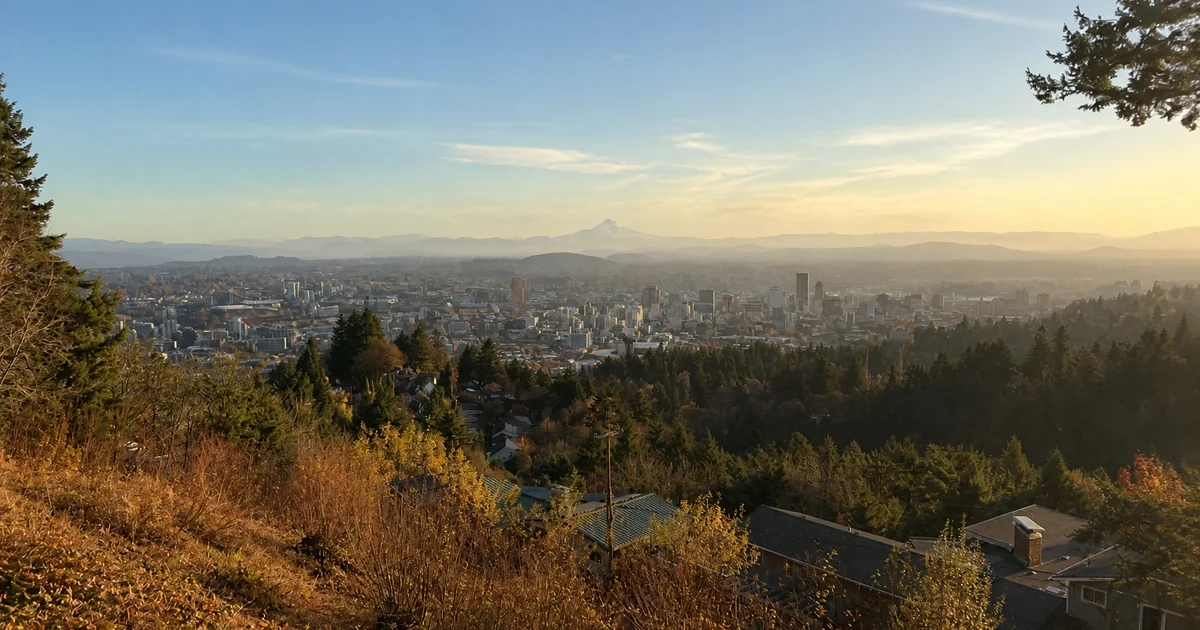
Brentwood-Darlington sits at the southern edge of Portland, bordered by SE 45th Avenue on the west, SE 82nd Avenue on the east, SE Duke Street on the north, and the Clackamas County line (SE Clatsop Street) on the south. Neighbors are Woodstock to the northwest, Mt. Scott-Arleta to the north, Lents to the northeast, and the city of Milwaukie to the south. The neighborhood sits on a plateau above Johnson Creek and below Mount Scott, which gives some blocks meaningful elevation and territorial views toward the south and west. It was annexed into Portland only in 1986, and the legacy of that late annexation still shows up in the infrastructure: some blocks have sidewalks, some do not, and street conditions vary more than most Portland neighborhoods.
A weekday morning here is residential in a way that inner Southeast is not. Traffic moves on SE Duke, SE Flavel, SE 52nd, SE 72nd, and SE 82nd, which form the commercial and commute arterials, while the interior streets carry mostly local cars. You hear birds in Errol Heights and Brentwood Park, dogs at the off-leash area at Brentwood Park, and the low hum of 82nd traffic along the eastern edge. Saturdays shift toward the parks and the Cartlandia food cart pod at SE 82nd and the Springwater Corridor, which has its own bar and draws a steady crowd. The Springwater Corridor Trail forms part of the southern boundary and gives residents car-free access west to Sellwood and east to Gresham.
On residential blocks you will see larger yards than most inner Southeast neighborhoods, community gardens (Brentwood Community Garden and the Portland State University Learning Gardens Laboratory both operate here), and regular demolition-and-infill activity. Brentwood-Darlington has seen some of the highest per-square-foot demolition rates in Portland, as developers buy older homes on large lots and replace them with new construction. The neighborhood association is active, running cleanups and fighting for sidewalk infill and neighborhood greenway projects. Three small Jewish cemeteries sit within the boundaries, along with the century-old Apostolic Faith Camp Meeting Park.
Looking for broader context on the area? Read my full Southeast Portland relocation guide for how Brentwood-Darlington fits into the wider district.
Homes and Architecture in Brentwood-Darlington
Brentwood-Darlington has one of the most varied housing stocks in Portland, which reflects the neighborhood's long unincorporated history and late annexation. You will find 1920s and 1930s bungalows and cottages on some blocks, 1940s Cape Cods built for post-war housing demand, 1950s and 1960s mid-century ranches (the largest single share), small Old Portland foursquares, and significant new construction from the last 15 years as demolition-and-rebuild activity has accelerated. Lot sizes tend to run larger than inner Southeast, with many parcels at 7,000 to 10,000 square feet, and some larger still on the irregular blocks that predate the annexation.
When you shop here, expect the widest condition range of any Southeast neighborhood. Some homes are still in original condition and sell to buyers planning full renovations; some have been renovated by long-term owners; and a growing share are new construction 2-story homes built on teardown lots. Competitive dynamics vary dramatically by block: newer construction on the western side near Woodstock draws more interest than older stock near 82nd, and Errol Heights has emerged as a micro-pocket that prices above the neighborhood average. Two items to price in: older homes here frequently have partial-quality construction (the wartime and post-war housing was sometimes built on modest budgets with substandard foundations or framing), and many streets still lack sidewalks, which can trigger future city assessment projects.
- Mid-century ranch (largest share)
- 1920s & 1940s bungalows & Cape Cods
- 21st-century infill construction
- 7,000 to 10,000 sq ft lots common
- Entry point for Southeast Portland
Geography, Amenities, and Getting Around
Errol Heights & Johnson Creek Plateau
The neighborhood sits on a plateau between Johnson Creek to the south and Mount Scott to the north, with meaningful elevation changes across the east-west run. Errol Heights Park and Natural Area preserve 12 acres of Johnson Creek watershed with walking paths, the Errol Creek wetland area, and a community garden. The bluff along SE Flavel Drive in the western portion gives some blocks territorial views.
Woodstock & 82nd Commercial Arterials
Closest full-service grocery: the Safeway on SE Woodstock or Trader Joe's at SE 82nd and Johnson Creek Boulevard, both about 5 to 7 minutes by car. Woodstock's SE Woodstock Boulevard commercial corridor (5 minutes northwest) has restaurants, the Bipartisan Cafe, and the weekly farmers market. For a walkable food destination inside the neighborhood, Three Sisters Nixtamal, Misdemeanor Meadows, and Mehri's Bakery cluster near SE 52nd/72nd and Flavel. Cartlandia food cart pod sits at the eastern edge at SE 82nd and the Springwater.
Brentwood Park & Springwater Corridor
Brentwood Park on SE 60th and Duke is the neighborhood's largest green space at 14 acres, with an off-leash dog area, soccer and softball fields, tennis, basketball, volleyball, playground, and paved paths. Errol Heights Park adds 12 acres of natural area on SE 52nd and Tenino. Hazeltine Park provides additional play space. The Springwater Corridor Trail access point at Cartlandia connects to 21 miles of paved multi-use trail.
Getting Around
Downtown Portland is typically 18 to 22 minutes by car outside of peak hours via SE 52nd to Powell Boulevard and the Ross Island Bridge, or via I-205 to I-84. Peak-hour drives stretch to 30 minutes or more. The MAX Green Line runs along I-205 about 2 miles east, with the Lents/SE Foster Road and Flavel Road stations closest. TriMet bus service runs along SE Duke, SE Flavel, SE 82nd, and SE 52nd. Bike access is improving as the city builds out the Knapp and Ogden greenways, but sidewalk coverage remains uneven.
Joe's Take on Brentwood-Darlington
When buyers tell me they want single-family housing in Southeast Portland at an entry price point, with larger lots and ADU or rebuild potential, Brentwood-Darlington is consistently on my short list. You typically pay the lowest per-square-foot in Southeast west of 82nd here, you get more lot for the money, and you get real outdoor access through Brentwood Park, Errol Heights, and the Springwater Corridor. The honest trade-off is that Brentwood-Darlington is not a walk-to-everything neighborhood. There is no central commercial corridor inside the boundaries; the commercial life happens at SE Woodstock, SE 82nd, SE Flavel, and SE 52nd, which are arterial-scaled rather than pedestrian-scaled.
The housing stock and location suit buyers who want more lot for the money, can live with a car-dependent daily pattern, and value access to parks and the Springwater Corridor. It works well for buyers considering ADU construction or long-term rebuild potential, for commuters using the MAX Green Line on I-205, and for anyone who wants a genuine single-family feel at an entry Southeast price. It is less of a fit for buyers who want to walk to a Friday night dinner, who need consistent sidewalk coverage block to block, or who need proximity to an inner Southeast commercial corridor without driving to it.
Before you write an offer in Brentwood-Darlington, there are a few specifics worth checking. Pull the PortlandMaps permit history on any home; the neighborhood has seen active demolition and rebuild activity, and some neighboring properties may be redevelopment targets that could affect your view or sun exposure. Because of the late annexation and varying construction era, inspection results vary more here than in most Portland neighborhoods. Pay attention to foundation condition on post-war homes, knob-and-tube wiring in pre-1945 stock, and sewer lateral condition on anything pre-1960. Check whether your target street has sidewalks and whether there is a pending city sidewalk assessment, which can run several thousand dollars per lot. For blocks closer to SE 82nd, drive by at 5pm to hear what arterial noise sounds like on your specific street.
Frequently Asked Questions About Brentwood-Darlington
How do home prices in Brentwood-Darlington compare to the rest of Southeast Portland?
Brentwood-Darlington consistently prices below most inner Southeast neighborhoods on a per-square-foot basis, and is one of the last neighborhoods west of SE 82nd Avenue with entry-level price points. Expect to pay less than Woodstock, Mt. Scott-Arleta, Sellwood-Moreland, Eastmoreland, Creston-Kenilworth, and Foster-Powell. Prices run roughly in line with Lents to the east and the northern portions of Milwaukie to the south. The larger lot sizes and active demolition-and-rebuild dynamic mean some newer construction homes price well above the neighborhood average. The current average sales price and active listing count are shown at the top of this page and update automatically with the market.
What are property taxes like in Brentwood-Darlington?
Multnomah County property taxes in Brentwood-Darlington run at an effective combined rate of approximately 1.3% to 2.1% of assessed value, in line with the rest of the county. Because most Brentwood-Darlington home values tend to be lower than inner Southeast neighborhoods, typical annual property tax bills are also lower on average. Newly constructed infill homes tend to carry higher assessed values and therefore higher tax bills. Oregon Measure 50 caps assessed value growth at 3% per year, so long-held homes often pay less than their market value would suggest. Verify current rates and the specific assessment for any address at multco.us/assessment-taxation.
Which schools serve Brentwood-Darlington?
Brentwood-Darlington is served by Portland Public Schools. The default elementary assignments are split between Whitman Elementary (covering most of the neighborhood) and Woodmere Elementary. Middle school students continue to Lane Middle School, and high school students attend Cleveland High School, one of the higher-rated high schools in Portland Public Schools. GreatSchools and Niche ratings for Whitman and Woodmere run around a C to C-plus, while Cleveland High School typically rates an A-minus. Portland Public Schools uses open enrollment, so residents can apply to any PPS school regardless of address. Verify the specific address assignment at pps.net, since boundaries can change.
What is the housing stock like in Brentwood-Darlington?
Housing stock spans a wider era than most Portland neighborhoods: 1920s and 1930s bungalows and cottages, 1940s Cape Cods from the wartime housing boom, 1950s and 1960s mid-century ranches (the largest single share), Old Portland foursquares, and a growing share of 21st-century new construction on teardown lots. Lot sizes typically run 7,000 to 10,000 square feet, larger than most inner Southeast neighborhoods. Amenity access includes Brentwood Park (14 acres), Errol Heights Park and Natural Area (12 acres), Hazeltine Park, the Brentwood Community Garden, the Portland State University Learning Gardens Laboratory, and Springwater Corridor trail access at the Cartlandia food cart pod.
How long is the commute from Brentwood-Darlington to downtown Portland?
Downtown Portland is typically 18 to 22 minutes by car outside of peak hours via SE 52nd to Powell Boulevard and the Ross Island Bridge, or via I-205 to I-84. Peak-hour drives can stretch to 30 minutes or more, especially on Powell. The MAX Green Line, accessed at the Lents/SE Foster Road or Flavel Road stations about 2 miles east, offers a transit option to downtown in about 30 minutes. TriMet bus service runs along SE Duke, SE Flavel, SE 82nd, and SE 52nd. Bike commuters use the Springwater Corridor for a flat paved route to Sellwood and the Eastbank Esplanade.
Is Brentwood-Darlington walkable?
Brentwood-Darlington is not a walkable neighborhood in the inner-Portland sense. There is no central commercial corridor inside the boundaries, many residential streets still lack sidewalks (a legacy of late annexation into Portland in 1986), and daily errands typically require a car or a short drive to Woodstock, SE 82nd, or SE Flavel. Walk Scores in the neighborhood are generally in the 40s to low 60s. The city has been slowly building out sidewalk infill and neighborhood greenways on SE Knapp and SE Ogden, which is gradually improving the situation. The Springwater Corridor Trail provides excellent car-free bike access.
How does Brentwood-Darlington compare to nearby Southeast Portland neighborhoods?
Brentwood-Darlington typically prices below Woodstock, Mt. Scott-Arleta, Sellwood-Moreland, and Eastmoreland on a per-square-foot basis, and roughly in line with Lents to the east and Ardenwald-Johnson Creek to the west. Woodstock has a walkable SE Woodstock Boulevard commercial corridor and the Saturday farmers market. Mt. Scott-Arleta has a more walkable SE Foster Road frontage. Sellwood-Moreland and Eastmoreland are premium neighborhoods with strong commercial density and higher prices. Brentwood-Darlington is the pick when a buyer wants larger lots, active infill and ADU potential, and an entry Southeast price, and is willing to trade commercial walkability for that package.
Can I add an ADU or short-term rental in Brentwood-Darlington?
Most Brentwood-Darlington lots are eligible for an accessory dwelling unit under Portland's Residential Infill Project rules, which allow up to one ADU on a single-family lot. The larger lot sizes here make ADU construction more flexible than tighter inner-Southeast parcels, and the active infill market has produced a meaningful inventory of newer duplex and cottage-cluster construction. Short-term rentals require a City of Portland STR permit; Type A permits require owner-occupancy, and Type B permits (non-owner-occupied) have stricter limits and are harder to obtain. Verify ADU eligibility, lot coverage limits, and STR permit type for your specific address with Portland Bureau of Development Services (portland.gov/bds) before counting on rental income.
Thinking About Buying in Brentwood-Darlington?
I help buyers navigate Southeast Portland neighborhoods every week. Let's talk about what you need, what you can afford, and whether Brentwood-Darlington is the right fit.
Schedule a Free Consultation Or call Joe directly: (503) 910-7364Joe Saling · Saling Homes at eXp Realty · 10+ years serving Portland metro buyers and sellers
Saling Homes at eXp Realty is committed to the principles of the Fair Housing Act and Equal Housing Opportunity. Licensed in the State of Oregon. Information deemed reliable but not guaranteed. Verify all data independently before making real estate decisions.
MY BLOGS

Market Trends

housing detail

Coming Soon
Listing Detail
5321 SE HENDERSON ST, Portland, OR 97206
3 Beds 2 Baths 1,215 SqFt
Single Family Home
Listed by Premiere Property Group, LLC
7804 SE Henderson ST, Portland, OR 97206
3 Beds 2.1 Baths 1,332 SqFt
Townhouse
Listed by Windermere Realty Trust7838 SE 62ND AVE, Portland, OR 97206
3 Beds 1 Bath 1,028 SqFt
Single Family Home
Listed by Premiere Property Group, LLC4815 SE FLAVEL DR, Portland, OR 97206
3 Beds 1 Bath 902 SqFt
Single Family Home
Listed by Portland's Alternative Inc., Realtors7741 SE 77TH PL, Portland, OR 97206
4 Beds 2.1 Baths 2,172 SqFt
Single Family Home
Listed by MORE Realty4945 SE OGDEN ST, Portland, OR 97206
3 Beds 2.1 Baths 1,366 SqFt
Single Family Home
Listed by Dream Dwelling7106 SE COOPER ST, Portland, OR 97206
3 Beds 1 Bath 1,440 SqFt
Single Family Home
Listed by Keller Williams Sunset Corridor6041 SE LAMBERT ST, Portland, OR 97206
2 Beds 2.1 Baths 983 SqFt
Townhouse
Listed by Opt5720 SE DUKE ST, Portland, OR 97206
2 Beds 2.1 Baths 1,052 SqFt
Townhouse
Listed by Opt7045 SE 60th AVE, Portland, OR 97206
2 Beds 2.1 Baths 978 SqFt
Single Family Home
Listed by Keller Williams Realty Portland Premiere5338 SE HENDERSON ST, Portland, OR 97206
3 Beds 2.1 Baths 1,812 SqFt
Single Family Home
Listed by Redfin7807 SE OGDEN ST, Portland, OR 97206
3 Beds 1 Bath 876 SqFt
Single Family Home
Listed by Capitol Real Estate5304 SE RURAL ST, Portland, OR 97206
2 Beds 1.1 Baths 848 SqFt
Single Family Home
Listed by Move Real Estate Inc6841 SE 48TH AVE, Portland, OR 97206
2 Beds 1 Bath 1,056 SqFt
Single Family Home
Listed by KJK Properties PC8115 SE 64TH AVE, Portland, OR 97206
3 Beds 1 Bath 1,040 SqFt
Single Family Home
Listed by John L. Scott Portland Central8101 SE 65TH AVE, Portland, OR 97206
3 Beds 1 Bath 1,240 SqFt
Single Family Home
Listed by Urban Nest Realty5741 SE OGDEN ST, Portland, OR 97206
3 Beds 1 Bath 816 SqFt
Single Family Home
Listed by eXp Realty, LLC7406 SE 78TH AVE, Portland, OR 97206
3 Beds 2.1 Baths 1,332 SqFt
Townhouse
Listed by Windermere Realty Trust5355 SE BYBEE BLVD, Portland, OR 97206
4 Beds 2 Baths 1,680 SqFt
Single Family Home
Listed by Windermere Realty Trust6626 SE 67TH AVE, Portland, OR 97206
1 Bed 1 Bath 780 SqFt
Single Family Home
Listed by Keller Williams Realty Professionals
Commute Score
Coming Soon
demographics
Population
Density
Households
Gender
Coming Soon
Education
Coming Soon
Coming Soon
Coming Soon

GET MORE INFORMATION