OR Milwaukie
Ardenwald-Johnson Creek


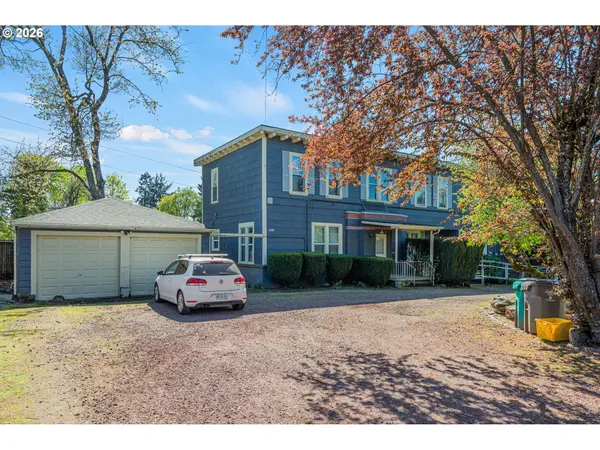





Living in Ardenwald-Johnson Creek
A cross-jurisdictional residential neighborhood straddling Portland and Milwaukie, with Tideman Johnson Natural Area, Springwater Corridor trail access, and larger lots than inner Southeast.
Updated April 2026 by Joe SalingWhat Ardenwald-Johnson Creek Is Really Like
Ardenwald-Johnson Creek is one of the more unusual neighborhoods in Portland: it straddles two cities (Portland and Milwaukie) and two counties (Multnomah and Clackamas), with the county line running east to west through the middle of it. Boundaries run from the backyards along Crystal Springs Boulevard (the Eastmoreland border) on the north, to the Milwaukie city center near Harrison and King roads on the south, and from the railroad tracks along SE McLoughlin Boulevard on the west to SE 42nd Avenue and Johnson Creek Boulevard on the east. SE 32nd Avenue runs north to south through the middle, and Johnson Creek itself forms the northern edge of most of the neighborhood. The defining geography is the creek corridor and the mature tree canopy that follows it.
A weekday morning here is quieter than most Southeast neighborhoods. There is no major commercial corridor inside the boundaries, so the streets carry mostly residents heading to work rather than through-traffic. You hear trains (the railroad along McLoughlin is active), birds along Johnson Creek, and the low hum of McLoughlin a few blocks west. By midday, cyclists and walkers are on the Springwater Corridor Trail, which bisects the neighborhood along Johnson Creek and provides a car-free route west to Sellwood and east toward Boring. Saturdays shift toward Ardenwald Park, where the neighborhood association hosts summer concerts, and Sellwood, a five-minute drive west for groceries, restaurants, and the New Seasons on SE 13th.
On residential blocks you will see gardeners working larger-than-inner-Southeast yards, cyclists rolling out to the Springwater, and neighbors chatting on porches. The Ardenwald Neighborhood Association is notably active for a small cross-jurisdictional neighborhood, running the summer concert series, reading-in-the-park programs, and cleanup days. The neighborhood has a rural or semi-rural feel on some blocks, especially closer to the creek, with larger lots, older trees, and less continuous sidewalk coverage than the standard Portland grid. The active Union Pacific railroad tracks running parallel to McLoughlin do cross the neighborhood and can trigger occasional wait times at crossings.
Looking for broader context on the area? Read my full Southeast Portland relocation guide for how Ardenwald-Johnson Creek fits into the wider district.
Homes and Architecture in Ardenwald-Johnson Creek
Ardenwald-Johnson Creek's housing stock runs across a wider era than most Portland neighborhoods. You will find small 1920s and 1930s bungalows and cottages on the Portland side, 1940s through 1960s mid-century ranches (the largest share of inventory) across both the Portland and Milwaukie portions, a handful of Victorian and Old Portland style homes, and newer infill from the 1980s to 2000s on redeveloped lots. Lot sizes tend to run larger than inner Southeast, with many homes sitting on 6,000 to 9,000 square foot lots and some creek-adjacent or semi-rural blocks with quarter-acre or larger parcels.
When you shop here, expect to underwrite two distinct variables that most Portland neighborhoods do not have: the railroad and the jurisdictional split. The Union Pacific mainline runs along the neighborhood's western edge, so blocks closer to McLoughlin will have train noise at varying frequencies. The jurisdictional split means that two otherwise identical homes two blocks apart can be in different cities, different counties, and different school districts, with different property tax structures. Condition varies widely: many mid-century ranches sell in original condition to buyers planning updates, while other homes have been fully renovated over the last decade. Competitive dynamics are typically less intense than inner Southeast, which is part of the appeal for price-conscious buyers.
- 1920s & 1930s bungalows
- Mid-century ranch (largest share)
- Victorian & Old Portland
- 6,000 to 9,000 sq ft lots common
- Entry-to-mid range for Southeast Portland
Geography, Amenities, and Getting Around
Johnson Creek & Tideman Johnson Natural Area
A 25-mile tributary of the Willamette River forms the northern edge of the neighborhood, and the 7.5-acre Tideman Johnson Natural Area preserves a stretch of wetland and forest with paved and natural trails. The creek and its canopy shape the feel of the entire neighborhood. Tideman Johnson is a notable birdwatching destination and connects directly to the Springwater Corridor Trail.
Sellwood & Milwaukie Downtown
Closest full-service grocery: New Seasons Sellwood on SE 13th, about 5 to 7 minutes by car. For restaurants, bars, and specialty shops, residents drive 5 minutes west to Sellwood-Moreland's SE 13th corridor, or 5 minutes southeast to downtown Milwaukie. Hardware and big-box shopping route to the Trader Joe's and Home Depot near SE 82nd and Johnson Creek Boulevard, about 8 minutes east.
Springwater Corridor & Ardenwald Park
The Springwater Corridor Trail, a 21-mile paved multi-use path, runs through the neighborhood along Johnson Creek with two access points (SE 28th and the Johnson Creek Boulevard trailhead). It links to Sellwood, the Eastbank Esplanade, and east to Boring. Ardenwald Park (at the southern edge across from the elementary school) has a playground, sheltered picnic area, and summer concert amphitheater.
Getting Around
Downtown Portland is typically 15 to 20 minutes by car via SE McLoughlin Boulevard (99E) outside of peak hours. Peak-hour drives stretch to 25 to 30 minutes. The MAX Orange Line runs through downtown Milwaukie (Park Avenue Station is a short drive or bike ride south) with direct service to downtown Portland in about 25 minutes. TriMet bus service runs along Tacoma Street and McLoughlin. Springwater Corridor bike access to Sellwood and downtown via the Esplanade is a meaningful car-free option.
Joe's Take on Ardenwald-Johnson Creek
When buyers tell me they want a larger lot, meaningful outdoor access via the Springwater and Johnson Creek, and a price point below inner Southeast, Ardenwald-Johnson Creek is one of the neighborhoods I bring up. You typically pay less per square foot here than in Sellwood-Moreland, Eastmoreland, or Woodstock, you get more lot for the money, and you get direct access to 21 miles of the Springwater Corridor Trail. The honest trade-offs are the jurisdictional complexity, the railroad running along the western edge, and the absence of a walkable commercial corridor inside the neighborhood. This is not a walk-to-restaurants neighborhood. This is a drive-to-Sellwood or drive-to-Milwaukie neighborhood with a strong bike and trail network.
The housing stock and location suit buyers who want more lot for the money, prefer a semi-rural residential feel over a commercial corridor, and value creek-adjacent outdoor access. It works well for cyclists who use the Springwater daily, for remote workers who do not need a daily downtown commute, and for anyone who values proximity to Sellwood and Milwaukie without paying Sellwood prices. It is less of a fit for buyers who want to walk to a Friday night dinner, who need a low-noise environment free of train horns (the western blocks can hear them at all hours), or who need to be in a single consistent school district.
Before you write an offer in Ardenwald-Johnson Creek, there are a few specifics worth checking. The jurisdictional question drives everything: confirm which city (Portland or Milwaukie), which county (Multnomah or Clackamas), and which school district (Portland Public Schools or North Clackamas Schools) your specific address falls in, because all three affect property taxes, services, and school assignments. Most of the neighborhood feeds into North Clackamas School District (Ardenwald Elementary, Alder Creek Middle, Milwaukie High), but this varies by block. Pull the sewer scope on older homes; many pre-1960 homes have cast-iron laterals with root intrusion. For creek-adjacent homes, check the FEMA flood map for Johnson Creek flooding history. For homes on the western blocks, drive by at 10pm and 5am to hear what the train frequency sounds like on your specific street.
Frequently Asked Questions About Ardenwald-Johnson Creek
How do home prices in Ardenwald-Johnson Creek compare to the rest of Southeast Portland?
Ardenwald-Johnson Creek typically prices below inner Southeast neighborhoods like Sellwood-Moreland, Eastmoreland, and Woodstock on a per-square-foot basis. Prices run roughly in line with Brentwood-Darlington to the east and the northern portions of Milwaukie to the south. The larger lots, semi-rural feel, and absence of a walkable commercial corridor all contribute to the lower entry point relative to Sellwood. The jurisdictional split (some homes in Milwaukie, some in Portland) creates variability. The current average sales price and active listing count are shown at the top of this page and update automatically with the market.
What are property taxes like in Ardenwald-Johnson Creek?
Property taxes vary by jurisdiction. Homes on the Portland/Multnomah County side run at approximately 1.3% to 2.1% of assessed value. Homes on the Milwaukie/Clackamas County side run at a similar effective range but with different taxing districts, which can shift the specific number. Oregon Measure 50 caps assessed value growth at 3% per year across both counties, so long-held homes often pay less than market value would suggest. Always verify the specific tax bill for a target address at multco.us/assessment-taxation (Multnomah) or clackamas.us/at (Clackamas) before writing an offer, since the jurisdictional line runs through the middle of the neighborhood.
Which schools serve Ardenwald-Johnson Creek?
Most of the neighborhood is served by North Clackamas School District, not Portland Public Schools, even for homes on the Portland side of the boundary. The default assignments for most addresses are Ardenwald Elementary (the community center of the neighborhood), Alder Creek Middle School, and Milwaukie High School. A small section on the far northern edge may assign to Portland Public Schools. Niche rates North Clackamas School District a B overall. Verify the specific address assignment at nclack.k12.or.us or pps.net depending on jurisdiction, since boundaries can change and the cross-jurisdictional nature of this neighborhood makes defaults unreliable.
What is the housing stock like in Ardenwald-Johnson Creek?
Housing stock spans a wider era than most Portland neighborhoods: 1920s and 1930s bungalows and cottages on the Portland side, 1940s through 1960s mid-century ranches (the largest share), Victorian and Old Portland style homes, and newer infill from the 1980s to 2000s. Lot sizes typically run 6,000 to 9,000 square feet, with some creek-adjacent parcels running larger. Amenity access includes Tideman Johnson Natural Area, the Springwater Corridor Trail, Ardenwald Park, and Water Tower Park. The active Union Pacific railroad runs along the western edge, which affects blocks near McLoughlin.
How long is the commute from Ardenwald-Johnson Creek to downtown Portland?
Downtown Portland is typically 15 to 20 minutes by car via SE McLoughlin Boulevard (99E) outside of peak hours. Peak-hour drives can stretch to 25 to 30 minutes. The MAX Orange Line, accessed at the Milwaukie/Main Street or Park Avenue stations a short drive or bike ride south of the neighborhood, offers a direct transit option to downtown in about 25 minutes. The Springwater Corridor Trail provides a flat paved bike commute to the Eastbank Esplanade and downtown in roughly 30 to 40 minutes for a regular cyclist.
Is Ardenwald-Johnson Creek walkable?
Ardenwald-Johnson Creek is not a walkable neighborhood in the inner-Portland sense. There is no commercial corridor inside the boundaries, daily errands require a car or a short drive to Sellwood or downtown Milwaukie, and many blocks lack continuous sidewalks. Walk Scores in the neighborhood are generally in the 30s to 50s. The outdoor walking options lean strongly toward the Springwater Corridor Trail and the Tideman Johnson Natural Area rather than commercial-corridor walks. Bike access is strong via the Springwater Corridor, which connects to Sellwood, the Esplanade, and east toward Boring.
How does Ardenwald-Johnson Creek compare to nearby Southeast Portland neighborhoods?
Ardenwald-Johnson Creek typically prices below Sellwood-Moreland, Eastmoreland, and Woodstock on a per-square-foot basis, and roughly in line with Brentwood-Darlington to the east. Sellwood-Moreland has a dense walkable commercial corridor on SE 13th, New Seasons at the core, and higher prices. Eastmoreland has larger homes on larger lots at a premium price point. Woodstock has a walkable commercial stretch on SE Woodstock with restaurants and a farmers market. Ardenwald-Johnson Creek is the pick when a buyer wants the Springwater Corridor and Tideman Johnson Natural Area access, larger lots, and an entry-to-mid Southeast price, and is willing to trade commercial walkability for that package.
Can I add an ADU or short-term rental in Ardenwald-Johnson Creek?
ADU eligibility and short-term rental rules depend on which jurisdiction your address is in. On the Portland side, most lots are eligible for an ADU under Portland's Residential Infill Project rules, and STRs require a City of Portland permit (Type A owner-occupied, or stricter Type B). On the Milwaukie side, ADU rules are governed by the City of Milwaukie code, and STR permitting is handled separately. The larger lot sizes across the neighborhood often make ADU construction more flexible than inner Southeast. Verify both ADU eligibility and STR permit type for your specific address with the correct jurisdiction (portland.gov/bds or milwaukieoregon.gov) before counting on rental income.
Thinking About Buying in Ardenwald-Johnson Creek?
I help buyers navigate Southeast Portland neighborhoods every week. Let's talk about what you need, what you can afford, and whether Ardenwald-Johnson Creek is the right fit.
Schedule a Free Consultation Or call Joe directly: (503) 910-7364Joe Saling · Saling Homes at eXp Realty · 10+ years serving Portland metro buyers and sellers
Saling Homes at eXp Realty is committed to the principles of the Fair Housing Act and Equal Housing Opportunity. Licensed in the State of Oregon. Information deemed reliable but not guaranteed. Verify all data independently before making real estate decisions.
MY BLOGS

MARKET TRENDS

HOUSING DETAIL
NEARBY SCHOOL & BUSINESS
9886 SE 38TH AVE, Milwaukie, OR 97222
Single Family Home 2 Beds 1 Bath 1,022 SqFt
Listed by Opendoor Brokerage LLC
3628 SE Wake ST, Milwaukie, OR 97222
Multi-Family 5 Beds 4 Baths 3,750 SqFt
Listed by Northwest Realty Source3328 SE OLSEN ST, Milwaukie, OR 97222
Single Family Home 4 Beds 2 Baths 2,750 SqFt
Listed by Keller Williams Realty Portland Elite9683 SE 37TH AVE, Milwaukie, OR 97222
Single Family Home 3 Beds 2 Baths 1,560 SqFt
Listed by Better Homes & Gardens Realty8933 SE 39TH AVE #lot 2, Milwaukie, OR 97222
Single Family Home 3 Beds 2.1 Baths 1,421 SqFt
Listed by John L. Scott Sandy8275 SE 29TH PL, Portland, OR 97202
Single Family Home 4 Beds 2.1 Baths 2,049 SqFt
Listed by Windermere Realty Trust3210 SE SHERRETT ST, Milwaukie, OR 97222
Single Family Home 3 Beds 1.1 Baths 1,072 SqFt
Listed by Keller Williams PDX Central9813 SE 32ND AVE, Milwaukie, OR 97222
Single Family Home 3 Beds 2.1 Baths 1,578 SqFt
Listed by Modern Realty3026 SE TACOMA ST, Portland, OR 97202
Multi-Family 7 Beds 5 Baths 0.32 Acres Lot
Listed by Coldwell Banker Bain10025 SE Cottage LN #14, Milwaukie, OR 97222
Condo 2 Beds 1.1 Baths 960 SqFt
Listed by Proud Ground10033 SE Cottage LN #15, Milwaukie, OR 97222
Condo 2 Beds 1.1 Baths 960 SqFt
Listed by Proud Ground3738 SE Harvey ST #1, Milwaukie, OR 97222
Condo 2 Beds 1.1 Baths 960 SqFt
Listed by Proud Ground9939 SE Cottage LN #4, Milwaukie, OR 97222
Condo 2 Beds 1.1 Baths 960 SqFt
Listed by Proud Ground9947 SE Cottage LN #3, Milwaukie, OR 97222
Condo 2 Beds 1.1 Baths 960 SqFt
Listed by Proud Ground9963 SE Cottage LN #6, Milwaukie, OR 97222
Condo 2 Beds 1.1 Baths 960 SqFt
Listed by Proud Ground9971 SE Cottage LN #7, Milwaukie, OR 97222
Condo 2 Beds 1.1 Baths 960 SqFt
Listed by Proud Ground9979 SE Cottage LN #8, Milwaukie, OR 97222
Condo 2 Beds 1.1 Baths 960 SqFt
Listed by Proud Ground9987 SE Cottage LN #9, Milwaukie, OR 97222
Condo 2 Beds 1.1 Baths 960 SqFt
Listed by Proud Ground9995 SE Cottage LN #10, Milwaukie, OR 97222
Condo 2 Beds 1.1 Baths 960 SqFt
Listed by Proud Ground10574 SE 32nd AVE, Milwaukie, OR 97222
Commercial 1,300 SqFt
Listed by Oregon First

Coming Soon
Commute Score
Coming Soon
Coming Soon
DEMOGRAPHICS
Population:
Density:
Households:
Gender
Coming Soon
Coming Soon
Coming Soon
Coming Soon