Portland New Construction 2027: What HB 4037 Changes for Buyers
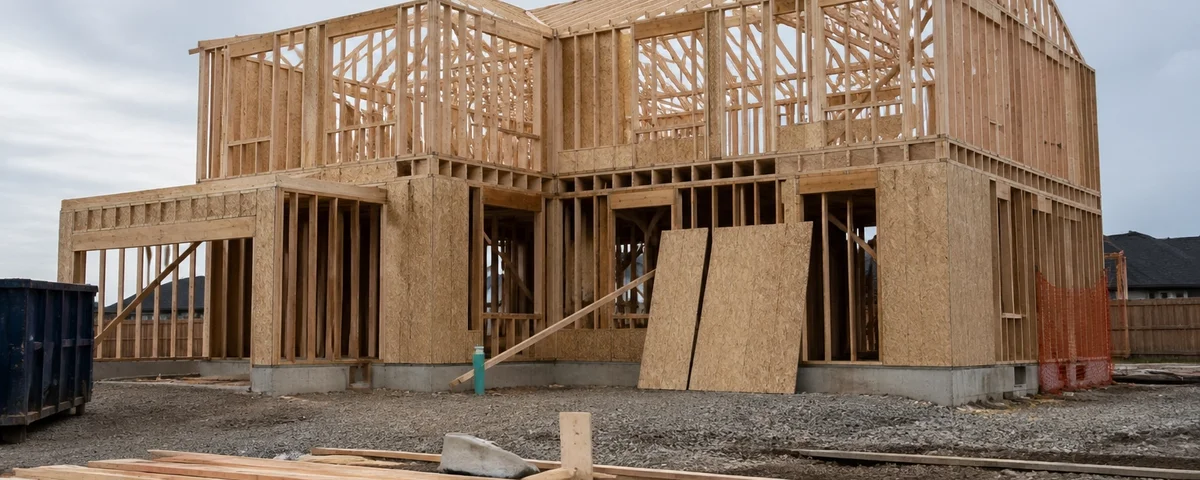
Washington County, Oregon — A new residential build in the framing stage. Portland-area permit activity dropped nearly 47% in 2024; state lawmakers passed HB 4037 in early 2026 to help reverse that trend.
If you've been watching Portland's new construction market and wondering when more supply is actually going to show up, Oregon HB 4037 is the answer the state just gave builders. Whether it's the right answer — and what it means for your timeline as a buyer — is worth looking at honestly.
What Does Oregon HB 4037 Mean for Portland New Construction in 2027?
Oregon HB 4037, signed April 7, 2026, is an omnibus housing law that cuts the public hearing and third-party appeal process for new residential projects that meet clear code standards. For developers, it removes one of the riskiest parts of permitting — the part where a single neighbor appeal can add four to six months to a project. Section 17, the most buyer-relevant provision, becomes operative July 1, 2026. Realistic new construction inventory impact for Portland buyers shows up in 2027-2028 at the earliest, because laws don't pour foundations — developers still need land, financing, and 12-18 months of construction time after the permit is in hand.
→ Bottom line: HB 4037 solves a real problem in the permitting pipeline. If you're planning a 2027-2028 purchase, it's a genuine tailwind — but it won't flip Portland's new construction inventory overnight.
- Why Portland's Permitting Problem Matters to Buyers
- What HB 4037 Actually Does: The Five Provisions
- Section 17: The Provision That Moves the Needle
- The Enforcement Piece: Why This May Matter More Than Self-Certification
- The Honest Timeline: When Does This Actually Help Buyers?
- When This Analysis Does Not Apply
- Frequently Asked Questions
Why Portland's Permitting Problem Matters to Buyers
Most buyers don't spend a lot of time thinking about building permits. That's reasonable — you're buying a home, not building one. But if you've been puzzled by why new construction options in the Portland metro feel so thin, the permitting system is a big part of the answer.
Oregon's state economists have calculated the state needs to build 29,500 new homes per year through 2044 to overcome the existing housing shortage, with the Portland region carrying most of that load. The City of Portland issued 1,624 housing permits in 2024 — down nearly 47% from the 3,089 permits issued the year prior. Even at Portland's better permitting years, the city wasn't close to what the market needed.
Three things have historically slowed the permitting pipeline in Portland and the surrounding suburbs. Construction costs and land prices are the first two — those are economic, and no legislation fixes them quickly. The third is the public hearing and appeal process that could add months to any project where a neighbor or community group decided to challenge an application. That third one is exactly what HB 4037 targets.
What HB 4037 Actually Does: The Five Provisions
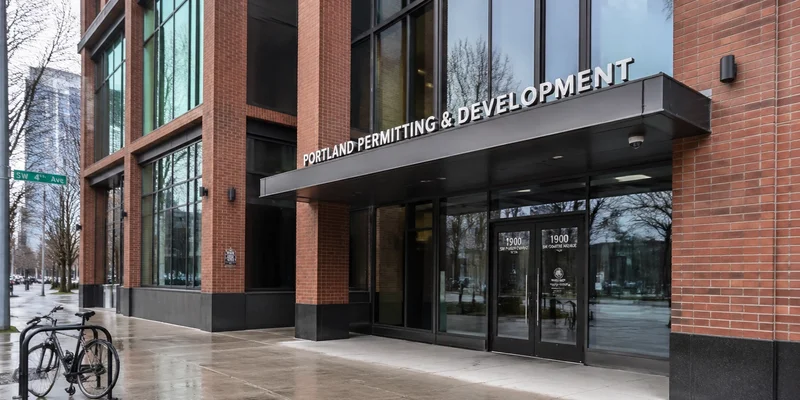
HB 4037 is an omnibus bill — it does five separate things rather than making one big change. Two provisions are most relevant to buyers watching the new construction supply picture.
HB 4037 Is Not HB 4084
HB 4084 is a separate Oregon bill that created the Joint Permitting Council and a fast-track program for major industrial and economic development projects — it's about factory sites and large employers, not housing. If you've seen coverage that conflated the two, HB 4037 is the housing-focused bill. HB 4084 affects buyers indirectly, by potentially accelerating employer growth in the region, but it does nothing to residential permitting timelines directly.
Click any milestone to see what changed and when:
HB 4037 is signed by Governor Kotek. The bill is now law, though Section 17 and most provisions have a future effective date. Self-certification and state enforcement changes are already defined but not yet operative.
SignedGovernor Kotek, state lawmakers, and housing advocates gather to celebrate. The bill was already signed on April 7 — the April 22 date is the ceremony only, not the signing, and is frequently confused in news coverage.
Ceremonial OnlyMost of HB 4037 becomes operative, including the self-certification expansion and the state enforcement mechanisms giving Oregon stronger tools to compel cities not complying with housing production mandates.
In EffectThe most consequential provision for buyers. Local governments can no longer require public hearings for qualifying housing applications, and third-party appeal rights to the Land Use Board of Appeals are eliminated for clear-and-objective projects. Developers who previously faced 4-6 months of appeal delay on qualifying projects no longer carry that risk.
In Effect NowProjects that benefited from Section 17 in late 2026 complete construction and reach the Portland metro market. Buyers with a 2027-2028 planning horizon are the primary beneficiaries. Even optimistic timelines put meaningful new inventory in the buyer pool in mid-to-late 2027 — land acquisition, financing, and 12-18 months of construction still have to happen after the permit is issued.
UpcomingHere is what HB 4037 actually does:
| Provision | What Changes | Buyer Relevance |
|---|---|---|
| Section 17 — Hearings & Appeals | Public notice limited to 100-500ft neighbors; no mandatory public hearing; only applicant can appeal | High — removes the biggest delay risk |
| Self-Certification Expansion | Developers can self-certify plans meet code requirements, reducing plan-check friction | Moderate — speeds front-end of permitting |
| State Enforcement of Local Laws | Stronger state tools to compel cities not complying with housing mandates | High — may matter most in Portland specifically |
| Revolving Loan Program | Modifies state loan program to expand low- and moderate-income housing production | Lower — affects affordable segment specifically |
| Surplus State Land | Clarifies surplus state-owned land should be prioritized for housing development | Lower — long-horizon supply addition |
Section 17: The Provision That Moves the Needle
Section 17 is the part of HB 4037 that changes something tangible for buyers watching the supply pipeline. It becomes operative July 1, 2026, and it fundamentally shifts how Oregon local governments can respond to housing applications that meet clear and objective code standards.
Under the old system, nearly anyone could request a public hearing on a residential development application, and nearly anyone could file an appeal if they didn't like the outcome. Portland land use attorney Ezra Hammer, speaking about the bill's passage, described Section 17 as addressing the risk and uncertainty housing developers face when they want to enter a market. That risk and uncertainty wasn't abstract — it translated directly into projects that sat in appeal limbo for six months to over a year, which is long enough for a developer's financing to expire, their costs to escalate, or their appetite to evaporate entirely.
Under HB 4037, for residential projects subject to clear and objective standards: local governments may only notify property owners within 100 feet of the site (or 500 feet for projects of 20+ units); they may not require a public hearing before making a decision; and only the applicant — not neighbors or third parties — can file an appeal. The Land Use Board of Appeals becomes accessible only to the builder, not to community groups or individual opponents.
Here's How Section 17 Affects Your Timeline
Projects that would have spent 2026 stuck in appeals are now more likely to reach construction in late 2026, which means they reach the market as completed homes in 2027-2028. That's not a guarantee of more options in your price range or your target neighborhood, but it is a structural improvement in the pipeline. The benefit is most visible in the 10-50 unit new construction projects in suburban Washington County and Clackamas County, where builder activity is higher and lots more available than inside Portland proper.

I've watched buyers get excited about a new development going in near where they want to live, only to see it disappear from the pipeline because one appeal stretched the developer past the point of viability. That's the specific friction Section 17 removes — and it's more common than most buyers realize.
Field note
The Enforcement Piece: Why This May Matter More Than Self-Certification
The headline coverage of HB 4037 focused on self-certification and reduced hearings. Those are real. But the state enforcement provision is the one worth watching closely if you're trying to understand Portland's long-term new construction trajectory.
Oregon has had housing production mandates in place for years. Cities are required to allow housing at densities that meet state targets. The problem is that "required to allow" and "actually allowing at scale" are different things. Some Portland-area municipalities have been slow or inconsistent in implementation. HB 4037 gives the state stronger tools to hold those jurisdictions accountable — not just guidelines, but enforcement mechanisms with teeth.
For buyers, this provision works on a longer horizon than Section 17. Self-certification changes a developer's experience in late 2026 and into 2027. State enforcement of local housing laws changes what Portland and surrounding cities are willing to approve at the zoning and planning level — and that plays out over 2027 and beyond. If the enforcement provision causes even two or three suburban cities in the metro to meaningfully accelerate their housing production, the downstream effect on buyer inventory in 2028-2030 is material.
The Self-Certification Piece Affects Your Builder's Workload
If you're working with a builder on a custom home or a spec home in a smaller infill project, the self-certification expansion means your builder spends less time in plan-check limbo waiting for city staff to review documents the builder already knows comply with code. Ask your builder specifically whether they're planning to use the self-certification pathway and what their current plan-check timeline looks like with the new city process.
The Honest Timeline: When Does This Actually Help Buyers?

Here's the honest version: laws don't pour foundations. HB 4037 removes a real bottleneck in the permit pipeline, but it doesn't fill a pipeline that still takes 12-18 months to move from approved permit to keys in hand.
Think of it like clearing a traffic jam on I-205. The jam is gone, but you still have to drive the rest of the way home. Section 17 takes effect July 1, 2026. Projects that benefit from it in late 2026 still need construction financing to close, a crew available, and a complete construction cycle to run. Even optimistic timelines put meaningful new inventory in the Portland metro buyer pool in mid-to-late 2027 at the earliest.
That timeline matters for how you plan your purchase. If you're trying to buy a newly built home in the next six months, HB 4037 doesn't help you directly. If you're looking at a 2027-2028 purchase window and are open to new construction in Washington County or outer Clackamas County, the picture is meaningfully better than it was before this legislation.
For buyers who aren't set on new construction, the existing home market is also shifting. Our hub post on why it's hard to buy in Portland covers the full picture, including what's happening on the resale side alongside the new construction changes.
Thinking about the 90-day investor rule instead? Oregon also passed HB 4128 the same week — it gives individual buyers a 90-day head start before institutional investors can purchase single-family homes. See Spoke 1: Oregon's 90-Day Rule explained →
When This Analysis Does Not Apply
Four Situations Where HB 4037's Effects Don't Apply to You
- You're buying in the next 6-12 months. Projects that benefit from Section 17 after July 2026 haven't been built yet. The market available to you now is the resale and already-permitted new construction that exists today.
- Your target is a specific Portland neighborhood inside the city core. Established close-in Portland neighborhoods don't have the land availability to generate significant new supply regardless of permitting speed.
- Your project uses discretionary review. HB 4037's Section 17 applies to projects under "clear and objective standards." Projects that use Portland's planned development or other discretionary pathways don't benefit from the hearings and appeals restrictions.
- You're purchasing a condo or ADU. The bill's effects are most visible in single-family and small multifamily new construction.
Frequently Asked Questions
Will HB 4037 actually increase new construction inventory in Portland?
Yes, but incrementally and on a 12-24 month lag. HB 4037 removes the public hearing and third-party appeal risk that has been a genuine deterrent for Portland-area builders — especially on smaller and mid-sized projects. The realistic impact is that some projects that would have been delayed or abandoned due to appeal risk will now proceed. That translates to more homes reaching the market in 2027 and 2028 than would have otherwise been available. It won't dramatically transform Portland's supply picture, but it's a real structural improvement for buyers with a 2027-2028 planning horizon.
When does HB 4037 go into effect?
HB 4037 was signed by Governor Kotek on April 7, 2026. The general provisions of the bill take effect June 5, 2026. Section 17 — the provision that restricts public hearings and third-party appeals for qualifying housing projects — becomes operative July 1, 2026. The April 22 event at Woodburn City Hall was a ceremonial signing celebration; the bill had already been signed into law before that date.
How long does it currently take to permit a new home in Portland?
Timelines vary significantly by project type. For a single-family home on a standard lot with a clear and objective application, Portland Permitting and Development's review process alone can run 60-120 days under current conditions. When a third-party appeal enters the picture, that 60-120 days can stretch to 6-12 months or more. HB 4037's Section 17 eliminates the third-party appeal risk entirely for qualifying projects, which is where the meaningful time savings is expected to come from.
Is 2027 a good time to buy new construction in Portland?
It depends heavily on your price range and geographic flexibility. Buyers targeting Washington County communities like Beaverton, Hillsboro, and Sherwood — or outer Clackamas County areas — are likely to see more new construction options in 2027 than in recent years. Buyers focused specifically on established close-in Portland neighborhoods will see limited new supply regardless of HB 4037, because buildable land is scarce there. Working with an agent who tracks active builder communities in the metro will matter more than ever.
What is the difference between HB 4037 and HB 4084?
They're separate bills addressing different problems. HB 4037 is the housing-focused omnibus bill — it changes residential permitting review, self-certification, state enforcement of local housing laws, and housing loan programs. HB 4084 created the Joint Permitting Council and a fast-track program for major industrial and economic development projects. HB 4084 has no direct effect on residential permitting timelines. Any coverage that conflated the two was describing different legislation.
Why is new construction inventory so low in Portland right now?
Several factors converged. Construction costs rose sharply after 2020 and haven't fully retreated, making it harder for builders to price projects that pencil out in Portland's mid-range market. Portland's inclusionary zoning requirement — which mandates below-market-rate units in projects over 20 units — increased the effective cost of multifamily construction starting in 2017. High interest rates in 2022-2024 further compressed builder margins. And the public hearing and appeal process that HB 4037 now addresses added unpredictable timelines that made Portland-area projects less attractive to regional and national developers.
Does the new construction guide cover what to look for when buying from a builder?
Yes. The Saling Homes new construction buyer guide walks through the key differences between buying from a builder versus buying resale — including why you need your own representation at the builder's sales office, what to look for in purchase agreements, and how to approach the inspection process on a newly built home. Builder contracts are materially different from standard resale contracts, and understanding those differences before you sign anything matters significantly.
Watching the New Construction Market in Portland?
Your situation — timeline, price range, target areas — changes which parts of HB 4037 actually matter for your purchase. Let's talk through what new construction options make sense for your specific plan.
Homes for Sale in the Portland Metro
Browse current listings across the Portland metro, including new construction and recent builds.
Sources & Verification
- Oregon Capital Chronicle — Governor signs six housing bills, April 22, 2026
- Schwabe, Williamson & Wyatt / JD Supra — Legal analysis of HB 4037 Sections 17 and 25, April 30, 2026
- Rental Housing Journal / HFO Investment Real Estate — 2026 Legislative Session analysis, April 28, 2026
- HFO Investment Real Estate — City of Portland falling 66% short of permit goals in 2024, February 2025
- City of Portland Permitting & Development — Current residential permitting information
- Oregon Department of Land Conservation and Development — Oregon Housing Needs Analysis and statewide housing targets
Data verified: April 2026
Saling Homes at eXp Realty | Portland Metro
- 10 years working the Portland metro market, including active-construction communities in Washington and Clackamas County
- 20+ years in sales, marketing, and leadership
- Education-first approach — clients understand what they're signing before they sign it
- Process leadership with client-owned decisions at every step
- Trusted vendor network including inspectors experienced with new construction defects
(503) 910-7364 | joe@sellingpdxhomes.com | sellingpdxhomes.com | About Joe
Saling Homes at eXp Realty is committed to equal housing opportunity. We do not discriminate on the basis of race, color, religion, sex, handicap, familial status, or national origin.
Categories
- All Blogs (92)
- Buying a Home (34)
- Community Page (14)
- Downsizing (7)
- Home Buying Process (7)
- Homeownership (6)
- Increasing Your Homes Value (4)
- Local Events (2)
- Market Update (20)
- Mortgage Information (9)
- Neighborhood Eats and Experiences (1)
- neighborhood info (3)
- Real Estate News (14)
- Selling Your Home (19)
Recent Posts








GET MORE INFORMATION