Why It's So Hard to Buy a Home in Portland Right Now (and What Just Changed in 2026)
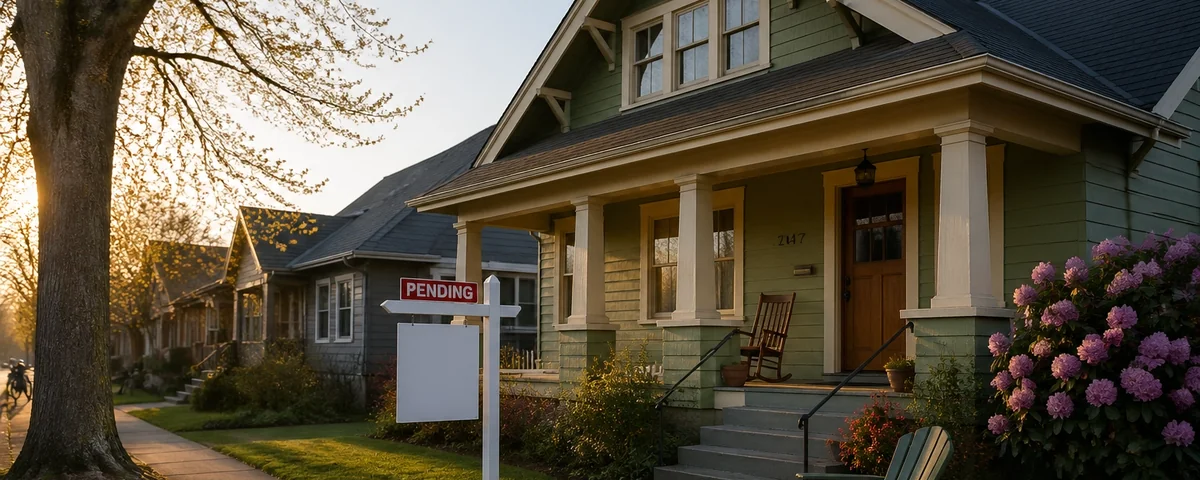
Inner Northeast Portland, Oregon. The "pending" rider goes up faster than most buyers expect.
You're three offers in. You've stopped sleeping well. The last house you actually liked went to a buyer who waived inspection and paid cash. Your loan officer says you're qualified. Your agent says you're competitive. And yet, here you are again, watching another listing go pending in 36 hours without you in it.
If buying a home in Portland feels broken right now, that's because, structurally, it kind of is. But not for the reasons most people think. And in April 2026, four pieces of that structure just got rewritten.
Quick Answer
Why is it so hard to buy a home in Portland right now?
Buying a home in Portland is hard for four structural reasons that all stack on top of each other: Oregon doesn't allow sprawl, permitting new homes is slow, large investors compete with regular buyers for entry-level homes, and the state is roughly 29,500 homes short every year. In April 2026, Oregon signed a six-bill housing package designed to start fixing each of those four problems. Don't expect a price drop in 2026. Expect a slightly faster supply pipeline, fewer institutional offers on entry-level homes, and a clearer path to new construction over the next 2 to 5 years.
→ Bottom line: the Portland affordability problem has four roots, not one, and all four were addressed in Oregon's April 2026 housing package.
Why It Feels This Way
You are not imagining it. Portland is genuinely harder to buy in than most metros its size. It is not because you are doing something wrong, and it is not because you waited too long. There are four specific structural reasons that, together, make the math feel impossible. Once you can name them, the news headlines about housing legislation start to make sense, because each new law is aimed at one of them.
Let's go through each cause in plain English, then circle back to what changed in April 2026.
Cause 1: Oregon Doesn't Sprawl
Oregon is the only state in the country where every city draws a hard line, called an urban growth boundary, around itself. Inside the line you can build dense neighborhoods. Outside, you cannot. It is the foundation of Oregon's land use law and a major reason the Willamette Valley still has farmland next to walkable communities. It is also the reason Portland cannot just spread out the way Phoenix or Houston do when demand spikes.
Metro is the agency that manages Portland's UGB. They are required to keep enough land inside the boundary for the next 20 years of housing and business growth, and they review the supply every six years. You can read more about how the line gets drawn on the Metro Urban Growth Report.
What this means for you as a buyer: when demand surges, Portland cannot answer with new subdivisions on the edge of town. Supply has to come from inside the existing boundary, which usually means infill, ADUs, townhomes, and mid-rise apartments. All of which run into Cause 2.
Cause 2: Permitting Is Glacial
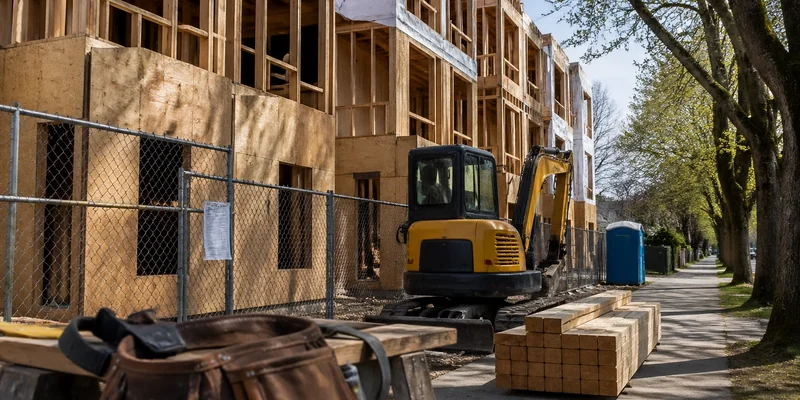
Even when builders want to build inside the boundary, the permit process has been one of the longest on the West Coast. Portland permitted only 656 multifamily units in 2025, the lowest annual total since 2011. That is not a demand problem. Builders are sitting on land. The bottleneck is review queues, design hearings, and discretionary approvals that can stretch a project's timeline by 12 to 24 months.
Long timelines do not just delay supply. They raise prices. Builders price in delay risk and carrying costs, both of which get passed to buyers. Every month a project sits in review is a month of interest on the construction loan and a month the developer cannot start the next one.
Watch the permit timelines, not the headlines. The Portland-area buyers who care most about the new permitting law are the ones eyeing new construction or major remodels. If your builder's clock has been stuck in design review, this is the rule that may finally start moving the needle in 2027.
Field note
Cause 3: Wall Street Competes With You
Here is the part most buyers feel but cannot prove. When you bid on an entry-level home in Portland, you are not just competing with another family. You may be competing with a private equity firm that owns thousands of single-family homes nationally, has a billion dollars in net assets, and is willing to pay cash with no contingencies. You will lose that bidding war every time, even when your offer is higher.
Data Point
How big is institutional buying in Oregon?
Institutional investors accounted for roughly 4.4% of Oregon home purchases in early 2025, according to ATTOM Data Solutions. In Portland specifically, large institutional owners control about 1% of the single-family market. Compare that to roughly 10% in some Sun Belt metros.
Source: ATTOM Data Solutions, via Axios Portland (July 2025).
One percent sounds small. It isn't, when you remember that institutional buyers concentrate their offers in a narrow price band, the same one first-time buyers shop. If you are looking in the $450K to $600K range in close-in Portland, the institutional share of competing offers on the homes you actually want is much higher than the headline number.
Cause 4: The Shortage Is Enormous
All three of the causes above feed into the fourth, which is just math. State economists estimate Oregon needs to build about 29,500 new homes per year to keep up with demand. Governor Kotek has set a more aggressive target of 36,000. The state has not hit either number in any recent year. The cumulative shortage is in the tens of thousands of units, most of it concentrated in the Portland region and the Willamette Valley.
This is the cause buyers feel without ever seeing a number. It is why every house you like has nine offers. It is why prices keep climbing despite higher mortgage rates. It is why downsizing feels like a downgrade in lifestyle, because the smaller home you want costs more per square foot than the larger home you are leaving. Supply that does not exist cannot bring prices down.
For a deeper read on the Portland affordability picture, our 7 data points on affordability post puts the local numbers next to the national context.
What Just Changed in 2026
On April 22, 2026, Governor Tina Kotek signed a package of six housing bills at Woodburn City Hall. The package is the first time Oregon has tried to address all four causes above in a single legislative session. The Oregon Capital Chronicle's coverage of the signing event has the political backdrop. What follows is which bill addresses which problem.
| The Problem | The 2026 Fix | What It Does |
|---|---|---|
| Land is locked behind the UGB | HB 4035 + HB 4082 | Lets more cities expand UGBs for housing; one-time expansion for manufactured and 55+ housing |
| Permits take too long | HB 4037 | Self-certification of plans, fewer required hearings on by-right projects |
| Wall Street outbids you | HB 4128 | 90-day wait before private equity firms (2,500+ homes, $1B+ assets) can buy a listed home |
| Not enough affordable units | HB 4036 + SB 1567 | Preserves existing affordable housing; creates a $20M mixed-income loan fund |
None of these bills will fix the Portland market by themselves. None of them will lower prices in 2026. What they do is start chipping away at the four structural causes that have made buying here harder than buying in most metros. Two of them, the permitting bill and the 90-day rule, will start showing up in your home search inside of a year.
For the bill text and staff summaries, the Oregon Legislature's OLIS site has the official documents.
Selling instead of buying? The new HB 4128 90-day rule changes who can make offers on your listing in the first three months. See our seller's prep timeline →
What This Means for You
Three quick scenarios, depending on where you are in your search.
If you are bidding entry-level (under $600K) in close-in Portland: HB 4128 is the bill that helps you most. The 90-day waiting period before a private equity firm can buy a listed home means fewer cash, no-contingency offers competing with you on the homes you actually want. You will not see this on every listing, but you will see it on the ones in the price band where institutional buyers concentrate.
If you are shopping new construction or considering a custom build: HB 4037 is your bill. Faster permits do not lower prices directly, but they shorten the gap between contract and keys. Builders adapting fastest to the new self-certification process will deliver homes sooner. Ask your builder directly how the new rules apply to their permit pipeline before you sign anything.
If you are downsizing or want a 55+ community: HB 4082 is the one to watch over the next two to four years. Cities like Hillsboro, Tigard, Beaverton, Oregon City, Forest Grove, and Sherwood can pull in extra land specifically for manufactured, prefab, and 55+ housing. New inventory in those segments is the most likely outcome.
What to Do This Week
Action Step
Three things you can actually do right now
1. If you are bidding this spring: Ask your agent to flag any HB 4128 disclosure forms that show up on competing offers. Knowing whether you are competing with an institutional buyer changes how you write your offer.
2. If you are shopping new construction: Email two or three builders this week and ask point-blank how their permit timelines have changed since April 2026. The ones with a clear answer are the ones worth working with.
3. If you are still deciding whether to buy at all: Read our Buy Now or Rent Longer? breakdown for the math, then view current market data for the metro areas you are considering.
When This Does Not Apply
Important
Most homes for sale today are unaffected by these laws
If you are buying a resale single-family home from an owner-occupant in Portland this week, none of the six bills directly change your transaction. Your offer process, your inspection rights, your financing, and your closing timeline all work the same as they did before April 22, 2026. The new laws affect supply over years, permitting over months, and competition from a narrow class of corporate buyers immediately, on a small share of listings.
The HB 4128 disclosure requirement only triggers when a buyer qualifies as a private equity firm with 2,500+ homes and $1B+ in net assets. The Mixed-Income Development Loan Fund (SB 1567) is a developer-side tool. The UGB expansions (HB 4035, HB 4082) only apply to specific qualifying cities. If you are buying inside Portland's existing UGB, those bills do not change your transaction.
Frequently Asked Questions
Will home prices in Portland go down in 2026?
Probably not. Oregon's housing shortage is structural, not cyclical. State economists estimate Oregon needs to build about 29,500 new homes per year to catch up with demand, and Portland permitted only 656 multifamily units in 2025. The 2026 housing package adds tools that chip away at the shortage, but none of them are large enough on their own to reverse Portland's pricing trend in a single year. Expect a slightly faster supply pipeline and a fairer offer process for entry-level buyers, not a price drop.
Why is buying a home in Portland so much harder than other cities?
Four structural reasons stack on top of each other: Oregon's urban growth boundary limits where land can be developed, the permit process has been among the longest on the West Coast, large institutional investors compete in entry-level price bands, and the state is roughly 29,500 homes short every year. Most metros face one or two of these. Portland faces all four at once. That is why the affordability problem feels heavier here than the headline numbers suggest.
Are Wall Street investors really buying homes in Portland?
Yes, but the share is smaller than national headlines suggest. Institutional investors with 2,500 or more single-family homes account for about 1% of Portland's single-family market, according to ATTOM Data Solutions. The catch is that institutional buyers concentrate their offers in a narrow price band, the same one first-time buyers shop. So while the headline number is small, the share of competing offers on entry-level Portland homes is meaningfully higher than 1%.
When will more homes be for sale in Portland?
The 2026 housing package starts to show up in the market on different timelines. HB 4128's 90-day rule is in effect now, so you should see fewer institutional offers on entry-level listings inside of a year. HB 4037's faster-permit provisions will start affecting new construction timelines over the next 12 to 24 months. The UGB expansion bills (HB 4035, HB 4082) operate on a 2 to 5 year horizon. Inventory will not surge in 2026, but it should start improving in 2027.
Should I keep waiting to buy a home in Portland or buy now?
The answer depends on your time horizon and your job stability, not on the legislation. If you plan to stay in your home for 5+ years and have a stable income, waiting for a price drop that probably is not coming usually costs more than buying. If you are short-term or uncertain, the calculus is different. The new laws do not change this math meaningfully. They make the market slightly fairer at the entry level. They do not make homes cheaper. Talking through your specific situation with a qualified real estate agent and lender is still the right move.
Is new construction in Portland a good idea right now?
For some buyers, yes, especially if you can wait 9 to 18 months for delivery. HB 4037's permit reform is most likely to benefit by-right townhome and infill projects, which often hit the entry-to-mid price range. Custom one-off builds with discretionary review will see less benefit. Ask any builder you are considering how their permit pipeline has changed since April 2026, and whether they are using the new self-certification path. Builders that adapt fastest will deliver homes sooner and at more predictable prices.
What is Oregon's urban growth boundary and why does it matter?
Every city in Oregon draws an urban growth boundary, a line that separates urban land from rural and farm land. Inside the line, dense development is allowed. Outside, it is not. The Portland boundary is managed by Metro and reviewed every six years. The UGB is the foundation of Oregon's land use law and a major reason the Willamette Valley still has farmland, but it also means Portland cannot expand outward when demand spikes. Supply has to come from inside the existing boundary, mostly through infill and density. That is why the 2026 UGB expansion bills (HB 4035, HB 4082) are getting so much attention.
Want help thinking through your specific situation?
Every buyer's situation is different. Whether you are bidding on entry-level homes, shopping new construction, or thinking about downsizing, the 2026 housing package will hit your timeline differently. Let's talk through what applies to you.
Homes for Sale in Portland Metro
Browse current listings across the Portland metro area.
Data Sources
Data verified: April 2026
- Oregon Capital Chronicle: Oregon governor signs housing bills addressing affordability, urban growth boundaries (April 2026)
- Office of Governor Tina Kotek: Partners gather in Woodburn to celebrate progress (April 22, 2026)
- Oregon Legislature OLIS: Enrolled HB 4036 measure document
- Oregon Legislature OLIS: SB 1567 staff measure summary
- Oregon Housing and Community Services: Bond financing and loans
- Oregon Metro: Urban Growth Report
- 1000 Friends of Oregon: 2026 Legislative Overview
- PAROA: Oregon Institutional Investor Home Buying Restrictions, Inside HB 4128
- Axios Portland: Oregon investor home sales slide as housing market slows (July 2025)
The information in this post is for general educational purposes and does not constitute financial, legal, or tax advice. Consult a qualified professional for guidance specific to your situation.
Saling Homes at eXp Realty is committed to equal housing opportunity. We do not discriminate on the basis of race, color, religion, sex, handicap, familial status, or national origin.
Categories
- All Blogs (92)
- Buying a Home (34)
- Community Page (14)
- Downsizing (7)
- Home Buying Process (7)
- Homeownership (6)
- Increasing Your Homes Value (4)
- Local Events (2)
- Market Update (20)
- Mortgage Information (9)
- Neighborhood Eats and Experiences (1)
- neighborhood info (3)
- Real Estate News (14)
- Selling Your Home (19)
Recent Posts









GET MORE INFORMATION