

OR Portland
Portland Downtown





Living in Portland Downtown
Portland's commercial and cultural core on the west bank of the Willamette River, with high-rise condos, Park Blocks, MAX light rail, and walking access to Pioneer Courthouse Square, Powell's, and Tom McCall Waterfront Park.
Updated April 2026 by Joe SalingWhat Portland Downtown Is Really Like
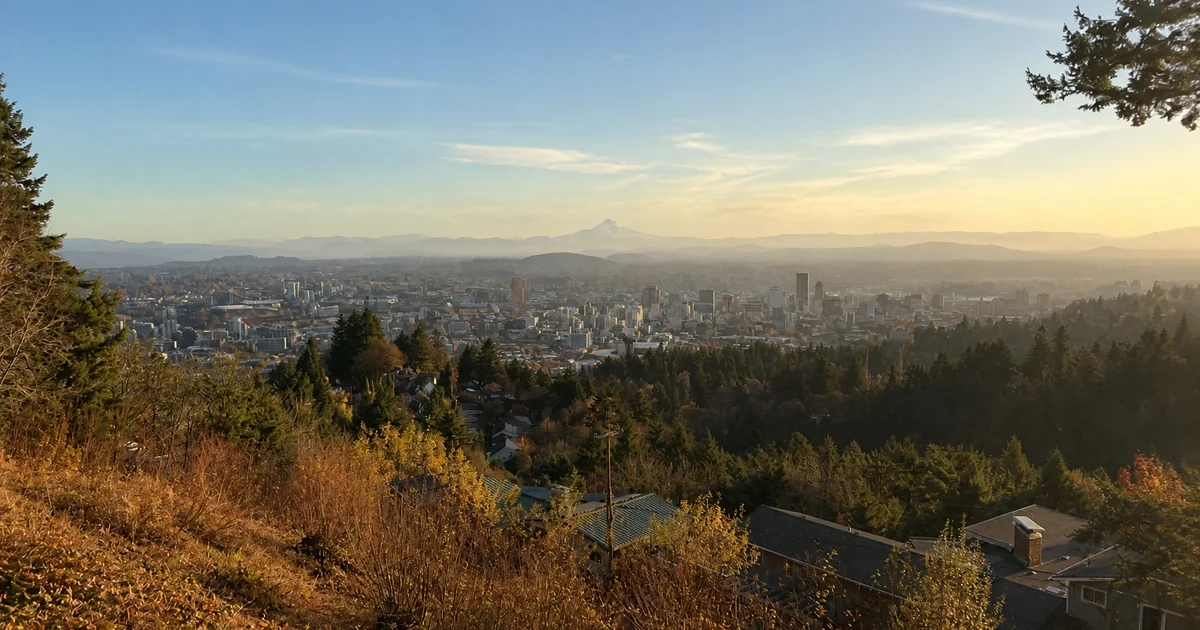
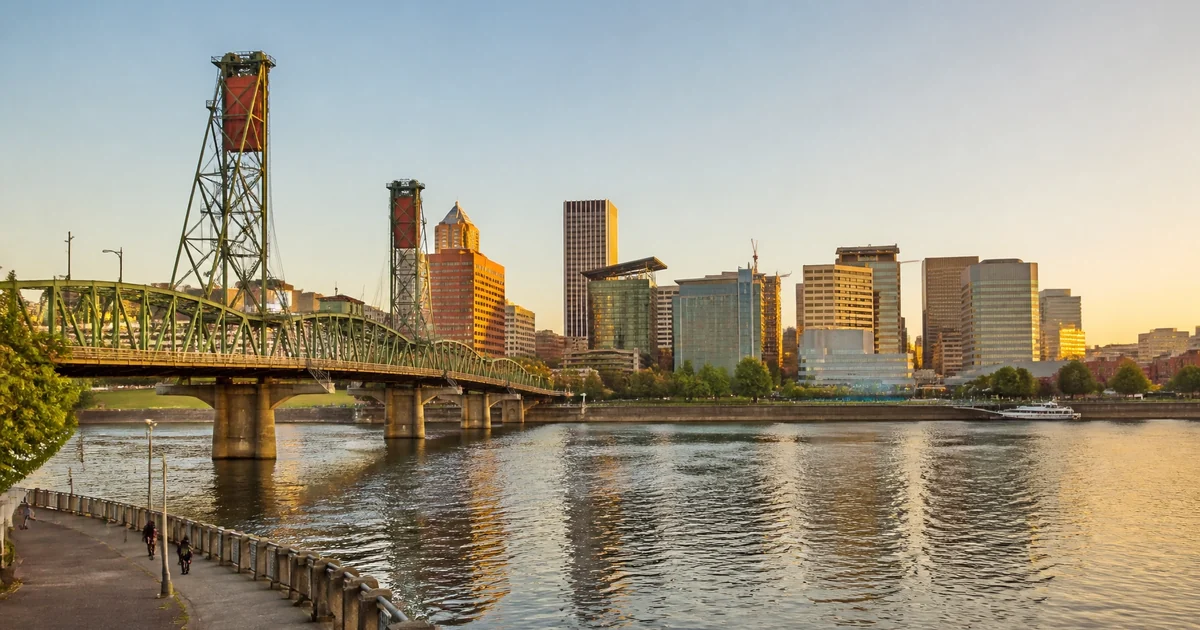
Portland Downtown sits on the west bank of the Willamette River and forms the historic commercial and cultural core of the city, founded on this site in 1845. Boundaries run from West Burnside Street on the north (separating Downtown from Old Town and the Pearl District) down to I-405 and the Marquam Bridge area on the south, with I-405 forming the western boundary and the Willamette River and Tom McCall Waterfront Park on the east. Within those edges sit Pioneer Courthouse Square, the Park Blocks, Portland State University, the Theater District around Broadway, and a dense mix of office towers, hotels, and residential buildings. The street grid runs on Portland's signature compact 200-foot blocks, which is why the area walks so well.
A weekday morning here sounds like MAX trains on the transit mall, food cart pods firing up around SW 9th and Alder, and PSU students moving across the Park Blocks toward class. Midday brings the lunch rush at Pine Street Market, the food carts, and Pioneer Courthouse Square, the city's "living room." Evenings shift toward theater audiences at the Arlene Schnitzer Concert Hall (the Schnitz), Portland Center Stage at The Armory just north, and dining along SW Broadway, SW Stark, and the West End. Saturdays bring the Portland Saturday Market under the Burnside Bridge and a steady flow of visitors to Powell's City of Books, which occupies an entire city block.
On any given block you will see runners on the waterfront path, commuters pulling bikes off MAX trains, residents walking dogs through the Park Blocks, and a steady flow of conferencegoers, hotel guests, and PSU students. Downtown has been navigating real challenges since 2020, including reduced office occupancy, retail vacancies, and visible houselessness on certain blocks. The recovery has been uneven by block, with the South Park Blocks and the riverfront staying steady, certain stretches of the West End and Old Town transition zone still in a rougher patch, and the PSU corridor and Saturday Market drawing strong weekend energy. The honest read is that downtown today is more affordable to buy into than it has been in two decades, which is part of the opportunity and part of the trade-off.
Looking for broader context on the area? Read my full Southwest Portland relocation guide for how Portland Downtown fits into the wider district.
Homes and Architecture in Portland Downtown
Downtown housing is almost entirely vertical and almost entirely condo or apartment. Single-family homes do not exist in this neighborhood. The for-sale stock breaks into three rough categories: pre-war historic conversions (early-1900s buildings on or near the National Register, like The Eliot or The Civic), post-war and mid-century mid-rise condos (sometimes 1970s or 1980s buildings with updated systems), and contemporary high-rise condos from the 2000s and 2010s including KOIN Tower's upper floors, The Strand, Harrison East, the Eliot Tower, and the buildings clustered near RiverPlace and South Park Square. Unit sizes run from compact studios under 600 square feet to penthouses well over 2,500. Many buildings include amenities like fitness rooms, concierge service, and shared roof decks.
When you shop here, expect a buyer-friendly market. Inventory has been higher and days-on-market longer than in suburban Portland for the past several years, and price-per-square-foot has come off its 2018 to 2019 peak in many buildings. That can be real opportunity if you want a downtown unit at a discount to the neighborhood's recent history. Watch HOA dues carefully, especially in older buildings: deferred maintenance, special assessments for facade or elevator work, and rising master-policy insurance costs are all real risks. Also pay attention to the building's owner-occupancy ratio, since lender requirements for warrantable financing depend on it. Views, floor level, and parking inclusion drive a lot of the price spread within any single building.
- High-rise condos
- Historic mid-rise conversions
- Mid-century condo towers
- Studio to 2,500+ sq ft units
- Wide range, entry to luxury
Dining, Parks, and Daily Life
Higgins & Higgins Bar
One of downtown's anchor dining institutions, open since 1994 with a James Beard nod to chef Greg Higgins. The bar offers a more casual entry point. Within a few blocks: Imperial, Mucca Osteria, Quaintrelle, and the rotating set of food carts at SW 9th and Alder.
Powell's City of Books
The largest independent bookstore in the world by floor area, occupying a full city block at the north edge of downtown. Open to midnight on most nights, it doubles as a destination and a community space. Locals stop in for an hour and lose three.
Case Study Coffee & Stumptown
Case Study Coffee's downtown locations, plus Stumptown's downtown roastery cafe, anchor the morning rhythm for residents and PSU students. Several food cart pod blocks, including the long-running SW 5th and Stark and the SW 9th and Alder pods, fill in the casual gathering layer.
Tom McCall Waterfront Park & Park Blocks
Tom McCall Waterfront Park runs along the Willamette for nearly 1.5 miles with the Eastbank Esplanade across the bridge. The South Park Blocks form a 25-block linear park through PSU, hosting the Portland Farmers Market on Saturdays and shaded by mature elms. Pioneer Courthouse Square and Director Park add hardscape gathering space.
Daily Errands
Safeway on SW Jefferson and the smaller Whole Foods just north in the Pearl handle most grocery needs within walking distance. Target on SW Morrison covers general goods and pharmacy. Hardware needs route to the Pearl or to Whittaker Hardware via short MAX or streetcar trip. The Portland Farmers Market at PSU runs Saturdays year-round.
Getting Around
Downtown is the transit hub for the entire region. MAX Blue, Red, Green, and Yellow lines all converge here. The Portland Streetcar loop connects Downtown to the Pearl, NW 23rd, OHSU/South Waterfront, and the Lloyd District. Most TriMet bus lines pass through. For drivers, I-5, I-405, I-84, and US-26 are all accessible within minutes. Walk Score is 95+ across most of the neighborhood.
Joe's Take on Portland Downtown
Downtown is the most contested neighborhood in Portland to talk about right now, and the honest answer is that it depends entirely on what kind of buyer you are. The trade-off is straightforward: you get the highest walkability and transit access in the metro, real architectural variety from 1900-era brick to contemporary glass towers, and prices that have come down meaningfully from their 2018 to 2019 peak in many buildings. In exchange, you accept that downtown is still in a recovery cycle, that some blocks feel more vibrant than others, that office occupancy has not returned to pre-2020 levels, and that the city's challenges with houselessness are most visible in this neighborhood.
The housing stock and location suit buyers who specifically want vertical, lock-and-leave living, full transit access, and walking distance to theater, dining, the riverfront, and major medical institutions including OHSU's downtown footprint. It works well for second-home buyers who travel often, transit commuters, anyone with PSU ties, and buyers who value the option to skip car ownership entirely. It is less of a fit for buyers who want a yard, a private garage, or quiet residential streets at night, since downtown lives on a different rhythm than any other Portland neighborhood.
Before you write an offer downtown, the building due diligence matters more than in any other Portland neighborhood. Pull the HOA financials and look hard at the reserve study; many older downtown buildings have deferred capital projects that turn into special assessments. Verify the owner-occupancy ratio and confirm the building is warrantable for the financing you plan to use, since some buildings have slipped below Fannie Mae and FHA thresholds. Walk the specific block at 8am, noon, 8pm, and 10pm on a weekday before you write an offer, since downtown's vibe really does vary block-by-block and time-of-day. Finally, factor parking carefully: some condos include a deeded space, some sell parking separately, and some require monthly rental in nearby garages.
Frequently Asked Questions About Portland Downtown
How do home prices in Portland Downtown compare to the rest of Southwest Portland?
Portland Downtown is currently one of the more affordable Southwest Portland neighborhoods on a price-per-square-foot basis for the for-sale market. Downtown condo prices have come off their 2018-2019 peak meaningfully, and inventory has been higher than the suburban norm for several years, which has created a buyer-friendly market. Compared to the West Hills, Hillsdale, or the Pearl District just north, downtown often sells at a discount per square foot. Prices vary widely by building, view, floor, and parking inclusion. The current average sales price and active listing count are shown at the top of this page and update automatically with the market.
What are property taxes and HOA dues like in Portland Downtown?
Multnomah County property taxes downtown run at an effective combined rate of approximately 1.3% to 2.1% of assessed value, in line with the rest of the county. The bigger budget item for most downtown buyers is the monthly HOA fee, which varies dramatically by building. Pre-war historic buildings and full-amenity high-rises with concierge, fitness, and pool can run several hundred dollars to over $1,000 per month. Always pull the HOA's reserve study and recent meeting minutes, since deferred maintenance, special assessments, and rising insurance costs are real risks. Verify property tax rates at multco.us/assessment-taxation.
Which schools serve Portland Downtown?
Portland Downtown is served by Portland Public Schools. The default elementary assignments are typically Chapman or Ainsworth depending on the address, with middle school at West Sylvan or Lane and high school at Lincoln High School (which moved to a new building in 2023). Portland State University is the major higher-education institution within the neighborhood. Downtown has historically had relatively few children compared to other Portland neighborhoods given its housing stock, but PPS open enrollment allows residents to apply to any PPS school regardless of address, subject to capacity. Verify the specific address assignment using the PPS School Finder at pps.net.
What is the housing stock like in Portland Downtown?
Housing stock is almost entirely vertical: condos, apartments, and a small number of historic loft buildings. Single-family homes do not exist in this neighborhood. For-sale options include pre-war historic conversions like The Eliot and The Civic, mid-century condo towers from the 1970s and 1980s, and contemporary high-rises from the 2000s and 2010s including KOIN Tower upper floors, The Strand, Harrison East, Eliot Tower, and buildings near RiverPlace. Units range from compact studios to multi-bedroom penthouses over 2,500 square feet. Building amenities, view, floor level, and parking inclusion drive most of the price variation.
How long is the commute from Portland Downtown to other employment centers?
Downtown is the regional employment center, so for many residents the commute is a walk or a short transit ride. For those commuting elsewhere, MAX Red Line provides a roughly 38-minute trip to PDX airport. Streetcar connects to OHSU and South Waterfront in 10 to 15 minutes. Driving to Beaverton via US-26 runs about 15 to 20 minutes off-peak; Lake Oswego via I-5 about 15 minutes; the Lloyd District across the river about 5 to 10 minutes. Peak-hour traffic on I-5 and I-405 can extend any of these significantly.
Is Portland Downtown walkable?
Portland Downtown is the most walkable neighborhood in Oregon. Walk Scores throughout most of the neighborhood register in the 90s, with much of the core hitting 95 to 99. The 200-foot block grid, the density of restaurants, services, and retail, and the convergence of MAX, streetcar, and bus lines mean a downtown resident can comfortably skip car ownership. Bike Score is also high, with Better Naito on the waterfront and protected bike lanes on multiple downtown streets. Walking access to Tom McCall Waterfront Park, the Park Blocks, and the Eastbank Esplanade across the river adds genuine outdoor space within a 5-minute walk of most addresses.
How does Portland Downtown compare to the Pearl District and other condo neighborhoods?
The Pearl District just north of downtown trades on newer construction (largely 2000s and later), warehouse-conversion lofts, and Whole Foods walking access, and typically prices at a premium per square foot. Downtown offers more architectural variety from pre-war to contemporary, broader transit access, and currently better value per square foot. Old Town/Chinatown sits between the two and is the lowest-priced of the three. South Waterfront, just south of downtown, is the newest condo neighborhood with the most modern high-rises but a more isolated feel. Goose Hollow, just west across I-405, has historic homes mixed with condos. Portland Downtown is the pick when central transit access, architectural variety, and current price-to-walkability ratio matter most.
What should I check before buying a condo in Portland Downtown?
Condo buyer due diligence downtown is more involved than single-family. Pull the HOA financials and reserve study to assess the building's capital health. Verify owner-occupancy ratio and confirm the building is warrantable for your financing (Fannie Mae and FHA both have requirements). Review the rental policies if you might rent the unit later. Confirm whether parking is deeded, sold separately, or rental. Check pet policies and any rental cap. Walk the specific block at multiple times of day. Verify HOA insurance coverage, since downtown master policies have seen significant premium increases. The City of Portland Bureau of Development Services (portland.gov/bds) can verify any active permits or code issues on the building.
Thinking About Buying in Portland Downtown?
I help buyers navigate Southwest Portland and downtown condos every week. Let's talk about what you need, what you can afford, and whether a downtown condo is the right fit.
Schedule a Free Consultation Or call Joe directly: (503) 910-7364Joe Saling · Saling Homes at eXp Realty · 10+ years serving Portland metro buyers and sellers
Saling Homes at eXp Realty is committed to the principles of the Fair Housing Act and Equal Housing Opportunity. Licensed in the State of Oregon. Information deemed reliable but not guaranteed. Verify all data independently before making real estate decisions.
MY BLOGS
MARKET TRENDS

HOUSING DETAIL
NEARBY SCHOOL & BUSINESS
1920 S RIVER DR #202, Portland, OR 97201
Condo 2 Beds 2 Baths 1,500 SqFt
Listed by Cascade Hasson Sotheby's International Realty
1500 SW 5TH AVE #1601, Portland, OR 97201
Condo 2 Beds 2 Baths 1,319 SqFt
Listed by Where, Inc1500 SW 5TH AVE #2201, Portland, OR 97201
Condo 2 Beds 2 Baths 1,319 SqFt
Listed by Where, Inc225 S MONTGOMERY ST #ES 2&5, Portland, OR 97201
Condo 2 Beds 2 Baths 1,654 SqFt
Listed by Cascade Hasson Sotheby's International Realty1616 S HARBOR WAY #502, Portland, OR 97201
Condo 1 Bed 1 Bath 834 SqFt
Listed by Svaren Realty111 SW HARRISON ST #17B, Portland, OR 97201
Condo 1 Bed 1 Bath 742 SqFt
Listed by John L. Scott1500 SW PARK AVE #108, Portland, OR 97201
Condo 2 Beds 1 Bath 841 SqFt
Listed by Realty Portland1209 SW 6TH AVE #701, Portland, OR 97204
Condo 3 Beds 3 Baths 2,074 SqFt
Listed by Keller Williams PDX Central1221 SW 10TH AVE #1803, Portland, OR 97205
Condo 2 Beds 2.1 Baths 2,594 SqFt
Listed by Windermere Realty Trust2211 SW 1st AVE #1704, Portland, OR 97201
Condo 3 Beds 2 Baths 1,868 SqFt
Listed by Premiere Property Group, LLC1500 SW 11TH AVE #1106, Portland, OR 97201
Condo 1 Bed 1 Bath 603 SqFt
Listed by Redfin1414 SW 3RD AVE #2604, Portland, OR 97201
Condo 2 Beds 2 Baths 1,950 SqFt
Listed by Safe Harbor Realty1221 SW 10TH AVE #219, Portland, OR 97205
Condo 2 Beds 2 Baths 1,025 SqFt
Listed by Real Broker111 SW HARRISON ST #16E, Portland, OR 97201
Condo 1 Bath 587 SqFt
Listed by Keller Williams PDX Central2221 1st Unit 2424 Av, Portland, OR 97201
Condo 3 Beds 2 Baths 1,950 SqFt
Listed by ROBERT LONG of WORKS REAL ESTATE
205 S MONTGOMERY ST #205, Portland, OR 97201
Condo 2 Beds 2 Baths 1,366 SqFt
Listed by Realty Portland2221 SW 1ST AVE #823, Portland, OR 97201
Condo 2 Beds 2 Baths 1,332 SqFt
Listed by Realty First1005 SW PARK AVE ##302, Portland, OR 97205
Condo 1 Bed 1 Bath 415 SqFt
Listed by Works Real Estate1414 SW 3RD AVE #2802, Portland, OR 97201
Condo 2 Beds 2 Baths 1,881 SqFt
Listed by Coldwell Banker Bain1410 SW 11TH AVE #106, Portland, OR 97201
Condo 0.2 Baths 733 SqFt
Listed by Keller Williams Realty Portland Premiere

Coming Soon
Commute Score
Coming Soon
Coming Soon
DEMOGRAPHICS
Population:
Density:
Households:
Gender
Coming Soon
Coming Soon
Coming Soon
Coming Soon

Joe Saling
joe@sellingpdxhomes.com