

OR Portland
Russell
Russell is a compact East Portland neighborhood between I-205 and NE 122nd Avenue, bordered on the south by the 240-acre Glendoveer Golf Course and its popular two-mile perimeter walking loop. The housing mix runs from 1950s and 1960s ranches to 1990s subdivision infill, with strong MAX access via the nearby Gateway Transit Center and quick I-205 connections to downtown and PDX airport.





Living in Russell
A residential pocket north of NE Glisan between I-205 and NE 122nd with mid-century ranches, 1990s infill, and Glendoveer Golf Course bordering the south edge.
Updated April 2026 by Joe SalingWhat Russell Is Really Like
Russell is a compact East Portland neighborhood tucked roughly between NE 122nd Avenue on the west, NE 148th on the east, NE Glisan Street on the south, and NE Halsey-adjacent boundaries to the north. The neighborhood was annexed to Portland along with much of East Portland in the 1980s and early 1990s, and its housing stock reflects that later-annexation pattern: mid-century ranches built when the area was unincorporated Multnomah County, mixed with 1990s and 2000s infill subdivisions. Glendoveer Golf Course, an 18-hole public course with a two-mile perimeter running loop, sits immediately south across Glisan and gives the southern blocks of Russell a treed, open backdrop.
A weekday morning here sounds like arterial traffic on NE 122nd and Glisan, school buses on the interior streets, and commuters heading for I-205 to the west. The commercial life happens on the edges rather than inside the neighborhood: NE 122nd and Glisan carry grocery, pharmacy, and fast food; Gateway (to the southwest around I-205 and I-84) holds larger retail and the Gateway Transit Center; and NE 148th and NE Halsey pick up some of the eastern services. Inside Russell the pace slows to residential rhythm, with pockets of 1990s-era subdivisions that feel newer and better-lit than some of the surrounding mid-century grid.
On residential blocks you will see walkers on the Glendoveer perimeter loop (a popular 2-mile walking and running path), gardeners working front yards, and bikers heading either south toward the I-205 Multi-Use Path or east toward Rocky Butte. Many streets lack sidewalks, which is common for East Portland and something to verify before buying a specific address. The neighborhood sits under a mix of mature and mid-size street trees, more in the older ranch sections and less in the 1990s subdivisions where the canopy is still filling in.
Looking for broader context on the area? Read my full East Portland relocation guide for how Russell fits into the wider district.
Homes and Architecture in Russell
Russell's housing stock comes from two main eras. The dominant layer is 1950s, 1960s, and 1970s single-story ranches and split-level homes, typically three-bedroom, two-bath, attached garage, built when the area was unincorporated Multnomah County. The second substantial layer is 1990s and 2000s subdivision infill, often two-story homes with attached garages, newer roofs, vinyl windows, and slightly tighter lot sizes than the mid-century section. Older lots commonly run 7,000 to 9,000 square feet; subdivision lots more commonly run 4,000 to 6,000 square feet. A handful of pre-war farmhouses still come to market occasionally, a reminder that this area was orchard and farm country well into the mid-20th century.
When you shop here, expect a wide spread of condition. Some mid-century ranches have been carefully maintained by long-term owners with updated kitchens, new roofs, and upgraded panels; others retain original systems. The 1990s subdivision homes are generally in more consistent condition but may be approaching their first major systems replacement (roof, water heater, HVAC). Two things to price into your underwriting: the original electrical panels on older mid-century homes (aluminum branch wiring and obsolete panel brands show up in inspection reports), and drainage on interior lots that sit lower than the arterial grade, where heavy rain can back up yards and crawlspaces.
- 1950s to 1970s ranch & split-level
- 1990s to 2000s subdivision infill
- Occasional pre-war farmhouse
- 4,000 to 9,000 sq ft lots
- Entry point for Portland
Geography, Amenities, and Getting Around
Glendoveer Golf Course & Perimeter Loop
Glendoveer is an 18-hole public golf course sitting on 240 acres immediately south of Russell. The course itself is gated, but its 2-mile perimeter walking and running loop is one of East Portland's most-used outdoor paths, circling the course under mature Douglas fir and maple canopy. The open space and tree cover give Russell a greener southern horizon than most East Portland neighborhoods.
NE 122nd & NE Glisan Corridors
Full-service grocery sits at the NE 122nd and Halsey intersection (Fred Meyer) about 3 to 5 minutes by car, with additional grocery and pharmacy options along NE 148th and at Gateway Fred Meyer to the southwest. Restaurants and daily services distribute across NE Glisan, NE 122nd, and NE 148th. Gateway Transit Center (4 to 6 minutes southwest) has the most retail density including Gateway Fred Meyer and the Gateway Discovery Park area.
Ventura Park & I-205 Multi-Use Path
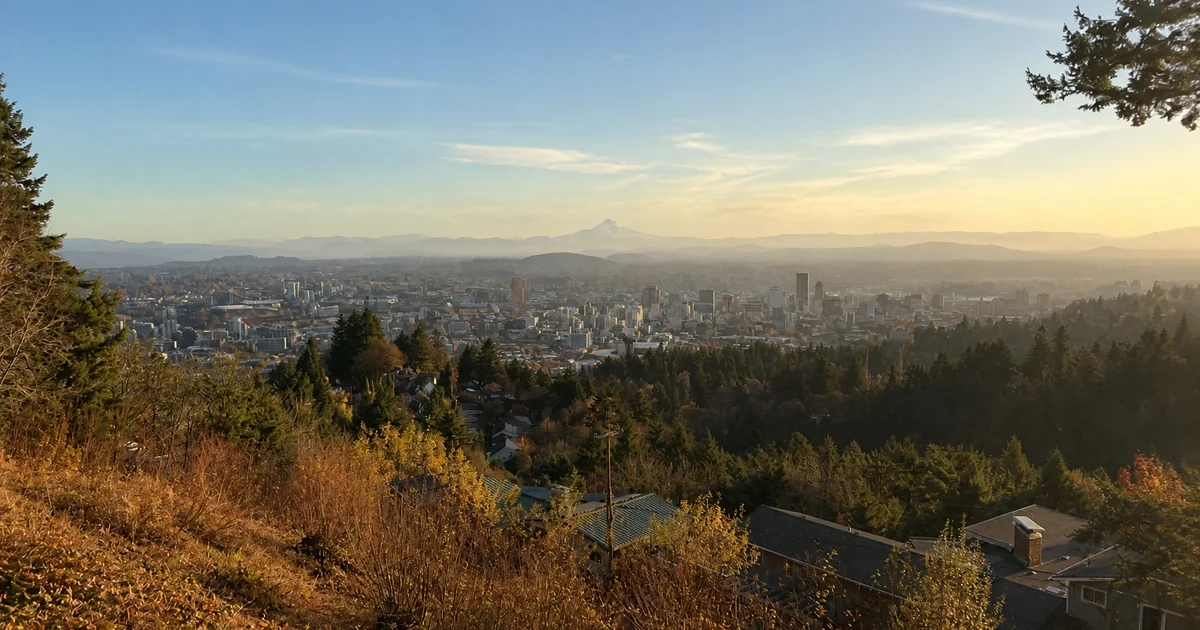
Ventura Park sits just south of Glisan and offers playgrounds, sport courts, and a community center. The Glendoveer Perimeter Loop is the primary walking and running draw. The I-205 Multi-Use Path, accessible 4 to 6 minutes west, gives bikers a long paved route south to Clackamas and north to the Columbia Slough. Rocky Butte is a short drive east for hiking and views of Mount Hood.
Getting Around
I-205 is 3 to 5 minutes west, putting downtown Portland about 18 to 22 minutes by car off-peak via I-205 to I-84. The MAX Blue and Green Lines serve the nearby Gateway Transit Center with direct service to downtown, PDX airport, and Gresham. TriMet bus lines run on Glisan, Halsey, 122nd, and 148th. Peak-hour drives can push to 30 minutes. The I-205 Multi-Use Path gives bike commuters a flat paved option, though the connection into downtown still requires on-street riding at the north end.
Joe's Take on Russell
When buyers tell me they want single-family housing in Portland at an entry price point, with real outdoor access and strong transit, Russell is a neighborhood I put on the short list. You typically pay noticeably less per square foot here than inner Southeast or inner Northeast, you have the Glendoveer perimeter loop right at your doorstep, and Gateway Transit Center gives you both MAX Blue and Green Line access. The honest trade-off is that Russell is not a walk-to-everything neighborhood. The commercial life happens on NE 122nd, NE Glisan, NE 148th, and at Gateway, all of which are arterial-scaled rather than pedestrian-scaled, and many residential blocks lack sidewalks.
The housing stock and location suit buyers who want more house for the money, who value transit access (MAX Blue and Green from Gateway covers downtown, PDX, and Gresham), and who want open-space outdoor access through Glendoveer. It works well for remote workers, transit-dependent commuters, and buyers who want to own in Portland at an entry point that inner neighborhoods cannot match. It is less of a fit for buyers who want to walk to a coffee shop and restaurants on a weekend morning, or who want consistently newer housing stock; the 1990s subdivisions are the newest significant layer and some of those systems are now approaching their first major replacement.
Before you write an offer in Russell, there are a few specifics worth checking. Pull the electrical panel history on any 1960s or 1970s home; aluminum branch wiring and obsolete panel brands (Zinsco, Federal Pacific) show up in this era and affect insurance. Check the sewer scope on pre-1980s homes. Look carefully at drainage on interior lots that sit below the arterial grade. Verify whether the street has city sidewalks, since many Russell blocks are still on the list for future sidewalk installation. Finally, confirm the school district assignment at davidouglas.k12.or.us, parkrose.k12.or.us, or reynolds.k12.or.us depending on address; Russell is split across district lines and surprises buyers used to Portland Public Schools.
Frequently Asked Questions About Russell
How do home prices in Russell compare to the rest of East Portland?
Russell typically prices in the lower-middle range for East Portland on a per-square-foot basis, running roughly in line with Hazelwood and Mill Park and generally below Montavilla. The mid-century housing stock, the outer location, the multiple school district assignments, and the arterial-adjacent setting all contribute to the entry-level pricing. The 1990s subdivision pockets within Russell tend to price at a modest premium over the mid-century ranches due to newer systems and tighter lot sizes. The current average sales price and active listing count are shown at the top of this page and update automatically with the market.
What are property taxes like in Russell?
Multnomah County property taxes in Russell run at an effective combined rate of approximately 1.3% to 2.1% of assessed value, in line with the rest of the county. Because home values here tend to be lower than inner Portland neighborhoods, typical annual property tax bills are also lower on average. Oregon Measure 50 caps assessed value growth at 3% per year, so long-held homes often pay less than their market value would suggest. Verify current rates and the specific assessment for any address you are considering at multco.us/assessment-taxation.
Which schools serve Russell?
Russell is split across multiple school districts depending on address. Most of the neighborhood is served by the David Douglas School District, with portions assigned to Parkrose or Reynolds depending on exact location. This is different from the Portland Public Schools assignment most inner-Portland buyers are used to. Russell also has Ron Russell Middle School (part of David Douglas) located within the neighborhood. Verify the specific address assignment at davidouglas.k12.or.us, parkrose.k12.or.us, or reynolds.k12.or.us before making assumptions. Boundaries can change.
What is the housing stock like in Russell?
Housing stock is a mix of 1950s to 1970s ranch and split-level homes (the dominant layer, built when the area was unincorporated Multnomah County) and 1990s to 2000s subdivision infill, with occasional pre-war farmhouses. Lot sizes vary from 4,000 square feet in newer subdivisions to 7,000 to 9,000 square feet on older ranch parcels. Amenity access includes the Glendoveer Golf Course perimeter loop (2-mile walking trail), Ventura Park with community center, and proximity to Gateway Transit Center with MAX service. Many residential streets lack sidewalks.
How long is the commute from Russell to downtown Portland?
Downtown Portland is typically 18 to 22 minutes by car outside of peak hours, using I-205 south to I-84 west. Peak-hour drives can push to 30 minutes or more. The MAX Blue Line from Gateway Transit Center runs directly to downtown and takes about 25 to 30 minutes. The MAX Green Line also serves Gateway with downtown service. TriMet bus service runs on Glisan, Halsey, 122nd, and 148th. PDX airport is about 10 minutes north, and the Columbia Gorge is 30 to 40 minutes east via I-84, both of which matter for buyers who fly or weekend outside the city.
Is Russell walkable?
Russell is not a walkable neighborhood in the inner-Portland sense. Many residential streets lack sidewalks, commercial amenities are concentrated along arterial corridors (NE 122nd, Glisan, 148th) rather than in a walkable pedestrian core, and daily errands typically require a car. Walk Scores in the neighborhood are generally in the 40s to low 60s depending on proximity to the arterials. The standout outdoor walking option is the Glendoveer Perimeter Loop, a 2-mile paved path around the golf course that draws walkers and runners from across East Portland. The I-205 Multi-Use Path is 4 to 6 minutes west for longer bike or walk options.
How does Russell compare to nearby East Portland neighborhoods?
Russell typically prices roughly in line with Hazelwood to the south and Wilkes to the east, and generally below Montavilla to the west. Hazelwood is larger and more commercially dense with the Gateway core and NE Halsey Street. Wilkes sits further east with a similar mid-century and subdivision mix but without the Glendoveer adjacency. Montavilla has significantly more commercial density along SE Stark Street and a different pricing tier. Russell is the pick when a buyer wants the Glendoveer perimeter loop at their doorstep, strong MAX access via Gateway, and entry-level Portland pricing on single-family housing.
Can I add an ADU or short-term rental in Russell?
Most Russell lots are eligible for an accessory dwelling unit under Portland's Residential Infill Project rules, which allow up to one ADU on a single-family lot. The larger mid-century lot sizes on the older portions of the neighborhood can make ADU construction more flexible than the tighter 1990s subdivision parcels. Short-term rentals require a City of Portland STR permit; Type A permits require owner-occupancy, and Type B permits (non-owner-occupied) have stricter limits and are harder to obtain. Verify both ADU eligibility and STR permit type for your specific address with Portland Bureau of Development Services (portland.gov/bds) before counting on rental income.
Thinking About Buying in Russell?
I help buyers navigate East Portland neighborhoods every week. Let's talk about what you need, what you can afford, and whether Russell is the right fit.
Schedule a Free Consultation Or call Joe directly: (503) 910-7364Joe Saling · Saling Homes at eXp Realty · 10+ years serving Portland metro buyers and sellers
Saling Homes at eXp Realty is committed to the principles of the Fair Housing Act and Equal Housing Opportunity. Licensed in the State of Oregon. Information deemed reliable but not guaranteed. Verify all data independently before making real estate decisions.
MY BLOGS
MARKET TRENDS

housing detail
NEARBY SCHOOL & BUSINESS
14130 NE RUSSELL ST, Portland, OR 97230
Single Family Home 3 Beds 2.1 Baths 1,596 SqFt
Listed by Real Broker
12513 NE Russell ST, Portland, OR 97230
Single Family Home 3 Beds 1 Bath 1,008 SqFt
Listed by Keller Williams PDX Central1535 NE 128TH AVE, Portland, OR 97230
Single Family Home 3 Beds 2 Baths 1,502 SqFt
Listed by eXp Realty, LLC1515 NE 129TH PL, Portland, OR 97230
Single Family Home 3 Beds 1 Bath 1,053 SqFt
Listed by Keller Williams Realty Portland Elite13209 NE SAN RAFAEL ST, Portland, OR 97230
Single Family Home 3 Beds 2 Baths 1,616 SqFt
Listed by KJK Properties PC13547 NE SACRAMENTO ST, Portland, OR 97230
Single Family Home 3 Beds 1.1 Baths 1,341 SqFt
Listed by RE/MAX Equity Group12410 NE MORRIS ST, Portland, OR 97230
Single Family Home 3 Beds 2 Baths 1,576 SqFt
Listed by Mapa Realty NW LLC1830 NE 132ND AVE, Portland, OR 97230
Single Family Home 4 Beds 1.1 Baths 1,800 SqFt
Listed by Keller Williams PDX Central1744 NE 132ND AVE, Portland, OR 97230
Single Family Home 3 Beds 1 Bath 1,106 SqFt
Listed by Keller Williams Premier Partners12715 NE HALSEY ST, Portland, OR 97230
Commercial 3,600 SqFt
Listed by Brokers Realty, Inc1830 NE 132ND AVE, Portland, OR 97230
Multi-Family 1.34 Acres Lot
Listed by Keller Williams PDX Central

Coming Soon
Commute Score
Coming Soon
Coming Soon
demographics
Population:
Density:
Households:
Gender
Coming Soon
Coming Soon
Coming Soon
Coming Soon

Joe Saling
joe@sellingpdxhomes.com