

OR Portland
Arlington Heights





Living in Arlington Heights
A roughly 300-home hillside pocket inside Washington Park with Tudor, Craftsman, and mid-century homes, panoramic views, and walkable access to the Rose Garden, Japanese Garden, and Hoyt Arboretum trails.
Updated April 2026 by Joe SalingWhat Arlington Heights Is Really Like
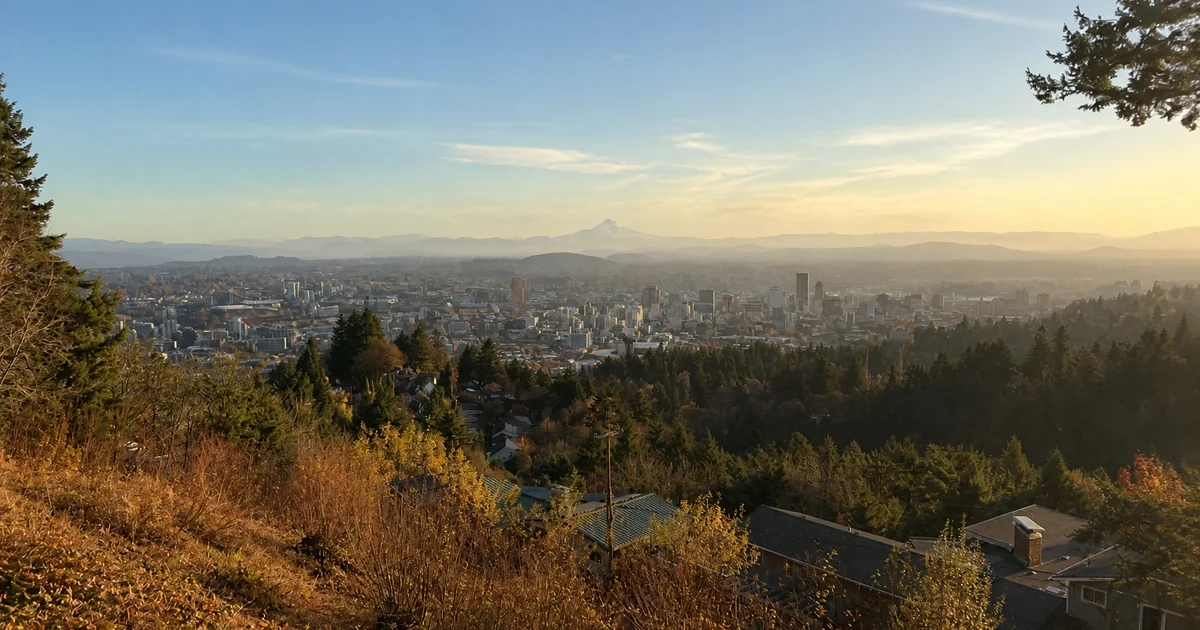
Arlington Heights is one of Portland's smallest and most geographically distinct neighborhoods, with roughly 300 single-family homes terraced into the West Hills at elevations approaching 1,000 feet. The boundaries are tight: West Burnside Street to the north, SW Fairview Boulevard to the south, SW Wright Avenue to the east, and Washington Park wrapping the western edge. The defining geography is the hillside itself. Streets curve and climb through dense tree canopy, many with sweeping views of downtown Portland, the Cascades, Mount Hood, and Mount St. Helens. The neighborhood is essentially embedded inside Washington Park, with the Oregon Zoo, Rose Garden, Japanese Garden, and Hoyt Arboretum all within or directly adjacent to its footprint.
A weekday morning here sounds like birdsong, distant traffic on Burnside, and the occasional hum of the Washington Park MAX shuttle. The streets are narrow, winding, and steep, which keeps cut-through traffic minimal. Park visitors come and go on weekends, especially during peak rose bloom in June and the holiday Festival of Lights at the Oregon Zoo. Residents tend to walk or bike into Northwest 23rd Avenue or down Burnside toward downtown when conditions allow, and reverse course on the MAX or by car when the climb home looks too steep.
On any given block you will see gardeners tending hillside terraces, runners and dog walkers heading into the Wildwood Trail or up the MAC Trail, and occasional photographers stopping for views over the city. The neighborhood association is active and the streets retain a distinctly residential feel despite being within a few minutes of downtown by car. Many homes have multi-car garages tucked into hillside foundations, since on-street parking is limited and grades are steep.
Looking for broader context on the area? Read my full Southwest Portland relocation guide for how Arlington Heights fits into the wider district.
Homes and Architecture in Arlington Heights
Arlington Heights has one of the older and most architecturally varied housing stocks in Portland. Roughly 60 percent of the homes were built before 1939, with first-wave construction running from the early 1900s through the late 1930s after Amos King and the King Real Estate Association platted the area. You see Tudor Revival, Dutch Colonial Revival, Craftsman, English cottage, Mediterranean, and a few significant historic homes designed by named Portland architects. A second layer of mid-century modern and contemporary infill sits on cleared or redeveloped lots, often perched on stilts or terraced into the hillside to capture views. Lots tend to run larger than typical Portland city lots, often irregular due to the topography, with many homes set behind landscaped gardens and gated drives.
When you shop here, expect inventory to be thin and condition to vary widely. Some pre-war homes have been carefully maintained and updated by long-term owners; others retain original kitchens, baths, and mechanical systems. Competitive dynamics are different from most Portland neighborhoods because turnover is low and listings are infrequent. Two items to price into your underwriting: hillside-specific inspection costs (geotechnical review for any home on a steep grade, drainage history, and retaining wall condition) and the cost of accessing utilities and contractors on narrow, winding streets. Foundation work, retaining walls, and roof replacements can run higher here than in flatter Portland neighborhoods because of access constraints alone.
- Tudor & English Cottage
- Craftsman & Dutch Colonial
- Mid-century & contemporary infill
- Larger irregular hillside lots
- Premium for Southwest Portland
Geography, Amenities, and Getting Around
West Hills Elevation & Washington Park
The neighborhood sits at elevations up to roughly 1,000 feet on the eastern slope of the Tualatin Mountains, surrounded on three sides by Washington Park (more than 410 acres). Many blocks have direct views of downtown, Mount Hood, and Mount St. Helens. The hillside setting is the single feature that defines daily life here, from the curving streets to the integration of homes with park trails and gardens.
NW 23rd Avenue & Northwest District
The closest full commercial corridor is Northwest 23rd Avenue, about 5 to 10 minutes by car (or a steep walk down) with restaurants, boutiques, and groceries including Trader Joe's. Downtown Portland is roughly 3 miles away with full big-box and grocery options. There are no commercial businesses within Arlington Heights itself; daily errands require leaving the neighborhood.
Hoyt Arboretum & Forest Park Trails
The 153-acre Hoyt Arboretum sits inside Washington Park with miles of curated trails through native and exotic tree species. The Wildwood Trail begins near the Vietnam Veterans Memorial and connects directly into Forest Park, the largest urban forest park in the United States at over 5,000 acres. The International Rose Test Garden, Portland Japanese Garden, and Oregon Zoo are all within walking distance.
Getting Around
Downtown Portland is roughly 10 to 15 minutes by car off-peak via West Burnside or SW Vista. The Washington Park MAX station (Blue and Red lines) sits inside the neighborhood and is the deepest train station in the Western Hemisphere, offering a 5-minute ride to downtown and direct service to Beaverton, Hillsboro, and PDX airport. TriMet bus route 63 serves Washington Park and Arlington Heights specifically, with route 20 along Burnside.
Joe's Take on Arlington Heights
When buyers tell me they want hillside views, mature architecture, and direct access to Washington Park and Forest Park trails without leaving Portland city limits, Arlington Heights is one of the few neighborhoods that delivers all three. The honest trade-off is that you are buying into a location that prioritizes geography and architectural character over walkable commercial life. There is no in-neighborhood grocery, no coffee shop on the corner, no third-place gathering spot inside the boundary. Daily errands mean a drive or a steep walk down to Northwest 23rd or downtown.
The housing stock and location suit buyers who value pre-war architectural craftsmanship, want immediate trail access, and can absorb the higher entry price that comes with limited inventory and West Hills views. It works well for remote workers who do not need a daily downtown commute and for anyone who values the MAX station as a backup option for getting around. It is less of a fit for buyers who want flat, walkable streets, easy garage access, or a corridor of restaurants within a five-minute walk; the Northwest District or Goose Hollow handles that better. Buyers focused on new construction with modern systems will find limited matches here, since most of the inventory is pre-1940.
Before you write an offer in Arlington Heights, there are a few specifics worth checking. Pull a geotechnical or hillside review on any property on a steep grade, and review drainage history (the neighborhood has a recorded history of slope movement going back to the 1894 Sliding Land case, and modern engineering manages it well, but soil conditions vary block by block). Check retaining wall condition and ownership boundaries; these can become expensive shared-responsibility items between neighbors. Confirm garage and street parking access for your specific address, since some homes have switchback drives that complicate larger vehicles. Verify the school boundary at pps.net, since Arlington Heights is served by Ainsworth Elementary, West Sylvan Middle, and Lincoln High School, all rated strongly but with boundaries that can shift.
Frequently Asked Questions About Arlington Heights
How do home prices in Arlington Heights compare to the rest of Southwest Portland?
Arlington Heights consistently prices at the higher end of Southwest Portland, with median sale prices well above neighborhoods like Hillsdale, Multnomah, and Hayhurst. The combination of hillside views, pre-war architecture, larger irregular lots, and Washington Park access drives the premium, and limited inventory keeps competitive dynamics tight even in slower markets. Prices typically run roughly in line with Portland Heights, Southwest Hills, and parts of Northwest Heights, all of which share the West Hills geography. The current average sales price and active listing count are shown at the top of this page and update automatically with the market.
What are property taxes like in Arlington Heights?
Multnomah County property taxes in Arlington Heights run at an effective combined rate of approximately 1.3% to 2.1% of assessed value, in line with the rest of the county. Because home values here are higher than most of Portland, typical annual property tax bills are correspondingly higher in dollar terms. Oregon Measure 50 caps assessed value growth at 3% per year, so long-held homes often pay less than their market value would suggest, which is particularly relevant in a neighborhood with low turnover. Verify current rates and the specific assessment for any address you are considering at multco.us/assessment-taxation.
Which schools serve Arlington Heights?
Arlington Heights is served by Portland Public Schools. The default assignments are Ainsworth Elementary School, West Sylvan Middle School, and Lincoln High School, all of which earn strong ratings on Niche and GreatSchools (Lincoln High has a graduation rate around 93%). Portland Public Schools uses open enrollment, so residents can apply to any PPS school regardless of address, though acceptance at oversubscribed schools is not guaranteed. Verify the specific address assignment with the PPS boundary finder at pps.net, since boundaries can change.
What is the housing stock like in Arlington Heights?
Housing stock is roughly 60 percent pre-1939, with Tudor Revival, Dutch Colonial Revival, Craftsman, English cottage, and Mediterranean styles dominant. A secondary layer of mid-century modern and contemporary infill sits on hillside lots, many designed to maximize views. Lots are typically larger than standard Portland city lots and often irregular due to the topography, with many homes set behind landscaped gardens. Amenity access is unusual: the neighborhood sits inside Washington Park, with the Oregon Zoo, Rose Garden, Japanese Garden, and Hoyt Arboretum all walkable or directly bordering. Many residential streets are narrow, steep, and curving, which keeps traffic minimal but limits parking.
How long is the commute from Arlington Heights to downtown Portland?
Downtown Portland is typically 10 to 15 minutes by car outside of peak hours via West Burnside or SW Vista Avenue. The MAX Blue and Red Lines stop at the Washington Park station inside the neighborhood, with a roughly 5-minute ride to downtown and direct service to Beaverton, Hillsboro, and PDX airport. The Washington Park station is also the deepest train station in the Western Hemisphere, which is a notable feature for transit users. Bike commuters use Burnside or descend through Goose Hollow.
Is Arlington Heights walkable?
Walkability depends on what you want to walk to. There are no commercial businesses inside Arlington Heights itself, so daily errands require leaving the neighborhood. However, walking access to Washington Park, the Rose Garden, the Japanese Garden, the Oregon Zoo, Hoyt Arboretum, and the Wildwood Trail into Forest Park is excellent. The NW 23rd commercial corridor is roughly a 10 to 15 minute downhill walk and a steeper climb back. Walk Scores in the neighborhood are typically in the 30s to 50s due to the absence of in-neighborhood retail, but trail access is among the strongest in Portland.
How does Arlington Heights compare to nearby Southwest Portland neighborhoods?
Arlington Heights typically prices at the high end of West Hills neighborhoods, roughly in line with Portland Heights and Southwest Hills, and above Goose Hollow and Hillside. Goose Hollow has more commercial density and Providence Park access. Southwest Hills has similar architecture and views but a larger footprint and somewhat more variety in housing era. Northwest Heights to the north shares the Forest Park trail access but with less direct Washington Park integration. Arlington Heights is the pick when a buyer wants pre-war architecture, true hillside views, and direct access to Washington Park inside the neighborhood, and is willing to drive or walk to all commercial errands.
Can I add an ADU or short-term rental in Arlington Heights?
Most Arlington Heights lots are eligible for an accessory dwelling unit under Portland's Residential Infill Project rules, which allow up to one ADU on a single-family lot. The hillside topography and irregular lot shapes can complicate ADU construction more than flatter Portland neighborhoods, so site-specific feasibility review is important early. Short-term rentals require a City of Portland STR permit; Type A permits require owner-occupancy, and Type B permits (non-owner-occupied) have stricter limits. Verify both ADU eligibility and STR permit type for your specific address with Portland Bureau of Development Services (portland.gov/bds), and confirm whether any environmental overlay zones apply, since hillside parcels here often have additional review requirements.
Thinking About Buying in Arlington Heights?
I help buyers navigate Southwest Portland neighborhoods every week. Let's talk about what you need, what you can afford, and whether Arlington Heights is the right fit.
Schedule a Free Consultation Or call Joe directly: (503) 910-7364Joe Saling · Saling Homes at eXp Realty · 10+ years serving Portland metro buyers and sellers
Saling Homes at eXp Realty is committed to the principles of the Fair Housing Act and Equal Housing Opportunity. Licensed in the State of Oregon. Information deemed reliable but not guaranteed. Verify all data independently before making real estate decisions.
MY BLOGS

MARKET TRENDS

HOUSING DETAIL
NEARBY SCHOOL & BUSINESS
3148 SW FAIRVIEW BLVD, Portland, OR 97205
Single Family Home 4 Beds 3.1 Baths 2,830 SqFt
Listed by Windermere Realty Trust
3127 SW CHAMPLAIN DR, Portland, OR 97205
Single Family Home 5 Beds 4 Baths 3,794 SqFt
Listed by The Agency Portland203 SW KINGSTON AVE, Portland, OR 97205
Single Family Home 5 Beds 3.1 Baths 3,380 SqFt
Listed by LUXE Forbes Global Properties3322 SW EVERGREEN TER, Portland, OR 97205
Single Family Home 5 Beds 3.1 Baths 4,032 SqFt
Listed by Windermere Realty TrustSW FAIRVIEW BLVD, Portland, OR 97205
Vacant Land 0.33 Acres
Listed by Keller Williams Sunset CorridorW BURNSIDE RD #5, Portland, OR 97210
Vacant Land 0.53 Acres
Listed by Premiere Property Group, LLCSW CHAMPLAIN DR, Portland, OR 97205
Vacant Land 0.12 Acres
Listed by Premiere Property Group, LLC

Coming Soon
Commute Score
Coming Soon
Coming Soon
DEMOGRAPHICS
Population:
Density:
Households:
Gender
Coming Soon
Coming Soon
Coming Soon
Coming Soon

Joe Saling
joe@sellingpdxhomes.com