

OR Portland
East Columbia
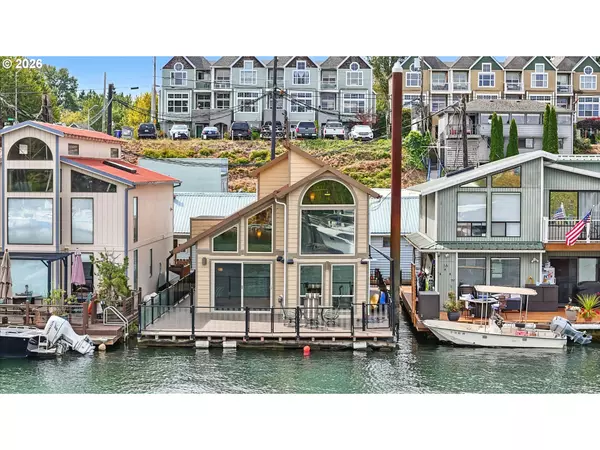
East Columbia is a small riverfront neighborhood north of NE Columbia Boulevard with mid-century ranches on large lots, direct access to the Columbia Slough Trail and Whitaker Ponds Natural Area, and an industrial edge that keeps prices among the lower per-square-foot pockets in Northeast Portland. Parts of the neighborhood fall within FEMA floodplain mapping, so address-level verification matters.





Living in East Columbia
A small riverfront neighborhood north of Columbia Boulevard with mid-century ranches, large lots, direct access to the Columbia Slough, and an industrial edge that keeps prices low relative to the rest of Northeast Portland.
Updated April 2026 by Joe SalingWhat East Columbia Is Really Like
East Columbia is one of the smallest and least-known neighborhoods in Northeast Portland, tucked into the narrow strip between NE Columbia Boulevard to the south and the Columbia River to the north, roughly between NE 33rd Drive on the west and Portland International Airport on the east. The neighborhood sits on the Columbia River floodplain, which shapes almost everything about it: flat terrain, slough channels cutting through the landscape, wildlife corridors, and a development pattern that mixes residential pockets with light industrial and port-related uses. The Columbia Slough runs through the middle of the neighborhood and is the defining natural feature.
A weekday morning in East Columbia is quieter than most of Northeast Portland in terms of street traffic, but you do hear the hum of the I-205 bridge approach and the regular rhythm of PDX arrivals and departures overhead. Commercial and industrial businesses along Columbia Boulevard and NE 33rd account for most of the daytime activity, while the residential pockets sit back from the main arteries. Weekends bring birders and cyclists to the Columbia Slough Trail and the nearby wildlife areas, which are a genuine draw for anyone interested in urban wildlife habitat within city limits.
On the residential blocks you will see longtime homeowners who have held property for decades, working on older homes and maintaining large yards. Community life is oriented more around the Columbia Slough Watershed Council activities, Whitaker Ponds Natural Area programming, and the annual Slough-to-Slough paddle than around any commercial corridor. The neighborhood does not have a traditional town center; daily rhythms are shaped by the natural landscape and the industrial edge rather than by a walkable main street.
Looking for broader context on the area? Read my full Northeast Portland relocation guide for how East Columbia fits into the wider district.
Homes and Architecture in East Columbia
East Columbia's housing stock is predominantly mid-century: 1940s to 1970s ranch-style and split-level homes built during the post-war push outward, along with a smaller number of pre-war farmhouses and cottages that date back to the neighborhood's rural origins. A handful of newer homes have gone up on scattered lots, but the pace of redevelopment is slower here than in inner Northeast. Lot sizes run noticeably larger than most Northeast neighborhoods, commonly 8,000 to 12,000 square feet, and some parcels near the Slough are significantly bigger. Many homes sit on quiet cul-de-sacs or short dead-end streets that back up to natural areas.
When you shop here, expect a wider range of condition than inner Northeast. Some homes have been carefully maintained by long-term owners; others retain original kitchens, baths, and systems from their era. Competitive dynamics are typically less intense than in the rest of Northeast, which is part of why East Columbia prices among the lower cost-per-square-foot pockets in the district. Three items worth pricing into your underwriting: flood zone mapping, since parts of the neighborhood fall within FEMA floodplain designations that affect insurance; older sewer laterals on pre-1970 homes; and potential soil and groundwater considerations given the industrial history and Slough proximity.
- Mid-century ranches & split-levels
- Pre-war farmhouses
- Limited newer infill
- 8,000 to 12,000 sq ft lots common
- Entry point for Northeast Portland
Geography, Amenities, and Getting Around
Columbia Slough & Floodplain
The Columbia Slough is a network of channels and wetlands running through the heart of the neighborhood, with active restoration work by the Columbia Slough Watershed Council. The floodplain shapes the flat terrain, the wildlife corridors, and the FEMA flood zones that affect parts of the neighborhood. The Slough is also a launchpad for paddling and birding that you cannot find elsewhere in the city.
NE 33rd Corridor & Cascade Station
Daily errands route to the NE 33rd corridor and Cascade Station. New Seasons Concordia sits about 6 to 8 minutes by car south on NE 33rd. Cascade Station (IKEA, Target, Marshalls) is about 5 to 7 minutes east. Fred Meyer on NE Hancock handles larger grocery runs. The neighborhood itself has no full-service grocery or pharmacy within its boundary.
Columbia Slough Trail & Whitaker Ponds
The Columbia Slough Trail runs through the neighborhood and connects to a broader network of paved and gravel paths along the slough system. Whitaker Ponds Natural Area, just south across Columbia Boulevard, offers wetland boardwalks and wildlife viewing. Broughton Beach on the Columbia River, a short drive north, adds river swimming and kayak access in summer.
Getting Around
Downtown Portland is typically 18 to 22 minutes by car off-peak via I-205 to I-84. The MAX Red Line, accessed at Cascade Station, offers a transit option to downtown and direct airport service. TriMet bus line 77 runs along NE Broadway and Weidler, reachable from the neighborhood's southern edge. Bike access is limited: the Slough Trail provides recreation, but commuter bike routes to inner Northeast require crossing Columbia Boulevard.
Joe's Take on East Columbia
When buyers tell me they want large lots in Northeast Portland at entry-level pricing, with real outdoor access and a tolerance for an industrial edge, East Columbia is one of the neighborhoods I mention. You typically pay well below inner Northeast per square foot here, you get substantially more land than almost anywhere else in the district, and the Slough trail system is a genuine recreational asset that most Portland neighborhoods cannot match. The honest trade-off is that East Columbia is not a walkable neighborhood in any conventional sense: there is no commercial corridor, no neighborhood cafe, and daily errands mean a drive to NE 33rd or Cascade Station.
The housing stock and location suit buyers who want a large lot, want proximity to urban wildlife habitat and paddling, and can accept the airport flight paths and the industrial neighbors along Columbia Boulevard. It works well for remote workers who do not need a daily downtown commute and for anyone drawn to the mid-century ranch housing stock at a lower entry price than inner Northeast. It is less of a fit for buyers who want walkable amenities, consistent pre-war architecture, or a conventional neighborhood feel with a defined commercial core.
Before you write an offer in East Columbia, there are a few specifics worth checking. Pull the FEMA flood zone map for the address; parts of the neighborhood fall within mapped floodplain, which affects insurance costs and sometimes loan requirements. Pull the PDX flight-path overlay, since noise varies significantly block by block depending on runway direction. For older homes, pull a sewer scope and consider a soil-contamination review given the industrial history of nearby parcels. Verify the school boundary at pps.net; East Columbia's small footprint means boundary edges can shift assignment meaningfully.
Frequently Asked Questions About East Columbia
How do home prices in East Columbia compare to the rest of Northeast Portland?
East Columbia consistently prices among the lowest per-square-foot pockets in Northeast Portland, typically well below Alameda, Irvington, Grant Park, Concordia, and Beaumont-Wilshire. The larger lot sizes mean total home prices remain competitive for buyers seeking more land, but the cost-per-square-foot advantage is meaningful. The combination of the industrial edge, the airport flight path, the floodplain mapping, and the absence of a commercial core all contribute to the lower pricing. The current average sales price and active listing count are shown at the top of this page and update automatically with the market.
What are property taxes like in East Columbia?
Multnomah County property taxes in East Columbia run at an effective combined rate of approximately 1.3% to 2.1% of assessed value, in line with the rest of the county. Because East Columbia home values tend to be lower than most of Northeast Portland, typical annual property tax bills are also lower on average. Oregon Measure 50 caps assessed value growth at 3% per year, so long-held homes often pay less than their market value would suggest. Verify current rates and the specific assessment for any address you are considering at multco.us/assessment-taxation.
Which schools serve East Columbia?
East Columbia is served by Portland Public Schools. Because the neighborhood is small and sits at the edge of multiple attendance areas, school assignment depends heavily on the specific address. Faubion K-8 and Rigler are the primary elementary options for most East Columbia addresses, with middle school typically routing to Roseway Heights Middle School and high school to Leodis V. McDaniel. Portland Public Schools uses open enrollment, so residents can apply to any PPS school regardless of address. Verify the specific address assignment at pps.net, since boundaries can change.
What is the housing stock like in East Columbia?
Housing stock is predominantly 1940s to 1970s mid-century ranches and split-levels, mixed with a smaller layer of pre-war farmhouses and limited newer infill. Lot sizes tend to run 8,000 to 12,000 square feet, significantly larger than most Northeast Portland neighborhoods, with some parcels near the Columbia Slough running larger still. Amenity access includes the Columbia Slough Trail, Whitaker Ponds Natural Area just south across Columbia Boulevard, and Broughton Beach on the Columbia River a short drive north. Parts of the neighborhood fall within FEMA-mapped floodplain, which is worth verifying by address.
How long is the commute from East Columbia to downtown Portland?
Downtown Portland is typically 18 to 22 minutes by car outside of peak hours, using I-205 south to I-84 west. Peak-hour drives can push closer to 30 minutes, and accidents on either freeway can extend that significantly. The MAX Red Line, accessed at Cascade Station, offers a transit option to downtown and direct airport service. TriMet bus service is limited within the neighborhood itself, so most residents default to car or a short drive to transit.
Is East Columbia walkable?
East Columbia is not a walkable neighborhood in any conventional sense. There is no commercial corridor, no neighborhood cafe, and no full-service grocery within the boundary. Daily errands require a car. Walk Scores in the neighborhood are generally in the 20s to 40s. The outdoor walking options are strong, however: the Columbia Slough Trail, Whitaker Ponds, and the broader floodplain trail network offer genuine recreational walking and birding within or very near the neighborhood, just not the walk-to-coffee or walk-to-grocery pattern you would find in inner Northeast.
How does East Columbia compare to nearby Northeast Portland neighborhoods?
East Columbia prices below most Northeast Portland neighborhoods on a per-square-foot basis, including Cully, Sumner, Roseway, and Madison South. It offers larger lots than almost all of them. Cully has a walkable commercial pocket at NE Killingsworth and NE 42nd that East Columbia lacks entirely. Sumner is airport-adjacent in a similar way but sits south of Columbia Boulevard with different school district implications. East Columbia is the pick when a buyer prioritizes lot size, Columbia Slough access, and entry-level pricing, and is willing to accept the industrial edge, flight paths, and lack of a conventional neighborhood commercial core.
Can I add an ADU or short-term rental in East Columbia?
The large lot sizes in East Columbia make it one of the more ADU-flexible pockets in Northeast Portland. Most lots are eligible for an accessory dwelling unit under Portland's Residential Infill Project rules, which allow up to one ADU on a single-family lot, and the generous parcels often accommodate detached ADUs more easily than tighter inner-Northeast lots. However, floodplain designation can complicate ADU siting on some parcels, so always verify the specific address. Short-term rentals require a City of Portland STR permit; Type A permits require owner-occupancy, and Type B permits (non-owner-occupied) have stricter limits. Verify both ADU eligibility and STR permit type with Portland Bureau of Development Services (portland.gov/bds) before counting on rental income.
Thinking About Buying in East Columbia?
I help buyers navigate Northeast Portland neighborhoods every week. Let's talk about what you need, what you can afford, and whether East Columbia is the right fit.
Schedule a Free Consultation Or call Joe directly: (503) 910-7364Joe Saling · Saling Homes at eXp Realty · 10+ years serving Portland metro buyers and sellers
Saling Homes at eXp Realty is committed to the principles of the Fair Housing Act and Equal Housing Opportunity. Licensed in the State of Oregon. Information deemed reliable but not guaranteed. Verify all data independently before making real estate decisions.
Real Estate News & Resources
MARKET TRENDS

HOUSING DETAIL
NEARBY SCHOOL & BUSINESS
331 NE Bridgeton #10, Portland, OR 97211
Single Family Home 2 Beds 2 Baths 1,320 SqFt
Listed by Windermere Heritage
738 NE MEADOW DR, Portland, OR 97211
Single Family Home 3 Beds 2 Baths 1,478 SqFt
Listed by Redfin521 NE MARINERS LOOP, Portland, OR 97211
Manufactured Home 3 Beds 2 Baths 1,188 SqFt
Listed by Matin Real Estate1514 NE MARINE DR, Portland, OR 97211
Townhouse 2 Beds 2 Baths 2,352 SqFt
Listed by eXp Realty, LLC534 South Shore Rd, Portland, OR 97211
Single Family Home 4 Beds 3 Baths 2,481 SqFt
Listed by CORIE GOSSE of JOHN L. SCOTT REAL ESTATE
1530 NE MARINE DR, Portland, OR 97211
Townhouse 2 Beds 2 Baths 2,273 SqFt
Listed by Keller Williams Premier Partners9400 NE GERTZ CT, Portland, OR 97211
Single Family Home 4 Beds 2 Baths 1,366 SqFt
Listed by MORE Realty534 NE SOUTH SHORE RD, Portland, OR 97211
Single Family Home 4 Beds 3 Baths 2,481 SqFt
Listed by John L. Scott9250 NE LEVEE RD, Portland, OR 97211
Single Family Home 4 Beds 2 Baths 2,623 SqFt
Listed by Kelly Right Real Estate of Portland, LLC936 NE LIJA LOOP, Portland, OR 97211
Single Family Home 5 Beds 2.1 Baths 2,136 SqFt
Listed by Berkshire Hathaway HomeServices NW Real Estate9324 NE LEVEE RD, Portland, OR 97211
Single Family Home 3 Beds 2 Baths 1,733 SqFt
Listed by Coldwell Banker Bain827 NE FALOMA RD, Portland, OR 97211
Single Family Home 4 Beds 2.1 Baths 1,548 SqFt
Listed by Keller Williams Realty Portland Elite1522 NE MARINE DR, Portland, OR 97211
Townhouse 2 Beds 2 Baths 2,273 SqFt
Listed by eXp Realty, LLC945 NE Lija LOOP, Portland, OR 97211
Single Family Home 4 Beds 2 Baths 1,678 SqFt
Listed by Oregon First1054 NE FALOMA RD, Portland, OR 97211
Single Family Home 3 Beds 3 Baths 1,700 SqFt
Listed by eXp Realty, LLC1054 NE FALOMA RD, Portland, OR 97211
Multi-Family 1,700 SqFt
Listed by eXp Realty, LLC9731 NE 6TH DR, Portland, OR 97211
Commercial 6,534 Sqft Lot
Listed by ERA Freeman & Associates362 NE MARINE DR, Portland, OR 97211
Vacant Land 0.92 Acres
Listed by Premiere Property Group, LLC

Coming Soon
Commute Score
Coming Soon
Coming Soon
DEMOGRAPHICS
Population:
Density:
Households:
Gender
Coming Soon
Coming Soon
Coming Soon
Coming Soon

Joe Saling
joe@sellingpdxhomes.com