

OR Portland
Multnomah





Living in Multnomah
A wooded Southwest Portland pocket built around the historic Multnomah Village commercial district, with pre-war homes, mature Douglas firs, and a six-block walkable main street on SW Capitol Highway.
Updated April 2026 by Joe SalingWhat Multnomah Is Really Like
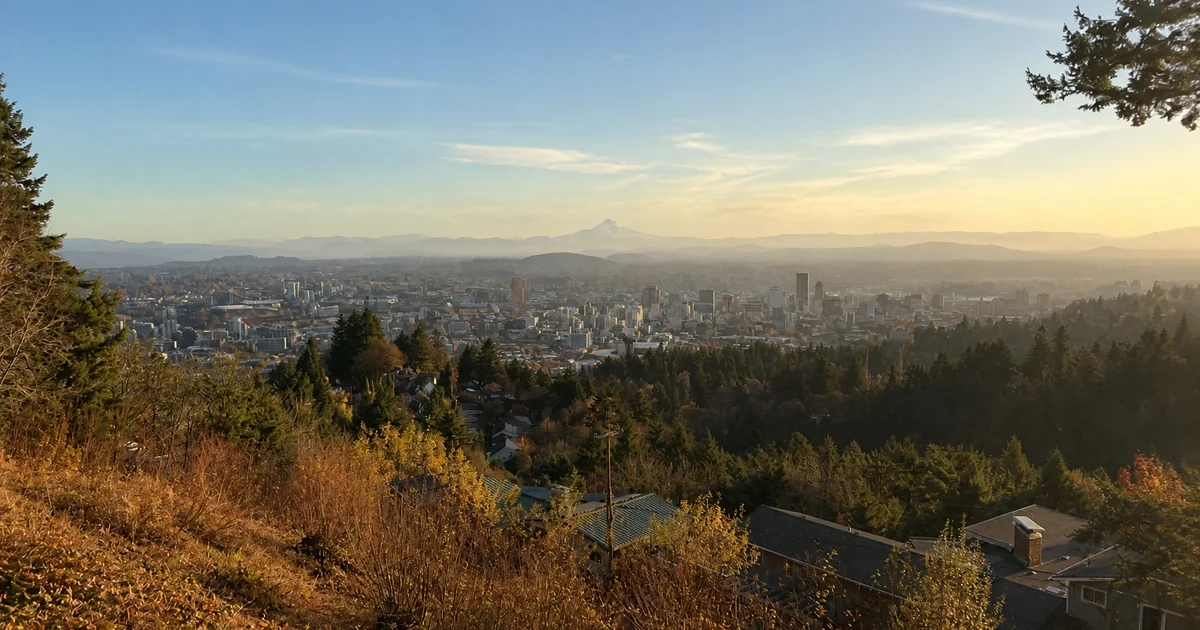
Multnomah is a Southwest Portland neighborhood centered on the Multnomah Village business district, with boundaries that run from SW 45th Avenue on the west to SW Capitol Hill Road on the east, and from SW Vermont Street on the north down to I-5 on the south. It sits in the Fanno Creek watershed in the rolling hills of Southwest, which means winding streets, mature Douglas fir and bigleaf maple canopy, and very few of the flat grid blocks you find on the east side of the river. Multnomah Village, the commercial heart, grew up in 1907 around a stop on the Oregon Electric Railway, and many of the original early-1900s buildings along SW Capitol Highway are still standing.
A weekday morning here sounds like espresso machines at Village Coffee, a steady stream of regulars at Fat City Cafe, and the hum of commuter traffic heading to I-5 or SW Barbur Boulevard. By mid-morning the village settles into a calmer rhythm of dog walkers and writers with laptops at neighborhood cafes. Saturdays shift considerably: the village fills up for breakfast at Marco's Cafe, browsing at Annie Bloom's Books and Thinker Toys, lunch at Tastebud or Lucky Labrador Public House, and afternoon errands at John's Marketplace, the bottle shop and taproom that sits on the original Multnomah train station ground. Once a year in August, Multnomah Days closes the street for a parade and street festival.
On residential blocks fanning out from Capitol Highway, you will see gardeners working under tree canopy, runners and dog walkers heading to Gabriel Park, and bike commuters routing through the neighborhood greenway toward downtown. The Multnomah Arts Center on SW 30th anchors a steady stream of art and music classes for all ages. First Friday in the village brings extended evening shopping hours and a community feel that very few Portland neighborhoods still pull off as consistently. The blocks immediately around the village are the most walkable; the further west and uphill you go toward Maplewood, the more car-dependent the daily routine becomes.
Looking for broader context on the area? Read my full Southwest Portland relocation guide for how Multnomah fits into the wider district.
Homes and Architecture in Multnomah
Multnomah's housing stock layers three distinct eras. The earliest core dates to the 1910s and 1920s, when the village was first platted and small Craftsman bungalows, English cottages, and Old Portland four-squares went up on streets named for states (north-south) and trees (east-west). A second wave from the 1940s through the 1960s added mid-century ranches and Cape Cods, often on the larger, hillier lots toward the western edge of the neighborhood. A third layer of newer townhomes and condos built since the 1970s and continuing through 2020s infill sits closer to SW Multnomah Boulevard and the village core. Lots tend to run larger than the inner east side, often 7,000 to 10,000 square feet, with many on irregular shapes that follow the topography.
When you shop here, expect a real range of conditions and price points. Some of the village-adjacent bungalows have been carefully restored and trade at a premium for their walk-to-Capitol-Highway location. Mid-century homes on the western and southern edges of the neighborhood often need updating but offer more square footage and lot for the dollar. The hilly topography means surprise basement conditions and drainage matter more here than in flatter parts of the city, and the mature canopy translates into root activity that should be priced into any pre-1970 sewer lateral. Competitive dynamics tend to be most intense on the walk-to-village blocks, while homes a 10-minute walk uphill or further west see steadier, less heated negotiation.
- 1910s & 1920s bungalows
- Mid-century ranch & Cape Cod
- Townhome & condo infill
- 7,000 to 10,000 sq ft lots common
- Mid-range for Southwest Portland
Dining, Parks, and Daily Life
Marco's Cafe & Tastebud
Marco's, in a 1913 building that once served as the village's Masonic lodge, has been the all-day breakfast and dinner anchor for decades. Tastebud, a few doors down, slings wood-fired pizzas made with Oregon-grown flour. Together they bookend the dining core of Capitol Highway.
Lucky Labrador Public House
The Multnomah Lucky Lab occupies the former 1925 Orenomah Masonic Lodge building and serves as the village's main neighborhood pub. Dog-friendly back patio, Lucky Lab beer on tap, and a steady mix of locals working through pints after the workday.
Village Coffee & Fat City Cafe
Village Coffee has been the morning gathering spot on Capitol Highway for over 20 years. Fat City Cafe, a few blocks east, has been serving pancake stacks and hefty omelets in green vinyl booths since the 1970s. Both anchor the village's everyday rhythm.
Gabriel Park
One of the largest parks in Southwest Portland sits on the neighborhood's western edge. Roughly 90 acres of trails, athletic fields, off-leash dog area, native plant garden, and the Southwest Community Center with an indoor pool. The forested sections feel removed from city.
Daily Errands
John's Marketplace handles beer and wine. Annie Bloom's Books, open since 1978, covers reading. Thinker Toys, in business since 1994, fills the largest single retail space in the village. For full-service grocery, Fred Meyer at SW Barbur and Hillsdale's New Seasons are both about 5 minutes by car.
Getting Around
Downtown Portland is typically 10 to 15 minutes by car off-peak via I-5 or SW Barbur Boulevard. There is no MAX line in the neighborhood. TriMet bus lines 44 and 45 run along SW Capitol Highway with direct service to downtown. Bike commuters use the SW Multnomah Boulevard greenway, though the route involves real elevation gain.
Joe's Take on Multnomah
When buyers tell me they want a walkable neighborhood center but cannot find what they want on the east side, Multnomah Village is one of the first neighborhoods I bring up. You get a six-block independent commercial strip that has held its character better than almost any other Portland neighborhood, you get larger lots than the inner east side, and you get real tree canopy and topography. The honest trade-off is that walkability is highly local: it is real if you live within five or six blocks of Capitol Highway, and it fades quickly the further uphill or west you go. There is also no light rail. Bus service is solid, but the daily commute pattern here is a car or a bike, not the MAX.
The housing stock and location suit buyers who want an independent commercial corridor with locally-owned businesses, a wooded residential setting, and access to substantial park space at Gabriel Park. It works well for remote workers, anyone whose commute is to Lake Oswego, Beaverton, or the Tigard area rather than downtown, and buyers who specifically want that small-town village feel inside the city. It is less of a fit for buyers whose daily commute depends on light rail, who want flat grid blocks for easy biking, or who want the dense, restaurant-every-block density of Sunnyside or Mississippi.
Before you write an offer in Multnomah, there are a few specifics worth checking. Pull a sewer scope on any pre-1970 home; the canopy that makes the neighborhood beautiful also drives heavy root intrusion in older laterals. Walk the lot during or after a heavy rain to understand drainage on hilly properties; some lots that look fine in summer reveal real water issues in November. Verify the school assignment at pps.net since the boundaries split within Multnomah itself, with some addresses feeding Maplewood Elementary and others feeding Capitol Hill or other PPS schools. Finally, drive Capitol Highway both at 8am on a weekday and on a Saturday at noon, because the village's commercial energy and the parking situation look very different at those two times.
Frequently Asked Questions About Multnomah
How do home prices in Multnomah compare to the rest of Southwest Portland?
Multnomah typically prices in the middle of the Southwest Portland range. Expect to pay below the West Hills, Hillsdale's premium blocks, and parts of Multnomah Village's walk-to-corridor pockets, and roughly in line with Maplewood, Hayhurst, and Ashcreek. The walkable village core, the Gabriel Park access, and the larger lots all push prices up; the lack of light rail and the hilly terrain pull them down relative to the closer-in inner east side. The current average sales price and active listing count are shown at the top of this page and update automatically with the market.
What are property taxes like in Multnomah?
Multnomah County property taxes in the Multnomah neighborhood run at an effective combined rate of approximately 1.3% to 2.1% of assessed value, in line with the rest of the county. Because home values in Multnomah tend to fall in the middle of Southwest Portland, typical annual property tax bills run a few thousand to roughly ten thousand dollars depending on assessed value. Oregon Measure 50 caps assessed value growth at 3% per year, so long-held homes often pay less than their market value would suggest. Verify current rates and the specific assessment for any address you are considering at multco.us/assessment-taxation.
Which schools serve Multnomah?
Multnomah is served by Portland Public Schools. The default elementary assignment for most of the neighborhood is Maplewood Elementary, with some addresses on the eastern edge assigned to Capitol Hill Elementary. Middle-schoolers continue to Jackson Middle School, and high-schoolers continue to Ida B. Wells-Barnett High School (formerly Wilson). Niche rates Maplewood and Capitol Hill among the higher-performing PPS elementaries, and Jackson and Ida B. Wells in the upper tier of PPS secondary schools. Verify the specific address assignment using the PPS School Finder at pps.net, since boundaries can change.
What is the housing stock like in Multnomah?
Housing stock spans 1910s and 1920s Craftsman bungalows and Old Portland four-squares, mid-century ranches and Cape Cods from the 1940s through 1960s, and townhome and condo infill from the 1970s onward. Lots commonly run 7,000 to 10,000 square feet, larger than most inner east-side neighborhoods, and follow the rolling topography of the Fanno Creek watershed. Amenity access includes Gabriel Park (approximately 90 acres with trails, athletic fields, and the Southwest Community Center with an indoor pool), the Multnomah Arts Center, and the Multnomah Village commercial district along SW Capitol Highway with locally-owned shops, restaurants, and bookstores.
How long is the commute from Multnomah to downtown Portland?
Downtown Portland is typically 10 to 15 minutes by car outside of peak hours via I-5 or SW Barbur Boulevard, both about 5 minutes from the village core. Peak-hour drives can stretch to 20 to 30 minutes, especially on I-5. There is no MAX line in the neighborhood. TriMet bus lines 44 and 45 run along SW Capitol Highway with direct service to downtown, taking roughly 25 to 35 minutes depending on time of day. Bike commuters use the SW Multnomah Boulevard greenway, with about 700 feet of elevation gain on the route.
Is Multnomah walkable?
Walkability is highly local in Multnomah. The Multnomah Village core along SW Capitol Highway is one of the most pedestrian-friendly commercial strips in Southwest Portland, with six blocks of locally-owned shops, restaurants, and services. Homes within four to five blocks of the village walk to coffee, dining, books, and the Multnomah Arts Center easily. Walk Scores for those village-adjacent blocks generally fall in the 70s. Further west or uphill, the topography and lack of sidewalks on some streets push the practical Walk Score down into the 40s and 50s, and most daily errands shift to driving.
How does Multnomah compare to nearby Southwest Portland neighborhoods?
Multnomah typically prices below the premium West Hills neighborhoods and inner Hillsdale blocks, and roughly in line with Maplewood, Hayhurst, and Ashcreek to the west. Hillsdale has a competing but smaller commercial corridor with New Seasons. Maplewood has very similar housing stock without the village walkability. Ashcreek and Crestwood sit further west with more car-dependent layouts. South Burlingame, just east across I-5, is more residential without a village core. Multnomah is the pick when a buyer specifically wants the Multnomah Village commercial corridor, the Gabriel Park access, and the small-town feel inside the city.
Can I add an ADU or short-term rental in Multnomah?
Most Multnomah lots are eligible for an accessory dwelling unit under Portland's Residential Infill Project rules, which allow up to one ADU on a single-family lot. The larger lot sizes common in the neighborhood often make ADU construction more flexible than tighter inner-east-side parcels, though the hilly topography can add cost and complexity. Short-term rentals require a City of Portland STR permit; Type A permits require owner-occupancy, and Type B permits (non-owner-occupied) have stricter limits and are harder to obtain. Verify both ADU eligibility and STR permit type for your specific address with Portland Bureau of Development Services (portland.gov/bds) before counting on rental income.
Thinking About Buying in Multnomah?
I help buyers navigate Southwest Portland neighborhoods every week. Let's talk about what you need, what you can afford, and whether Multnomah is the right fit.
Schedule a Free Consultation Or call Joe directly: (503) 910-7364Joe Saling · Saling Homes at eXp Realty · 10+ years serving Portland metro buyers and sellers
Saling Homes at eXp Realty is committed to the principles of the Fair Housing Act and Equal Housing Opportunity. Licensed in the State of Oregon. Information deemed reliable but not guaranteed. Verify all data independently before making real estate decisions.
MY BLOGS


MARKET TRENDS

HOUSING DETAIL
NEARBY SCHOOL & BUSINESS
8412 SW 30TH AVE, Portland, OR 97219
Single Family Home 3 Beds 2 Baths 1,326 SqFt
Listed by RE/MAX Equity Group
7574 SW 31st AVE, Portland, OR 97219
Multi-Family 12 Beds 12.6 Baths 6,760 SqFt
Listed by Keller Williams Realty Portland Premiere7560 SW 31st AVE, Portland, OR 97219
Townhouse 2 Beds 2.1 Baths 955 SqFt
Listed by Keller Williams Realty Portland Premiere7572 SW 31st AVE, Portland, OR 97219
Townhouse 2 Beds 2.1 Baths 970 SqFt
Listed by Keller Williams Realty Portland Premiere7581 SW Capitol HWY, Portland, OR 97219
Townhouse 2 Beds 2.1 Baths 959 SqFt
Listed by Keller Williams Realty Portland Premiere7564 SW 31st AVE, Portland, OR 97219
Townhouse 2 Beds 2.1 Baths 970 SqFt
Listed by Keller Williams Realty Portland Premiere7585 SW Capitol HWY, Portland, OR 97219
Townhouse 2 Beds 2.1 Baths 970 SqFt
Listed by Keller Williams Realty Portland Premiere1997 SW MOSS ST, Portland, OR 97219
Single Family Home 2 Beds 2.1 Baths 987 SqFt
Listed by The Koval Group8329 SW 24TH AVE, Portland, OR 97219
Townhouse 3 Beds 3.1 Baths 1,716 SqFt
Listed by H & H Preferred Real Estate3530 SW FALCON ST, Portland, OR 97219
Single Family Home 2 Beds 3 Baths 1,490 SqFt
Listed by Reside Realty Group2520 SW MILES ST, Portland, OR 97219
Single Family Home 3 Beds 2.1 Baths 1,594 SqFt
Listed by Where, Inc2531 SW SPRING GARDEN ST #14, Portland, OR 97219
Condo 3 Beds 2 Baths 1,173 SqFt
Listed by JMG - Jason Mitchell Group7430 SW CAPITOL HWY, Portland, OR 97219
Townhouse 3 Beds 3.1 Baths 2,040 SqFt
Listed by Neighbors Realty7307 SW CAPITOL HWY, Portland, OR 97219
Single Family Home 4 Beds 3 Baths 2,693 SqFt
Listed by 24/7 Properties2716 SW HUME ST, Portland, OR 97219
Single Family Home 3 Beds 1 Bath 1,356 SqFt
Listed by eXp Realty, LLC6737 SW 30TH AVE #B, Portland, OR 97219
Condo 2 Beds 1.1 Baths 1,056 SqFt
Listed by Farrell Realty & Property Management, Inc2811 SW SPRING GARDEN ST, Portland, OR 97219
Condo 2 Beds 1 Bath 884 SqFt
Listed by Urban Nest Realty8206 SW 46TH AVE, Portland, OR 97219
Single Family Home 4 Beds 2.1 Baths 2,084 SqFt
Listed by Keller Williams Realty Portland Premiere3624 SW MULTNOMAH BLVD, Portland, OR 97219
Townhouse 1 Bed 1 Bath 574 SqFt
Listed by Windermere Realty Trust2608 SW HUME CT, Portland, OR 97219
Townhouse 3 Beds 2.1 Baths 1,474 SqFt
Listed by Keller Williams Realty Professionals

Coming Soon
Commute Score
Coming Soon
Coming Soon
DEMOGRAPHICS
Population:
Density:
Households:
Gender
Coming Soon
Coming Soon
Coming Soon
Coming Soon

Joe Saling
joe@sellingpdxhomes.com