

OR Portland
Northwest Industrial
Northwest Industrial is one of Portland's largest neighborhoods by area but one of the smallest by residential population, running along the Willamette River from the Fremont Bridge north toward Linnton, with NW St. Helens Road as its commercial spine. The residential footprint is limited to a small set of pre-1940 homes along the Forest Park bluff and live-work conversions within the industrial fabric, making this an unconventional purchase rather than a typical neighborhood search.


RECENTLY SOLD

Listed by Cascade Hasson Sotheby's International Realty


Listed by eXp Realty, LLC

Listed by Constant Commercial Real Estate Inc
Living in Northwest Industrial
A working waterfront district along the Willamette with shipping terminals, rail yards, and a small residential footprint tucked against the Forest Park bluff.
Updated April 2026 by Joe SalingWhat Northwest Industrial Is Really Like
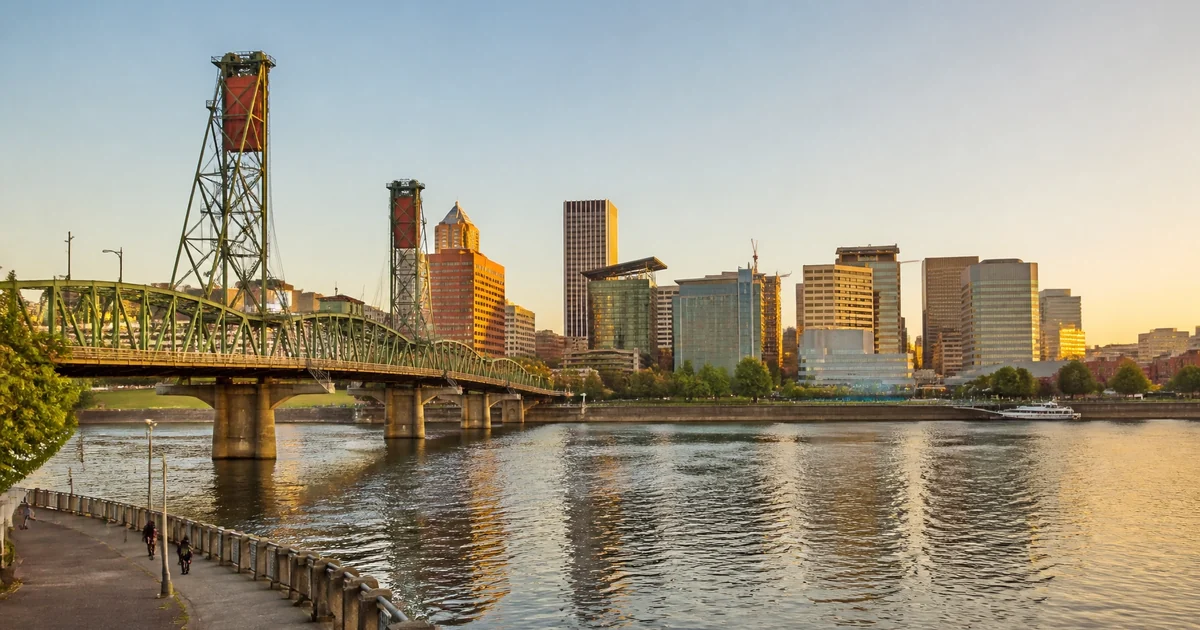
Northwest Industrial is one of Portland's largest neighborhoods by area and one of the smallest by residential population. It runs along the west bank of the Willamette River from the Fremont Bridge north to roughly the Linnton boundary, with NW St. Helens Road (US-30) as its commercial spine. The eastern edge is the river itself; the western edge climbs into the Tualatin Mountains and Forest Park. The defining geography is the working waterfront: deep-water shipping terminals, the Port of Portland's Terminal 4 and Terminal 5 facilities, rail lines feeding the BNSF and Union Pacific corridors, and the kind of industrial scale that has been the engine of Portland's economy for more than a century.
A weekday here sounds like trains, container handlers, and freight trucks moving along NW Front Avenue and US-30. The rhythm is set by shifts at the terminals and the warehouses, not by retail hours. Most of the buildings are single-story warehouses, distribution centers, food processing plants, and metal-fabrication shops, with a few converted live-work spaces and a small handful of older houses dating to before the area was rezoned industrial. There is no walkable commercial corridor for residents in the conventional sense; food carts and a few worker-oriented lunch spots cluster near the larger employer concentrations, but most are designed for daytime industrial use, not evening foot traffic.
The small residential pocket here is genuinely small. A few dozen older houses sit on the bluff side near the Forest Park boundary, and a limited number of artist live-work conversions exist within the industrial fabric itself. On those blocks you will see homeowners gardening in narrow yards, dog walkers heading up to Forest Park trailheads, and workers parking and walking to nearby shops. This is not a typical residential neighborhood, and any buyer considering a home here should approach it as a unique-property purchase rather than a traditional neighborhood search.
Looking for broader context on the area? Read my full Northwest Portland relocation guide for how Northwest Industrial fits into the wider district.
Homes and Architecture in Northwest Industrial
Residential housing here is rare and falls into two categories. The first is older single-family homes, most built between 1900 and 1940, that predate the industrial zoning and now sit interspersed with warehouses or along the Forest Park boundary. The second is a small set of live-work conversions in former industrial buildings, where artists and small-business owners have converted warehouse or workshop space into a mix of studio and residence. New residential construction is essentially non-existent because the underlying zoning is industrial, not residential.
When you shop here, expect listings to be sporadic and often unconventional. A typical listing might be a 1920s house surrounded by industrial parcels, a converted warehouse with no traditional yard, or a property whose value is more about the unique structure than the lot or street. Lot sizes vary widely depending on whether the property is a bluff-side house or a former industrial parcel. Underwriting requires extra diligence: zoning use limitations, environmental history of adjacent parcels, freight noise, and whether the residential use is grandfathered or a permitted live-work configuration. Financing can be more complex on non-conforming or live-work properties, and you should expect appraisals to be challenging because comparable sales are limited.
- Pre-1940 detached homes
- Live-work conversions
- Limited residential inventory
- Variable lot sizes
- Below-market for Northwest Portland
Geography, Amenities, and Getting Around
Willamette Waterfront & Forest Park Bluff
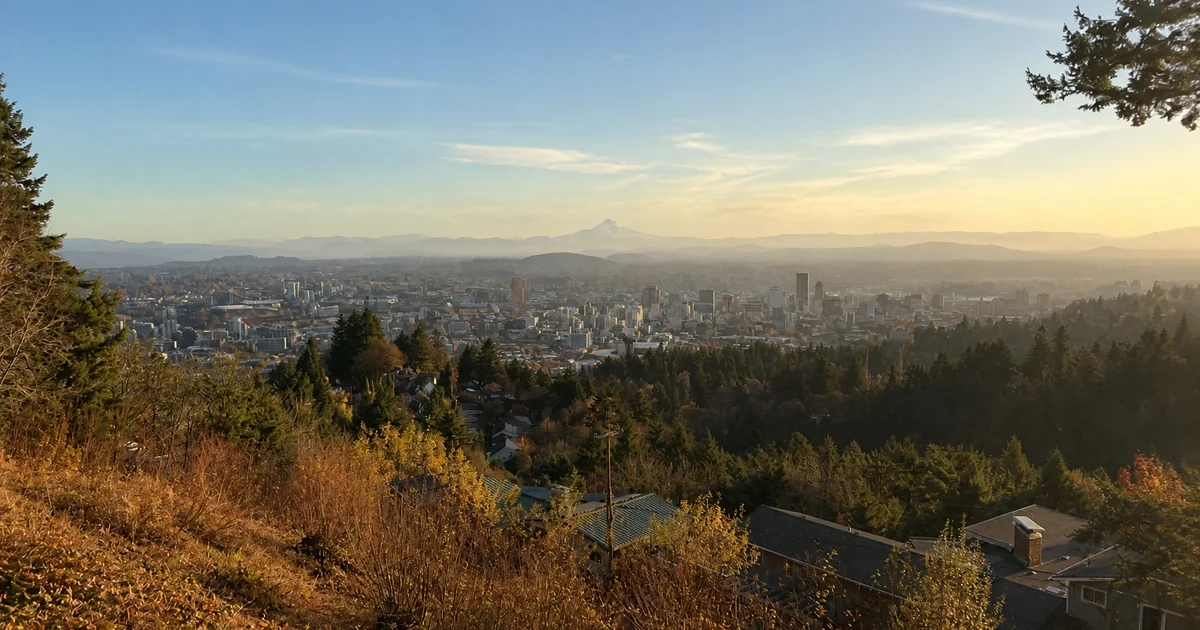
The neighborhood is bookended by two of Portland's most distinctive geographic features: the working Willamette River waterfront on the east and the Forest Park bluff on the west. The combination is unusual. You can stand on a single block and see container ships, BNSF rail lines, and one of the largest urban forests in North America rising directly above the rooftops.
NW 23rd & Northwest District Shopping
Closest full-service grocery and dining: the Northwest District corridor along NW 23rd Avenue, about 5 to 8 minutes by car (depending on traffic on the Yeon and Vaughn ramps). New Seasons on NW 21st, Trader Joe's, and the corridor restaurants are the practical errand zone for residents. For everyday hardware and big-box, Lower Albina and the Pearl District are similarly close by car.
Forest Park Trails
Forest Park, more than 5,000 acres of urban forest with the 30-mile Wildwood Trail, sits directly above the western boundary. Residents on bluff-adjacent streets have some of the most direct trail access of any Portland neighborhood. Linnton Park to the north and the Willamette Greenway corridor along the river add additional outdoor options.
Getting Around
NW St. Helens Road (US-30) is the main artery connecting the neighborhood to downtown Portland (about 10 to 15 minutes by car off-peak) and north to the St. Johns Bridge and Linnton. I-405 access is at the south end via the Fremont Bridge approach. TriMet bus service runs along US-30 with the Line 16 to St. Johns and downtown. Freight and passenger traffic on US-30 makes peak-hour drives meaningfully slower.
Joe's Take on Northwest Industrial
Northwest Industrial is the most unusual neighborhood I write about, because it is genuinely an industrial district with a small residential footprint rather than a residential neighborhood with industry around it. The honest trade-off is straightforward: you get a one-of-a-kind property setting with direct Forest Park access and a working-waterfront character you cannot replicate anywhere else in Portland, in exchange for freight noise, limited residential infrastructure, and a property type that does not fit conventional buyer searches. Any conversation about buying here starts with whether the specific property is the right kind of unique, not with comparable-block walkthroughs.
The housing stock and location features suit buyers who specifically want an unconventional property: an artist or maker who needs studio or workshop space alongside living space, a buyer drawn to live-work configurations, or someone who has identified a specific bluff-side house and is willing to do the underwriting work. It is not a fit for buyers looking for a typical residential block, daily walkability, or predictable resale comps. If you are searching Northwest Portland for a residential neighborhood feel, the Northwest District (NW 23rd corridor) and Northwest Heights are far better fits.
Before you write an offer in Northwest Industrial, the diligence list is longer than usual. Confirm the zoning use status of the specific property: is the residential use legal-conforming, legal-nonconforming (grandfathered), or part of a live-work permit? Pull a Phase 1 environmental review on the parcel and check the history of adjacent properties; industrial neighbors can carry contamination risks that affect future financing or resale. Verify freight rail and truck noise at the specific address at multiple times of day. Check flood and tsunami inundation overlays for waterfront-side properties. Talk to your lender early about appraisal feasibility on non-conforming residential or live-work properties, because not every lender will write the loan. And verify the school assignment at pps.net, since this neighborhood is split between Portland Public Schools attendance areas depending on address.
Frequently Asked Questions About Northwest Industrial
How do home prices in Northwest Industrial compare to the rest of Northwest Portland?
Pricing in Northwest Industrial is hard to generalize because residential inventory is so limited and properties are often unique. In general, prices on conforming residential parcels run below the Northwest District (NW 23rd) and Northwest Heights, reflecting the industrial surroundings and freight noise. Live-work conversions can price either above or below typical residential comps depending on building condition, square footage, and amenity package. Comparing this neighborhood to traditional residential neighborhoods on a per-square-foot basis is misleading; each property here needs its own underwriting. The current average sales price and active listing count are shown at the top of this page and update automatically with the market.
What are property taxes like in Northwest Industrial?
Multnomah County property taxes in Northwest Industrial run at an effective combined rate of approximately 1.3% to 2.1% of assessed value, in line with the rest of the county. Industrial-use parcels and live-work properties can have unusual assessment histories, so the assessed value relationship to market value varies more than in standard residential neighborhoods. Oregon Measure 50 caps assessed value growth at 3% per year on residential property. Verify current rates and the specific assessment for any address you are considering at multco.us/assessment-taxation.
Which schools serve Northwest Industrial?
Northwest Industrial is served by Portland Public Schools, with attendance areas split depending on the specific address. Bluff-adjacent and northern residential parcels have historically routed to Skyline School (a K-8 in the West Hills) for elementary, while other addresses route to Chapman Elementary in the Northwest District. Middle and high school assignments follow accordingly. Because the residential footprint is small and addresses are scattered, school assignment varies more than in typical neighborhoods. Verify the specific address assignment with the PPS boundary finder at pps.net.
What is the housing stock like in Northwest Industrial?
Residential housing here is limited and falls into two main categories. The first is pre-1940 single-family homes that predate the industrial zoning, often sitting on the Forest Park bluff side or interspersed with industrial parcels along older streets. The second is live-work conversions in former industrial buildings, where commercial or warehouse space has been adapted into combined residence and studio. New residential construction is essentially non-existent. Lot sizes vary significantly. Amenity access includes Forest Park trail entrances on the western edge, the Willamette Greenway along the eastern edge, and a 5 to 8 minute drive to the Northwest District corridor for groceries and dining.
How long is the commute from Northwest Industrial to downtown Portland?
Downtown Portland is typically 10 to 15 minutes by car off-peak via NW St. Helens Road and the Fremont Bridge, or via I-405 from the south end. Peak-hour drives can stretch to 20 to 25 minutes, especially when freight traffic is heavy on US-30. TriMet's Line 16 runs along US-30 to downtown via the Northwest District. There is no MAX line directly serving the neighborhood, though MAX stations in downtown Portland are within a 10 to 15 minute combined drive and walk for some residents.
Is Northwest Industrial walkable?
Northwest Industrial is not a walkable residential neighborhood. There is no concentrated commercial corridor for residents, sidewalks are inconsistent, and the surrounding land use is freight, warehousing, and shipping terminals. Walk Scores are generally low and reflect the industrial fabric. The walking that does happen tends to be Forest Park trail access from bluff-side homes and short walks within the live-work pockets. For a walkable neighborhood feel in Northwest Portland, the Northwest District (NW 23rd) is the standard recommendation.
How does Northwest Industrial compare to nearby Northwest Portland neighborhoods?
Northwest Industrial is fundamentally different from its Northwest Portland neighbors. The Northwest District (NW 23rd corridor) is dense, walkable, and almost entirely residential and commercial. Northwest Heights and Forest Heights are upscale residential neighborhoods west of the bluff. Linnton, immediately north along US-30, is the closest comparable in character (working-waterfront pocket with limited residential), though Linnton has a slightly more established small residential community. Northwest Industrial is the pick when a buyer specifically wants a one-of-a-kind property with direct Forest Park or waterfront access and is comfortable with the freight-corridor surroundings.
Can I add an ADU or short-term rental in Northwest Industrial?
ADU eligibility in Northwest Industrial is more complex than in residential neighborhoods because the underlying zoning is industrial. Conforming residential parcels (where residential is the legal use) may have ADU eligibility under Portland's Residential Infill Project rules; non-conforming or grandfathered residential uses may not. Live-work properties have their own permit requirements. Short-term rentals require a City of Portland STR permit, and eligibility depends on the property's zoning and use status. Verify both ADU eligibility and STR permit feasibility for your specific address with Portland Bureau of Development Services (portland.gov/bds) before assuming either is possible.
Thinking About Buying in Northwest Industrial?
I help buyers navigate Northwest Portland neighborhoods every week, including unconventional properties like the ones in Northwest Industrial. Let's talk about what you need, what you can afford, and whether this neighborhood is the right fit.
Schedule a Free Consultation Or call Joe directly: (503) 910-7364Joe Saling · Saling Homes at eXp Realty · 10+ years serving Portland metro buyers and sellers
Saling Homes at eXp Realty is committed to the principles of the Fair Housing Act and Equal Housing Opportunity. Licensed in the State of Oregon. Information deemed reliable but not guaranteed. Verify all data independently before making real estate decisions.
MY BLOGS

Market Trends
housing detail

Coming Soon
Listing Detail
Commute Score
Coming Soon
demographics
Population
Density
Households
Gender
Coming Soon
Education
Coming Soon
Coming Soon
Coming Soon

GET MORE INFORMATION