

OR Portland
Parkrose
Parkrose is an outer East Portland neighborhood between NE 82nd and 122nd Avenues, anchored by Sandy Boulevard and bordered by Rocky Butte to the south and the Columbia Slough corridor to the north. Housing is predominantly post-war ranches and 1960s and 1970s split-levels on 7,000 to 10,000 square foot lots, with MAX Red Line service at the Parkrose/Sumner Transit Center and assignment to the Parkrose School District.





Living in Parkrose
An outer East Portland neighborhood between NE 82nd and 122nd with post-war ranches on larger lots, MAX Red Line access at the Parkrose/Sumner Transit Center, and the Historic Parkrose district along Sandy Boulevard.
Updated April 2026 by Joe SalingWhat Parkrose Is Really Like
Parkrose sits in outer East Portland between NE 82nd Avenue on the west and NE 122nd Avenue on the east, stretching from the Columbia Slough corridor on the north down to roughly NE Prescott and Fremont on the south. Sandy Boulevard cuts through diagonally as the main commercial artery, with the Historic Parkrose district clustered between 105th and 111th. Parkrose High School sits near the geographic center, and Rocky Butte frames the southern edge. The neighborhood's character is post-war residential: mid-century ranches, 1960s and 1970s split-levels, and larger lots than you typically see in inner Northeast Portland.
A weekday morning here is Sandy Boulevard traffic, school buses circulating through the Parkrose district, and the background hum of I-205 on the eastern edge. Residential interior streets feel distinctly separate from the commercial corridors, with many blocks ending in cul-de-sacs or transitioning toward wooded stretches near Rocky Butte. Weekend rhythms shift toward the Rocky Butte trails for hikers and runners, the 40-Mile Loop trail along the Columbia Slough on the north, and the occasional community event at the Historic Parkrose corridor.
On residential blocks you will see homeowners working on cars in driveways, gardeners tending established yards with mature fruit trees and vegetable beds, and walkers looping the greenways where they exist. The Historic Parkrose Business Association runs periodic community events along Sandy. Many interior streets lack continuous sidewalks, which is standard for outer Portland and gives the streetscape a slightly more rural feel than inner Northeast. Residents rely on cars for most daily errands, with Sandy Boulevard and 122nd Avenue handling the bulk of local shopping and services.
Looking for broader context on the area? Read my full East Portland relocation guide for how Parkrose fits into the wider district.
Homes and Architecture in Parkrose
Parkrose's housing stock is dominated by post-war construction, with the bulk of homes built between 1945 and 1975. Mid-century ranches on slab or short-crawlspace foundations make up the largest share, mixed with split-levels from the 1960s and 1970s and a smaller layer of 1920s and 1930s cottages closer to Sandy Boulevard that predate the post-war development push. Lots run notably larger than inner Northeast Portland, with many homes sitting on 7,000 to 10,000 square foot lots and some along the Rocky Butte edge reaching well over a quarter acre. A limited layer of newer infill and townhome construction has filled in scrape-and-build parcels over the last 15 years, mostly near Sandy.
When you shop here, expect significant variation in condition. Some mid-century homes have been carefully updated with new kitchens, modern windows, and refreshed electrical; others retain original aluminum windows, vintage kitchens, and 60-amp panels. Competitive dynamics are typically less intense than inner Northeast, which is part of the appeal for budget-conscious buyers but means cosmetic updates do not always translate into aggressive bidding. Two items to price into your underwriting: older sewer laterals (concrete and cast iron) that show 60-plus years of wear, and aluminum branch-circuit wiring in some 1960s and early 1970s homes, which insurers sometimes flag.
- Mid-century ranch
- 1960s & 70s split-level
- Pre-war cottages
- 7,000 to 10,000 sq ft lots common
- Entry point for East Portland
Geography, Amenities, and Getting Around
Rocky Butte & Columbia Slough Edge
Parkrose sits between Rocky Butte (a retired volcanic cinder cone with viewpoint trails) on the south and the Columbia Slough wetland corridor on the north. The elevation difference gives southern Parkrose blocks near the butte territorial views, while the northern edge transitions into slough wetlands and the Portland International Airport buffer.
Historic Parkrose & 122nd Corridor
The Historic Parkrose district along Sandy Boulevard between 105th and 111th holds a cluster of small businesses, restaurants, and the Historic Parkrose Theater. For full-service grocery, Fred Meyer at NE 122nd and Glisan is about 5 minutes by car, with Safeway at 102nd closer. Big-box shopping at Cascade Station (IKEA, Target) is about 7 minutes north. Hardware routes to Winks Hardware or Home Depot near the airport.
Rocky Butte Natural Area
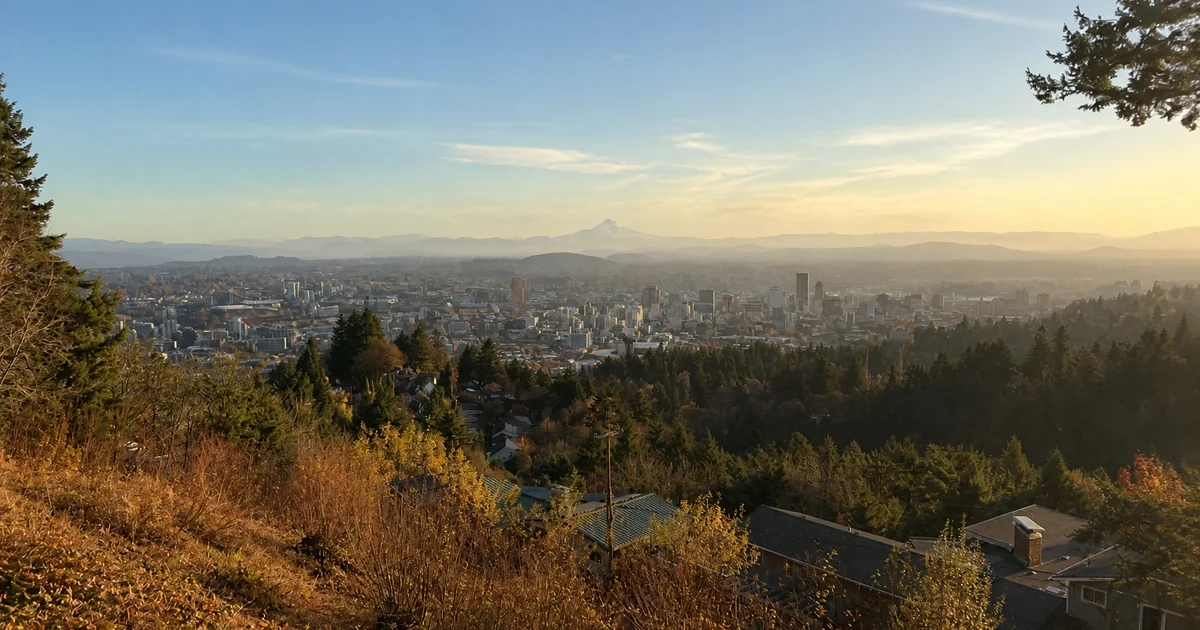
Rocky Butte Natural Area and its stone-walled summit viewpoint sit on the neighborhood's southern edge, offering hiking trails and panoramic views of Mount Hood, Mount St. Helens, and downtown Portland. Parkrose Community Park off NE 122nd adds a local option with playing fields and a playground. The 40-Mile Loop trail runs north of the neighborhood along the Columbia Slough, linking to a broader regional trail network.
Getting Around
Parkrose's freeway and transit access is the main commuting advantage for its outer location. I-205 runs along the eastern boundary and I-84 is 2 to 3 minutes south, putting downtown Portland about 18 to 22 minutes by car off-peak. The MAX Red Line stops at the Parkrose/Sumner Transit Center with direct service to downtown and PDX airport in about 7 minutes. TriMet bus service runs along Sandy Boulevard, 122nd Avenue, and 82nd Avenue. Peak-hour drives can push to 30 minutes.
Joe's Take on Parkrose
When buyers tell me they want single-family housing inside the Portland city limits at an entry price point, with a real yard and strong transit access, and are willing to drive for most errands, Parkrose goes on the short list. You typically pay noticeably less per square foot here than in inner Northeast, you get meaningfully larger lots, and you get direct MAX Red Line service to both downtown and PDX airport. The honest trade-off is that Parkrose is not a walk-to-everything neighborhood. Sandy Boulevard and 122nd Avenue are arterial-scaled, and most daily errands require driving.
The housing stock and location suit buyers who want more lot for the money, prefer a residential block over a commercial corridor, and can live with driving to the grocery. The post-war ranches and split-levels offer single-level living on flat sites, which is harder to find in inner Portland at comparable prices. It works well for remote workers who value the quick I-205 and MAX airport access, and for buyers who want room for a garden, a shop, or an ADU on a larger parcel. It is less of a fit for buyers who want to walk to a dozen restaurants or who need consistently low-noise conditions without airport flight paths overhead.
Before you write an offer in Parkrose, there are a few specifics worth checking. Pull the PDX flight-path overlay for your specific address; approach and departure paths run over parts of the neighborhood, and noise varies significantly block to block depending on runway direction. Check whether the street has continuous sidewalks and whether there is a pending city sidewalk assessment. Pull a sewer scope on any pre-1970 home; older concrete and cast-iron laterals commonly show cracks or root intrusion. If the listing is a 1960s or early 1970s ranch, have the inspector specifically check for aluminum branch wiring. Finally, verify the school boundary at parkrose.k12.or.us, since Parkrose is served by the Parkrose School District rather than Portland Public Schools, which surprises some buyers relocating from inner Portland.
Frequently Asked Questions About Parkrose
How do home prices in Parkrose compare to the rest of East Portland?
Parkrose typically prices in the lower-to-middle range for East Portland, generally below Hazelwood and Russell on a per-square-foot basis and roughly in line with neighboring Parkrose Heights, Argay Terrace, and Sumner to the west. The outer location, the Parkrose School District assignment, and the airport-adjacent setting all contribute to the entry-level pricing. Larger lots and flat sites often mean better value per square foot of land than inner Portland comparables. The current average sales price and active listing count are shown at the top of this page and update automatically with the market.
What are property taxes like in Parkrose?
Multnomah County property taxes in Parkrose run at an effective combined rate of approximately 1.3% to 2.1% of assessed value, in line with the rest of the county. Because Parkrose home values tend to be lower than inner Northeast neighborhoods, typical annual property tax bills are also lower on average. Oregon Measure 50 caps assessed value growth at 3% per year, so long-held homes often pay less than their market value would suggest. Verify current rates and the specific assessment for any address you are considering at multco.us/assessment-taxation.
Which schools serve Parkrose?
Parkrose is served by the Parkrose School District, not Portland Public Schools, which surprises many buyers relocating from inner Portland. Default assignments include Parkrose Middle School and Parkrose High School, with elementary assignment depending on the specific address (typical feeders include Prescott, Russell, and Sacramento elementaries). Niche rates Parkrose School District a B overall and notes smaller class sizes than Portland Public Schools on average. Verify the specific address assignment at parkrose.k12.or.us, since boundaries can change.
What is the housing stock like in Parkrose?
Housing stock is predominantly post-war, with mid-century ranches and 1960s to 1970s split-levels making up the largest share, mixed with some 1920s and 1930s cottages near Sandy Boulevard and a limited layer of 21st-century infill homes and townhomes. Lot sizes tend to run 7,000 to 10,000 square feet, notably larger than inner Northeast. Amenity access includes Rocky Butte Natural Area on the southern edge, Parkrose Community Park, and the Columbia Slough trail system to the north. Many interior streets lack continuous sidewalks, which is common in outer Portland.
How long is the commute from Parkrose to downtown Portland?
Downtown Portland is typically 18 to 22 minutes by car outside of peak hours, using I-84 or I-205 to I-84. Peak-hour drives can stretch to 30 to 35 minutes depending on traffic. The MAX Red Line, accessed at the Parkrose/Sumner Transit Center, offers a transit option to downtown (roughly 30 minutes) and direct airport service in about 7 minutes. TriMet bus service runs along Sandy Boulevard, 122nd Avenue, and 82nd Avenue. Park-and-ride at the transit center is a common commuting pattern.
Is Parkrose walkable?
Parkrose is not a walkable neighborhood in the inner-Portland sense. Most interior blocks lack continuous sidewalks, commercial amenities are concentrated along Sandy Boulevard and 122nd Avenue (both arterial-scaled), and daily errands typically require a car. Walk Scores in the neighborhood generally fall in the 40s to 60s depending on proximity to Sandy. Outdoor walking options lean toward Rocky Butte trails and the Columbia Slough path rather than commercial-corridor walks. Bike access to the broader Northeast network routes through Gateway and the I-205 multi-use path.
How does Parkrose compare to nearby East Portland neighborhoods?
Parkrose typically prices in line with Parkrose Heights and Argay Terrace, slightly above Sumner (which is smaller and more freeway-influenced), and below Hazelwood and Russell farther south. Parkrose Heights sits immediately east across 112th with similar housing stock and the same school district, but trades Rocky Butte access for more cul-de-sac interior. Argay Terrace has more consistent 1970s subdivision planning and slightly better sidewalks. Parkrose is the pick when a buyer wants MAX Red Line transit access, proximity to Rocky Butte, and the Historic Parkrose commercial corridor on Sandy.
Can I add an ADU or short-term rental in Parkrose?
Most Parkrose lots are eligible for an accessory dwelling unit under Portland's Residential Infill Project rules, which allow up to one ADU on a single-family lot. The larger lot sizes in Parkrose often make ADU construction more flexible than tighter inner-Portland parcels, and some lots may qualify for a detached ADU with meaningful yard space left over. Short-term rentals require a City of Portland STR permit; Type A permits require owner-occupancy, and Type B permits (non-owner-occupied) have stricter limits and are harder to obtain. Verify both ADU eligibility and STR permit type for your specific address with Portland Bureau of Development Services (portland.gov/bds) before counting on rental income.
Thinking About Buying in Parkrose?
I help buyers navigate East Portland neighborhoods every week. Let's talk about what you need, what you can afford, and whether Parkrose is the right fit.
Schedule a Free Consultation Or call Joe directly: (503) 910-7364Joe Saling · Saling Homes at eXp Realty · 10+ years serving Portland metro buyers and sellers
Saling Homes at eXp Realty is committed to the principles of the Fair Housing Act and Equal Housing Opportunity. Licensed in the State of Oregon. Information deemed reliable but not guaranteed. Verify all data independently before making real estate decisions.
MY BLOGS
MARKET TRENDS

housing detail
NEARBY SCHOOL & BUSINESS
12138 NE FREMONT ST #18, Portland, OR 97220
Townhouse 2 Beds 2.1 Baths 1,626 SqFt
Listed by Corcoran Prime
10632 NE SKIDMORE ST, Portland, OR 97220
Single Family Home 3 Beds 1 Bath 2,658 SqFt
Listed by Keller Williams PDX Central4556 NE 97TH AVE, Portland, OR 97220
Single Family Home 2 Beds 1.1 Baths 958 SqFt
Listed by D&D Realty LLC3601 NE 109TH AVE, Portland, OR 97220
Single Family Home 2 Beds 1 Bath 1,184 SqFt
Listed by Living Room Realty10737 NE SHAVER ST, Portland, OR 97220
Single Family Home 3 Beds 2 Baths 2,888 SqFt
Listed by ERA Freeman & Associates10723 NE FREMONT ST, Portland, OR 97220
Single Family Home 3 Beds 1 Bath 1,110 SqFt
Listed by Coldwell Banker Bain11122 NE WYGANT ST, Portland, OR 97220
Single Family Home 4 Beds 3 Baths 3,354 SqFt
Listed by Nova Realty NW, LLC4665 NE 119TH AVE, Portland, OR 97220
Townhouse 4 Beds 2 Baths 1,628 SqFt
Listed by Real Broker12142 NE FREMONT ST #11, Portland, OR 97220
Townhouse 3 Beds 2.1 Baths 1,689 SqFt
Listed by Redfin4704 NE 108TH AVE, Portland, OR 97220
Single Family Home 2 Beds 1 Bath 873 SqFt
Listed by Urban Pacific Real Estate4716 4722 NE 108TH AVE, Portland, OR 97220
Townhouse 2 Beds 2 Baths 1,248 SqFt
Listed by Urban Pacific Real Estate4620 NE 105TH AVE, Portland, OR 97220
Single Family Home 3 Beds 2.1 Baths 1,476 SqFt
Listed by MORE Realty4536 NE 102ND AVE, Portland, OR 97220
Multi-Family 2,166 SqFt
Listed by Premiere Property Group, LLC4536 NE 102ND AVE, Portland, OR 97220
Vacant Land
Listed by Premiere Property Group, LLC4536 NE 102ND AVE, Portland, OR 97220
Commercial 2,166 SqFt
Listed by Premiere Property Group, LLC5546 NE 109TH AVE, Portland, OR 97220
Commercial 7,680 SqFt
Listed by Gold Star Properties, LLC4663 NE 119TH AVE, Portland, OR 97220
Multi-Family 1,628 SqFt
Listed by Real Broker11324 NE SANDY BLVD, Portland, OR 97220
Vacant Land 0.71 Acres
Listed by Keller Williams Realty Professionals11324 NE SANDY BLVD, Portland, OR 97220
Commercial 7,294 SqFt
Listed by Keller Williams Realty Professionals4775 NE 107TH AVE, Portland, OR 97220
Multi-Family 10,480 SqFt
Listed by Knipe Realty ERA Powered

Coming Soon
Commute Score
Coming Soon
Coming Soon
demographics
Population:
Density:
Households:
Gender
Coming Soon
Coming Soon
Coming Soon
Coming Soon

Joe Saling
joe@sellingpdxhomes.com