Beaverton vs. Hillsboro: The Real Difference Between Portland's West-Side Suburbs
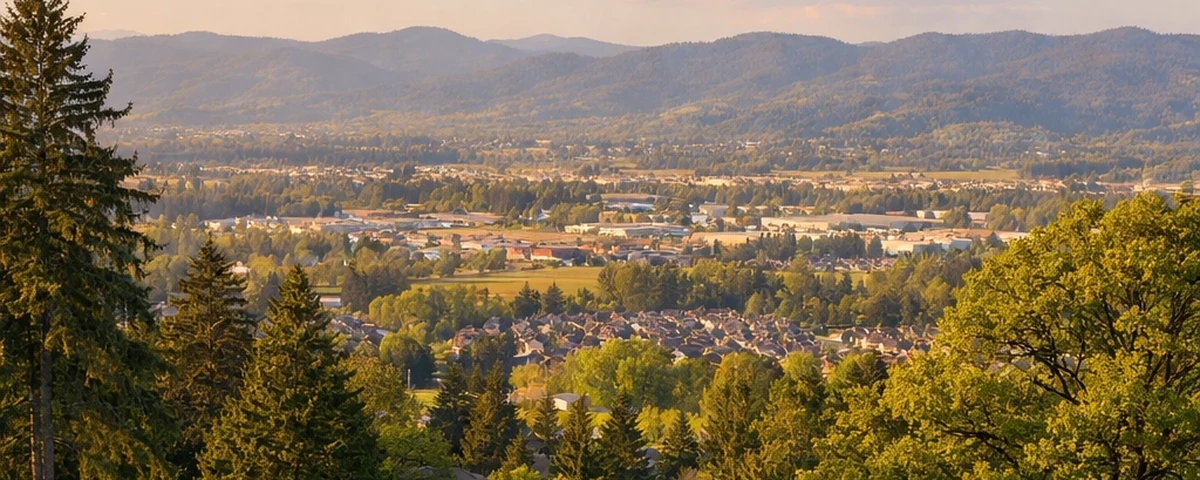
Looking west across the Tualatin Valley from Beaverton toward Hillsboro and the Coast Range. Washington County, Oregon.
Almost every buyer I work with who lands on Portland's west side starts in the same place: they know they want Washington County, they know they want good schools and a reasonable commute, and they know their budget. What they do not know yet is whether Beaverton or Hillsboro is the right answer to those priorities. And honestly, the answer is not as obvious as the internet makes it look. These two cities share a highway, a light rail line, and a county seat, but they solve very different problems for very different buyers. Here is how I walk people through it.
Beaverton vs. Hillsboro for Homebuyers
Beaverton is the established west-side suburb with deeper neighborhood roots, MAX Blue Line light rail access, and closer proximity to Portland. Hillsboro is the Silicon Forest engine with significantly lower home prices, newer construction, and a younger population. Both sit in Washington County with Highway 26 access. Beaverton median sale prices run in the mid-to-high $500Ks while Hillsboro lands around $500K in early 2026 (RMLS, February 2026). The right choice depends less on which city is "better" and more on what your daily life actually looks like.
Why the West Side Keeps Winning
Portland's west side has a gravitational pull that the east side cannot replicate right now. The employment base is the biggest reason. Nike's world headquarters sits in Beaverton. Intel's Ronler Acres campus and a cluster of semiconductor companies anchor Hillsboro. Between those two poles, tens of thousands of well-paying jobs create steady housing demand that keeps both markets moving even when the broader metro softens.
The infrastructure helps too. Highway 26 is the spine, and the MAX Blue Line light rail connects both cities to downtown Portland without touching a freeway. The Beaverton Farmers Market, Tualatin Hills Nature Park, and the Tualatin Valley wine region at Hillsboro's western edge all sit within a 20-minute drive of each other. People who move to the west side tend to stay on the west side.
So the question is not whether the west side is the right call. For a lot of buyers, it clearly is. The question is which west-side city matches the life you are actually going to live once you close.
Where Your Money Goes Furthest
This is where most people expect Beaverton and Hillsboro to look similar. They do not. In February 2026, Hillsboro's median sale price came in around $498,000 to $530,000 depending on the source. Beaverton's median landed in the mid-to-high $500,000s. That is a gap of $75,000 to nearly $100,000 between two cities connected by a 15-minute drive. The Portland metro median of $525,000 (RMLS, February 2026) sits right between them.
The reason for that gap is not quality. It is supply. Hillsboro has more land. South Hillsboro alone is adding thousands of new homes in a master-planned development with parks, trails, and schools built from scratch. That volume of new inventory keeps prices competitive. Beaverton is more built out. There is less land, less new construction, and more demand for the existing stock. You pay a premium for being closer to Portland and closer to established infrastructure.
The Price Gap at a Glance (Early 2026)
Beaverton: Population ~98,700 | Median sale price mid-to-high $500Ks | Median household income ~$98,600 | Homeownership rate ~50%
Hillsboro: Population ~112,000 | Median sale price ~$498K-$530K | Median household income ~$106,400 | Homeownership rate ~50%
Both: Washington County | Highway 26 access | MAX Blue Line | Metro median $525,000
Sources: RMLS February 2026 Market Action Report, U.S. Census Bureau ACS 2024, World Population Review 2026 estimates
Here is the part that surprises people: Hillsboro's median household income is actually higher than Beaverton's, roughly $106,400 versus $98,600. Higher incomes and lower home prices in the same county. That happens when a city has room to build and a tech employment base that keeps drawing younger, well-paid workers. If you are running the numbers on what you can afford, Hillsboro stretches your dollar further.
If You Are Stretching to Maximize Square Footage
Hillsboro is where the math works hardest in your favor. Newer construction, modern floor plans, energy-efficient builds, and community amenities come standard in South Hillsboro at price points that would get you an older, smaller home in Beaverton. The trade-off is distance from Portland. If that trade-off does not bother you, the value is real. Browse current homes for sale in Hillsboro to see what that looks like.
What Each City Actually Feels Like at Street Level
Numbers explain the price gap. They do not explain the feel gap. And the feel gap is what actually drives most decisions once people start touring homes.
Beaverton's Layered Character
Beaverton feels layered. You can drive through neighborhoods from four different decades in 20 minutes: 1950s ranches near Central Beaverton, 1970s splits in the Five Oaks area, 1990s subdivisions near Murray Hill, and newer infill condos along the light rail corridor. The trees are taller. The lots are more varied. The downtown has a farmers market that draws from all over the west side and a walkable restaurant scene that has been building for years. Washington Square Mall sits at the city's southern edge, and Nike's campus is just north. Beaverton feels like a city that has been earning its identity for decades.

Hillsboro's New Construction Energy
Hillsboro feels like a city in the middle of becoming something. Large sections barely existed 20 years ago. South Hillsboro's wide sidewalks and young trees look like they were installed last spring because they were. Intel's Ronler Acres campus and the semiconductor cluster give the city a tech heartbeat that shapes everything from restaurant density to median age (about 35 in Hillsboro versus 37 in Beaverton). The old town core around Main Street has genuine character with local restaurants and the civic center, but the center of gravity has shifted west and south with the growth.
Then there is the Orenco Station neighborhood, which deserves its own mention. It is a transit-oriented development near the MAX line with walkable retail, a mix of housing types, and a strong sense of community that feels more like a small town dropped into the suburbs than a planned development. If you want Hillsboro's price advantage with something closer to Beaverton's walkability, Orenco is the neighborhood to tour first.
Parks, Trails, and Wine Country
Beaverton's Tualatin Hills Park and Recreation District manages one of the best park systems in Oregon, including a 222-acre nature preserve with old-growth forest. Hillsboro's parks are newer and often built into the planned communities, but the city sits at the doorstep of wine country. The Tualatin Valley wine region is right at Hillsboro's western edge, and weekend vineyard visits are a genuine part of life here, not a marketing gimmick.
If You Want Established Neighborhoods with Transit Access
Beaverton delivers that without compromising on west-side location. Multiple MAX stations mean you can commute to downtown Portland without a car from several neighborhoods. The trees, the neighborhood variety, and the established parks system are things that Hillsboro simply cannot replicate yet because they take decades to build. See current homes for sale in Beaverton.
The Commute That Picks Your City
I could give you the Census averages (Beaverton: about 21 minutes, Hillsboro: about 23 minutes), but those numbers hide the real story. The commute question on the west side is not about minutes. It is about direction.
If you work in downtown Portland, Beaverton is closer at roughly 8 miles versus Hillsboro's 17. The MAX Blue Line runs through both cities, but Beaverton has more stations with genuine walk-up access. You can realistically leave your car in the garage and be downtown in 30 to 40 minutes from several Beaverton neighborhoods. In Hillsboro, the MAX extends to Hatfield Government Center and serves Orenco, but most outer neighborhoods require driving to a station first.
If you work at Intel, Synopsys, Lattice Semiconductor, or any of the tech campuses concentrated in Hillsboro, the calculation flips completely. Living in Hillsboro and working in Hillsboro means a potential single-digit-minute commute that nobody in Beaverton can match for those employers. That is not a small thing. Saving 30 to 40 minutes of daily windshield time adds up to weeks of your life over a few years.
If You Work in West-Side Tech
This is where Hillsboro wins and it is not close. The concentration of semiconductor and technology employers within Hillsboro city limits is unlike anything else in the Portland metro. If your job is already in Hillsboro, paying a Beaverton premium for a longer reverse commute does not make financial or lifestyle sense. Read more about how tech corridor employment shapes property values across the west side.
And here is the wrinkle: Nike sits in Beaverton. So if you work at Nike, Beaverton is the short commute. But plenty of Nike employees live in Hillsboro and commute east on Highway 26, choosing newer homes and lower prices over a shorter drive. The corridor between the two cities is well-traveled in both directions.
The School Question Nobody Asks Early Enough
Here is something that catches people off guard: Beaverton and Hillsboro are in different school districts. The Beaverton School District is the largest in Oregon with over 38,000 students and multiple high schools including Sunset, Southridge, Westview, and Mountainside. The Hillsboro School District serves about 19,000 students with high schools including Hilhi, Glencoe, Century, and Liberty.
Niche gives the Beaverton district an A- overall rating and Hillsboro a B+. But those district-level grades hide wide variation at the individual school level. A specific elementary school in Hillsboro might outperform one across the line in Beaverton, and vice versa. The only way to know is to verify the exact schools that serve a specific address before you write an offer.
District Boundaries Do Not Always Follow City Limits
Some homes in Beaverton city limits are actually served by the Hillsboro School District, and vice versa. Unincorporated areas between the two cities can fall into either district. I have seen buyers assume their Beaverton address meant Beaverton schools and find out at the wrong moment that it did not. Always verify directly through the district websites before making an offer.
The One Thing I Tell Every West-Side Buyer
The Buyer Who Chooses Beaverton
After years of showing homes on both sides of this line, here is the pattern I keep seeing. Beaverton buyers are usually people who already know the Portland area. They value proximity, transit, and the fact that everything they need already exists within a short drive or train ride. They are willing to pay more per square foot because they are buying location and infrastructure that took decades to build. The Beaverton real estate guide covers what that lifestyle looks like day to day.
The Buyer Who Chooses Hillsboro
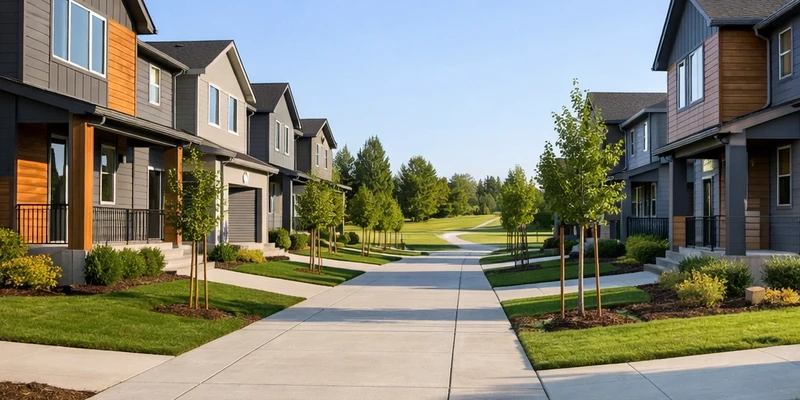
Hillsboro buyers tend to be people moving to the area for work, especially in tech. They run the numbers, see that they can get a newer and larger home for tens of thousands less, and the math clicks. The trade-off is that Hillsboro is further from Portland's cultural core, and depending on which neighborhood you land in, you may feel like you are living in a city that is still writing its own story. The guide to moving to Hillsboro walks through what that looks like.
The Bottom Line
If I had to give one piece of advice, it would be this: Beaverton is where you buy if Portland is still the center of your world. Hillsboro is where you buy if your world is already on the west side. Neither answer is wrong. But they are different answers to a different question, and knowing which question you are actually asking is the whole game.
For deeper profiles, read the full guide to living in Beaverton and guide to living in Hillsboro. And check the Beaverton market snapshot and Hillsboro market snapshot for the latest pricing.
When This Analysis Does Not Apply
When This Analysis Does Not Apply
If you need a small-town pace with rural access, both cities are too suburban. Look further west toward Forest Grove or south toward Sherwood. If your commute runs along I-5 rather than Highway 26, the south-metro cities of Tigard, Tualatin, or Wilsonville will serve you better. And if your budget is above $800,000 and walkable luxury is the priority, Lake Oswego or the West Hills of Portland may be a stronger match. This post is built for buyers choosing between Portland's two dominant west-side suburbs.
How to Decide Between Beaverton and Hillsboro
- Where do you work? If your commute runs east toward Portland, Beaverton saves you time and gives you MAX access. If you work at Intel, Synopsys, or anywhere along the west-side tech corridor, Hillsboro puts you minutes from your desk.
- New or established? If you want a home with history, mature trees, and neighborhood character, Beaverton delivers that. If you want modern construction with current systems and no deferred maintenance, Hillsboro has the inventory.
- What does your budget buy? Run a side-by-side search at your price point. The difference in square footage, condition, and lot size between the two cities at the same dollar amount is often the clearest signal.
- How long are you staying? Beaverton's location premium has held up over decades. Hillsboro's newer communities are still establishing their long-term value. A five-plus year hold reduces risk in either city.
Frequently Asked Questions: Beaverton vs. Hillsboro
Is Beaverton or Hillsboro a better place to live?
It depends on what you prioritize. Beaverton offers more established neighborhoods, stronger transit connections via the MAX Blue Line, and closer proximity to Portland. Hillsboro offers newer construction, more affordable home prices, and shorter commutes if you work in the west-side tech sector. Both are well-regarded Washington County suburbs with strong employment and amenities.
How do Beaverton and Hillsboro home prices compare?
As of early 2026, Beaverton median sale prices land in the mid-to-high $500,000s while Hillsboro median sale prices fall around $498,000 to $530,000. That difference of $75,000 to $100,000 is meaningful and reflects Beaverton's location premium closer to Portland. Both cities sit near the metro-wide median of $525,000.
Are Beaverton and Hillsboro in the same school district?
No. Beaverton is primarily served by the Beaverton School District (the largest in Oregon with over 38,000 students), while Hillsboro is served by the Hillsboro School District (about 19,000 students). However, some homes near city boundaries may fall in the opposite district, so always verify before buying.
Which has a shorter commute to downtown Portland?
Beaverton is closer at roughly 8 miles from downtown Portland with an average commute of about 21 minutes. Hillsboro sits about 17 miles west with an average commute of about 23 minutes. The MAX Blue Line serves both cities, but Beaverton has more walkable access to stations. If you work on the west side rather than downtown, Hillsboro may actually be closer.
What are the best neighborhoods in Beaverton?
Central Beaverton and the downtown area offer walkability and MAX access. Murray Hill and Sexton Mountain provide established suburban living. South Beaverton (zip 97008) is one of the most in-demand areas on the entire west side, with homes selling faster than the city average.
What are the best neighborhoods in Hillsboro?
South Hillsboro leads for new construction with master-planned parks, trails, and schools. Orenco Station offers a transit-oriented lifestyle with walkable retail. Historic downtown Hillsboro provides older, more affordable homes with small-town character. Each serves a different buyer profile.
Is Hillsboro a good place to buy a house in 2026?
Hillsboro offers strong value relative to other west-side suburbs. Median prices are lower than Beaverton, Tigard, and Lake Oswego, while median household incomes are among the highest in the metro. The city's tech employment base and ongoing new construction in South Hillsboro provide a stable demand floor. If you work on the west side, the value proposition is compelling.
Should I buy in Beaverton or Hillsboro if I work at Nike?
Nike's world headquarters is in Beaverton, so living in Beaverton gives you the shortest commute to campus. However, many Nike employees live in Hillsboro and commute east, especially if they prioritize newer homes and lower prices. The drive between the two cities is roughly 15 to 20 minutes on Highway 26 outside of peak hours.
Ready to See the West Side for Yourself?
The best way to feel the difference is to spend a day in both cities. I can set up a tour that covers neighborhoods in Beaverton and Hillsboro so you can compare the feel, the inventory, and the commute firsthand.
Data Sources and References (as of March 2026):
RMLS, Portland Metro Market Action Report, February 2026 Reporting Period. U.S. Census Bureau, American Community Survey 2024 estimates. World Population Review, 2026 city population estimates. Niche.com, Beaverton School District and Hillsboro School District rankings, 2025-2026. TriMet, MAX Blue Line service information. Intel Corporation, Oregon campus information. City of Hillsboro, South Hillsboro development data. Beaverton Farmers Market, City of Beaverton.
Data verified: March 2026
Saling Homes at eXp Realty is committed to equal housing opportunity. We do not discriminate on the basis of race, color, religion, sex, handicap, familial status, or national origin.
Categories
- All Blogs (93)
- Buying a Home (35)
- Community Page (14)
- Downsizing (7)
- Home Buying Process (7)
- Homeownership (6)
- Increasing Your Homes Value (4)
- Local Events (2)
- Market Update (21)
- Mortgage Information (9)
- Neighborhood Eats and Experiences (1)
- neighborhood info (3)
- Real Estate News (15)
- Selling Your Home (20)
Recent Posts









GET MORE INFORMATION