Downsizing vs Aging in Place in Portland: How to Decide
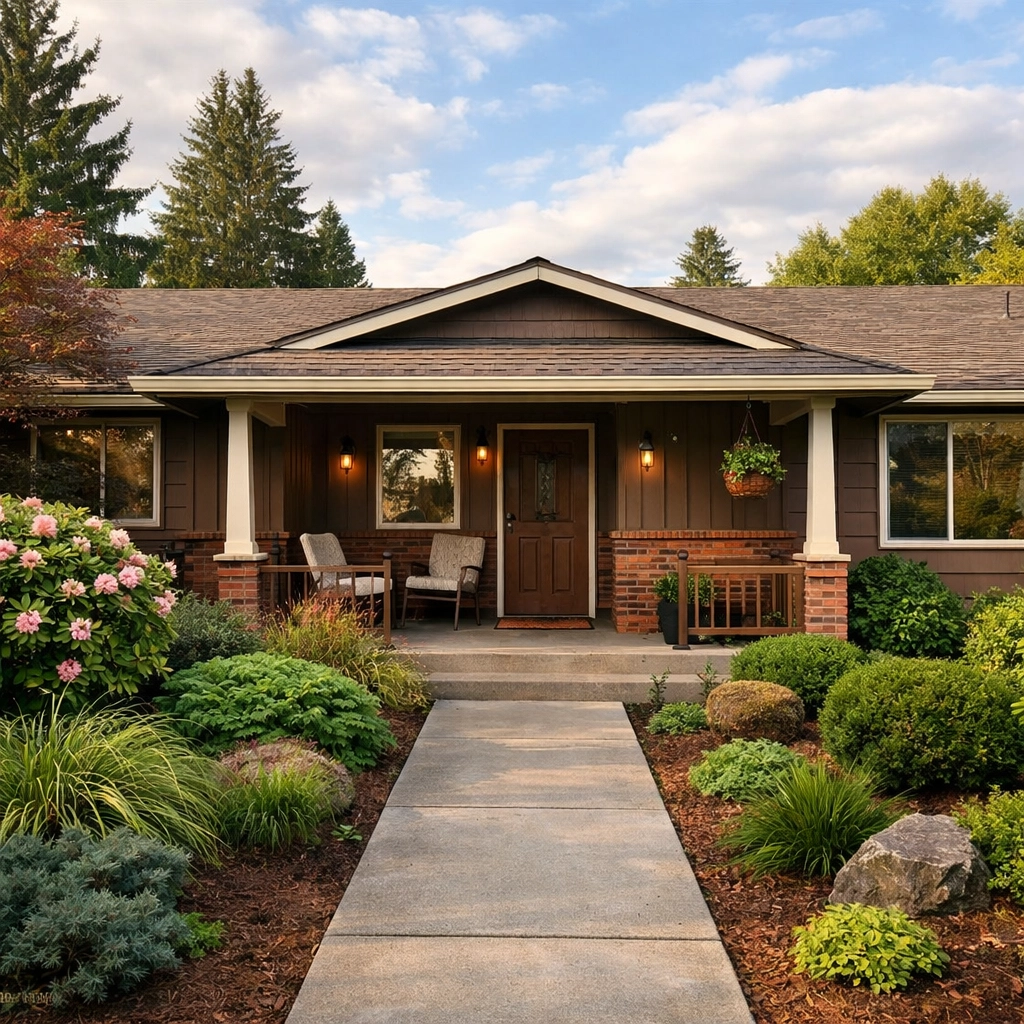
An established home in the Portland metro area, Oregon. For many long-time homeowners, the question is not whether they love their home but whether it will continue to work for them in the years ahead.
Downsizing vs aging in place is not really a housing question. It is a question about how you want the next chapter of your life to work: your daily routines, your finances, your physical safety, and your connection to the people and places that matter to you. Both paths have real costs, real trade-offs, and real advantages. This post lays them side by side so you can make the decision with clear numbers instead of assumptions.
Aging in place keeps you in your community and avoids transaction costs, but requires home modifications that typically run $3,000 to $15,000 for standard upgrades and up to $25,000 or more for accessible bathroom remodels. Downsizing frees up equity, reduces maintenance, and can lower your monthly costs, but carries transaction costs of $55,000 to $75,000 in the Portland metro and requires starting over in a new space. Neither option is universally cheaper. The right choice depends on your home's current condition, your health trajectory, your financial position, and how much your current location matters to your quality of life.
- The Honest Comparison: What Each Path Actually Costs
- Aging in Place: What It Takes to Make Your Portland Home Work Long-Term
- Downsizing: What You Gain and What You Give Up
- The Five-Question Decision Framework
- Portland-Specific Factors That Change the Math
- When This Does Not Apply
- Frequently Asked Questions
The Honest Comparison: What Each Path Actually Costs
Most articles about downsizing vs aging in place treat the decision as purely emotional. It is not. Both paths carry significant, measurable costs. Here is how they compare in the Portland metro market.
| Cost Category | Age in Place | Downsize |
|---|---|---|
| One-time transaction costs | $0 | $55,000 - $75,000 |
| Home modifications (accessibility) | $9,500 - $25,000+ | $0 (buy accessible) |
| Annual maintenance (larger home) | $8,000 - $15,000/yr | $3,000 - $7,000/yr |
| Property taxes (10-year est.) | Capped by Measure 50 | Resets at purchase price |
| Utilities (10-year est.) | Higher (larger space) | Lower (smaller space) |
| Potential equity freed | $0 (locked in home) | $100,000 - $300,000+ |
| Outsourced maintenance (lawn, cleaning) | $3,600 - $7,200/yr | $0 - $2,400/yr |
Estimates based on a Portland metro homeowner with a $650,000 current home and a $425,000 downsized home. Actual costs vary significantly by home condition, location, and individual needs.
The comparison is not as simple as "downsizing saves money." If your current home is in good condition, already has a main-floor bedroom and bathroom, and does not need major modifications, aging in place can be significantly less expensive over a 10-year horizon since you avoid the $55,000 to $75,000 in transaction costs entirely. But if your home needs $25,000 or more in accessibility modifications, plus escalating maintenance on an aging structure, the downsizing math starts to look much better.
Aging in Place: What It Takes to Make Your Portland Home Work Long-Term

According to AARP, 77% of adults over 50 want to remain in their current home as they age. The desire is real and understandable. Your home holds memories, your neighborhood holds relationships, and the familiarity of your daily routines has genuine value. But wanting to stay and being able to stay safely are two different things.
The Harvard Joint Center for Housing Studies found that fewer than 25% of homeowners over 55 have both a main-floor bedroom and bathroom and step-free entry to their home. That means roughly 75% of aging homeowners are living in homes that will need modifications before they can safely age in place. In the Portland metro, where much of the suburban housing stock was built in the 1960s through 1980s with multi-level entries, narrow hallways, and upstairs-only primary suites, that number is likely even higher.
What Aging-in-Place Modifications Cost in Portland
The costs break down into three tiers, and most homeowners need a combination of items from at least two of them.
Basic safety upgrades ($500 to $3,000): Grab bars in bathrooms ($90 to $300 installed per bar), non-slip flooring in wet areas, lever-style door handles and faucets ($150 to $350 to replace throughout), improved lighting, and handrails on all stairways. These are the highest-impact, lowest-cost modifications and should be the starting point for every homeowner considering aging in place.
Mid-range modifications ($3,000 to $15,000): Walk-in or roll-in shower conversion ($6,000 to $12,000), comfort-height toilet installation, stairlift ($4,000 to $8,000 for a straight staircase), widening doorways ($300 to $2,500 per doorway), and wheelchair ramp at the entry ($1,000 to $4,000). The average aging-in-place project comes in around $9,500 according to Fixr.com data.
Major renovations ($15,000 to $75,000+): Full accessible bathroom remodel ($6,600 to $28,000), accessible kitchen renovation ($15,000 to $20,000), adding a main-floor bedroom and bathroom ($30,000+), or a whole-home accessibility overhaul. If your Portland home has a second-floor-only primary suite and no main-floor bathroom, the cost to create accessible living on the first floor can exceed $50,000.
For homeowners who are also considering value-adding renovations, our guide to remodeling projects with the highest ROI covers which upgrades build equity alongside functionality.
A homeowner in Tigard with a 1978 split-level faces a common Portland challenge: the primary bedroom is upstairs, the only full bathroom is upstairs, and the front entry has four steps with no ramp option. To age in place safely, they need a stairlift ($5,500), a main-floor half-bath converted to a full accessible bathroom ($18,000), grab bars and non-slip surfaces ($800), and an entry ramp ($2,500). Total: approximately $26,800. At that price point, the homeowner is spending roughly half of what the transaction costs would be to downsize, but they are not freeing any equity or reducing their ongoing maintenance burden on a 46-year-old home.
The Hidden Costs of Staying
Beyond modifications, aging in place in a larger home carries ongoing costs that tend to increase over time. As physical capacity changes, you may need to outsource tasks you previously handled yourself: lawn care ($150 to $300/month in Portland), housekeeping ($100 to $200 per visit), gutter cleaning ($150 to $300 twice a year), and snow/ice removal. On a larger home, annual maintenance costs (roof, HVAC, plumbing, exterior paint) average $8,000 to $15,000 per year. These costs compound over a decade and are often underestimated in the aging-in-place calculation.
Downsizing: What You Gain and What You Give Up
Downsizing is not free. As we covered in detail in the total cost to downsize in Portland, the transaction costs alone run $55,000 to $75,000 for a typical Portland metro homeowner. That is real money that comes out of your equity before you pocket anything. But what you gain in return can be substantial.
What Downsizing Gets You
Freed equity. If you sell a $650,000 home and buy a $425,000 home, you walk away with a significant cash cushion after transaction costs. That money can fund retirement, serve as a safety net, or simply reduce financial stress. This is the single biggest financial advantage of downsizing and one that aging in place cannot replicate without a reverse mortgage or home equity loan.
Lower ongoing costs. A smaller home means lower property taxes (though Oregon's Measure 50 complicates this calculation), lower utility bills, lower insurance, and less maintenance. The savings compound over time and directly improve your monthly cash flow.
A home that already fits. If you buy a single-level home or an accessible condo, you skip the modification costs entirely. Many newer homes and condos in the Portland suburbs are already built with wider hallways, main-floor living, and accessible bathroom features. Browse the best places to downsize in Portland for neighborhood-specific options.
What Downsizing Costs You (Beyond Money)
Your community. If you move to a different neighborhood or suburb, you leave behind the daily relationships and routines that took years to build. This is the cost that does not show up on a spreadsheet but matters enormously to quality of life.
Your space. A 1,400 square foot home feels very different from a 3,200 square foot one. Furniture does not always fit. Storage is limited. The guest room may disappear. Our guide to choosing the right smaller home covers how to evaluate whether a floor plan will actually work for your life.
Your timeline. Selling and buying in today's Portland market takes time: 60 to 80 days on market for the sale, plus the buying process, plus the move. The Portland downsizing checklist maps out the full timeline so you can plan accordingly.
Some Portland homeowners choose a middle path: make basic safety modifications now (grab bars, lighting, non-slip surfaces for under $1,500) to buy themselves time, while simultaneously planning for a future downsize. This lets you stay in your home comfortably for the next 3 to 5 years while you research neighborhoods, monitor the market, and make the move on your own timeline rather than being forced into it by an injury or health change. The key is starting the planning process before you need to, not after.
The Five-Question Decision Framework

After walking dozens of Portland homeowners through this decision, I have found that five questions consistently cut through the noise and get to the heart of what actually matters. Answer these honestly, and the right path usually becomes clear.
1. Can you live entirely on your main floor?
If your home has a bedroom, full bathroom, kitchen, and laundry on the main floor, aging in place is structurally viable with minimal modifications. If any of those are on a different level, you are looking at either significant renovation costs or a future where stairs become a daily safety risk. Most Portland split-levels and many two-story homes fail this test.
2. What will your home need in the next 10 years (regardless of aging)?
Every home needs maintenance. If your Portland home is approaching the point where it needs a new roof ($15,000 to $25,000), HVAC replacement ($8,000 to $15,000), or siding work ($10,000 to $20,000) in the next decade, those costs stack on top of any aging-in-place modifications. Add them up and compare to the transaction costs of downsizing.
3. How much of your net worth is locked in your home?
If the majority of your retirement savings is home equity, aging in place keeps that money inaccessible unless you take out a reverse mortgage or HELOC. Downsizing converts that equity to liquid assets you can invest, spend, or use as a financial cushion. This question matters more the closer you are to retirement or the thinner your non-housing savings are.
4. How connected are you to your current location?
If your doctors, your social circle, your worship community, and your daily routines are all within 10 minutes of your current home, the non-financial cost of moving is high. If you are already driving 20 to 30 minutes to reach the people and places that matter to you, moving might actually bring you closer to your real life. For some homeowners, a multigenerational arrangement is the right solution. Our multigenerational home buying guide covers that option.
5. Are you making this decision proactively or reactively?
Homeowners who plan a downsize 1 to 2 years in advance consistently get better outcomes: better sale prices, better purchase choices, and less stress. Homeowners who are forced to move after a health event or injury have fewer options and less negotiating power. If you are reading this article, you are in the proactive category. Use that advantage.
Portland-Specific Factors That Change the Math
The downsizing vs aging in place decision is not the same in Portland as it is in Phoenix or Charlotte. Several local factors shift the calculation in ways that national articles miss.
Oregon's Measure 50 caps annual increases in assessed value at 3%, which means long-time homeowners often pay property taxes based on an assessed value far below their home's market value. When you buy a new home, the assessed value resets closer to the purchase price. A homeowner who has owned a $650,000 Portland home for 20 years might have an assessed value of $350,000 and pay $3,800 per year in property taxes. If they downsize to a $425,000 home that was recently built, the new assessed value could be $410,000, resulting in a property tax bill of $4,500 or more. Downsizing to a cheaper home does not always mean lower property taxes in Oregon.
Portland's housing stock challenge. Much of the Portland metro's suburban housing was built between 1960 and 1990. These homes frequently have split-level or multi-level designs, narrow interior hallways (36 inches or less), small bathrooms not designed for accessibility, and entries with steps. Retrofitting these homes for aging in place is more expensive than modifying a single-level ranch or a newer build.
Portland's condo market advantage. As we covered in best places to downsize in Portland, the Portland condo market is softer than it has been in years, with median prices around $325,000. For aging homeowners who want zero-maintenance living, this creates a buying opportunity, though HOA fees and resale uncertainty are real considerations.
Oregon's support programs. Oregon's Medicaid program covers some home modifications through the Aged and Physically Disabled waiver and the Community First Choice program. Habitat for Humanity Portland Region runs a home repair program specifically for aging and accessibility modifications for homeowners with low incomes. These programs can significantly offset modification costs for qualifying homeowners. Contact your local Area Agency on Aging for information on what is available in your county.
Portland's assisted living costs for context. Oregon assisted living averages approximately $5,045 per month. Over five years, that totals more than $300,000. Both aging-in-place modifications and downsizing transaction costs are small fractions of the institutional alternative. This perspective matters when evaluating whether a $25,000 remodel or a $65,000 transaction cost is "expensive." Compared to the alternative, both are bargains. Consult a qualified elder care planner for guidance on your specific long-term care options.
When This Does Not Apply
If you need memory care or skilled nursing. This post compares two paths for independent living. If you or a family member needs memory care, skilled nursing, or daily medical assistance, neither aging in place (without full-time in-home care) nor a standard downsize addresses those needs. Consult an elder care coordinator for a care-level assessment.
If you are underwater on your mortgage. The downsizing math only works if you have positive equity. If you owe more than your home is worth (uncommon in the current Portland market, but possible in specific situations), downsizing creates a financial loss rather than a gain. Aging in place or a refinance conversation with a lender may be the better starting point.
If your home has environmental issues. Homes with significant deferred maintenance, foundation problems, lead paint, asbestos, or other environmental concerns require a different analysis. The cost to remediate these issues before selling (or before safely aging in place) can change the financial comparison dramatically.
If you are considering a move out of state. This post focuses on Portland metro downsizing. If you are considering leaving Oregon entirely, the financial and lifestyle factors are fundamentally different, including the impact of Oregon's income tax structure on your retirement income. The guide to selling a large home in Portland covers how to maximize your sale price before a relocation.
Frequently Asked Questions About Downsizing vs Aging in Place
Is it cheaper to age in place or downsize in Portland?
There is no universal answer. Aging in place avoids $55,000 to $75,000 in transaction costs but requires home modifications ($3,000 to $25,000+) and carries higher ongoing maintenance costs on a larger home. Downsizing is more expensive upfront but frees significant equity and reduces monthly expenses over time. If your home already has main-floor living and is in good condition, aging in place is usually cheaper. If your home needs major modifications and is approaching expensive maintenance milestones, downsizing often comes out ahead over a 10-year period.
How much does it cost to modify a Portland home for aging in place?
Basic safety modifications like grab bars, non-slip surfaces, and lever handles cost $500 to $3,000. Mid-range projects like a walk-in shower conversion or stairlift run $3,000 to $15,000. Major renovations like a full accessible bathroom remodel or adding a main-floor bedroom and bathroom can reach $25,000 to $75,000 or more. The average aging-in-place project comes in around $9,500 nationally. Portland costs tend to be at or slightly above national averages due to higher labor rates.
When is the right time to downsize in Portland?
The best time to downsize is when you can make the decision proactively rather than being forced into it by a health event. Homeowners who plan 1 to 2 years ahead consistently get better outcomes: higher sale prices, more buying options, and less stress. In terms of market timing, Portland's 2026 market is balanced with more inventory and less competition, which actually favors downsizers who are both selling and buying since negotiating leverage helps more on the buy side where you are spending less.
Can I age in place in a two-story Portland home?
Yes, but it may require significant modifications. If your primary bedroom, a full bathroom, and laundry are all on the second floor, you will either need a stairlift ($4,000 to $8,000) or a main-floor conversion ($30,000+). Many Portland homes built in the 1970s and 1980s have this layout. The alternative is to plan your daily life around the main floor and use the upstairs only for guests or storage, but that means those rooms become effectively unusable square footage you are still paying to heat and maintain.
What are the hidden costs of aging in place versus downsizing?
For aging in place, the hidden costs include escalating maintenance on an older home, outsourced tasks you can no longer do yourself (lawn care, cleaning, snow removal), rising utility costs on a larger space, and the opportunity cost of equity locked in your home. For downsizing, the hidden costs include Oregon's Measure 50 property tax reset, potential HOA fees if you buy a condo, furniture that does not fit the new space, and the emotional adjustment of leaving a home you have lived in for decades. Both paths have costs that go beyond the obvious line items.
How do I know if my Portland home is suitable for aging in place?
Start with a basic assessment: Is there a bedroom, full bathroom, kitchen, and laundry on the main floor? Is the entry step-free or can a ramp be added? Are hallways and doorways wide enough for a walker or wheelchair (minimum 36 inches)? Are bathrooms large enough to add grab bars and a walk-in shower? If you answer no to two or more of these questions, your home will need significant modification to support aging in place. A Certified Aging-in-Place Specialist (CAPS) contractor can do a formal assessment for a consultation fee, typically $150 to $400.
Should I downsize or stay in my house as I get older?
The answer depends on five factors: whether your home can support main-floor living, what maintenance your home will need in the next decade, how much of your net worth is locked in home equity, how connected you are to your current location, and whether you are making this decision proactively or reactively. If your home is already accessible, in good condition, and in a location you love, aging in place is often the better choice. If your home needs major modifications, is approaching expensive maintenance milestones, and most of your net worth is tied up in equity, downsizing tends to produce a better financial and lifestyle outcome.
Are there programs in Oregon that help pay for aging-in-place modifications?
Yes. Oregon's Medicaid program covers some home modifications through the Aged and Physically Disabled waiver and the Community First Choice program for qualifying residents. Habitat for Humanity Portland Region runs a home repair program for aging and accessibility modifications for homeowners with low incomes. Veterans may qualify for VA grants through the HISA or SAH programs. Contact your local Area Agency on Aging to learn what programs are available in your county and whether you qualify.
Not Sure Which Path Is Right for You?
The decision between downsizing and aging in place is deeply personal, and the numbers look different for every home and every household. I can help you evaluate your current home's value, estimate your net proceeds from a potential sale, and map out what each option would look like for your specific situation.
Data Sources and References (as of March 2026):
- AARP: 2021 Home and Community Preferences Survey - 77% of adults over 50 want to remain in their current home
- Harvard Joint Center for Housing Studies - Fewer than 25% of homeowners over 55 have main-floor living and step-free entry
- RetirementLiving.com: Cost of Aging in Place Remodeling (2026) - Bathroom, kitchen, and stairlift cost ranges
- Fixr.com: Cost of Aging in Place Remodeling - Average project cost $9,500
- CDC: Falls Prevention - Falls are the leading cause of injury for adults 65+
- Habitat for Humanity Portland Region: Aging in Place - Portland-area home repair programs for aging homeowners
Data verified: March 2026
The information in this post is for general educational purposes and does not constitute financial, legal, or tax advice. Consult a qualified professional for guidance specific to your situation.
Saling Homes at eXp Realty is committed to equal housing opportunity. We do not discriminate on the basis of race, color, religion, sex, handicap, familial status, or national origin.
Categories
- All Blogs (93)
- Buying a Home (35)
- Community Page (14)
- Downsizing (7)
- Home Buying Process (7)
- Homeownership (6)
- Increasing Your Homes Value (4)
- Local Events (2)
- Market Update (21)
- Mortgage Information (9)
- Neighborhood Eats and Experiences (1)
- neighborhood info (3)
- Real Estate News (15)
- Selling Your Home (20)
Recent Posts









GET MORE INFORMATION