Selling a Large Home in Portland: What the 2026 Market Demands
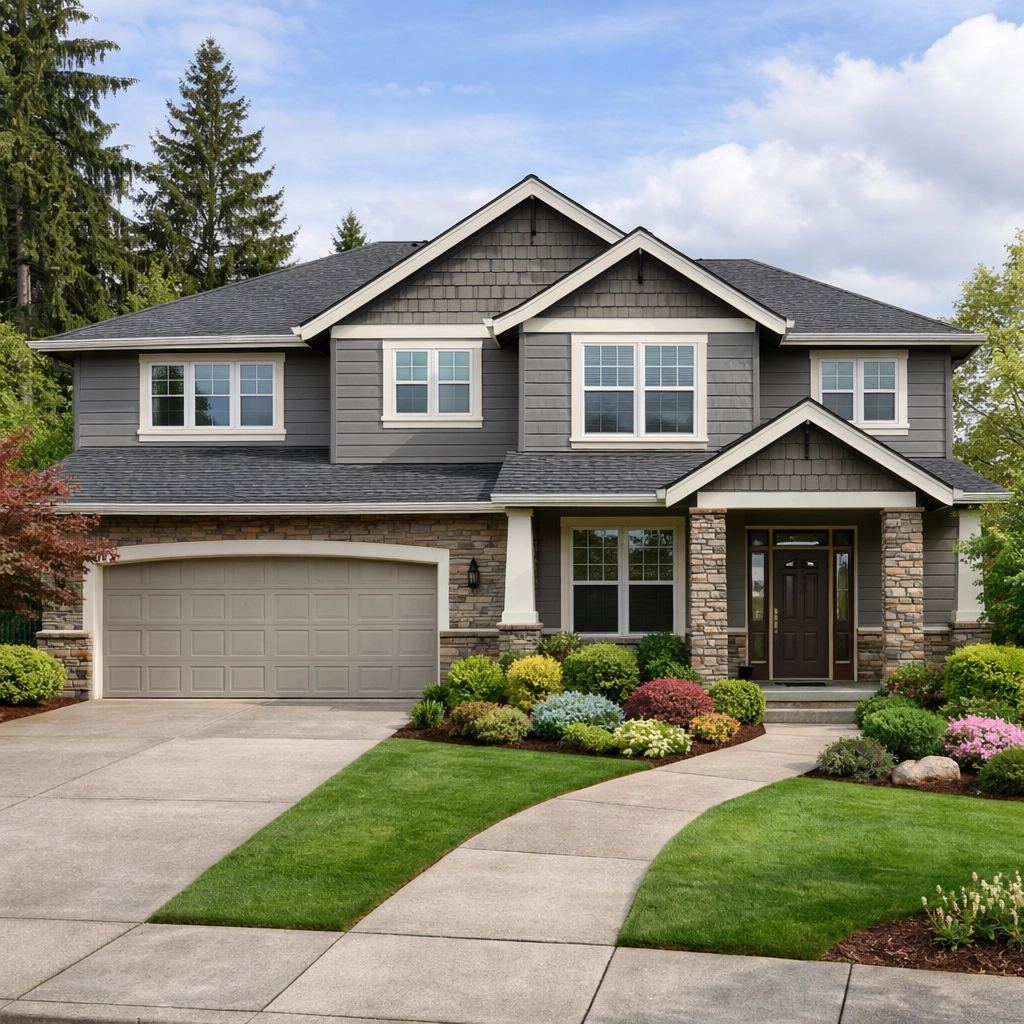
A larger home in the Portland metro area, Oregon. In a market where total market time has reached 91 days and inventory is rising, selling a large home requires more preparation and more realistic pricing than it did two years ago.
Selling a large home in Portland right now is not the same as selling a starter home or a mid-range property. The buyer pool is thinner, the days on market are longer, preparation costs are higher, and pricing mistakes are punished more severely. But the homes that are getting strong results have something in common: their sellers treated the sale like a strategic project, not an afterthought. This post covers exactly what that strategy looks like in the current market.
The Portland metro market averaged 91 days of total market time in February 2026, up from 79 days a year earlier, according to RMLS. Inventory has risen to 3.6 months and new listings are up 17.1% year over year. Homes in the $300K to $600K range are moving steadily, accounting for 58.6% of all closed sales. But homes over $600K face a thinner buyer pool and longer timelines. The sellers who are getting results in this market are investing in pre-sale preparation, pricing realistically from day one, and staging strategically. The ones who are not are watching their listings sit.
- The Market Reality for Large Homes in Portland
- Pricing Strategy: Why the First Two Weeks Determine Everything
- Preparation That Moves the Needle for Large Homes
- Staging ROI: The Math for Homes Over $600K
- Your Selling Timeline: What to Do and When
- When This Analysis Does Not Apply
- Frequently Asked Questions
The Market Reality for Large Homes in Portland
The Portland metro housing market is in a fundamentally different place than it was in 2021 or 2022. The RMLS Market Action Report for February 2026 paints a clear picture: total market time has increased to 91 days, inventory sits at 3.6 months, and the median sale price is $525,000, down 2.5% from a year ago. New listings are up 17.1% year over year while closed sales are down 1.6%. More homes are competing for the same number of buyers.
For sellers of larger homes, the picture is even more specific. The RMLS price range data for February 2026 shows that 58.6% of all closed sales fell in the $300K to $600K range. Only 13.2% of sales were in the $600K to $700K range, 8.4% in the $700K to $800K range, and just 5.3% in the $800K to $900K range. As you move up in price, the buyer pool shrinks and competition among sellers intensifies.
| Metric | February 2026 | February 2025 | Change |
|---|---|---|---|
| Total market time | 91 days | 79 days | +15.2% |
| Median sale price | $525,000 | $538,300 | -2.5% |
| Average sale price | $590,600 | $613,100 | -3.7% |
| Inventory | 3.6 months | 3.2 months | +0.4 |
| New listings | 2,260 | 1,930 | +17.1% |
| Closed sales | 1,405 | 1,428 | -1.6% |
Source: RMLS Market Action Report, Portland Metro, February 2026 Reporting Period
The area-by-area data adds another layer. West Portland, which includes many of the metro's larger homes, had a total market time of 131 days in February 2026 with an average sale price of $741,500. Lake Oswego and West Linn averaged 96 days at $960,100. Compare that to Beaverton/Aloha at 74 days and $543,400, or NE Portland at 71 days and $529,000. The pattern is clear: higher price points mean longer timelines.
This does not mean large homes are not selling. They are. But they are selling to a more selective buyer pool that has more options and more negotiating leverage than at any point in the last decade. Understand that dynamic, and you can work with it. Ignore it, and your listing sits. For a look at the costly mistakes home sellers make, that post covers the most common pitfalls.
Pricing Strategy: Why the First Two Weeks Determine Everything

In Portland's current market, the most expensive mistake a seller can make is overpricing at launch. Every piece of data points to the same conclusion: realistically priced, well-presented homes are still moving. Overpriced homes are sitting, accumulating days on market, and eventually selling for less than they would have if priced correctly from the start.
The RMLS data shows the rolling 12-month average sale price has decreased 0.5% while the median has held flat. Homes are selling, but they are not appreciating. That means the "price it high and see what happens" strategy that worked in 2021 now actively costs you money.
How to Price a Large Home in This Market
Start with comparable sales, not your equity target. Your net proceeds goal is important, but the market does not care what you need. It cares about what comparable homes in your area have sold for in the last 90 days. For homes over $600K, comparables may be limited, which is why working with an agent who understands the specific micro-market matters more at this price point than at any other.
Account for condition honestly. In this market, move-in-ready homes are drawing the strongest interest while properties needing work are sitting longer. If your home has dated finishes, deferred maintenance, or a layout that feels like 1995, price accordingly. A buyer looking at your $750,000 listing is also looking at the $725,000 listing down the street that has a new kitchen. For more on what moves the needle, see tips to maximize your home's sale price.
Price for the first showing weekend, not for negotiation room. The highest-quality buyer activity happens in the first 7 to 14 days of a listing. If you price 5% above market to "leave room to negotiate," you miss that window. The buyers who would have paid your actual market value never schedule a showing because they filtered your listing out by price.
If you bought your Portland home 15 to 20 years ago, you have likely seen extraordinary appreciation. That is real, and you should feel good about it. But the market you are selling into today is not the market of 2021 or even 2024. The average sale price in the Portland metro for the first two months of 2026 is $581,100, down 4.4% from the same period in 2025. Price your home based on what comparable homes are selling for right now, not what your neighbor's home sold for in the spring of 2022.
Preparation That Moves the Needle for Large Homes
Every home benefits from pre-sale preparation, but large homes have a higher preparation bar because there is simply more to address. More rooms, more surfaces, more deferred maintenance, and more potential for buyer objections. Here is where to focus your investment.
Portland Home Energy Score
If your home is a single-family residence inside Portland city limits, you are legally required to obtain a Home Energy Score before listing. The assessment takes about an hour and costs $150 to $250. Skipping it results in a $500 fine, and you still have to get the score before closing. Get this done early in your prep timeline so it does not delay your listing date.
Pre-Sale Repairs and Updates
In a 91-day market with rising inventory, buyers have options. They will choose the home that requires the least work after closing. Focus your pre-sale investment on the items that create buyer objections during showings. Interior paint in neutral tones ($3,000 to $6,000 for a larger home), carpet cleaning or replacement in high-traffic areas ($500 to $2,000), landscaping refresh for curb appeal ($500 to $1,500), and addressing any deferred maintenance that would show up on a home inspection.
For a detailed breakdown of which specific projects deliver the strongest return, see our guide to home improvements with the highest ROI before selling in Portland.
Pre-Listing Inspection
Consider investing $400 to $600 in a pre-listing inspection. This gives you the chance to identify and address issues before a buyer's inspector finds them and uses them as leverage to renegotiate your price. On a larger, older home, the inspection often surfaces items like aging HVAC systems, roof wear, or plumbing concerns that are better dealt with proactively. The seller's prep timeline maps out the full sequence.
The single most common regret I hear from sellers of larger homes is "I wish I had started the preparation process sooner." Decluttering a 3,000+ square foot home takes weeks, not days. Scheduling contractors for paint, repairs, and landscaping can take 3 to 4 weeks depending on the season. If you are thinking about selling in the next 6 to 12 months, start the preparation now. You do not have to list tomorrow, but having the home ready gives you the flexibility to move when the timing is right. The Portland downsizing checklist breaks the entire process into a manageable timeline.
Staging ROI: The Math for Homes Over $600K

Staging is not decorating. It is strategic merchandising designed to help buyers emotionally connect with your home and visualize living there. In Portland's current market, where buyers have more options and are taking more time, staging is one of the highest-ROI investments a seller can make.
According to the National Association of Realtors, 29% of sellers' agents reported that staging resulted in a 1% to 10% increase in the dollar value offered. On a $700,000 home, even a 1% increase translates to $7,000. Staging in Portland averages around $1,800 for a standard occupied home, and $2,500 to $4,000 or more for larger homes that need more rooms addressed. Luxury staging with rented furniture can run $3,000 to $6,000 for the first month.
The speed benefit is equally important. NAR reports that 49% of sellers' agents say staged homes spend less time on market. In a 91-day market, cutting your time to offer by even two to three weeks has real financial value: less carrying cost, less mortgage payment, less property tax, and less risk of a price reduction.
For a step-by-step staging approach, our guide to proven staging steps to boost offers covers room-by-room priorities.
| Scenario | Cost | Potential Return |
|---|---|---|
| Staging investment (occupied, larger home) | $2,500 - $4,000 | -- |
| Sale price increase at 1% | -- | +$7,000 |
| Sale price increase at 3% | -- | +$21,000 |
| Reduced time on market (3 weeks faster) | -- | $2,000 - $4,000 in carrying costs saved |
| Net ROI range | $2,500 - $4,000 invested | $5,000 - $21,000+ returned |
Based on NAR 2025 Profile of Home Staging and Portland metro average staging costs. Individual results vary.
If you have $10,000 to invest in pre-sale preparation, here is how I would allocate it for a larger Portland home in the current market. First priority: staging ($2,500 to $4,000), because it affects every single showing and every online photo. Second: interior paint in the most visible areas ($2,000 to $3,000). Third: professional deep cleaning including carpets and windows ($500 to $1,000). Fourth: landscaping curb appeal ($500 to $1,000). The remainder goes to addressing the top items a pre-listing inspection reveals. This allocation targets the factors that directly influence buyer perception in the first 10 seconds of a showing and the first 5 seconds of an online listing photo.
Your Selling Timeline: What to Do and When
Selling a large home in Portland's current market is a project that benefits from a clear timeline. Here is a realistic sequence based on the current 91-day total market time.
8 to 12 Weeks Before Listing
Get a home evaluation to understand your likely sale price range. Begin decluttering room by room. Schedule a pre-listing inspection. Obtain your Portland Home Energy Score if inside city limits. Start researching your next move, whether that is best places to downsize in Portland or deciding between downsizing and aging in place.
4 to 8 Weeks Before Listing
Complete pre-sale repairs based on the inspection findings. Paint interior. Schedule professional cleaning. Arrange landscaping. Hire a stager for a consultation and plan your staging strategy. Begin packing items you will not need before the sale. Download our free home seller guide for a comprehensive checklist.
1 to 2 Weeks Before Listing
Complete staging. Professional photography and video tour. Finalize pricing based on current comparable sales. Review your listing description and marketing plan with your agent. Understand your total cost to downsize in Portland so you know what your net proceeds will look like.
Weeks 1 Through 4 on Market
Maximum exposure period. Keep the home show-ready at all times. Respond to feedback quickly. If you have not received an offer or significant showing activity by week 3, have a serious conversation with your agent about pricing.
Week 4 and Beyond
If the home has not gone pending, evaluate whether a price adjustment is needed. In the current Portland market, homes that are correctly priced from day one are going pending in 30 to 60 days. If you are past 60 days without strong activity, the price is the most likely issue.
RMLS data consistently shows that the busiest months for pending sales in the Portland metro are March through July, with buyer activity ramping up in February. If you are planning to sell a large home, listing in late March through May puts you in front of the highest buyer traffic of the year. But the preparation needs to start 8 to 12 weeks before that window, which means January or February for a spring listing. Waiting until April to start preparing means you miss the peak window entirely.
When This Analysis Does Not Apply
If your home is in a premium location with limited inventory. Certain micro-markets within the Portland metro, particularly Southwest Hills, parts of Lake Oswego, Dunthorpe, and Irvington, have such limited inventory that buyer competition remains stronger even at higher price points. The RMLS area data for Lake Oswego/West Linn shows a median sale price of $806,500 with pending sales up 37.8% year over year. Premium location partially insulates you from the broader market dynamics described in this post.
If you are selling a tear-down or land-value property. If the primary value of your property is the lot rather than the structure, the selling strategy is fundamentally different. Your buyer is a builder or investor, not a homeowner. Different marketing channels, different pricing methodology, and different negotiation dynamics apply.
If you are considering selling off-market. Some sellers of larger or luxury homes choose to sell through private networks rather than the MLS. This approach sacrifices maximum exposure for privacy and discretion. It can work in specific situations, but it typically results in a lower sale price because you are limiting your buyer pool.
If you are selling an estate or inherited property. Probate sales and estate dispositions have additional legal requirements in Oregon and may involve court approval, multiple heirs, or time pressure that changes the strategy. Consult an attorney who handles Oregon probate before listing.
Frequently Asked Questions About Selling a Large Home in Portland
How long does it take to sell a house in Portland in 2026?
The Portland metro averaged 91 days of total market time in February 2026, according to RMLS. That number includes the time from listing to accepted offer. However, total market time varies significantly by area and price point. West Portland averaged 131 days, while NE Portland averaged 71 days. Higher-priced homes generally take longer because the buyer pool is smaller. Well-priced, well-presented homes are still going pending in 30 to 60 days, while overpriced or poorly presented homes are sitting well beyond 90 days.
Is now a good time to sell a home in Portland, Oregon?
It is a reasonable time to sell if you are realistic about pricing and willing to invest in preparation. The market is balanced, not crashing. Median sale prices are holding near $525,000, inventory is at 3.6 months, and buyer activity is increasing with pending sales up 10.5% year over year. The sellers who are struggling are the ones pricing above market or listing homes that are not move-in ready. If your home is well-maintained and priced based on current comparable sales, the market is functional and deals are closing.
How much does it cost to sell a house in Portland?
The total cost to sell a home in Portland typically runs 7% to 10% of the sale price. That includes agent commissions (5% to 6%), seller closing costs (approximately 2.42% in Oregon), and pre-sale preparation expenses like staging, repairs, and the required Home Energy Score. On a $700,000 home, total selling costs range from roughly $49,000 to $70,000. Our detailed breakdown of the total cost to downsize in Portland walks through every line item.
Do I need a Home Energy Score to sell in Portland?
Yes, if your home is a single-family residence inside Portland city limits. The Portland Home Energy Score is legally required before listing. A licensed assessor conducts a walkthrough that takes about an hour and costs $150 to $250. The score is valid for eight years unless you make major mechanical changes to the home. Non-compliance carries a $500 fine, and you still have to get the score before closing. Exemptions exist for stacked condos, floating homes, detached ADUs, and mobile homes.
Should I stage my home before selling in Portland?
Yes, especially for larger homes. In Portland's 91-day market, staging is one of the highest-ROI investments a seller can make. NAR data shows 49% of sellers' agents report that staged homes sell faster, and 29% report a 1% to 10% increase in the sale price. Staging in Portland costs $1,800 to $4,000 depending on your home's size and whether it is occupied or vacant. On a $700,000 home, even a 1% price increase more than covers the staging investment. The financial case is strongest for homes over $600K where the dollar amounts are higher.
What sells a house fast in Portland's current market?
Three factors consistently separate the homes that sell quickly from the ones that sit. First: realistic pricing based on current comparable sales, not aspirational targets. Second: move-in-ready condition with fresh paint, clean carpets, and no obvious deferred maintenance. Third: professional staging and photography that shows the home at its best online, since the majority of buyer interest starts with listing photos. Homes that hit all three consistently go pending within 30 to 45 days even in the current market.
How do I price a large home in Portland's balanced market?
Start with closed comparable sales from the last 90 days in your specific area and price range. For homes over $600K, comparables may be limited, so look at pending sales and active competition as well. Price for the first showing weekend, not for negotiation room. The RMLS data shows the Portland metro average sale price year-to-date is $581,100, down 4.4% from the same period in 2025. Sellers who price based on 2024 or early 2025 comparables rather than current data are consistently overpricing by 3% to 5%, which results in extended days on market and eventual price reductions.
What is the best time of year to sell a home in Portland?
RMLS data consistently shows that pending sales peak between March and July in the Portland metro, with the strongest buyer activity in the spring. Listing in late March through May puts you in front of maximum buyer traffic. However, the preparation process for a larger home takes 8 to 12 weeks, so if you want to be on the market by April, your preparation should start in January or February. Selling in the fall or winter is still possible but typically means longer days on market and less buyer competition.
Ready to Start Planning Your Sale?
Selling a large home in Portland's current market is a strategic process, and the earlier you start planning, the better your outcome. I can provide a detailed home evaluation with current comparable sales, walk you through the preparation timeline, and help you build a pricing strategy based on the latest RMLS data for your specific area.
Data Sources and References (as of March 2026):
- RMLS Market Action Report: Portland Metro, February 2026 Reporting Period - Total market time, median/average sale prices, inventory, sales by price range, area-by-area data
- National Association of Realtors: 2025 Profile of Home Staging - Staging impact on sale price and time on market
- KGW: Portland Homebuyers and Sellers in 2026 (Living Room Realty market analysis)
- City of Portland: Home Energy Score Program - Requirements for sellers inside Portland city limits
- Oregon Department of Revenue - Seller closing costs and property tax information
Data verified: March 2026
Saling Homes at eXp Realty is committed to equal housing opportunity. We do not discriminate on the basis of race, color, religion, sex, handicap, familial status, or national origin.
Categories
- All Blogs (93)
- Buying a Home (35)
- Community Page (14)
- Downsizing (7)
- Home Buying Process (7)
- Homeownership (6)
- Increasing Your Homes Value (4)
- Local Events (2)
- Market Update (21)
- Mortgage Information (9)
- Neighborhood Eats and Experiences (1)
- neighborhood info (3)
- Real Estate News (15)
- Selling Your Home (20)
Recent Posts








GET MORE INFORMATION