Best Places to Downsize in Portland: Condos, Suburbs, and Value Pockets

Residential neighborhoods across the Portland metro area, Oregon. Downsizers in this market have three distinct paths depending on whether they prioritize lifestyle, proximity, or equity.
Finding the best places to downsize in Portland is not really a question about neighborhoods. It is a question about which trade-off you are willing to make. Do you want to eliminate yard work and walk to everything? Stay in the community you already know? Or squeeze every dollar of equity out of the transaction? Each path leads to a different part of the metro, and the right answer depends on how you actually want to live after the move, not just where the prices look good on paper.
Portland downsizers generally land in one of three categories. Urban simplifiers move into condos in the Pearl District, South Waterfront, or Sellwood-Moreland, trading square footage for walkability and zero maintenance. Suburban right-sizers stay in the same part of the metro but move to a smaller single-level home in places like Milwaukie, Gladstone, Tigard, or Sherwood. Equity maximizers sell high-value homes and intentionally buy in a lower price tier to pocket significant cash. The Portland condo market is softer than it has been in years, with median prices around $325,000, while suburban single-family homes in the downsizer price range ($350,000 to $550,000) are holding value more reliably.
- Three Downsizing Paths and Why They Lead to Different Places
- Path 1: The Urban Simplifier (Condos and Walkability)
- Path 2: The Suburban Right-Sizer (Smaller Home, Same Community)
- Path 3: The Equity Maximizer (Buy Low, Pocket the Difference)
- Condos vs. Smaller Houses: The Math Portland Downsizers Need to Run
- When This Analysis Does Not Apply
- Frequently Asked Questions
Three Downsizing Paths and Why They Lead to Different Places
Most downsizing advice treats the process like a simple math problem: sell big, buy small, pocket the difference. But after working with dozens of Portland metro homeowners through this transition, the pattern I see is more nuanced than that. The people who are happiest after downsizing are the ones who figured out what they were optimizing for before they started looking at listings.
The best places to downsize in Portland break down along three distinct strategies, and each one points to a different part of the metro with different price dynamics, lifestyle trade-offs, and long-term financial implications. If you have not worked through the step-by-step planning process yet, start with the Portland downsizing checklist and then come back here to match your priorities to a location.
| Housing Type | Median Price Range | Key Trend |
|---|---|---|
| Portland condos | $325,000 - $395,000 | Prices softening, selling ~8% below list |
| Suburban single-family (smaller) | $380,000 - $550,000 | Holding value, stronger demand |
| Entry-level single-family (value areas) | $300,000 - $420,000 | Active downsizer and first-time buyer zone |
| Portland townhomes | $400,000 - $470,000 | Middle ground, limited inventory |
Sources: RMLS data via Portland Appraisal Blog (Feb 2026), KGW/Living Room Realty market analysis (Jan 2026)
Path 1: The Urban Simplifier (Condos and Walkability)
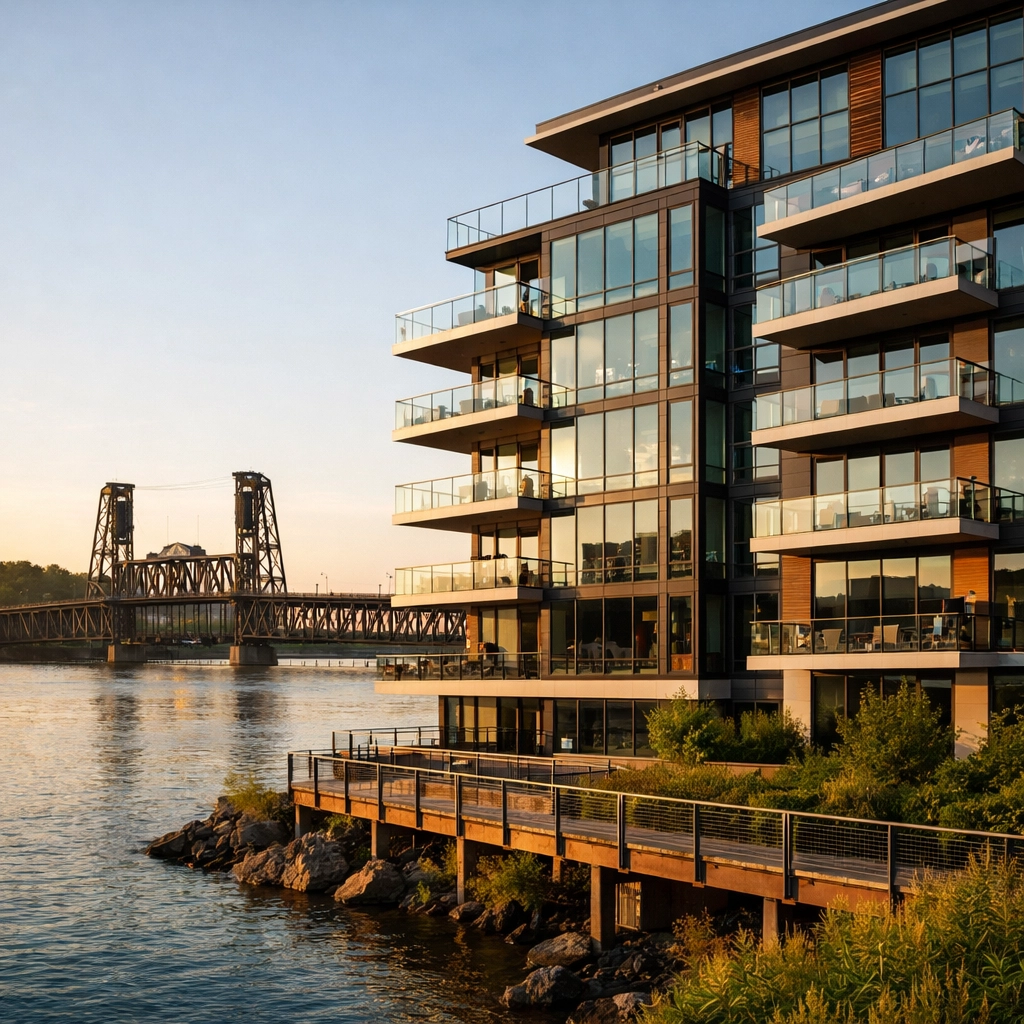
If your downsizing motivation is fundamentally about simplifying daily life, eliminating maintenance, and living somewhere you can walk to coffee, dinner, and the grocery store without starting a car, then the urban core is where you should be looking.
Portland's condo market is softer than it has been in years. The median condo price in the Portland region dropped 3.0% to $325,000 in 2025, with cumulative days on market climbing 32% to 102 days, according to RMLS data analyzed by the Portland Appraisal Blog. Many condos are selling at a discount of around 8% below list price. For a downsizer coming from a $650,000 or $700,000 suburban home, that price gap creates real financial breathing room.
Where to Look: Urban Condo Zones
Pearl District: The most polished option. Converted warehouses, modern high-rises, Powell's Books around the corner, and some of the best restaurants in the city within walking distance. One-bedroom condos cluster around $389,500, two-bedrooms around $647,000. HOA fees here tend to be on the higher end because many buildings include concierge, gym, and parking. For a deeper look at whether condos should be part of your search, see why condos deserve a spot in your home search.
South Waterfront: Newer construction, river views, proximity to OHSU via the aerial tram. This area attracts downsizers who want modern finishes without renovation. Prices are competitive with the Pearl, but the neighborhood has fewer walkable retail options.
Sellwood-Moreland: A different flavor entirely. This is southeast Portland at its most neighborhood-oriented: antique shops, local cafes, Oaks Bottom Wildlife Refuge. Condos and smaller homes here offer a balance between urban access and a quieter pace. Prices tend to be lower than the Pearl, and the feel is more residential than urban.
Browse current availability for Portland condos for sale.
Before you fall in love with a view, do the HOA math. Average Portland condo HOA fees run $300 to $400 per month, and luxury buildings can exceed $1,000. HOA dues in the Portland region rose 13% in 2025 alone. Over 10 years at $450/month, that is $54,000 in fees on top of your purchase price. Ask for the HOA's reserve study and recent meeting minutes before you make an offer. A well-funded reserve means fewer surprise special assessments. A poorly funded one means that $325,000 condo could cost you far more than you planned.
Path 2: The Suburban Right-Sizer (Smaller Home, Same Community)
This is the most common downsizing path I see in the Portland metro, and it is often the least disruptive. You stay in the same general area, keep the same grocery store and coffee shop, stay close to your social circle, and simply move to a smaller home that requires less maintenance and costs less to operate.
The suburbs of Washington and Clackamas Counties are outperforming the Portland urban core in both demand and price retention right now. Buyers are gravitating toward larger lots, newer infrastructure, and the perceived value that suburban communities offer. This "doughnut effect," where residents migrate outward from Multnomah County, is keeping suburban prices stable even as the city core softens.
Where to Look: Suburban Right-Sizing Zones
Milwaukie: One of the strongest value propositions for Clackamas County downsizers. Single-level homes in the $380,000 to $450,000 range, MAX Orange Line access to Portland, and a downtown core that has been steadily improving with new restaurants and breweries. If you are coming from a larger home in Lake Oswego or West Linn and want to stay on the east side, Milwaukie puts you 10 minutes away at a fraction of the price.
Gladstone: Just south of Milwaukie, Gladstone offers some of the most affordable single-family homes in the Clackamas County orbit, typically in the $350,000 to $420,000 range. Smaller lots, established neighborhoods, and practical access to I-205 and the Clackamas Town Center corridor. Browse Clackamas County single-level downsizing homes to see what is available now.
Tigard: A strong option for Washington County downsizers who want to stay on the west side. Smaller homes in the $420,000 to $520,000 range, strong retail access along Pacific Highway and Bridgeport Village, and a growing downtown area. Tigard has been investing in its town center, and the walkability in that pocket is improving. Search Washington County single-level downsizing homes for current inventory.
Sherwood: Slightly higher price point ($450,000 to $550,000) but with a distinctly small-town character. Sherwood is a strong fit if you are downsizing from a larger home in the Tualatin or Wilsonville corridor and want to maintain a suburban lifestyle with less square footage. For a look at single-level options in the adjacent community, see the guide to single-level homes in Tualatin.
The biggest risk for this persona is underestimating how different a 1,400 square foot home feels compared to a 3,200 square foot one. Before you start shopping, walk through a few homes in your target size range just to calibrate your expectations. Measure your current furniture. Decide what you are keeping before you make an offer, not after. The practical guidance in choosing the right smaller home covers how to think through that process.
Path 3: The Equity Maximizer (Buy Low, Pocket the Difference)
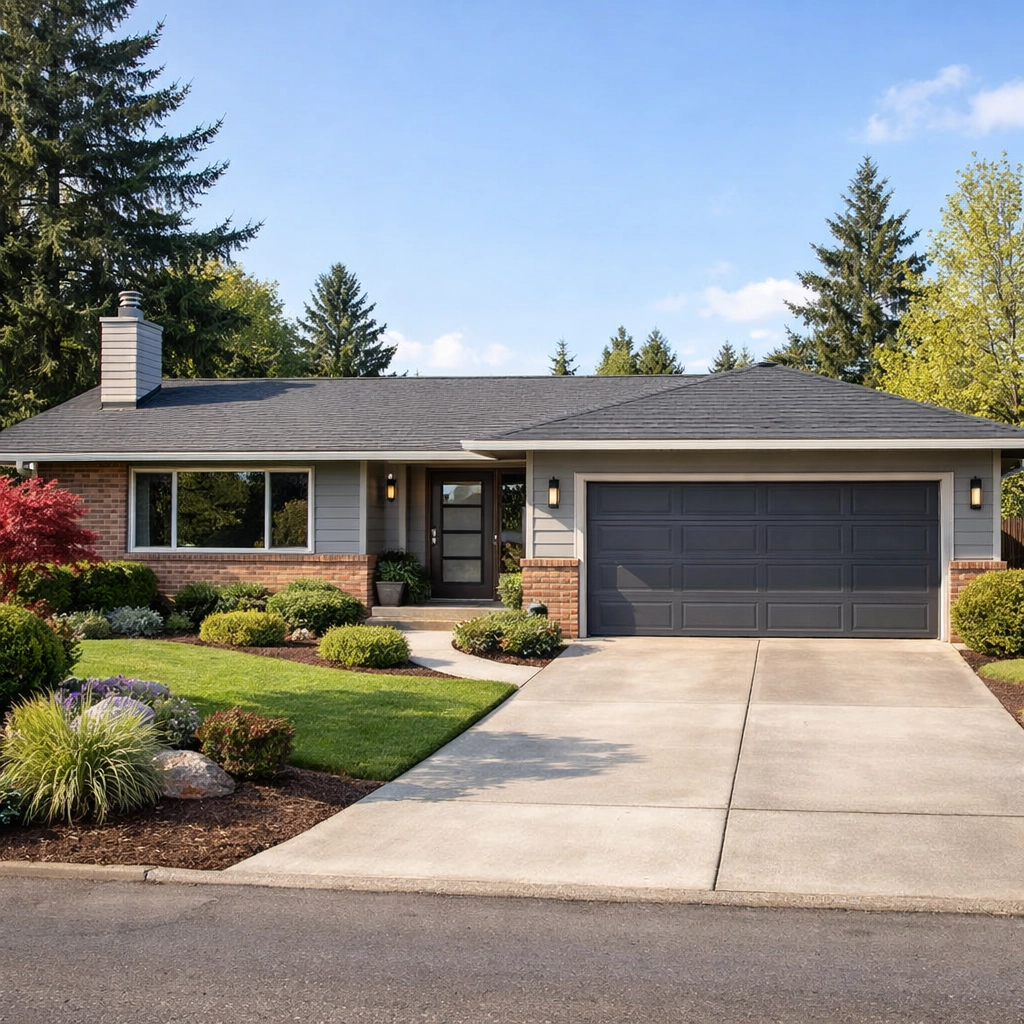
This path is for the homeowner who views downsizing primarily as a financial strategy. You are selling a home worth $700,000 or more, and your goal is to walk away with the largest possible cash cushion, whether that means a paid-off home and money in the bank, or a small mortgage and significant reserves. You are open to changing communities if the numbers are right.
In late 2025, 55% of all Portland metro home sales closed in the $300,000 to $600,000 range, according to KGW and Living Room Realty market data. That is the downsizer landing zone. If you are selling at $750,000 and buying at $375,000, the equity spread after transaction costs (roughly $55,000 to $75,000 based on our total cost to downsize in Portland breakdown) still leaves you with substantial cash in hand.
Where to Look: Value-Maximizing Zones
East Portland and Gateway: The most affordable single-family homes within Portland city limits. Prices in the $300,000 to $400,000 range for homes that offer more square footage per dollar than anywhere else in the city. Access to I-84 and I-205 keeps commute options open. The trade-off is a more urban, mixed-use character compared to the quieter suburbs.
Gresham: Just east of Portland, Gresham offers newer builds and larger lots in the $350,000 to $450,000 range. MAX Blue Line access connects you to downtown Portland. The city has been investing in its downtown corridor, and the housing stock includes a solid inventory of single-level and ranch-style homes.
Oregon City: At the southern edge of the metro along the Willamette, Oregon City offers a distinct small-city feel with prices in the $375,000 to $475,000 range. The downtown area has character, and the newer developments on the bluff offer wider views and more modern layouts. This is a strong play if you are coming from a high-value Clackamas County home and want to maximize your equity gap.
Run the full net proceeds calculation before you commit to a price range. The transaction costs on both sides of a downsize (selling and buying) can consume $55,000 to $75,000 in the Portland metro. If your equity spread between selling and buying is only $150,000, a third or more of that goes to transaction costs. The math only works dramatically in your favor when the gap is $250,000 or wider. Make sure you also account for Oregon's Measure 50 property tax reset, which can increase your annual taxes even on a lower-priced home. The total cost to downsize in Portland post walks through every line item.
Condos vs. Smaller Houses: The Math Portland Downsizers Need to Run
This is the question that comes up in almost every downsizing conversation. On the surface, condos look like the obvious answer: lower purchase price, no exterior maintenance, and a lock-and-leave lifestyle. But the numbers tell a more complicated story.
| Cost Factor | Condo ($350,000) | Small SFH ($450,000) |
|---|---|---|
| Purchase price | $350,000 | $450,000 |
| HOA fees (10 years) | $48,000 - $60,000 | $0 - $3,000 |
| Exterior maintenance (10 yr est.) | $0 (covered by HOA) | $15,000 - $25,000 |
| Property tax (annual est.) | Lower assessed value | Higher assessed value |
| Resale trend | Softening (-3% in 2025) | Stable to modest growth |
| 10-year total cost of ownership | $398,000 - $410,000 | $465,000 - $478,000 |
Estimates based on current Portland metro market data. Actual costs vary by specific property, HOA, and condition. Consult with a financial advisor for your situation.
The condo still comes out cheaper on total cost of ownership in most scenarios, but the gap narrows significantly once you factor in HOA fees, and it narrows further if the condo's resale value continues to soften while the single-family home holds steady. The single-family home also gives you more control over your costs since you decide when and how to do maintenance rather than having the HOA board make that call for you.
Portland-area condo HOA dues increased 13% in 2025 according to RMLS data. If that trend continues, a $400/month fee today could reach $500/month within three years. Special assessments for major building repairs (roof, elevator, siding) can add thousands in a single year. Before buying any condo, request the HOA reserve study, the last two years of meeting minutes, and the current budget. A reserve funded below 70% is a warning sign that a special assessment may be coming.
For a deeper exploration of whether condo living fits your goals, our comparison of downsizing versus aging in place covers how these ongoing costs affect the long-term financial picture.
When This Analysis Does Not Apply
If you are downsizing into a rental. This entire analysis assumes you are buying your next home. If you are selling and renting instead, the location math changes completely since you are optimizing for monthly rent, lease flexibility, and proximity to what matters to you, not purchase price or equity. That is a different decision framework.
If you are relocating out of the Portland metro. If your downsize involves moving to the Oregon coast, Central Oregon, or out of state entirely, the local neighborhood analysis in this post does not apply. The guide to selling a large home in Portland covers how to maximize your sale price before you leave the metro.
If you need ADA-accessible or specialized housing. Accessibility requirements (zero-step entry, wide doorways, roll-in showers) significantly narrow the inventory in any area. Some of the neighborhoods listed here have limited accessible housing stock, particularly in older construction. Work with an agent who understands accessibility-specific inventory before narrowing your search geography.
Frequently Asked Questions About the Best Places to Downsize in Portland
What is the best area in Portland to downsize to?
It depends on your priorities. If you want walkability and zero maintenance, the Pearl District or South Waterfront condos are the strongest options. If you want to stay in your current community but in a smaller home, look at Milwaukie, Gladstone, Tigard, or Sherwood for single-level inventory. If maximizing equity is your primary goal, value pockets in East Portland, Gresham, or Oregon City offer the widest price gap between what you sell and what you buy.
Should I downsize to a condo or a smaller house in Portland?
Condos have a lower purchase price and eliminate exterior maintenance, but HOA fees of $300 to $1,000 per month add up significantly over time. A smaller single-family home costs more upfront but avoids HOA fees and has shown stronger resale performance in the Portland market. Over 10 years, the total cost of ownership gap between the two is smaller than most people assume. Run the numbers for your specific situation before deciding.
What Portland suburbs have the most affordable single-level homes?
Milwaukie and Gladstone in Clackamas County currently offer some of the most affordable single-level homes in the metro, with prices ranging from $350,000 to $450,000. On the Washington County side, Tigard and Aloha have pockets of ranch-style homes in the $420,000 to $520,000 range. Gresham in east Multnomah County is another strong option, particularly for buyers who want more square footage per dollar.
Is the Pearl District a good place to downsize in Portland?
The Pearl District is an excellent lifestyle fit for downsizers who prioritize walkability, restaurants, cultural amenities, and a car-optional lifestyle. Financially, the condo market there has softened, which means better negotiating leverage for buyers. However, HOA fees in Pearl District buildings tend to be on the higher end, often $400 to $800 per month or more, and those fees directly affect your monthly budget and long-term cost of ownership. It is a great fit if you value convenience and are comfortable with the HOA commitment.
What are HOA fees like in Portland condos?
Average HOA fees for Portland condos run $300 to $400 per month. Luxury buildings with elevators, concierge services, or fitness centers can exceed $1,000 per month. HOA dues in the Portland region increased 13% in 2025, and that upward trend is expected to continue as buildings age and maintenance costs rise. Always check the HOA reserve study and recent meeting minutes before making an offer to understand the financial health of the association.
Where can I find ranch homes under $500,000 near Portland?
Milwaukie, Gladstone, parts of Gresham, and pockets of East Portland consistently offer ranch-style and single-level homes under $500,000. On the west side, parts of Tigard and Aloha also fall in this range. The inventory is tighter than it is for two-story homes since ranch-style homes are in high demand from downsizers, buyers with accessibility needs, and other buyers who prefer single-level living. Working with an agent who tracks this specific inventory type can give you an advantage.
Is it better to downsize inside Portland or move to the suburbs?
Portland's city core offers condos and some smaller homes with walkability and cultural access, but at the cost of HOA fees and a softer resale market. The suburbs offer single-family homes without HOA costs, typically with larger lots and stronger price retention. The right answer depends on whether you value walkability and urban amenities more than property control and resale stability. Many downsizers in the Portland metro choose the suburbs because the lifestyle change is less dramatic and the financial math is more straightforward.
How do I decide which downsizing path is right for me?
Start by identifying your non-negotiables. If zero maintenance and walkability are at the top, look at condos. If staying near your current community matters most, look at smaller homes in your area. If maximizing equity is the priority, look at value areas where the price gap is widest. Then run the financial math using our cost breakdown to see how each path affects your net proceeds. Most people find that one path clearly fits better once they see the numbers alongside their lifestyle priorities.
Ready to Explore Your Downsizing Options?
Every downsizing path starts with understanding what your current home is worth and what you can afford on the other side. I can walk you through a personalized comparison of your options, whether that is a condo in the Pearl, a ranch in Milwaukie, or something in between.
Data Sources and References (as of March 2026):
- Portland Appraisal Blog: 2025 Portland Region Condominium Market Review (RMLS data)
- KGW: What Portland Homebuyers and Sellers Can Expect in 2026 (Living Room Realty interview)
- The OPT Group: Portland OR Housing Market 2026 Buyer Insights
- The OPT Group: Average Cost of a Home in Portland OR (2026 Market Trends)
- National Association of Realtors: Research and Statistics
Data verified: March 2026
Saling Homes at eXp Realty is committed to equal housing opportunity. We do not discriminate on the basis of race, color, religion, sex, handicap, familial status, or national origin.
Categories
- All Blogs (93)
- Buying a Home (35)
- Community Page (14)
- Downsizing (7)
- Home Buying Process (7)
- Homeownership (6)
- Increasing Your Homes Value (4)
- Local Events (2)
- Market Update (21)
- Mortgage Information (9)
- Neighborhood Eats and Experiences (1)
- neighborhood info (3)
- Real Estate News (15)
- Selling Your Home (20)
Recent Posts









GET MORE INFORMATION